English

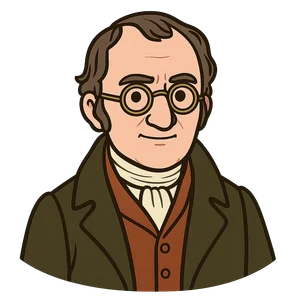
John Dalton
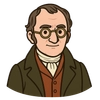
John Dalton was an English chemist, physicist…
Reads at Grades 6–8 Listens at Grades 4–8
Print & create
Answer keys·No prep·Free with an account
28 worksheets · answer keys · full story · quiz · Ages 10-12 · CEFR B2
Plus adds 164,000+ more stories in 27 languages, audio for every one, and printables for all of them.
Just want John Dalton?
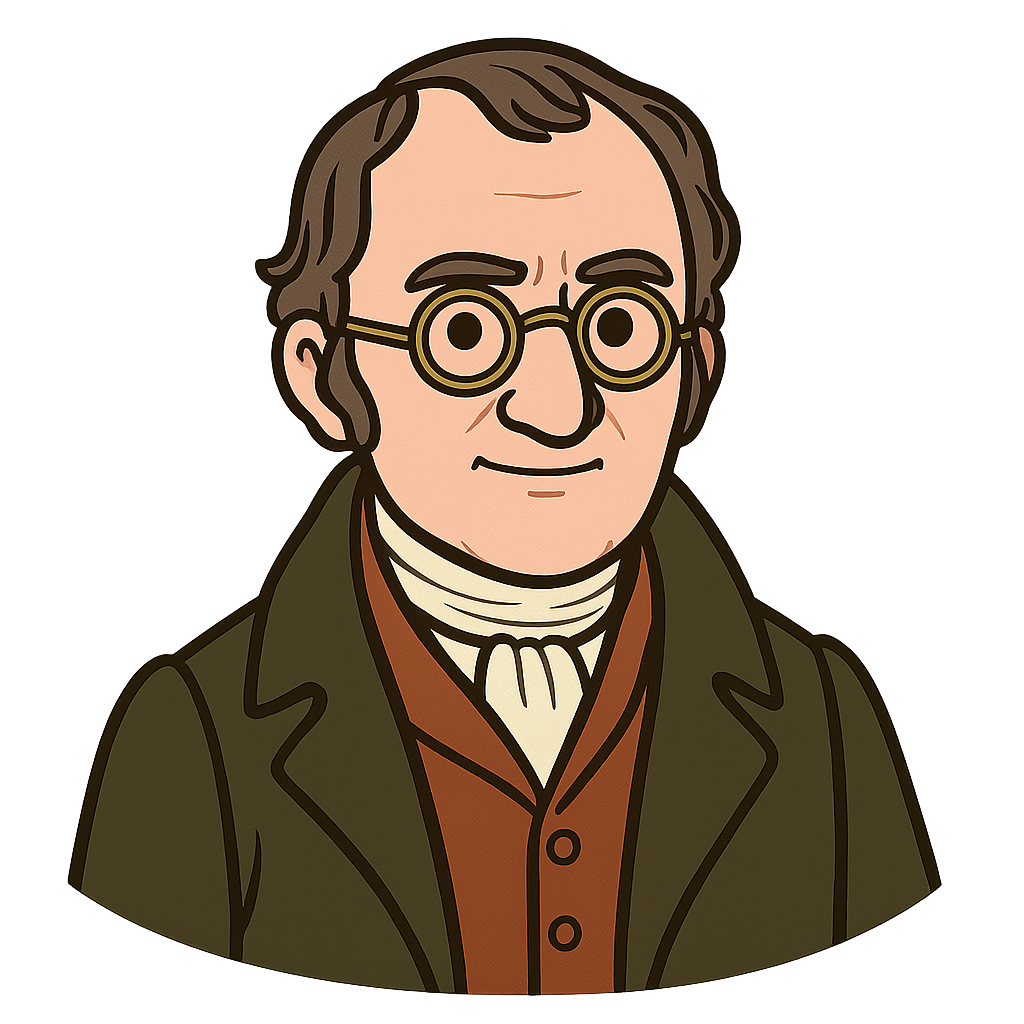
Hello! My name is John Dalton, and I want to tell you the story of how my curiosity about the world, from the weather to the very air we breathe, led to some big discoveries. I was born on September 6th, 1766, in a small village called Eaglesfield in England. My family were Quakers, a group of people who believe in living simply and peacefully. We didn't have much money, but my mind was always rich with questions. I loved the world around me, especially the wind, the rain, and the clouds. I wondered: what is weather made of? This early fascination with the natural world set me on a lifelong path of scientific exploration.
Our Quaker school was small, but I soaked up everything I could learn. I was so eager that by the time I was just 12 years old, around 1778, I started my own little school to teach other children! A few years later, in 1781, my older brother Jonathan and I moved to a town called Kendal to run a Quaker boarding school. While teaching, my scientific curiosity only grew. In 1787, I began a habit I would keep for the rest of my life: I started a daily weather journal. Every single day, I recorded the temperature, wind, and pressure. This wasn't just a hobby; it was my way of collecting data to understand the patterns of the atmosphere. I was a scientist in the making.
In 1793, I moved to the bustling city of Manchester to become a tutor at a college. This was a wonderful new chapter for me. I joined the Manchester Literary and Philosophical Society, where I could discuss my ideas with other thinkers. It was here, in 1794, that I presented my very first scientific paper. It was about a curious condition that my brother and I both had: we couldn't see certain colors the same way other people did. Today, you might know it as color blindness, but for a time, people called it 'Daltonism' after me! Studying my own eyes taught me the importance of careful observation, a skill that would soon lead to my greatest idea.
John Dalton: The Father of Atomic Theory
Hello! My name is John Dalton, and I want to tell you the story of how my curiosity about the world, from the weather to the very air we breathe, led to some big discoveries. I was born on September 6th, 1766, in a small village called Eaglesfield in England. My family were Quakers, a group of people who believe in living simply and peacefully. We didn't have much money, but my mind was always rich with questions. I loved the world around me, especially the wind, the rain, and the clouds. I wondered: what is weather made of? This early fascination with the natural world set me on a lifelong path of scientific exploration.
Our Quaker school was small, but I soaked up everything I could learn. I was so eager that by the time I was just 12 years old, around 1778, I started my own little school to teach other children! A few years later, in 1781, my older brother Jonathan and I moved to a town called Kendal to run a Quaker boarding school. While teaching, my scientific curiosity only grew. In 1787, I began a habit I would keep for the rest of my life: I started a daily weather journal. Every single day, I recorded the temperature, wind, and pressure. This wasn't just a hobby; it was my way of collecting data to understand the patterns of the atmosphere. I was a scientist in the making.
In 1793, I moved to the bustling city of Manchester to become a tutor at a college. This was a wonderful new chapter for me. I joined the Manchester Literary and Philosophical Society, where I could discuss my ideas with other thinkers. It was here, in 1794, that I presented my very first scientific paper. It was about a curious condition that my brother and I both had: we couldn't see certain colors the same way other people did. Today, you might know it as color blindness, but for a time, people called it 'Daltonism' after me! Studying my own eyes taught me the importance of careful observation, a skill that would soon lead to my greatest idea.
My studies of the weather led me to experiment with gases. I wanted to know why air was a mixture of different gases, instead of settling into layers like oil and water. I began to think about what made up these gases. Around 1803, I came to a groundbreaking conclusion. I proposed that all matter—everything in the world—is made of tiny, invisible particles I called atoms. I suggested that each chemical element, like oxygen or hydrogen, is made of its own unique kind of atom. And when elements combine to make something new, like water, their atoms join together in simple, whole-number ratios. It was a simple but powerful idea. I published these thoughts in my book, 'A New System of Chemical Philosophy,' which began to come out in 1808. My atomic theory gave scientists a whole new way to understand the building blocks of the universe.
I spent the rest of my years in Manchester, teaching, writing, and continuing my research. My work was recognized, and in 1822, I was honored to be elected a Fellow of the prestigious Royal Society in London. I lived a simple life, following my Quaker beliefs and my scientific passions. I lived to be 77 years old, and my life came to a peaceful close in Manchester on July 27th, 1844. Though I am gone, my ideas live on. My atomic theory became the foundation of modern chemistry, helping us understand everything from medicine to materials. I hope my story shows you that with curiosity and careful observation, even a quiet boy from a small village can help change the way we see the world.
Wow facts
About
John Dalton was an English chemist, physicist, and meteorologist best known for introducing the atomic theory into chemistry and for his research into color blindness.
Take a Quiz
Question 1 of 5
What does the word 'groundbreaking' mean in the context of Dalton's atomic theory?
Explore next




Want to do even more?
Go beyond exploring. Unlock tools that turn every story into real learning.

Storypie Plus for families
Full stories, quizzes, and printables. Nights and car rides, sorted.
- Unlimited audio stories
- Create Mode: your child stars in the story
- Offline downloads
- Printable worksheets & coloring pages

Why Storypie for Schools
Students engaged. Prep in seconds. Evenings back to you.
- Worksheets & Quizzes
- Classroom Management
- Formative Assessment
- Custom Curriculum & Lesson Plans
- 27 Languages

Why Storypie for Homeschool
Curriculum done. They'll ask for more. Hours back in your day.
- Worksheet Generator
- First-Person Audio Stories
- Built-in Comprehension Quizzes
- Custom Curriculum & Lesson Plans
- Print & Go Activities