English

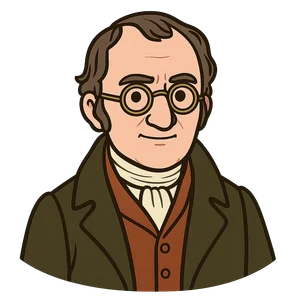
John Dalton
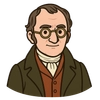
John Dalton was an English chemist, physicist…
Reads at Grades K-2 Listens at K–3
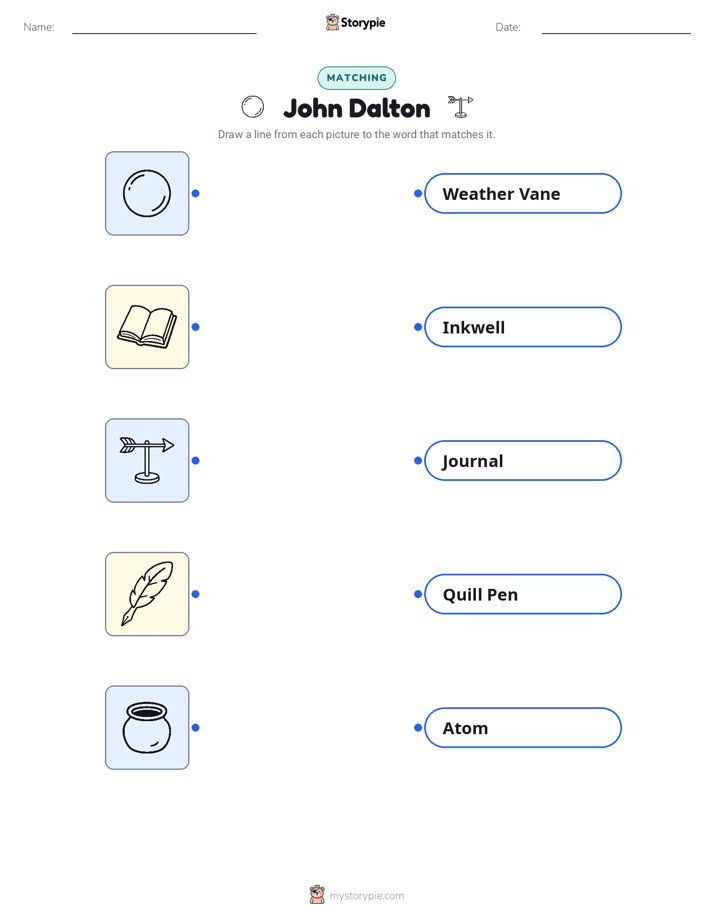
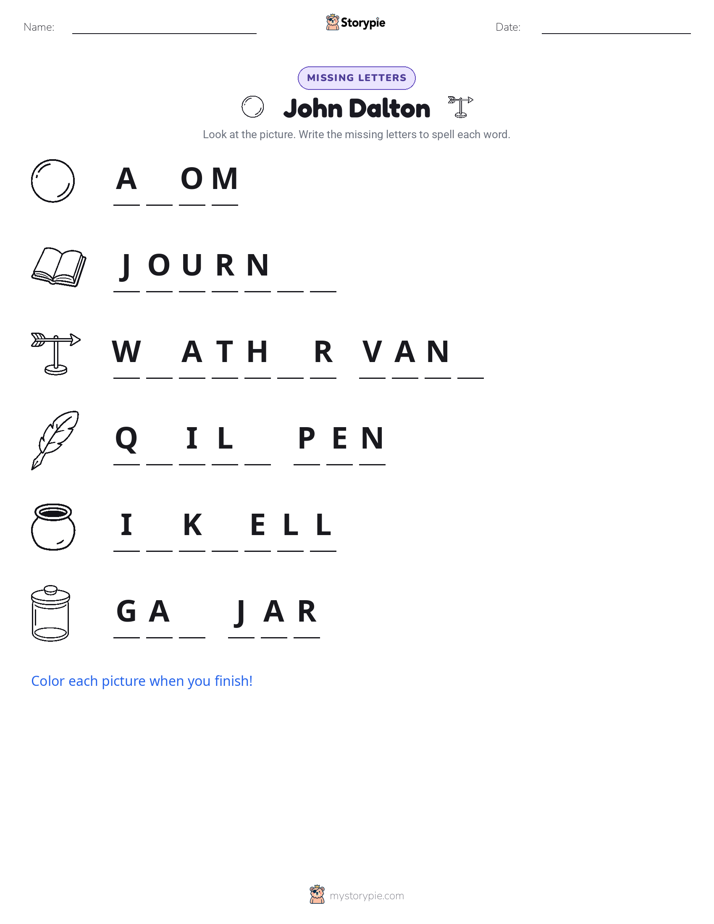
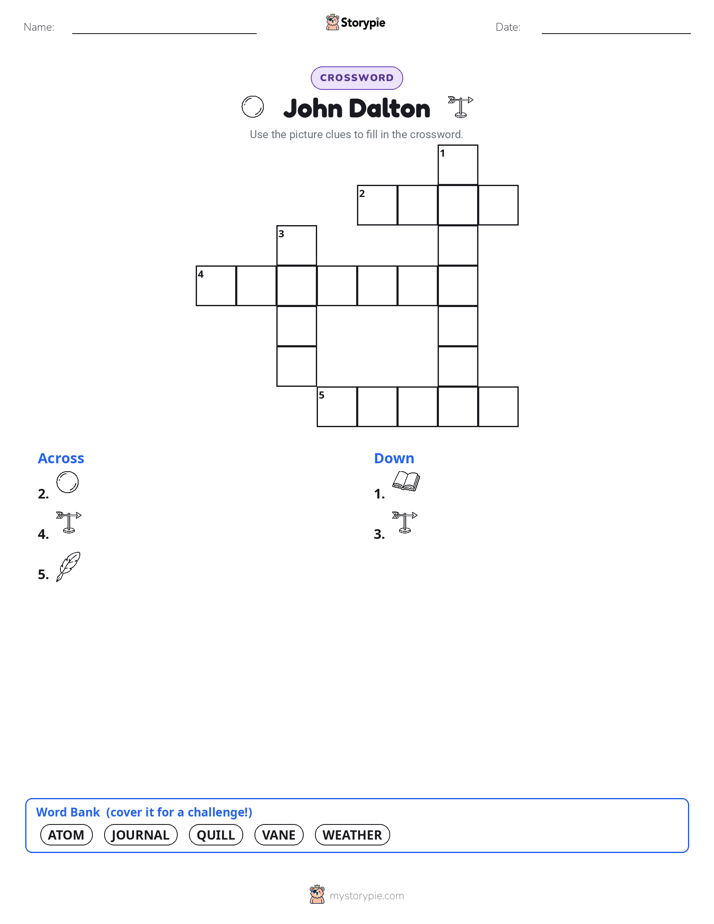
Print & create
Answer keys·No prep·Free with an account
28 worksheets · answer keys · full story · quiz · Ages 6-8 · CEFR A2
Plus adds 164,000+ more stories in 27 languages, audio for every one, and printables for all of them.
Just want John Dalton?
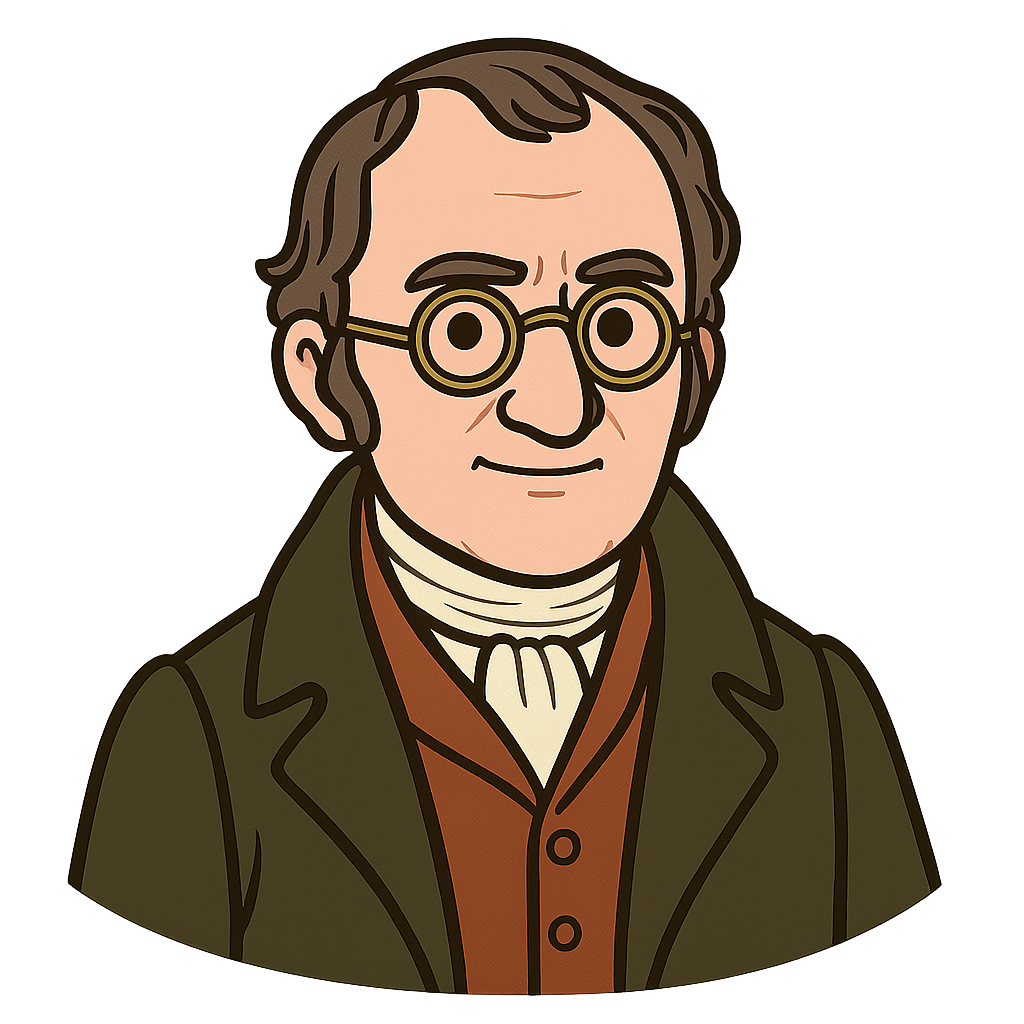
Hello! My name is John Dalton. I was born a long, long time ago, on September 6th, 1766, in a small village in England. Even as a little boy, I was full of questions. I was especially curious about the weather. I would look at the clouds and wonder why it rained. I loved learning so much that when I was just 12 years old, I started my own school to teach other children. I believed that if you looked closely at the world, you could figure out its secrets.
As I grew up, I became a teacher in a big city called Manchester. I noticed something curious about myself and my brother, Jonathan. We didn't see colors the same way other people did. A red flower might look gray or yellow to us. Instead of just shrugging, I wanted to know why. In 1794, I wrote down all my ideas about it. It was the first time anyone had ever studied what we now call color blindness. It was proof that asking questions could lead to new discoveries.
My biggest questions were about what everything was made of. What makes a rock a rock, and water water? Around the year 1803, I had a giant idea. I imagined that everything in the whole world—the chair you're sitting on, the air you breathe, and even you—is made of teeny, tiny building blocks. These blocks are so small you can't see them. I called them 'atoms.' I thought that different things were made of different kinds of atoms, like how you can build different things with different toy blocks. A water atom was different from an air atom. This simple idea changed how everyone thought about the world.
John Dalton: The Boy Who Questioned Everything
Hello! My name is John Dalton. I was born a long, long time ago, on September 6th, 1766, in a small village in England. Even as a little boy, I was full of questions. I was especially curious about the weather. I would look at the clouds and wonder why it rained. I loved learning so much that when I was just 12 years old, I started my own school to teach other children. I believed that if you looked closely at the world, you could figure out its secrets.
As I grew up, I became a teacher in a big city called Manchester. I noticed something curious about myself and my brother, Jonathan. We didn't see colors the same way other people did. A red flower might look gray or yellow to us. Instead of just shrugging, I wanted to know why. In 1794, I wrote down all my ideas about it. It was the first time anyone had ever studied what we now call color blindness. It was proof that asking questions could lead to new discoveries.
My biggest questions were about what everything was made of. What makes a rock a rock, and water water? Around the year 1803, I had a giant idea. I imagined that everything in the whole world—the chair you're sitting on, the air you breathe, and even you—is made of teeny, tiny building blocks. These blocks are so small you can't see them. I called them 'atoms.' I thought that different things were made of different kinds of atoms, like how you can build different things with different toy blocks. A water atom was different from an air atom. This simple idea changed how everyone thought about the world.
I spent the rest of my life as a scientist, always asking questions and looking for answers. I lived to be 77 years old. My idea about atoms was just the beginning, and it helped other scientists make amazing discoveries that are still important today. Every time someone studies science and learns how things are put together, they are using ideas that started in my curious mind. So always remember to ask questions—you never know what secrets you might unlock!
Wow facts
About
John Dalton was an English chemist, physicist, and meteorologist best known for introducing the atomic theory into chemistry and for his research into color blindness.
Take a Quiz
Question 1 of 4
Why did John Dalton study colors?
Explore next



Want to do even more?
Go beyond exploring. Unlock tools that turn every story into real learning.

Storypie Plus for families
Full stories, quizzes, and printables. Nights and car rides, sorted.
- Unlimited audio stories
- Create Mode: your child stars in the story
- Offline downloads
- Printable worksheets & coloring pages

Why Storypie for Schools
Students engaged. Prep in seconds. Evenings back to you.
- Worksheets & Quizzes
- Classroom Management
- Formative Assessment
- Custom Curriculum & Lesson Plans
- 27 Languages

Why Storypie for Homeschool
Curriculum done. They'll ask for more. Hours back in your day.
- Worksheet Generator
- First-Person Audio Stories
- Built-in Comprehension Quizzes
- Custom Curriculum & Lesson Plans
- Print & Go Activities