English

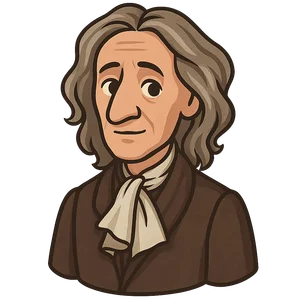
John Locke
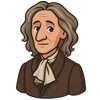
John Locke was an English philosopher and physician…
Reads at Grades 3–5 Listens at Grades 1–5
Print & create
Answer keys·No prep·Free with an account
28 worksheets · answer keys · full story · quiz · Ages 8-10 · CEFR B1
Plus adds 102,000+ more stories in 27 languages, audio for every one, and printables for all of them.
Just want John Locke?
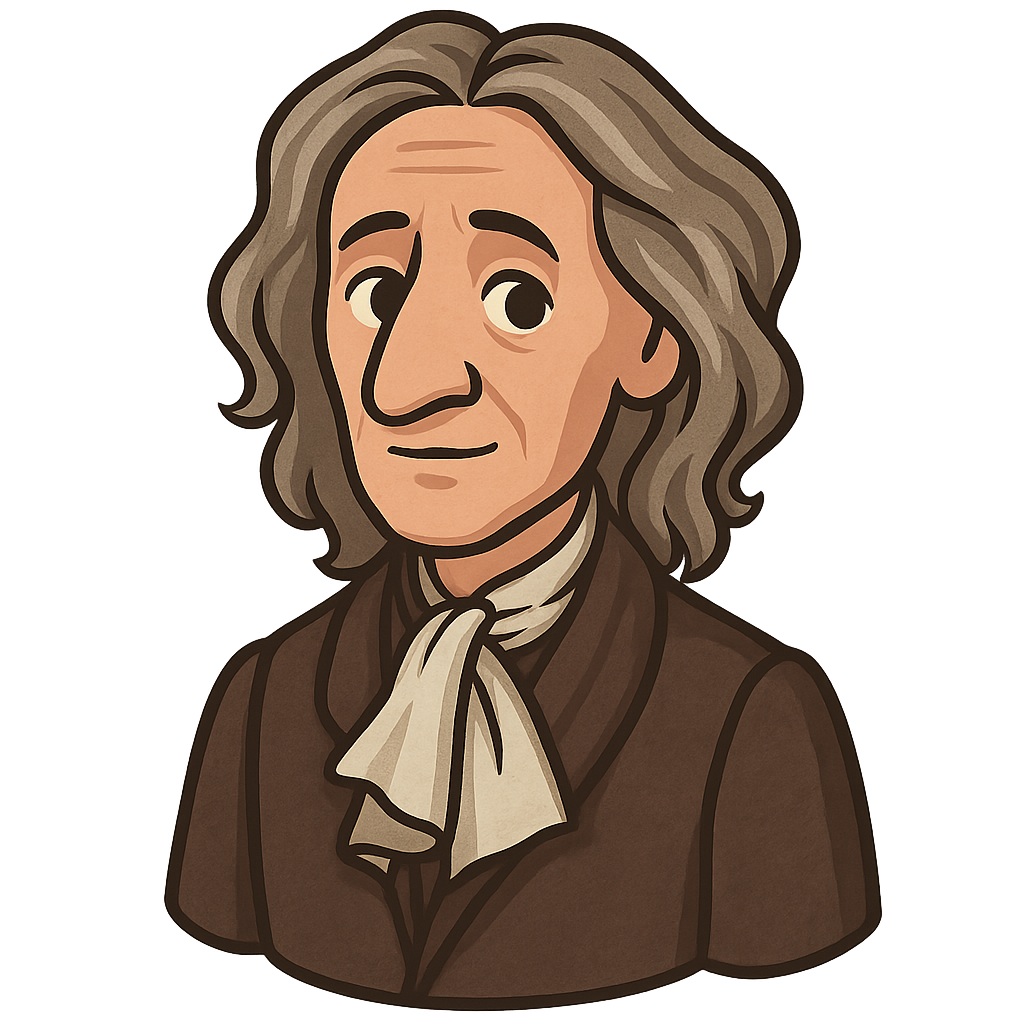
Hello, my name is John Locke, and I was a thinker who loved asking big questions. I was born on August 29th, 1632, in a small cottage in Somerset, England. My father was a lawyer, and I grew up during a very exciting and sometimes difficult time in my country's history. There were many arguments about how England should be ruled, and seeing all this change made me very curious about people, government, and how the world worked. From the time I was very young, I found my greatest joy in books. I loved to read and learn, and this passion stayed with me my entire life, guiding me on a journey to understand the human mind itself.
My love of learning took me far from my childhood home. Around the year 1647, I traveled to London to study at the famous Westminster School, which was a very big step for a boy from the countryside. Then, in 1652, I went to the University of Oxford, one of the best schools in the world. At Oxford, I studied many subjects, but I found myself most interested in medicine and the new ideas of science. The world was full of amazing discoveries, and I wanted to be a part of them. I didn't just want to memorize what old books said. I wanted to understand things for myself. My biggest question was about us: how do our minds work? Where do all of our thoughts, ideas, and knowledge really come from? This question would become the center of my life's work.
In 1667, a very important thing happened—I met a nobleman named Lord Anthony Ashley Cooper. I first served as his personal doctor, but soon we became very close friends. Lord Ashley was deeply involved in the world of politics and government, and through him, I learned about how countries are run. Our conversations inspired me to organize my own thoughts and write them down for others to read. This led to my most famous idea. I believed that when a baby is born, their mind is like a 'tabula rasa,' which is Latin for a blank slate or an empty notebook. I argued that we are not born with ideas already inside us. Instead, we learn everything from our experiences—from what we see, hear, and touch in the world. I wrote all about this in my book, *An Essay Concerning Human Understanding*, which was finally published in 1689.
John Locke: The Thinker Who Believed in Freedom
Hello, my name is John Locke, and I was a thinker who loved asking big questions. I was born on August 29th, 1632, in a small cottage in Somerset, England. My father was a lawyer, and I grew up during a very exciting and sometimes difficult time in my country's history. There were many arguments about how England should be ruled, and seeing all this change made me very curious about people, government, and how the world worked. From the time I was very young, I found my greatest joy in books. I loved to read and learn, and this passion stayed with me my entire life, guiding me on a journey to understand the human mind itself.
My love of learning took me far from my childhood home. Around the year 1647, I traveled to London to study at the famous Westminster School, which was a very big step for a boy from the countryside. Then, in 1652, I went to the University of Oxford, one of the best schools in the world. At Oxford, I studied many subjects, but I found myself most interested in medicine and the new ideas of science. The world was full of amazing discoveries, and I wanted to be a part of them. I didn't just want to memorize what old books said. I wanted to understand things for myself. My biggest question was about us: how do our minds work? Where do all of our thoughts, ideas, and knowledge really come from? This question would become the center of my life's work.
In 1667, a very important thing happened—I met a nobleman named Lord Anthony Ashley Cooper. I first served as his personal doctor, but soon we became very close friends. Lord Ashley was deeply involved in the world of politics and government, and through him, I learned about how countries are run. Our conversations inspired me to organize my own thoughts and write them down for others to read. This led to my most famous idea. I believed that when a baby is born, their mind is like a 'tabula rasa,' which is Latin for a blank slate or an empty notebook. I argued that we are not born with ideas already inside us. Instead, we learn everything from our experiences—from what we see, hear, and touch in the world. I wrote all about this in my book, An Essay Concerning Human Understanding, which was finally published in 1689.
My ideas about learning were interesting, but my ideas about government were revolutionary. I wrote another important book in 1689 called Two Treatises of Government. In it, I argued that every single person is born with certain natural rights. These are the rights to life, liberty, and property. I believed that no king or ruler could take these away. The main job of a government, I explained, was to protect these rights for its citizens. Furthermore, I said that a government could only rule if the people it governed agreed to be ruled. At the time, many believed that kings had a divine right to rule, so my ideas were seen as quite dangerous. In fact, because of my beliefs, I had to leave England for my safety and went to live in the Netherlands in 1683.
I was able to return to England after the Glorious Revolution of 1688 made it a safer place for people who shared my ideas. I lived to be 72 years old, and I spent my final years writing and sharing my thoughts with friends. Today, people remember me as the 'Father of Liberalism.' This is because my thoughts on rights and fair government helped inspire people all over the world. The brave founders who wrote the United States Declaration of Independence even used my ideas about life and liberty. I am proud that my questions about how we learn and how we should live together are still being studied and talked about today.
Wow facts
About
John Locke was an English philosopher and physician, widely regarded as one of the most influential of Enlightenment thinkers and commonly known as the 'Father of Liberalism.' His ideas about natural rights and government by consent heavily influenced modern democracy.
Take a Quiz
Question 1 of 5
Why did John Locke have to leave England and move to the Netherlands in 1683?
Explore next


Want to do even more?
Go beyond exploring. Unlock tools that turn every story into real learning.

Storypie Plus for families
Full stories, quizzes, and printables. Nights and car rides, sorted.
- Unlimited audio stories
- Create Mode: your child stars in the story
- Offline downloads
- Printable worksheets & coloring pages

Why Storypie for Schools
Students engaged. Prep in seconds. Evenings back to you.
- Worksheets & Quizzes
- Classroom Management
- Formative Assessment
- Custom Curriculum & Lesson Plans
- 27 Languages

Why Storypie for Homeschool
Curriculum done. They'll ask for more. Hours back in your day.
- Worksheet Generator
- First-Person Audio Stories
- Built-in Comprehension Quizzes
- Custom Curriculum & Lesson Plans
- Print & Go Activities