English

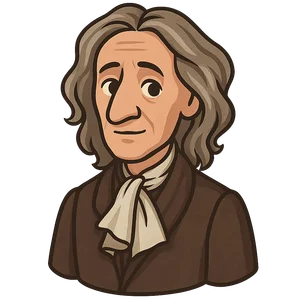
John Locke
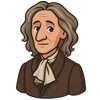
John Locke was an English philosopher and physician…
Reads at Grades 6–8 Listens at Grades 4–8
Print & create
Answer keys·No prep·Free with an account
28 worksheets · answer keys · full story · quiz · Ages 10-12 · CEFR B2
Plus adds 102,000+ more stories in 27 languages, audio for every one, and printables for all of them.
Just want John Locke?
Hello! My name is John Locke, and I want to tell you my story. I was born on August 29th, 1632, in a small village called Wrington in Somerset, England. My childhood was a time of great change and conflict in my country, as the English Civil War began when I was just ten years old. This meant that from a young age, I saw how much arguments over power and beliefs could affect everyone's lives. My father was a lawyer, and he believed deeply in fairness and duty. His beliefs shaped my own thinking a great deal. In 1647, I left home to attend a famous school in London called Westminster School, and then in 1652, I went to the University of Oxford. I was curious about everything, but I found that I was most interested in how we think, what we know, and how we should live together peacefully.
At Oxford, I didn't just study old books. I became fascinated by medicine and the new 'experimental philosophy'—what we call science today. I learned from brilliant minds like Robert Boyle, who taught me the importance of observation and evidence rather than just accepting old traditions. I became a physician, which taught me to look closely at the world and understand how things work, from the human body to the world around us. My life took an unexpected turn in 1666 when I met a powerful and influential politician named Lord Anthony Ashley Cooper. He was suffering from a serious illness, and I was able to help him. From that moment on, we became close friends, and in 1667, I became his personal doctor and advisor. This friendship opened up a new world for me, taking me from the quiet halls of the university to the busy center of English politics.
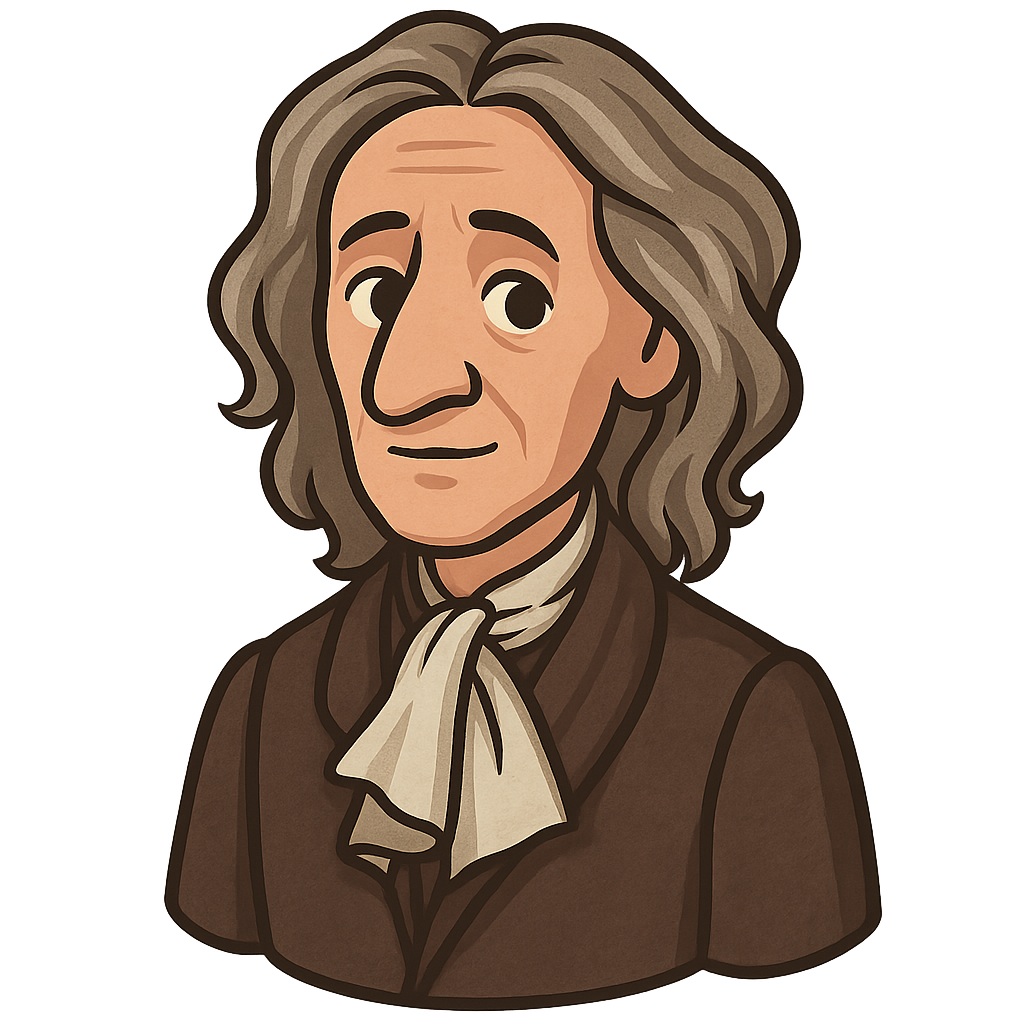
John Locke
Hello! My name is John Locke, and I want to tell you my story. I was born on August 29th, 1632, in a small village called Wrington in Somerset, England. My childhood was a time of great change and conflict in my country, as the English Civil War began when I was just ten years old. This meant that from a young age, I saw how much arguments over power and beliefs could affect everyone's lives. My father was a lawyer, and he believed deeply in fairness and duty. His beliefs shaped my own thinking a great deal. In 1647, I left home to attend a famous school in London called Westminster School, and then in 1652, I went to the University of Oxford. I was curious about everything, but I found that I was most interested in how we think, what we know, and how we should live together peacefully.
At Oxford, I didn't just study old books. I became fascinated by medicine and the new 'experimental philosophy'—what we call science today. I learned from brilliant minds like Robert Boyle, who taught me the importance of observation and evidence rather than just accepting old traditions. I became a physician, which taught me to look closely at the world and understand how things work, from the human body to the world around us. My life took an unexpected turn in 1666 when I met a powerful and influential politician named Lord Anthony Ashley Cooper. He was suffering from a serious illness, and I was able to help him. From that moment on, we became close friends, and in 1667, I became his personal doctor and advisor. This friendship opened up a new world for me, taking me from the quiet halls of the university to the busy center of English politics.
Working with Lord Ashley, who later became the Earl of Shaftesbury, I saw firsthand how governments worked—and how they sometimes failed their people. The times were turbulent, and my friend's political views, which favored Parliament over the absolute power of the king, put us both in danger. Because we believed the king was not respecting the rights of the people, we were seen as threats to the crown. In 1683, the political situation became so dangerous that I had to flee England and go into exile in the Netherlands to stay safe. It was a difficult time, but it also gave me the quiet I needed to organize all my thoughts. I spent my years there writing down my most important ideas about the human mind, freedom, and government. I believed that people weren't born good or bad, but that our minds were like a 'tabula rasa,' or a blank slate, and our experiences write on it what we learn and who we become.
I was finally able to return to England in 1689, after an event called the Glorious Revolution changed the country's leadership and made it safer for people with my beliefs. It was then that I published my most famous books, including 'An Essay Concerning Human Understanding' and 'Two Treatises of Government.' In these books, I shared my biggest ideas with the world. I argued that every single person is born with certain natural rights—the right to life, liberty, and property. I also wrote that a government's job is to protect these rights, and that it can only rule with the 'consent of the governed.' This means that people should have a say in their own government. If a government becomes a tyranny and takes away people's rights, then the people have the right to change it. These were powerful ideas that challenged the way people had thought about rulers and citizens for centuries.
I continued to write and serve in government for many years, always hoping my ideas would help build a more fair and reasonable world. I lived to be 72 years old, passing away on October 28th, 1704. Though my life ended, my ideas traveled far beyond England. They inspired thinkers and leaders across Europe and in the American colonies. A man named Thomas Jefferson read my words about natural rights and included them in the United States Declaration of Independence. Today, my belief that governments should serve the people and protect their freedoms is a cornerstone of modern democracy. I hope my story reminds you that asking big questions and thinking for yourself can truly change the world.
Wow facts
About
John Locke was an English philosopher and physician, widely regarded as one of the most influential of Enlightenment thinkers and commonly known as the 'Father of Liberalism.' His ideas about natural rights and government by consent heavily influenced modern democracy.
Take a Quiz
Question 1 of 5
What is the central idea John Locke promoted about the relationship between a government and its people?
Explore next



Want to do even more?
Go beyond exploring. Unlock tools that turn every story into real learning.

Storypie Plus for families
Full stories, quizzes, and printables. Nights and car rides, sorted.
- Unlimited audio stories
- Create Mode: your child stars in the story
- Offline downloads
- Printable worksheets & coloring pages

Why Storypie for Schools
Students engaged. Prep in seconds. Evenings back to you.
- Worksheets & Quizzes
- Classroom Management
- Formative Assessment
- Custom Curriculum & Lesson Plans
- 27 Languages

Why Storypie for Homeschool
Curriculum done. They'll ask for more. Hours back in your day.
- Worksheet Generator
- First-Person Audio Stories
- Built-in Comprehension Quizzes
- Custom Curriculum & Lesson Plans
- Print & Go Activities