English

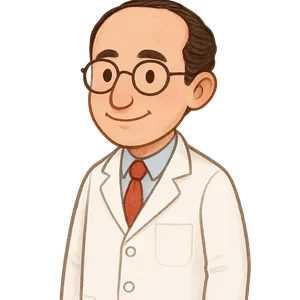
Jonas Salk
Jonas Salk was an American medical researcher and virologist…
Reads at Grades 6–8 Listens at Grades 4–8
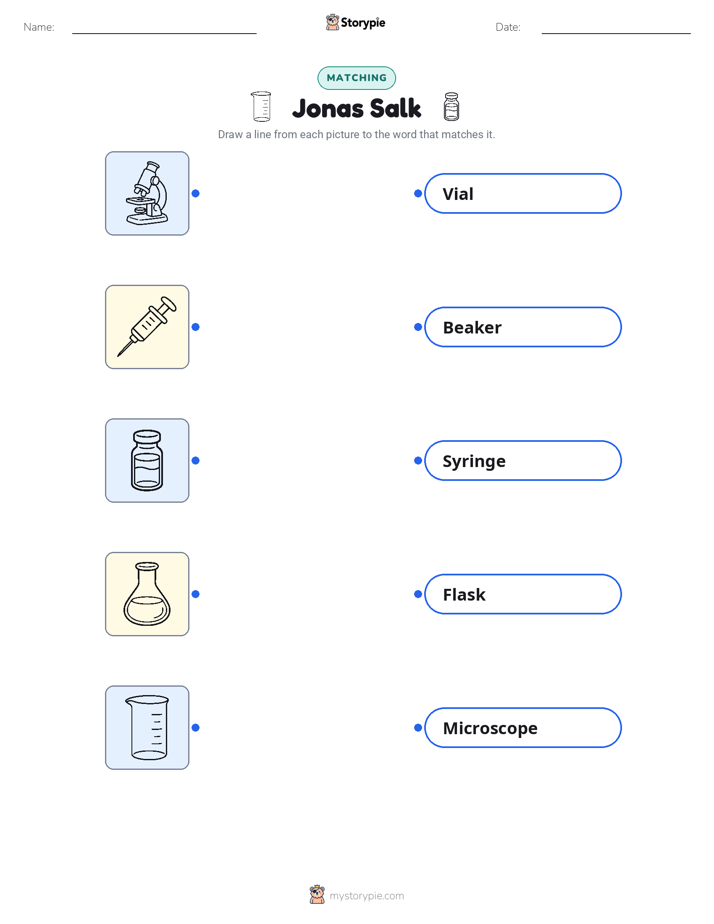
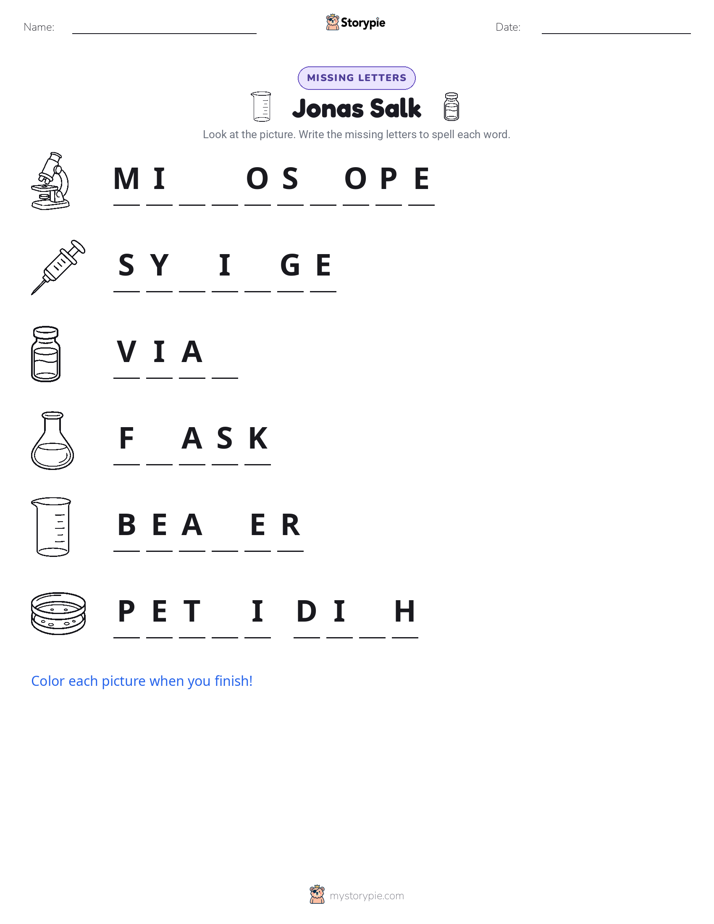
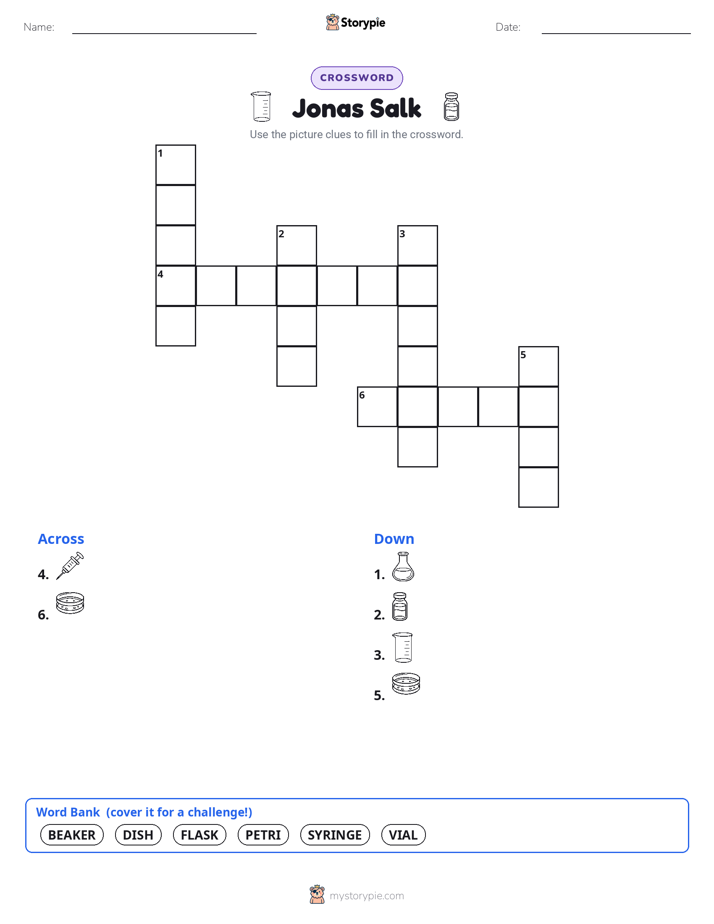
Print & create
Answer keys·No prep·Free with an account
28 worksheets · answer keys · full story · quiz · Ages 10-12 · CEFR B2
Plus adds 102,000+ more stories in 27 languages, audio for every one, and printables for all of them.
Just want Jonas Salk?
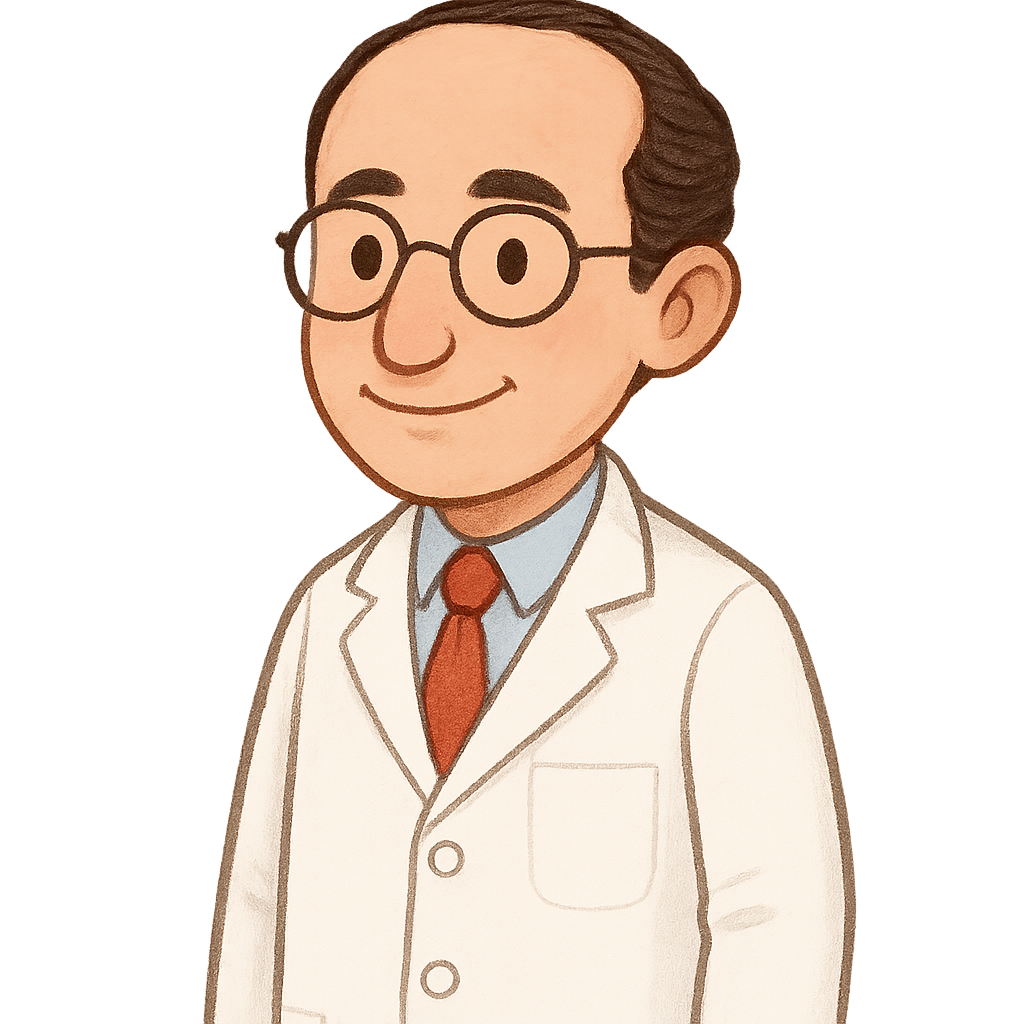
Hello, my name is Jonas Salk, and I am a scientist. My story begins in New York City, where I was born on October 28th, 1914. My parents always taught me that education was one of the most important things in life, and I took their words to heart. I developed a deep passion for science and medicine. When I was in medical school, around the year 1939, I realized something important about myself. While I wanted to help people who were sick, I didn't want to be a doctor who treated just one patient at a time. I dreamed bigger. I wanted to be a scientist in a laboratory, making discoveries that could help millions of people all at once. This decision set me on a path that would change not only my life but the lives of children all over the world.
During the first half of the 20th century, a terrible disease cast a shadow of fear across the globe. It was called poliomyelitis, or polio for short. This virus was a terrifying enemy, primarily affecting children. It could invade the nervous system, causing paralysis that made it difficult for children to walk, play, or even breathe. Every summer, parents were filled with dread, closing swimming pools and keeping their children home, hoping to protect them from this invisible threat. In 1947, I was given an opportunity to fight back. I moved to the University of Pittsburgh to lead my very own research laboratory. I had one clear and determined goal in mind: to develop a way to stop polio and end the fear it caused.
My team and I began our work immediately. At the time, many scientists were trying to create a vaccine using a weakened but still living poliovirus. I believed there was a safer way. My idea was to create what is known as a 'killed-virus' vaccine. This meant we would use a poliovirus that had been made inactive, so it could not cause the disease but could still teach the body's immune system how to fight it. For years, my team and I worked tirelessly in the lab. Our research was funded by an organization called the March of Dimes, which collected donations from ordinary people across the country. By 1953, I was so sure that our vaccine was safe that I took a momentous step. I tested it on the people I cared about most: myself, my wife, and our three sons. We all received the injection, and none of us got sick. This was the proof I needed to move forward.
Jonas Salk: A Gift to the World
Hello, my name is Jonas Salk, and I am a scientist. My story begins in New York City, where I was born on October 28th, 1914. My parents always taught me that education was one of the most important things in life, and I took their words to heart. I developed a deep passion for science and medicine. When I was in medical school, around the year 1939, I realized something important about myself. While I wanted to help people who were sick, I didn't want to be a doctor who treated just one patient at a time. I dreamed bigger. I wanted to be a scientist in a laboratory, making discoveries that could help millions of people all at once. This decision set me on a path that would change not only my life but the lives of children all over the world.
During the first half of the 20th century, a terrible disease cast a shadow of fear across the globe. It was called poliomyelitis, or polio for short. This virus was a terrifying enemy, primarily affecting children. It could invade the nervous system, causing paralysis that made it difficult for children to walk, play, or even breathe. Every summer, parents were filled with dread, closing swimming pools and keeping their children home, hoping to protect them from this invisible threat. In 1947, I was given an opportunity to fight back. I moved to the University of Pittsburgh to lead my very own research laboratory. I had one clear and determined goal in mind: to develop a way to stop polio and end the fear it caused.
My team and I began our work immediately. At the time, many scientists were trying to create a vaccine using a weakened but still living poliovirus. I believed there was a safer way. My idea was to create what is known as a 'killed-virus' vaccine. This meant we would use a poliovirus that had been made inactive, so it could not cause the disease but could still teach the body's immune system how to fight it. For years, my team and I worked tirelessly in the lab. Our research was funded by an organization called the March of Dimes, which collected donations from ordinary people across the country. By 1953, I was so sure that our vaccine was safe that I took a momentous step. I tested it on the people I cared about most: myself, my wife, and our three sons. We all received the injection, and none of us got sick. This was the proof I needed to move forward.
The next step was the largest public health experiment in American history. In 1954, a massive field trial was organized to test the vaccine on a large scale. Nearly two million children, who bravely volunteered with their parents' permission, became known as the 'Polio Pioneers.' They were the heroes of this story, helping us gather the data we needed. The world held its breath and waited for the results. Then, on April 12th, 1955, the announcement came. At a press conference, the scientist who led the study declared that the vaccine was 'safe, effective, and potent.' A wave of incredible relief and celebration swept across the country and the world. Bells rang, people cheered in the streets, and parents wept with joy. The terrifying enemy finally had a powerful foe.
After the announcement, I became famous almost overnight. I was seen as a hero, and many people wanted to know more about the vaccine. A journalist once asked me who owned the patent for it, a legal document that could have made me incredibly wealthy. I gave an answer that surprised many people. I said, 'Well, the people, I would say. There is no patent. Could you patent the sun?' I truly believed that a discovery this important for human health should not belong to one person or company; it belonged to everyone. My work didn't stop there. My next dream was to create a place where scientists could work together on humanity's biggest challenges. In 1963, I founded the Salk Institute for Biological Studies in California, a beautiful place designed to inspire collaboration and groundbreaking research.
I spent the rest of my life continuing my research and guiding the institute I had created. I lived to be 80 years old, passing away in 1995. My greatest happiness was never fame or fortune, but knowing that countless children could grow up running, playing, and living their lives free from the fear of polio. My work continues to this day through the dedicated scientists at the Salk Institute, who carry on the mission of making discoveries for the benefit of all humanity.
Wow facts
About
Jonas Salk was an American medical researcher and virologist, best known for developing one of the first successful polio vaccines.
Take a Quiz
Question 1 of 5
What action did Jonas Salk take in 1953 that showed he was confident and courageous about his vaccine?
Explore next



Want to do even more?
Go beyond exploring. Unlock tools that turn every story into real learning.

Storypie Plus for families
Full stories, quizzes, and printables. Nights and car rides, sorted.
- Unlimited audio stories
- Create Mode: your child stars in the story
- Offline downloads
- Printable worksheets & coloring pages

Why Storypie for Schools
Students engaged. Prep in seconds. Evenings back to you.
- Worksheets & Quizzes
- Classroom Management
- Formative Assessment
- Custom Curriculum & Lesson Plans
- 27 Languages

Why Storypie for Homeschool
Curriculum done. They'll ask for more. Hours back in your day.
- Worksheet Generator
- First-Person Audio Stories
- Built-in Comprehension Quizzes
- Custom Curriculum & Lesson Plans
- Print & Go Activities