English

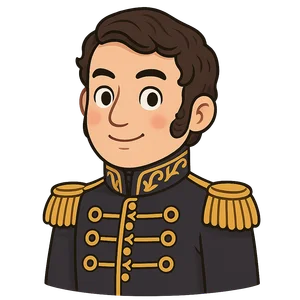
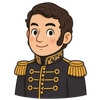
José de San Martín
A South American general and statesman who was a key leader in the successful struggle for independence from…
Reads at Grades 6–8 Listens at Grades 4–8
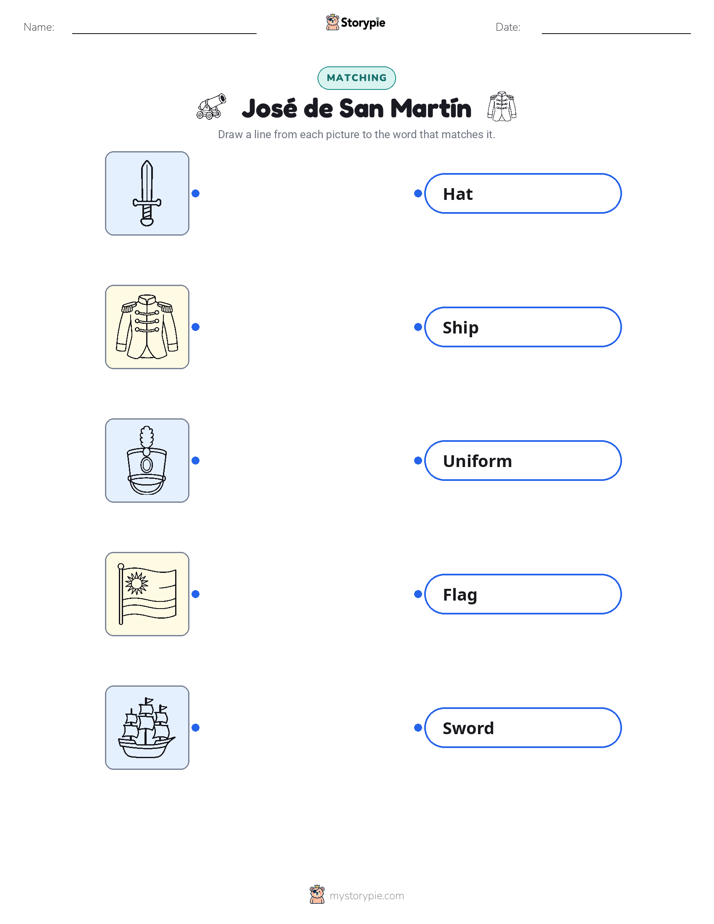
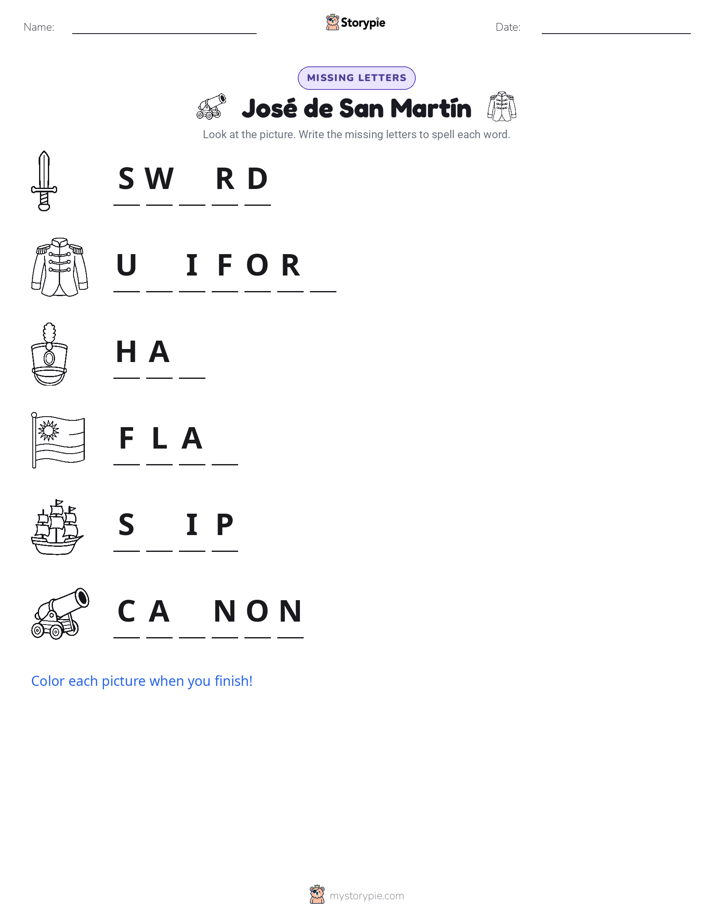
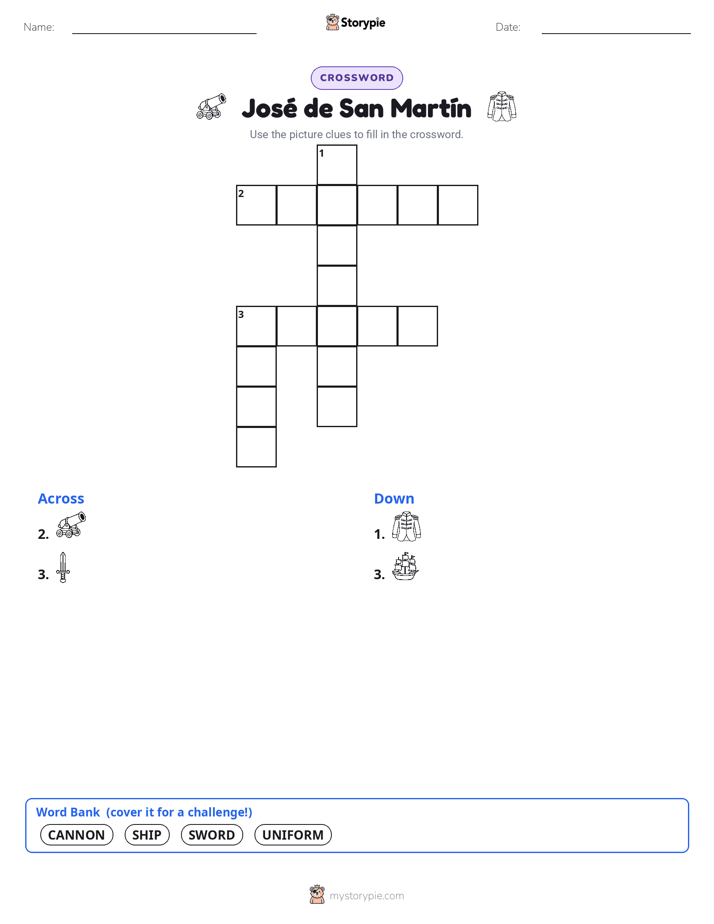
Print & create
Answer keys·No prep·Free with an account
28 worksheets · answer keys · full story · quiz · Ages 10-12 · CEFR B2
Plus adds 164,000+ more stories in 27 languages, audio for every one, and printables for all of them.
Just want José de San Martín?
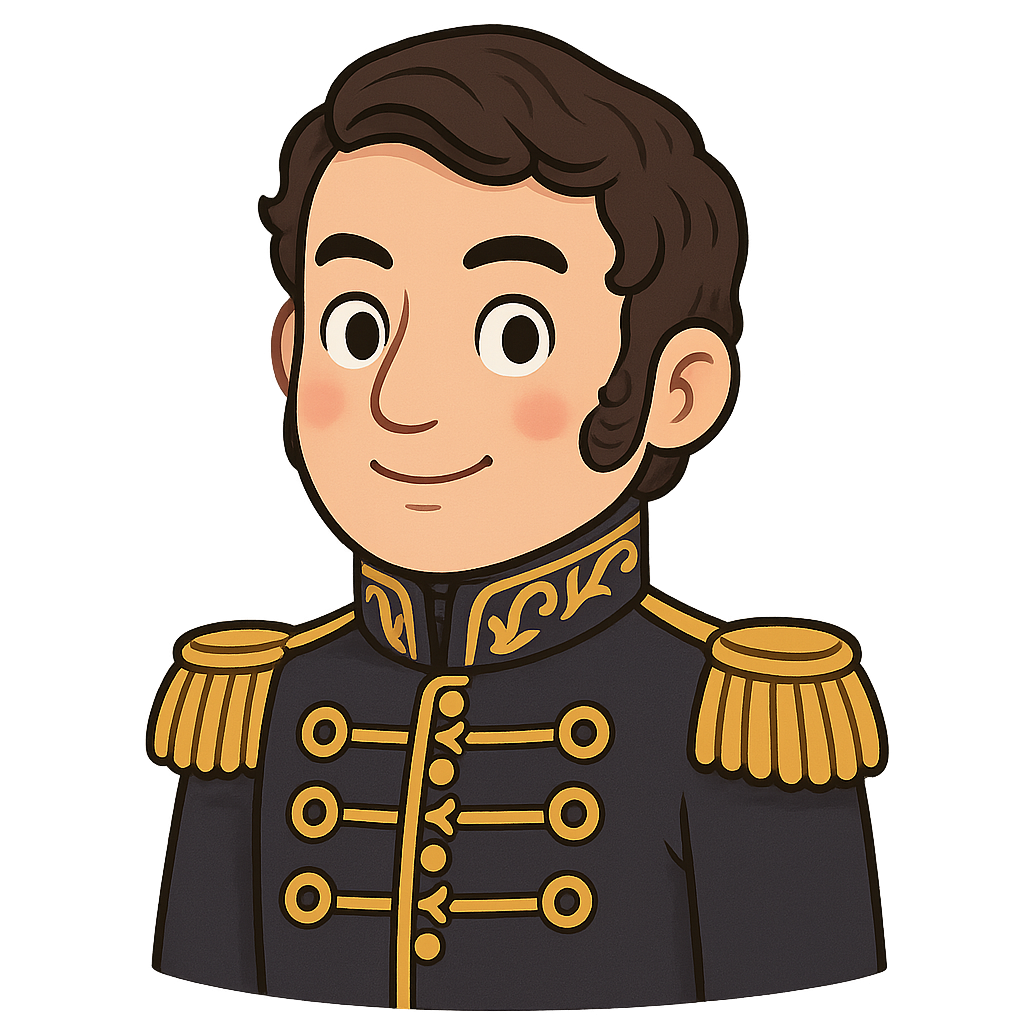
Hello, my name is José de San Martín, and I am known as one of the great liberators of South America. I was born on February 25th, 1778, in a small town called Yapeyú, which is now part of Argentina. The world was a very different place then, and when I was still a young boy, my family made the long journey across the Atlantic Ocean to live in Spain. It was a major change for me, but it set the course for my entire life. In 1789, at the young age of eleven, I began my military career by joining the Spanish army. For more than two decades, I served as a soldier for Spain. During this time, I fought in many difficult campaigns, including major battles against the famous French leader Napoleon Bonaparte and his powerful armies. Those years were my training ground, teaching me everything I needed to know about military strategy, the importance of discipline, and what it truly means to lead others in challenging times.
While I was serving in Europe, news traveled across the ocean that people in my homeland were beginning to fight for their independence from Spanish rule. A powerful feeling grew inside me—a sense that my true duty was to them. I knew I had to return and use my skills to help in their struggle for freedom. In 1812, I made the journey back and arrived in Buenos Aires. My first task was to create a professional and skilled military force. I established a special cavalry unit called the Regiment of Mounted Grenadiers. These soldiers were highly trained and disciplined, becoming a model for the new armies of independence. In 1813, we faced our first real test at the Battle of San Lorenzo. Though it was not a large battle, our victory was decisive and sent a powerful message. It proved that we could defeat the royalist forces and gave people a renewed sense of hope that we could truly win our freedom.
José de San Martín: Liberator of the Andes
Hello, my name is José de San Martín, and I am known as one of the great liberators of South America. I was born on February 25th, 1778, in a small town called Yapeyú, which is now part of Argentina. The world was a very different place then, and when I was still a young boy, my family made the long journey across the Atlantic Ocean to live in Spain. It was a major change for me, but it set the course for my entire life. In 1789, at the young age of eleven, I began my military career by joining the Spanish army. For more than two decades, I served as a soldier for Spain. During this time, I fought in many difficult campaigns, including major battles against the famous French leader Napoleon Bonaparte and his powerful armies. Those years were my training ground, teaching me everything I needed to know about military strategy, the importance of discipline, and what it truly means to lead others in challenging times.
While I was serving in Europe, news traveled across the ocean that people in my homeland were beginning to fight for their independence from Spanish rule. A powerful feeling grew inside me—a sense that my true duty was to them. I knew I had to return and use my skills to help in their struggle for freedom. In 1812, I made the journey back and arrived in Buenos Aires. My first task was to create a professional and skilled military force. I established a special cavalry unit called the Regiment of Mounted Grenadiers. These soldiers were highly trained and disciplined, becoming a model for the new armies of independence. In 1813, we faced our first real test at the Battle of San Lorenzo. Though it was not a large battle, our victory was decisive and sent a powerful message. It proved that we could defeat the royalist forces and gave people a renewed sense of hope that we could truly win our freedom.
After our initial successes, I began to see a much larger picture. To secure the independence of my own country, we needed to help our neighbors in Chile and Peru, where Spanish control remained very strong. The Spanish army in Chile was well-defended, and attacking them directly across the flatlands would have been costly and difficult. So, I developed a plan that many thought was impossible: we would march an entire army over the massive, snow-covered peaks of the Andes mountains to surprise them. No army had ever accomplished such a feat before. For years, I gathered and trained my soldiers in the province of Cuyo, preparing them for the extreme conditions. We called ourselves the 'Army of the Andes.' In January of 1817, we began our historic journey. The march was incredibly challenging, with freezing temperatures, thin air that made it hard to breathe, and narrow, treacherous passes. It was one of the most difficult undertakings of my life, but our shared goal of freedom fueled our determination and kept us moving forward.
My bold strategy paid off exactly as I had hoped. Our surprise crossing of the Andes caught the Spanish forces completely off guard. On February 12th, 1817, we met them at the Battle of Chacabuco and won a crucial victory. The fight for Chile was not over yet, but this was a major turning point. With the help of my dear friend and Chilean patriot, Bernardo O'Higgins, we continued the fight. The final, decisive victory came on April 5th, 1818, at the Battle of Maipú, which secured Chile’s independence for good. Our mission, however, was not complete. The heart of Spanish power in South America was in Peru. To get there, we organized a navy and sailed north. After a careful campaign, we entered the capital city, and on July 28th, 1821, I had the great honor of standing before the people in the city of Lima and officially declaring Peru's independence.
As I was liberating the southern part of the continent, another great leader was fighting for freedom in the north. His name was Simón Bolívar. It was clear that our two campaigns would eventually need to unite to drive the last of the Spanish forces from South America. In July of 1822, Bolívar and I met in the city of Guayaquil to discuss the future of the continent and how to complete the war for independence. We both shared the same ultimate dream of a free and united South America, but we had different ideas about how the new countries should be governed. I quickly realized that for the revolution to succeed, it needed a single, unified command. I made a difficult but necessary decision. The freedom of our people was far more important than any one person's title or glory. I chose to step aside, leaving Bolívar to lead the final phase of the liberation.
After the wars for independence were won, I left South America and moved to Europe to live a quiet life with my daughter. My fighting days were over, and my greatest wish was to see the new nations I helped create grow in peace and freedom. I lived to be 72 years old, and my life came to an end on August 17th, 1850. Today, I am remembered as a national hero in Argentina, Chile, and Peru. My name is honored alongside other great leaders as one of the 'Libertadores'—the Liberators—who dedicated their lives to bringing independence to our continent, and that is a legacy I am proud of.
Wow facts
About
A South American general and statesman who was a key leader in the successful struggle for independence from the Spanish Empire for Argentina, Chile, and Peru.
Take a Quiz
Question 1 of 5
In your own words, what was José de San Martín's main goal after he returned to South America in 1812?
Explore next

Want to do even more?
Go beyond exploring. Unlock tools that turn every story into real learning.

Storypie Plus for families
Full stories, quizzes, and printables. Nights and car rides, sorted.
- Unlimited audio stories
- Create Mode: your child stars in the story
- Offline downloads
- Printable worksheets & coloring pages

Why Storypie for Schools
Students engaged. Prep in seconds. Evenings back to you.
- Worksheets & Quizzes
- Classroom Management
- Formative Assessment
- Custom Curriculum & Lesson Plans
- 27 Languages

Why Storypie for Homeschool
Curriculum done. They'll ask for more. Hours back in your day.
- Worksheet Generator
- First-Person Audio Stories
- Built-in Comprehension Quizzes
- Custom Curriculum & Lesson Plans
- Print & Go Activities