English

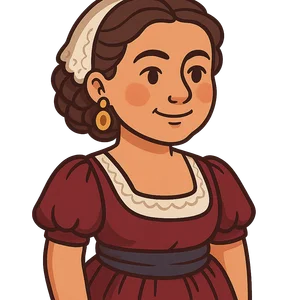
Josefa Ortiz de Domínguez
A key heroine of the Mexican War of Independence…
Reads at Grades 6–8 Listens at Grades 4–8
Print & create
Answer keys·No prep·Free with an account
28 worksheets · answer keys · full story · quiz · Ages 10-12 · CEFR B2
Plus adds 208,000+ more stories in 27 languages, audio for every one, and printables for all of them.
Just want Josefa Ortiz de Domínguez?
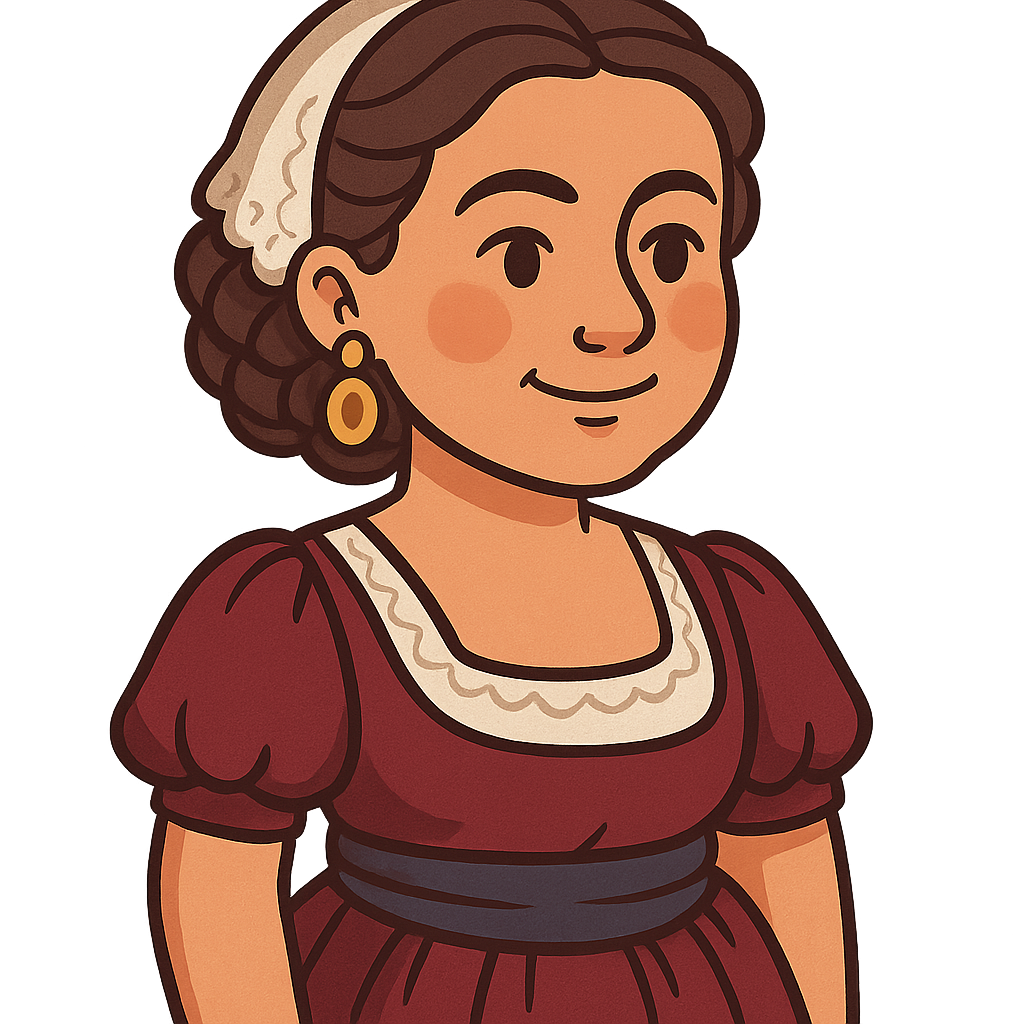
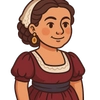
My full name is María Josefa Crescencia Ortiz Téllez-Girón, but you may know me as Josefa Ortiz de Domínguez. My story begins in Valladolid, New Spain, where I was born on September 8th, 1768. The world I grew up in was a colony ruled by the distant kingdom of Spain, a fact that would shape my entire life. My childhood was marked by sadness, as I lost both of my parents at a very young age. My older sister took care of me, and in 1789, she made a decision that changed everything. She sent me to the Colegio de las Vizcaínas in Mexico City. This was not an ordinary school; it was a special place for girls, and it was there that my mind was opened to powerful new ideas. I read books and listened to discussions about the Enlightenment, a movement that spoke of liberty, justice, and the rights of all people to govern themselves. These ideas took root in my heart and made me question the world around me. I began to dream of a future where the people of New Spain could decide their own destiny.
In 1791, my life took another important turn when I met and married a thoughtful man named Miguel Domínguez. Our partnership was one of shared values and a deep love for our homeland. A few years later, in 1802, our lives changed again when we moved to the city of Querétaro. Miguel was appointed to the important position of 'corregidor,' which was like being the city's magistrate or mayor. As his wife, I became known as 'La Corregidora.' In this role, I was not just a public figure but a witness to the daily life of the city. What I saw troubled me deeply. I watched as the indigenous people and those of mixed heritage, the mestizos, were treated unfairly by the Spanish-born ruling class. They were denied opportunities and respect. I saw the great wealth of our land being sent across the ocean to Spain, while many of our own people lived in poverty. These injustices fueled the beliefs that had started forming back in school. I became convinced that New Spain must break free from Spanish rule and become an independent nation, Mexico.
Josefa Ortiz de Domínguez: A Mother of Mexican Independence
My full name is María Josefa Crescencia Ortiz Téllez-Girón, but you may know me as Josefa Ortiz de Domínguez. My story begins in Valladolid, New Spain, where I was born on September 8th, 1768. The world I grew up in was a colony ruled by the distant kingdom of Spain, a fact that would shape my entire life. My childhood was marked by sadness, as I lost both of my parents at a very young age. My older sister took care of me, and in 1789, she made a decision that changed everything. She sent me to the Colegio de las Vizcaínas in Mexico City. This was not an ordinary school; it was a special place for girls, and it was there that my mind was opened to powerful new ideas. I read books and listened to discussions about the Enlightenment, a movement that spoke of liberty, justice, and the rights of all people to govern themselves. These ideas took root in my heart and made me question the world around me. I began to dream of a future where the people of New Spain could decide their own destiny.
In 1791, my life took another important turn when I met and married a thoughtful man named Miguel Domínguez. Our partnership was one of shared values and a deep love for our homeland. A few years later, in 1802, our lives changed again when we moved to the city of Querétaro. Miguel was appointed to the important position of 'corregidor,' which was like being the city's magistrate or mayor. As his wife, I became known as 'La Corregidora.' In this role, I was not just a public figure but a witness to the daily life of the city. What I saw troubled me deeply. I watched as the indigenous people and those of mixed heritage, the mestizos, were treated unfairly by the Spanish-born ruling class. They were denied opportunities and respect. I saw the great wealth of our land being sent across the ocean to Spain, while many of our own people lived in poverty. These injustices fueled the beliefs that had started forming back in school. I became convinced that New Spain must break free from Spanish rule and become an independent nation, Mexico.
My home in Querétaro soon became the secret heart of a growing movement for independence. Around the year 1810, my husband and I began hosting gatherings. To the outside world, we called them 'literary societies,' a clever disguise that made it seem as though we were simply a group of friends discussing poetry and books. But our true purpose was far more dangerous and important: we were planning a revolution. In our drawing room, surrounded by books, we laid the groundwork for a new nation. Among the key members of our secret group were brilliant and passionate men like Miguel Hidalgo y Costilla, a priest with a powerful voice, and Ignacio Allende, a captain in the army who had the skills to lead soldiers. Together, we planned to launch our fight for freedom. However, planning a revolution is a risky business, and spies were everywhere. In the early days of September 1810, a terrible message reached us: the Spanish authorities had discovered our conspiracy. Our carefully laid plans were about to unravel.
Everything came to a head on the night of September 15th, 1810. The authorities were closing in, and my husband, Miguel, became terrified for my safety. He knew my passionate involvement in the plot and, in a desperate attempt to protect me from arrest, he locked me inside my bedroom. He hoped that by keeping me isolated, he could claim I knew nothing of the plan. But I could not stand by and let our dream of a free Mexico be crushed. I knew I had to warn Father Hidalgo and Captain Allende before they were captured. Pacing my room, I realized the town warden, Ignacio Pérez, was in the office directly below. I began to stomp my feet on the wooden floor, making as much noise as I could to get his attention. When he came to investigate, I knelt down and whispered urgently through the keyhole of my locked door. I told him everything—that our plan was exposed and that he must ride as fast as he could to warn our friends. It was a single, desperate act, but the future of our nation depended on it.
My whispered warning through the keyhole set in motion a chain of events that would change history forever. The town warden rode through the night and delivered my message to the leaders of the conspiracy. Thanks to my warning, they were not captured. Instead, they decided to act immediately. On the morning of September 16th, 1810, Father Hidalgo stood before his church in the town of Dolores and rang the church bell. He delivered a powerful speech known as the 'Grito de Dolores,' or the Cry of Dolores, calling on the people to rise up against Spanish rule. That moment was the start of the Mexican War of Independence. My victory was short-lived, however. On that very same day, Spanish officials came to my home and arrested me for my role in the conspiracy. For years, I was held as a prisoner, moved between different convents. I was finally released in 1817, but during all those long years of imprisonment, I never once lost hope for the cause. I held onto the belief that one day, Mexico would be free.
I was filled with immense joy when I lived to see that dream become a reality. In 1821, after more than a decade of struggle, Mexico finally won its independence from Spain. In the early days of our new nation, some wanted to create a Mexican empire and offered me the title of a royal lady-in-waiting. I refused. I had not fought for a new monarchy but for a republic, a country where citizens were in charge. I lived to be 60 years old and passed away on March 2nd, 1829. Today, I am remembered not by my full name, but by my title: 'La Corregidora.' I am honored to be called one of the mothers of Mexican Independence, a woman whose belief in freedom and a single act of courage through a keyhole helped spark the birth of a new nation.
Wow facts
About
A key heroine of the Mexican War of Independence, known as 'La Corregidora.' She risked her life to warn insurgents that their plans had been discovered, which helped them get ready, but the start of the war is usually marked by Miguel Hidalgo's famous shout for freedom on September 16, 1810.
Take a Quiz
Question 1 of 5
In your own words, describe the events of September 15th and 16th, 1810, and explain Josefa's role in them.
Explore next


Want to do even more?
Go beyond exploring. Unlock tools that turn every story into real learning.

Storypie Plus for families
Full stories, quizzes, and printables. Nights and car rides, sorted.
- Unlimited audio stories
- Create Mode: your child stars in the story
- Offline downloads
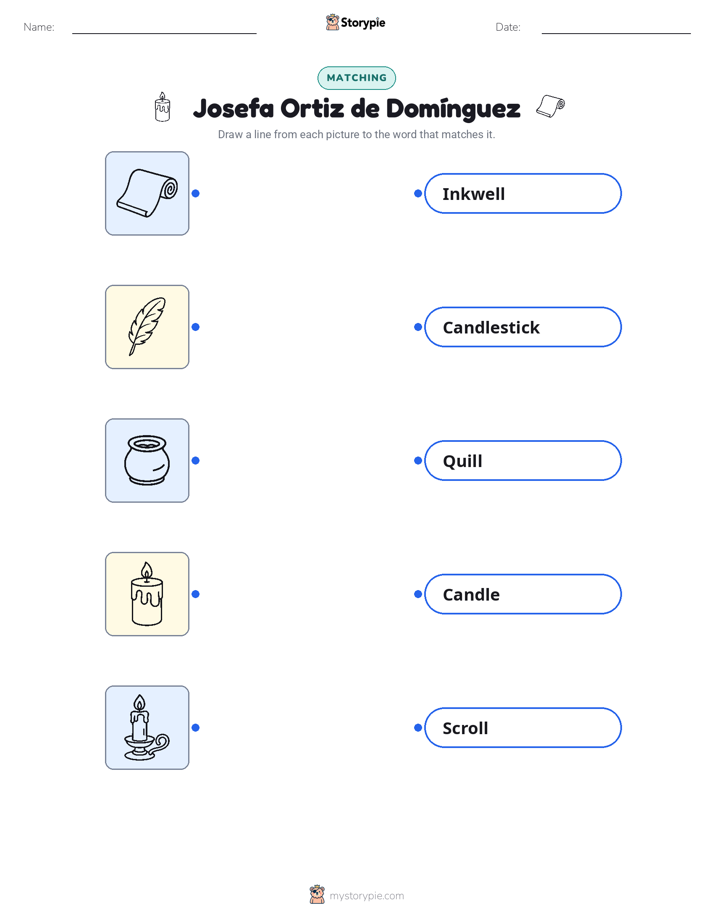
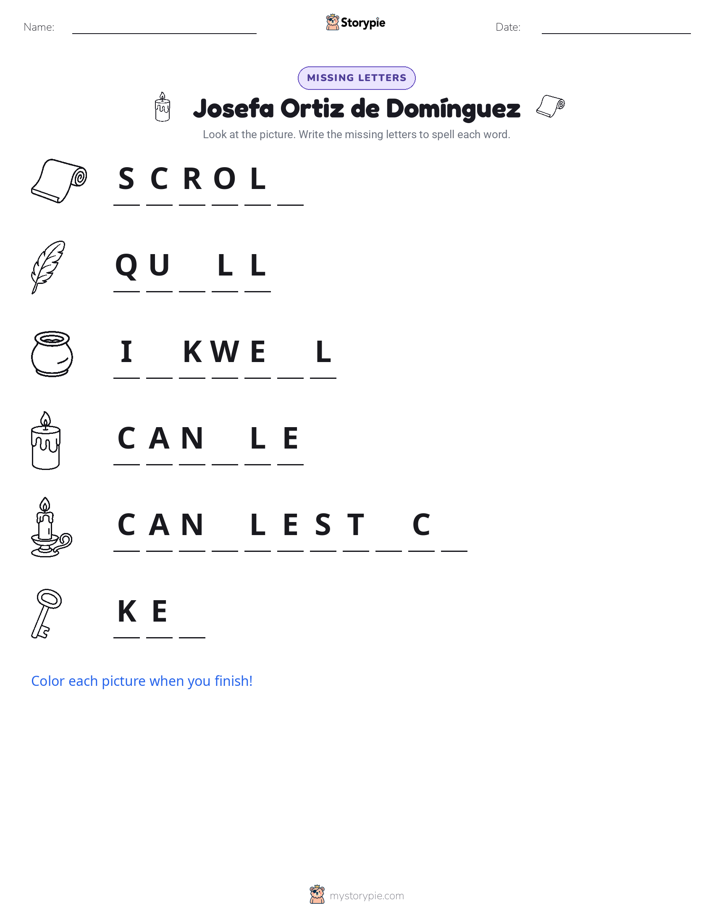
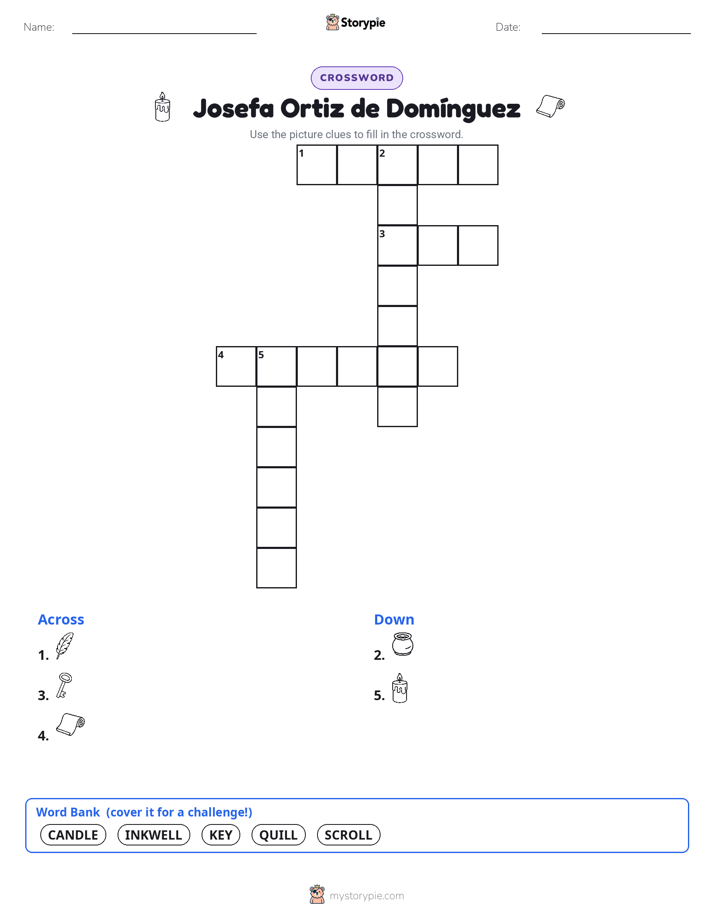
- Printable worksheets & coloring pages

Why Storypie for Schools
Students engaged. Prep in seconds. Evenings back to you.
- Worksheets & Quizzes
- Classroom Management
- Formative Assessment
- Custom Curriculum & Lesson Plans
- 27 Languages

Why Storypie for Homeschool
Curriculum done. They'll ask for more. Hours back in your day.
- Worksheet Generator
- First-Person Audio Stories
- Built-in Comprehension Quizzes
- Custom Curriculum & Lesson Plans
- Print & Go Activities