English

Leopold Mozart
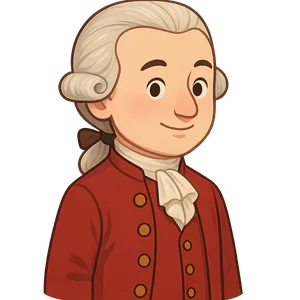
Johann Georg Leopold Mozart was an 18th-century German composer, conductor, music teacher, and violinist.
Reads at Grades 6–8 Listens at Grades 4–8
Print & create
Answer keys·No prep·Free with an account
28 worksheets · answer keys · full story · quiz · Ages 10-12 · CEFR B2
Plus adds 279,000+ more stories in 27 languages, audio for every one, and printables for all of them.
Just want Leopold Mozart?
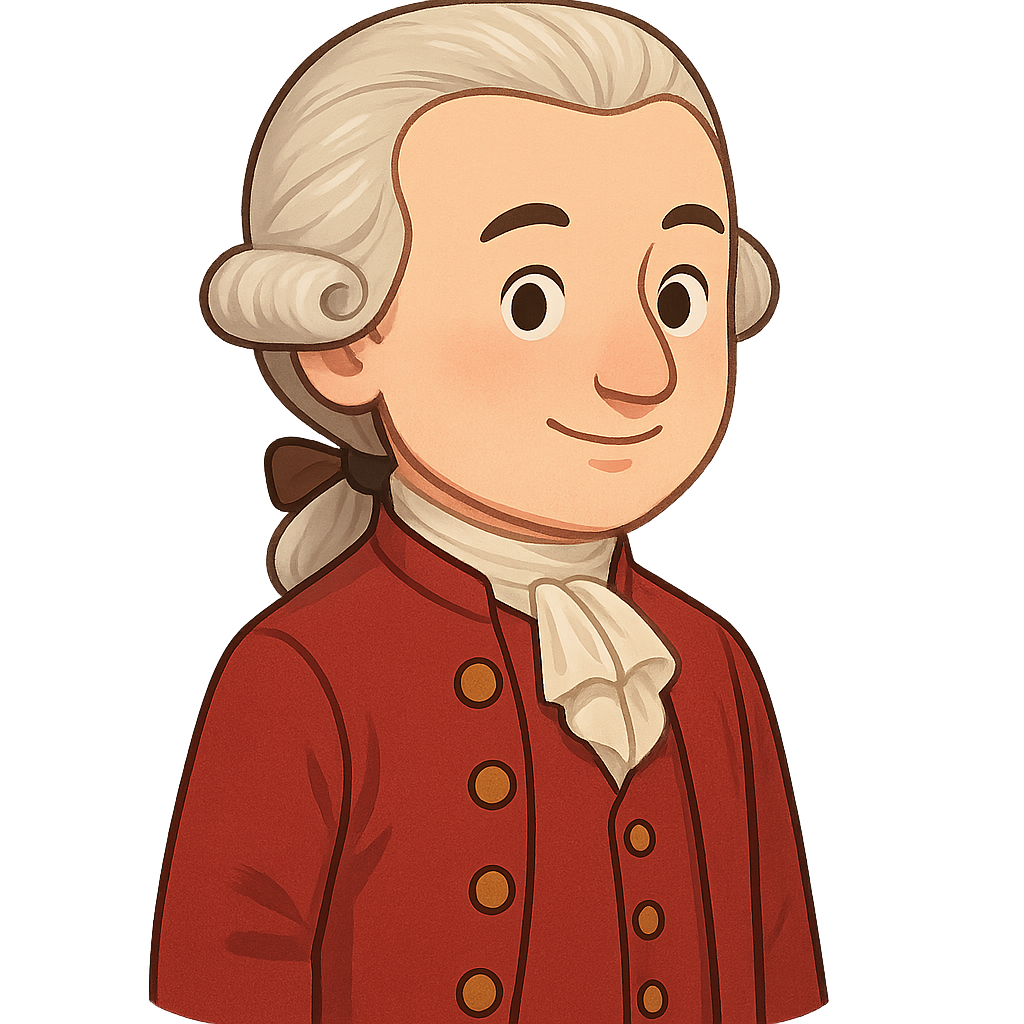
Hello, my name is Leopold Mozart, and my life was dedicated to the beautiful world of music. I was born on November 14th, 1719, in a German city called Augsburg. From a very young age, I was drawn to musical instruments, especially the violin and the organ. My parents had hoped I would study to become a priest, and for a time, I tried to follow that path. In 1737, I moved to the magnificent city of Salzburg to attend the university. However, my passion for music was far stronger than my interest in other studies. I soon left the university to dedicate my life to what I loved most. My hard work paid off, and in 1743, I earned my first significant position as a violinist in the court orchestra of the Prince-Archbishop of Salzburg, who was the ruler of our city.
Life in Salzburg was where I truly built my home and career. It was there that I met the wonderful Anna Maria Pertl, and we were married on November 21st, 1747. We were blessed with seven children, but it was a time of great sadness and hardship, and only two of our children survived into childhood. They were my talented daughter, Maria Anna, who we lovingly called Nannerl, and my brilliant son, Wolfgang Amadeus. During these years, I also focused on my own musical work. In 1756, I published a book that would become quite important across Europe, titled 'A Treatise on the Fundamental Principles of Violin Playing.' It was a guide for musicians on the proper techniques for playing the violin. The very next year, in 1757, I was honored with a promotion to the position of court composer, which was a great achievement.
Leopold Mozart: A Father's Musical Legacy
Hello, my name is Leopold Mozart, and my life was dedicated to the beautiful world of music. I was born on November 14th, 1719, in a German city called Augsburg. From a very young age, I was drawn to musical instruments, especially the violin and the organ. My parents had hoped I would study to become a priest, and for a time, I tried to follow that path. In 1737, I moved to the magnificent city of Salzburg to attend the university. However, my passion for music was far stronger than my interest in other studies. I soon left the university to dedicate my life to what I loved most. My hard work paid off, and in 1743, I earned my first significant position as a violinist in the court orchestra of the Prince-Archbishop of Salzburg, who was the ruler of our city.
Life in Salzburg was where I truly built my home and career. It was there that I met the wonderful Anna Maria Pertl, and we were married on November 21st, 1747. We were blessed with seven children, but it was a time of great sadness and hardship, and only two of our children survived into childhood. They were my talented daughter, Maria Anna, who we lovingly called Nannerl, and my brilliant son, Wolfgang Amadeus. During these years, I also focused on my own musical work. In 1756, I published a book that would become quite important across Europe, titled 'A Treatise on the Fundamental Principles of Violin Playing.' It was a guide for musicians on the proper techniques for playing the violin. The very next year, in 1757, I was honored with a promotion to the position of court composer, which was a great achievement.
As my children grew, I began to realize that something truly remarkable was happening in our home. I discovered that both Nannerl and Wolfgang were musical prodigies, meaning they had extraordinary musical talent from a very early age. Nannerl was a gifted harpsichord player, mastering the instrument with incredible skill. Young Wolfgang was simply astonishing. Before he was even old enough to attend school, he could not only play music perfectly after hearing it just once but also began to compose his own original melodies. I knew then that it was my most important duty as their father to be their teacher. I decided to put aside much of my own composing work to focus entirely on their musical education, ensuring their incredible gifts would be nurtured and developed to their fullest potential.
Believing the world needed to hear the astonishing talents of my children, I made the decision to take our family on long journeys across Europe. Starting around 1762, we embarked on what was known as a 'Grand Tour.' We traveled for months, and sometimes years, at a time, visiting some of the continent's most magnificent cities, including Munich, Vienna, Paris, and London. In these grand capitals, Nannerl and Wolfgang performed for the highest levels of society—for kings, queens, and emperors. It was a thrill to see them celebrated by royalty. The travel itself was not easy. The roads were rough, and the coach rides were long and bumpy. Being away from our home in Salzburg for such extended periods was a great sacrifice, but my heart swelled with pride every time I watched my children captivate an audience with their music.
As children do, mine eventually grew into adults with their own ideas and ambitions. When Wolfgang became a young man, he grew restless in Salzburg and wanted to find his own path in the world. In 1781, he made the momentous decision to leave the security of our city and move to Vienna, the musical capital of Europe, to work as an independent composer and musician. As a father, I was worried for him. I knew firsthand how difficult and uncertain the life of a musician could be without the steady employment and protection of a royal court. We did not always agree on the choices he made during this time, but I want to make it clear that I always wanted what was best for him. I was, and always remained, immensely proud of his unparalleled musical genius.
I spent my later years back in Salzburg, continuing my work as a composer and leading the court orchestra. I lived to be 67 years old and passed away in my home on May 28th, 1787. Today, most people remember me as the father of the famous Wolfgang Amadeus Mozart, and that is a title I wear with the greatest pride. I hope that people also remember my own contributions to music—my symphonies and concertos, and especially my violin textbook which guided so many musicians. Ultimately, my greatest joy and most important work was nurturing the precious gift of music within my family and helping to share it with the entire world.
Wow facts
About
Johann Georg Leopold Mozart was an 18th-century German composer, conductor, music teacher, and violinist. He is best known today as the father and teacher of Wolfgang Amadeus Mozart, but he was also a composer and author of a violin textbook, although his music is not as well-known today.
Take a Quiz
Question 1 of 5
What was the main purpose of the Mozart family's 'Grand Tour' of Europe?
Explore next




Want to do even more?
Go beyond exploring. Unlock tools that turn every story into real learning.

Storypie Plus for families
Full stories, quizzes, and printables. Nights and car rides, sorted.
- Unlimited audio stories
- Create Mode: your child stars in the story
- Offline downloads
- Printable worksheets & coloring pages

Why Storypie for Schools
Students engaged. Prep in seconds. Evenings back to you.
- Worksheets & Quizzes
- Classroom Management
- Formative Assessment
- Custom Curriculum & Lesson Plans
- 27 Languages

Why Storypie for Homeschool
Curriculum done. They'll ask for more. Hours back in your day.
- Worksheet Generator
- First-Person Audio Stories
- Built-in Comprehension Quizzes
- Custom Curriculum & Lesson Plans
- Print & Go Activities