English

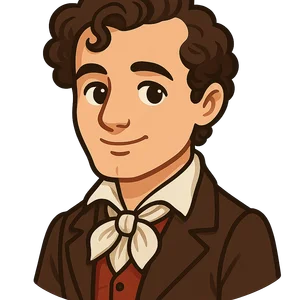
Lord Byron
George Gordon Byron, known as Lord Byron, was a leading English poet of the Romantic movement…
Reads at Grades 6–8 Listens at Grades 4–8
Print & create
Answer keys·No prep·Free with an account
28 worksheets · answer keys · full story · quiz · Ages 10-12 · CEFR B2
Plus adds 244,000+ more stories in 27 languages, audio for every one, and printables for all of them.
Just want Lord Byron?
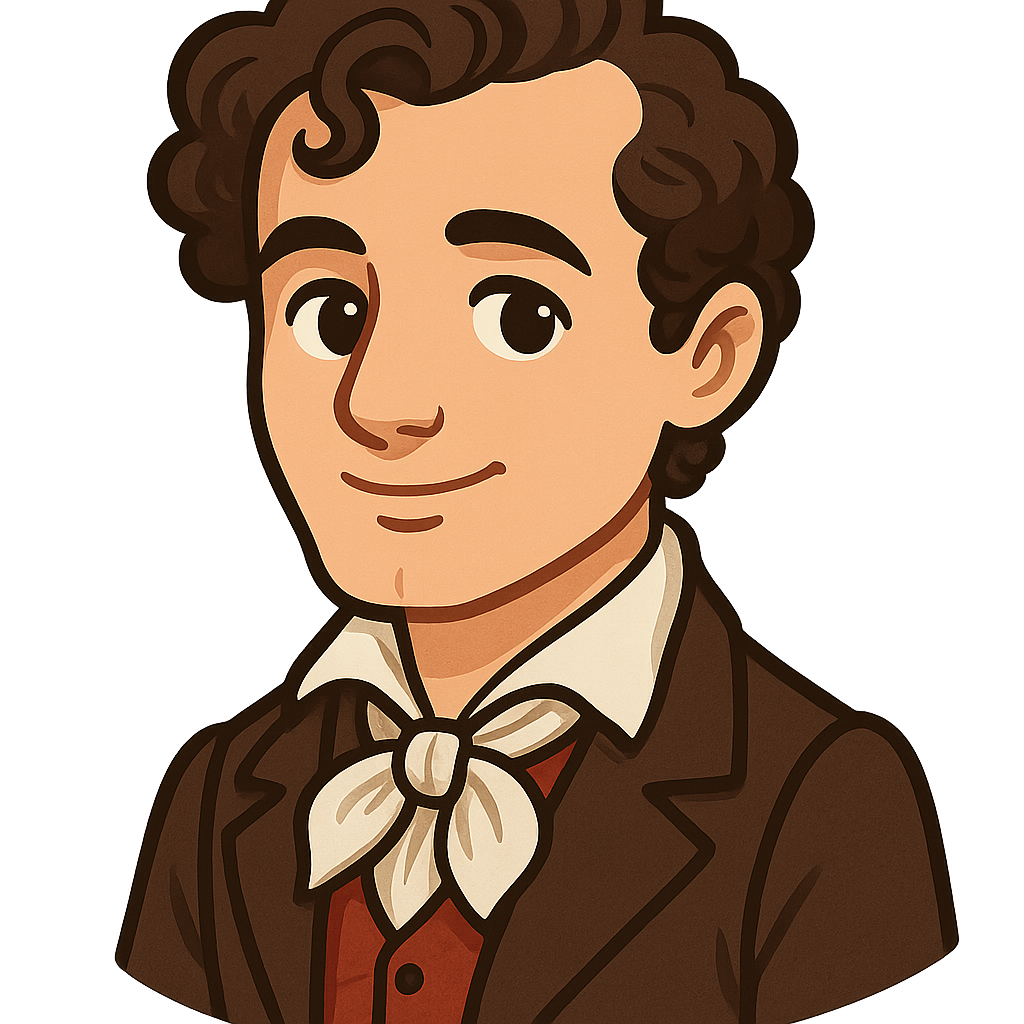
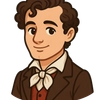
Hello! My name is George Gordon Byron, but the world would come to know me as Lord Byron. I was born in London, England, on January 22nd, 1788, into a world on the cusp of great change. My early life was marked by challenges that shaped who I would become. I was born with a clubfoot, which meant one of my feet was twisted out of shape. This made walking difficult and often made me the subject of curiosity, setting me apart from other boys my age. A significant turn in my life came in 1798 when I was just ten years old. My great uncle passed away, and through a line of inheritance, I became the 6th Baron Byron. This new title meant I was a member of the British aristocracy, with responsibilities and a future seat in the House of Lords. My family and I moved to his estate, Newstead Abbey, a grand but decaying old home whose ancient halls and mysterious atmosphere sparked my imagination and gave me a deep love for history and romance.
My formal education took place at Harrow School and later Trinity College at Cambridge University, but I confess my true learning happened outside the classroom. I was a voracious reader and began writing poetry at a young age, finding more excitement in literature than in my required studies. Between 1809 and 1811, I embarked on what was known as a 'Grand Tour' of Europe, a traditional trip for young noblemen to complete their education. My journey took me far from England, through Portugal, Spain, Malta, Albania, Greece, and Turkey. This was not a simple vacation; it was a life-altering experience. I explored ancient ruins that whispered stories of fallen empires, witnessed vibrant cultures, and developed a profound love for the Mediterranean, especially Greece. The sights, sounds, and histories I encountered during these years filled my notebooks and my mind, providing the raw material for the poetry that would define my life.
Lord Byron: A Poet's Passion
Hello! My name is George Gordon Byron, but the world would come to know me as Lord Byron. I was born in London, England, on January 22nd, 1788, into a world on the cusp of great change. My early life was marked by challenges that shaped who I would become. I was born with a clubfoot, which meant one of my feet was twisted out of shape. This made walking difficult and often made me the subject of curiosity, setting me apart from other boys my age. A significant turn in my life came in 1798 when I was just ten years old. My great uncle passed away, and through a line of inheritance, I became the 6th Baron Byron. This new title meant I was a member of the British aristocracy, with responsibilities and a future seat in the House of Lords. My family and I moved to his estate, Newstead Abbey, a grand but decaying old home whose ancient halls and mysterious atmosphere sparked my imagination and gave me a deep love for history and romance.
My formal education took place at Harrow School and later Trinity College at Cambridge University, but I confess my true learning happened outside the classroom. I was a voracious reader and began writing poetry at a young age, finding more excitement in literature than in my required studies. Between 1809 and 1811, I embarked on what was known as a 'Grand Tour' of Europe, a traditional trip for young noblemen to complete their education. My journey took me far from England, through Portugal, Spain, Malta, Albania, Greece, and Turkey. This was not a simple vacation; it was a life-altering experience. I explored ancient ruins that whispered stories of fallen empires, witnessed vibrant cultures, and developed a profound love for the Mediterranean, especially Greece. The sights, sounds, and histories I encountered during these years filled my notebooks and my mind, providing the raw material for the poetry that would define my life.
Upon my return to England, I gathered my journals and experiences from my travels and wove them into a long, narrative poem titled Childe Harold's Pilgrimage. When the first two sections were published in 1812, the result was astonishing and immediate. As I later wrote, 'I awoke one morning and found myself famous.' The book was an enormous success, and I became the most celebrated literary figure in London seemingly overnight. Society was captivated not only by my verses but also by my persona. I was seen as someone new and exciting: intense, moody, passionate, and openly rebellious against societal norms. This image gave birth to a new kind of literary figure—the 'Byronic hero.' This character, often a handsome and brilliant but deeply flawed outcast, appeared again and again in my later works, such as the poems The Corsair and Manfred.
My personal life in London was as dramatic and turbulent as any of my poems. In 1815, I married Annabella Milbanke, a highly intelligent and thoughtful woman. On December 10th of that same year, our daughter, Augusta Ada, was born. Despite the joy of her birth, my marriage was unhappy and short-lived. Annabella and I separated soon after, and I found myself at the center of a public scandal. Feeling that English society had turned its back on me, I made the momentous decision to leave my home country in 1816. I would never return. My exile led me to Switzerland, where I spent a famous summer with my friends, the poet Percy Bysshe Shelley and his future wife, Mary. We spent our evenings reading stories, and one night, we challenged one another to write a ghost story. It was this very challenge that inspired Mary Shelley to begin writing her legendary novel, Frankenstein. Though I never saw my daughter Ada again, she was always in my thoughts, and I wrote of her in my poetry, hoping she would know of my love.
From Switzerland, I moved to Italy, where I lived for several years and continued to write. It was during this period that I composed what many critics consider my masterpiece, the epic and satirical poem Don Juan. But my spirit was restless, and I felt a growing desire to do more than just write about heroes and great deeds. In the early 1820s, the people of Greece, a country I had adored since my Grand Tour, began a fierce war for independence from the Ottoman Empire. Their struggle for freedom called to me. In 1823, I decided that I could no longer be a mere observer. I sold my estate back in England, used my own fortune to purchase a ship and gather supplies, and sailed to Greece to join their cause. I was determined to be a man of action, not just words, and I dedicated myself to helping train the soldiers and funding their fight for liberty.
My time in Greece was filled with hardship and purpose. While organizing and preparing for a crucial battle in the damp, swampy town of Missolonghi, I fell ill with a severe fever. My life came to an end there in Greece on April 19th, 1824. I lived to be 36 years old. Although I did not live to see Greece win its independence, my sacrifice was not forgotten. I was declared a national hero in Greece, a country that still honors my name today. My legacy continued in the world of literature, where the 'Byronic hero' I created went on to influence countless writers, artists, and thinkers for generations. Perhaps my greatest legacy, however, was my daughter, Ada Lovelace. She grew into a brilliant mathematician whose visionary work on early computers has led her to be celebrated as the world's first computer programmer. I like to think my passion for breaking rules and seeing the world differently lived on through her amazing work.
Wow facts
About
George Gordon Byron, known as Lord Byron, was a leading English poet of the Romantic movement, famous for his epic poems, adventurous life, and for making the idea of the "Byronic hero" popular. This type of hero is known for being rebellious, sad, and having hidden feelings of guilt.
Take a Quiz
Question 1 of 5
What event in 1812 caused Lord Byron to say, 'I awoke one morning and found myself famous'?
Explore next

Want to do even more?
Go beyond exploring. Unlock tools that turn every story into real learning.

Storypie Plus for families
Full stories, quizzes, and printables. Nights and car rides, sorted.
- Unlimited audio stories
- Create Mode: your child stars in the story
- Offline downloads
- Printable worksheets & coloring pages

Why Storypie for Schools
Students engaged. Prep in seconds. Evenings back to you.
- Worksheets & Quizzes
- Classroom Management
- Formative Assessment
- Custom Curriculum & Lesson Plans
- 27 Languages

Why Storypie for Homeschool
Curriculum done. They'll ask for more. Hours back in your day.
- Worksheet Generator
- First-Person Audio Stories
- Built-in Comprehension Quizzes
- Custom Curriculum & Lesson Plans
- Print & Go Activities