English

Louis Daguerre
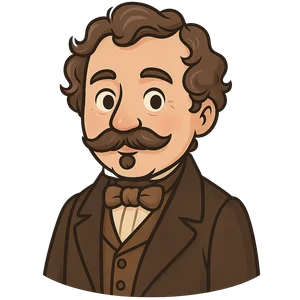
Louis Daguerre was a French artist known for his work in scene painting and the development of the…
Reads at Grades 6–8 Listens at Grades 4–8
Print & create
Answer keys·No prep·Free with an account
28 worksheets · answer keys · full story · quiz · Ages 10-12 · CEFR B2
Plus adds 244,000+ more stories in 27 languages, audio for every one, and printables for all of them.
Just want Louis Daguerre?
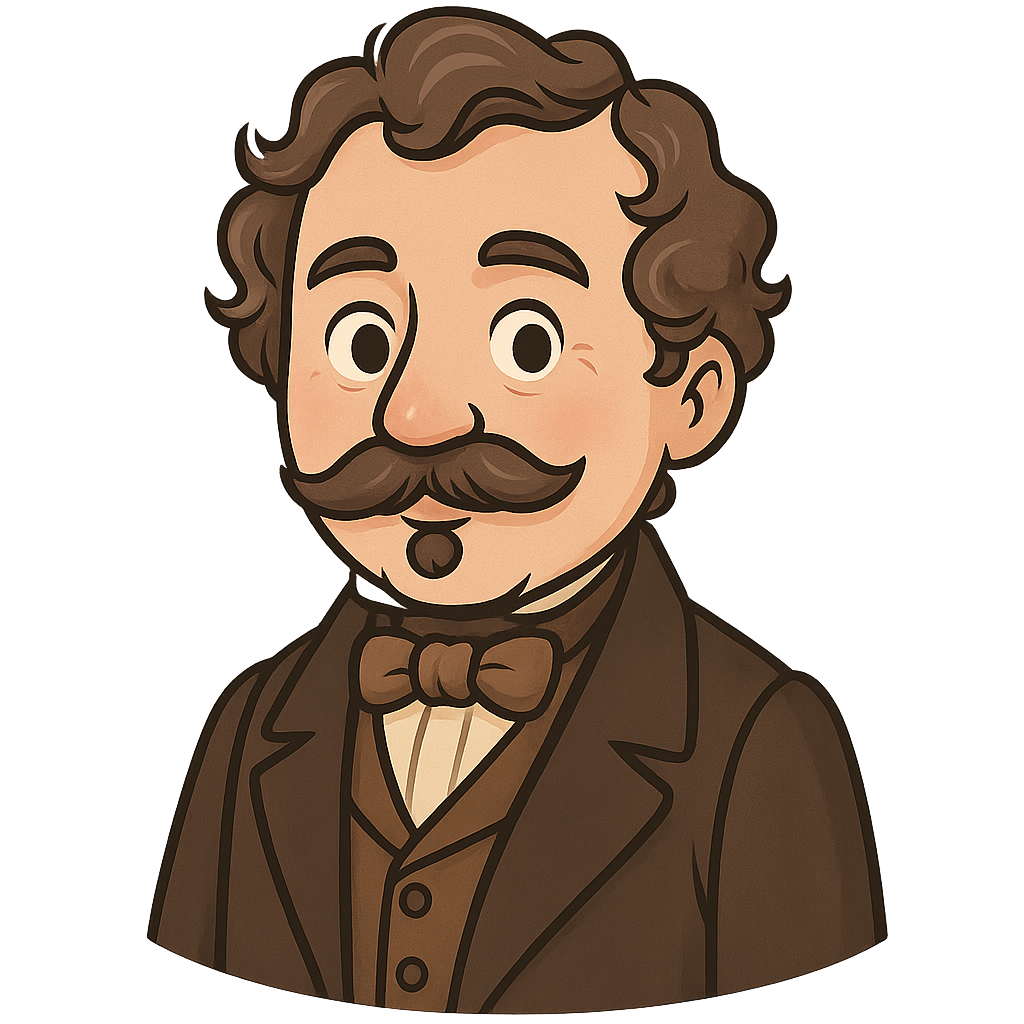
Hello! My name is Louis-Jacques-Mandé Daguerre, but you can call me Louis. My story begins on November 18th, 1787, in a small town near Paris, France. From a young age, I was completely fascinated by art and the way light could change what we see. I spent countless hours drawing and painting, trying my best to capture the world around me on paper. As I grew older, my passion led me to a career as a painter for the theater. I created enormous, highly realistic scenes that were designed to make audiences feel like they were in another place entirely. This work with grand illusions inspired me to create something new in 1822, which I called the Diorama. It was a unique kind of theater that used massive paintings and clever lighting tricks to make scenes look so real that you felt you could step right into them. Even with this success, I held onto a bigger dream: I wanted to find a way to capture a real scene perfectly and permanently, without ever touching a paintbrush.
I soon learned that I was not the only person with this ambitious dream. A man named Joseph Nicéphore Niépce was also conducting experiments to capture images using light. He had already succeeded in creating what we now consider the very first photograph. However, his method was slow, requiring an exposure time of many hours, sometimes even days, to produce a single image. I believed that by working together, we could achieve our shared goal much faster. In 1829, we officially became partners. We communicated through letters, sharing our ideas and the secrets we uncovered in our experiments. We both worked tirelessly to find a quicker, more effective way to fix an image projected from a camera obscura—a device known as a 'dark room' that could project an image onto a surface. Tragically, my friend and partner Niépce passed away in 1833. I was deeply saddened by the loss, but I made a promise to myself to continue the important work we had started together.
Louis Daguerre
Hello! My name is Louis-Jacques-Mandé Daguerre, but you can call me Louis. My story begins on November 18th, 1787, in a small town near Paris, France. From a young age, I was completely fascinated by art and the way light could change what we see. I spent countless hours drawing and painting, trying my best to capture the world around me on paper. As I grew older, my passion led me to a career as a painter for the theater. I created enormous, highly realistic scenes that were designed to make audiences feel like they were in another place entirely. This work with grand illusions inspired me to create something new in 1822, which I called the Diorama. It was a unique kind of theater that used massive paintings and clever lighting tricks to make scenes look so real that you felt you could step right into them. Even with this success, I held onto a bigger dream: I wanted to find a way to capture a real scene perfectly and permanently, without ever touching a paintbrush.
I soon learned that I was not the only person with this ambitious dream. A man named Joseph Nicéphore Niépce was also conducting experiments to capture images using light. He had already succeeded in creating what we now consider the very first photograph. However, his method was slow, requiring an exposure time of many hours, sometimes even days, to produce a single image. I believed that by working together, we could achieve our shared goal much faster. In 1829, we officially became partners. We communicated through letters, sharing our ideas and the secrets we uncovered in our experiments. We both worked tirelessly to find a quicker, more effective way to fix an image projected from a camera obscura—a device known as a 'dark room' that could project an image onto a surface. Tragically, my friend and partner Niépce passed away in 1833. I was deeply saddened by the loss, but I made a promise to myself to continue the important work we had started together.
For several years after Niépce's death, I continued experimenting in my laboratory, which was often filled with the peculiar smells of the various chemicals I used. Then, one day around 1835, a remarkable discovery happened purely by accident. I had placed an exposed photographic plate inside a cabinet where I stored chemicals, not thinking much of it. When I opened the cabinet later, I was stunned to see that a perfect, clear image had appeared on the plate. I investigated and realized that fumes from a broken thermometer inside the cabinet—mercury vapor—had developed the image. This was the breakthrough I had been searching for. I spent the next few years perfecting the method. The process began by polishing a sheet of copper plated with silver until it shone like a mirror. Next, I would make the plate sensitive to light by exposing it to iodine vapor. After placing it in a camera for an exposure of several minutes, not hours, I developed the latent image with hot mercury vapor. To make the image permanent, I fixed it with a salt solution so it would not fade away. In 1838, I used this method to take a picture of a busy street in Paris, the Boulevard du Temple. Because the exposure took several minutes, the moving carriages and pedestrians vanished from the final image. However, one man who stood still to have his boots shined remained, becoming the very first person to be captured in a photograph.
I knew that my invention, which I decided to call the 'daguerreotype,' was something extraordinary. I showed my creation to my friend François Arago, who was a famous scientist and an influential politician. He was so impressed that on January 7th, 1839, he announced my discovery to the prestigious French Academy of Sciences. The news caused a worldwide sensation. The French government recognized the immense importance of my invention and decided to grant me and Niépce's son a pension to support us for the rest of our lives. In a historic act of generosity, the government announced the complete instructions for my process on August 19th, 1839, giving it as a gift, free to the entire world. Almost overnight, everyone wanted a daguerreotype. Artists, scientists, and the public across the globe began using my method to capture portraits, landscapes, and historic events with a level of detail that had never been seen before.
I lived to be 63 years old, passing away in 1851, and I was fortunate to see my invention spread across the planet, changing the way people saw the world. Although photography has evolved tremendously since my time, the daguerreotype was the first practical and popular method for capturing a moment in time forever. Every time you snap a photo with a camera or a phone, you are continuing the dream that my partner, Nicéphore Niépce, and I worked so hard to achieve. It is the simple but profound dream of being able to hold a memory in your hand.
Wow facts
About
Louis Daguerre was a French artist known for his work in scene painting and the development of the daguerreotype process of photography, one of the first commercially successful photographic methods.
Take a Quiz
Question 1 of 5
In your own words, describe the key steps Louis Daguerre used to create a daguerreotype.
Explore next





Want to do even more?
Go beyond exploring. Unlock tools that turn every story into real learning.

Storypie Plus for families
Full stories, quizzes, and printables. Nights and car rides, sorted.
- Unlimited audio stories
- Create Mode: your child stars in the story
- Offline downloads
- Printable worksheets & coloring pages

Why Storypie for Schools
Students engaged. Prep in seconds. Evenings back to you.
- Worksheets & Quizzes
- Classroom Management
- Formative Assessment
- Custom Curriculum & Lesson Plans
- 27 Languages

Why Storypie for Homeschool
Curriculum done. They'll ask for more. Hours back in your day.
- Worksheet Generator
- First-Person Audio Stories
- Built-in Comprehension Quizzes
- Custom Curriculum & Lesson Plans
- Print & Go Activities