English

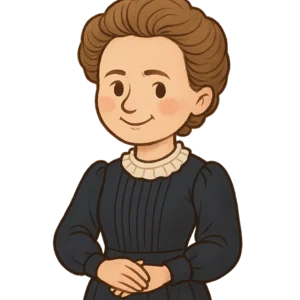
Marie Curie
A pioneering Polish and naturalized-French physicist and chemist who conducted groundbreaking research on…
Reads at Grades 3–5 Listens at Grades 1–5
 Screen-free speaker. Built for your kids.
No card, no commitment. One email when there is real news, and one click to stop.
Print & create
Answer keys·No prep·Free with an account
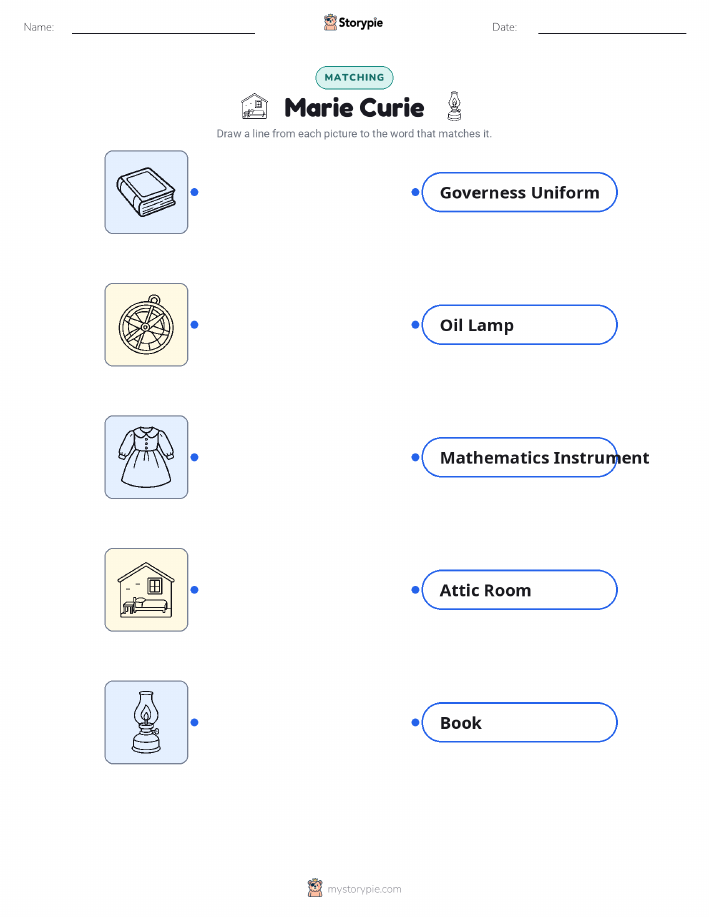
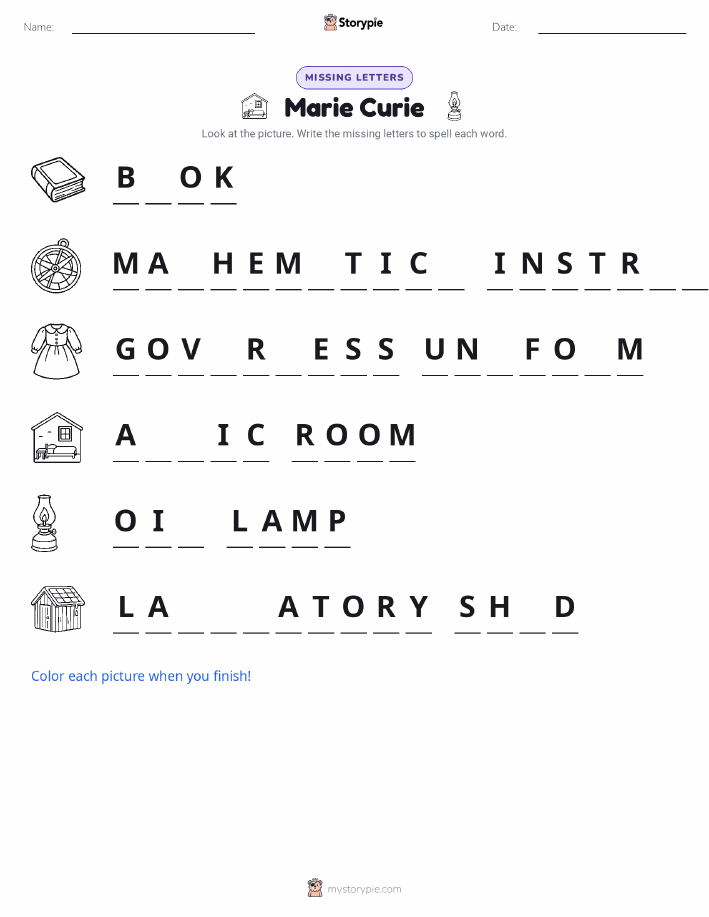
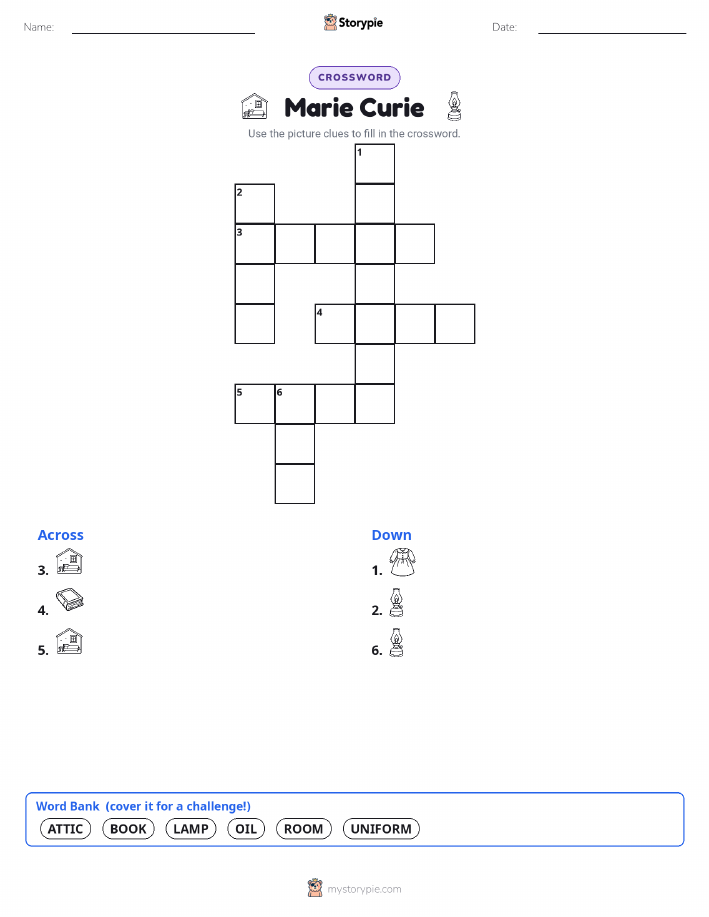
28 worksheets · answer keys · full story · quiz · Ages 8-10 · CEFR B1
Plus adds 102,000+ more stories in 27 languages, audio for every one, and printables for all of them.
Just want Marie Curie?
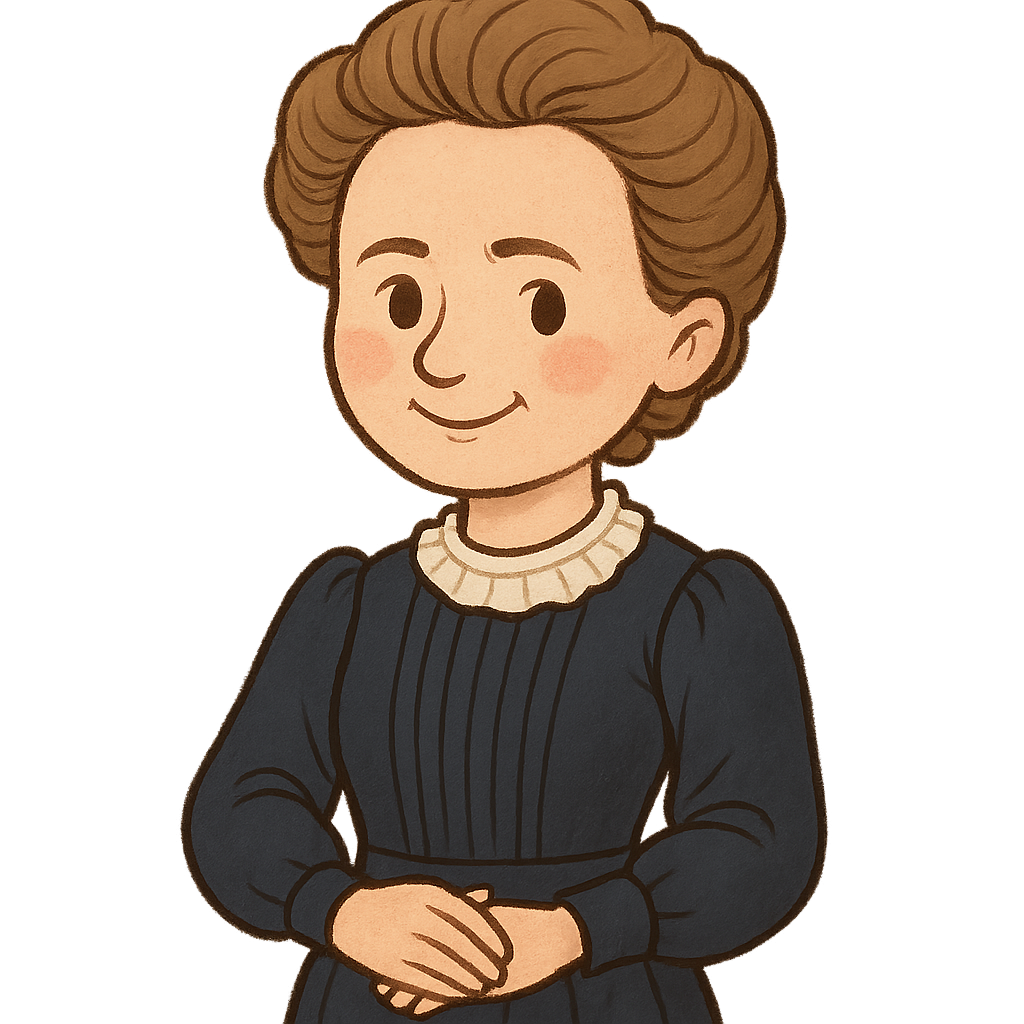
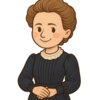
Hello. My name is Maria Skłodowska, but the world would come to know me as Marie Curie. My story begins in Warsaw, Poland, where I was born on November 7, 1867. I was the youngest of five children, and our home was always filled with books and learning. My father was a teacher of mathematics and physics, and he filled my mind with curiosity about how the world worked. I would watch him with his scientific instruments, and I knew, deep in my heart, that I wanted to be a scientist more than anything. But there was a big problem. In Poland at that time, universities did not allow women to attend. It felt like a locked door was standing between me and my dream. My older sister, Bronia, also had a dream—she wanted to be a doctor. We felt stuck, but we were determined. So, we made a secret pact. I would work as a governess, sending money to Bronia so she could go to medical school in Paris. Once she became a doctor, she would help pay for my education. It was a risky plan, but it was our only hope, and we promised to help each other no matter what.
In 1891, it was finally my turn. I packed my bags and traveled to Paris to study at the famous Sorbonne university. I felt a thrill of excitement mixed with a little bit of fear. I was finally where I belonged. Life was not easy. I lived in a tiny attic room that was cold in the winter and hot in the summer, and I often had only bread and tea to eat. But I didn't mind because my mind was feasting on knowledge. I spent every waking hour studying physics, chemistry, and math. It was in Paris that I met a brilliant scientist named Pierre Curie. He was quiet and serious, but he had the same fire for science that I did. We loved to talk for hours about our ideas. We fell in love and got married in 1895, and I became Marie Curie. We were more than just husband and wife; we were a scientific team. We became fascinated by the work of another scientist, Henri Becquerel, who had discovered that an element called uranium gave off mysterious, invisible rays. We wanted to know where these rays came from. Our laboratory was nothing fancy. It was a drafty old shed with a leaky roof, but to us, it was a place of magic. For four long years, we worked tirelessly. We would spend entire days stirring huge, boiling pots of a black mineral called pitchblende, which we knew contained uranium. It was hard, physical work, but we were hunting for something new. Then, in 1898, we made a breakthrough. We discovered not one, but two new elements that were far more powerful than uranium. I named the first one Polonium, in honor of my beloved homeland, Poland. I named the second Radium, from the Latin word for 'ray,' because it gave off a strange, beautiful glow in the dark. I came up with a new word to describe this amazing energy: 'radioactivity.'
Marie Curie: A Life of Discovery
Hello. My name is Maria Skłodowska, but the world would come to know me as Marie Curie. My story begins in Warsaw, Poland, where I was born on November 7, 1867. I was the youngest of five children, and our home was always filled with books and learning. My father was a teacher of mathematics and physics, and he filled my mind with curiosity about how the world worked. I would watch him with his scientific instruments, and I knew, deep in my heart, that I wanted to be a scientist more than anything. But there was a big problem. In Poland at that time, universities did not allow women to attend. It felt like a locked door was standing between me and my dream. My older sister, Bronia, also had a dream—she wanted to be a doctor. We felt stuck, but we were determined. So, we made a secret pact. I would work as a governess, sending money to Bronia so she could go to medical school in Paris. Once she became a doctor, she would help pay for my education. It was a risky plan, but it was our only hope, and we promised to help each other no matter what.
In 1891, it was finally my turn. I packed my bags and traveled to Paris to study at the famous Sorbonne university. I felt a thrill of excitement mixed with a little bit of fear. I was finally where I belonged. Life was not easy. I lived in a tiny attic room that was cold in the winter and hot in the summer, and I often had only bread and tea to eat. But I didn't mind because my mind was feasting on knowledge. I spent every waking hour studying physics, chemistry, and math. It was in Paris that I met a brilliant scientist named Pierre Curie. He was quiet and serious, but he had the same fire for science that I did. We loved to talk for hours about our ideas. We fell in love and got married in 1895, and I became Marie Curie. We were more than just husband and wife; we were a scientific team. We became fascinated by the work of another scientist, Henri Becquerel, who had discovered that an element called uranium gave off mysterious, invisible rays. We wanted to know where these rays came from. Our laboratory was nothing fancy. It was a drafty old shed with a leaky roof, but to us, it was a place of magic. For four long years, we worked tirelessly. We would spend entire days stirring huge, boiling pots of a black mineral called pitchblende, which we knew contained uranium. It was hard, physical work, but we were hunting for something new. Then, in 1898, we made a breakthrough. We discovered not one, but two new elements that were far more powerful than uranium. I named the first one Polonium, in honor of my beloved homeland, Poland. I named the second Radium, from the Latin word for 'ray,' because it gave off a strange, beautiful glow in the dark. I came up with a new word to describe this amazing energy: 'radioactivity.'
Our discoveries sent waves of excitement through the scientific world. In 1903, Pierre, myself, and Henri Becquerel were awarded the Nobel Prize in Physics. It was a tremendous honor, and I was the first woman ever to receive one. But my greatest joy was sharing it with Pierre. Our happiness, however, was tragically cut short. In 1906, my dear Pierre was killed in a street accident. My world fell apart. I was heartbroken, but I knew I had to continue the important work we had started together. The Sorbonne offered me Pierre's teaching position, and I accepted, becoming the first female professor in the university’s history. I poured all my energy into my research, and in 1911, I was awarded a second Nobel Prize, this time in Chemistry, for my work with Polonium and Radium. This time, the prize was for me alone. I wanted my science to do more than just win awards; I wanted it to help people. During World War I, I developed mobile X-ray machines, which we called 'petites Curies' or 'little Curies.' These machines could be driven to the battlefields to help doctors find bullets and shrapnel in wounded soldiers, saving many lives. Looking back, my life was a journey fueled by curiosity. I hope my story shows you that no obstacle is too great if you have a dream and are willing to work hard to achieve it. Science is a powerful light, and with it, we can make the world a better, brighter place.
Wow facts
About
A pioneering Polish and naturalized-French physicist and chemist who conducted groundbreaking research on radioactivity and was the first woman to win a Nobel Prize.
Take a Quiz
Question 1 of 5
Why did Marie and her sister, Bronia, have to make a secret pact to go to university?
Explore next




Want to do even more?
Go beyond exploring. Unlock tools that turn every story into real learning.

Storypie Plus for families
Full stories, quizzes, and printables. Nights and car rides, sorted.
- Unlimited audio stories
- Create Mode: your child stars in the story
- Offline downloads
- Printable worksheets & coloring pages

Why Storypie for Schools
Students engaged. Prep in seconds. Evenings back to you.
- Worksheets & Quizzes
- Classroom Management
- Formative Assessment
- Custom Curriculum & Lesson Plans
- 27 Languages

Why Storypie for Homeschool
Curriculum done. They'll ask for more. Hours back in your day.
- Worksheet Generator
- First-Person Audio Stories
- Built-in Comprehension Quizzes
- Custom Curriculum & Lesson Plans
- Print & Go Activities