English

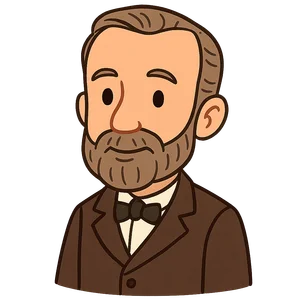
Pierre Curie
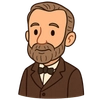
Pierre Curie was a French physicist, a pioneer in crystallography, magnetism, piezoelectricity…
Reads at Grades 3–5 Listens at Grades 1–5
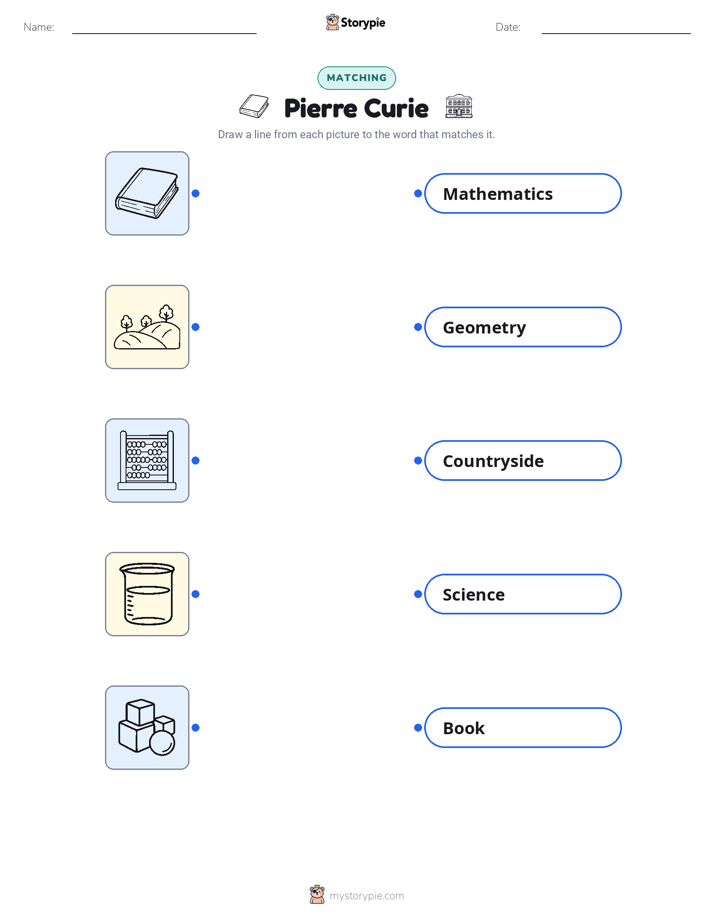
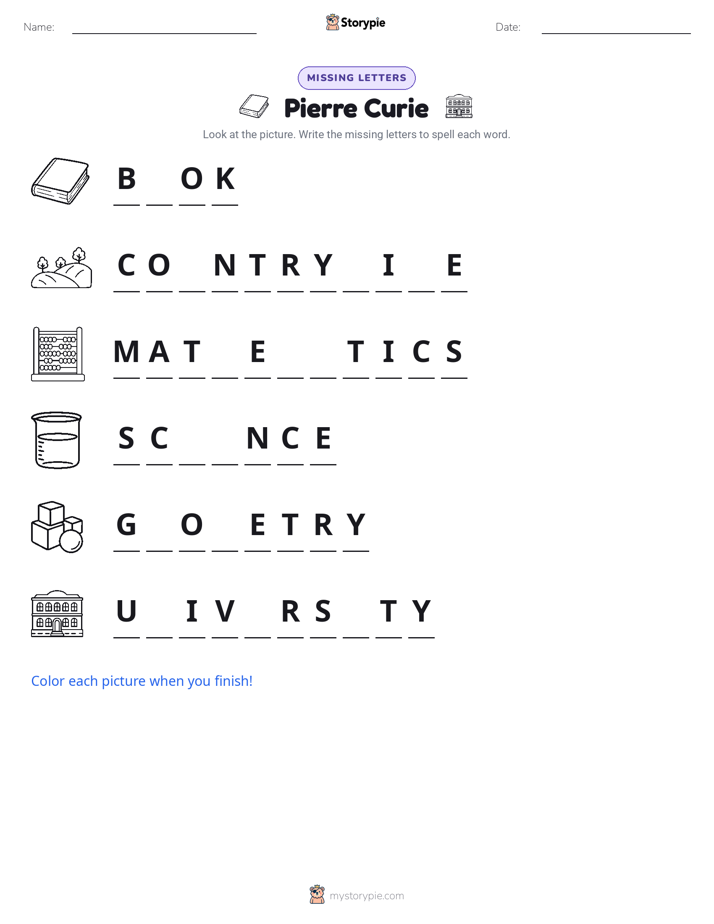
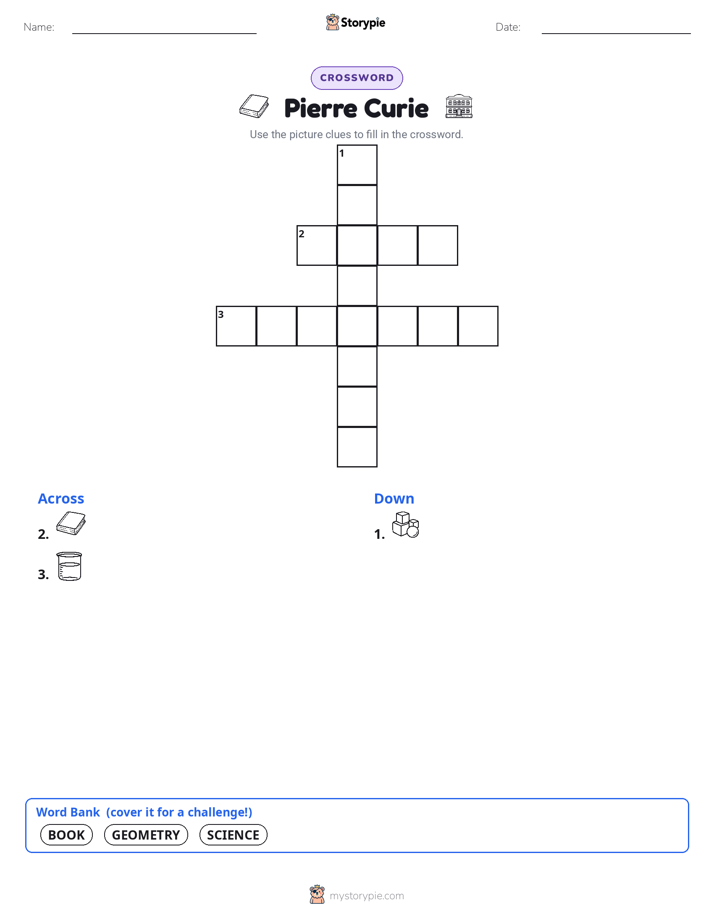
Print & create
Answer keys·No prep·Free with an account
28 worksheets · answer keys · full story · quiz · Ages 8-10 · CEFR B1
Plus adds 164,000+ more stories in 27 languages, audio for every one, and printables for all of them.
Just want Pierre Curie?
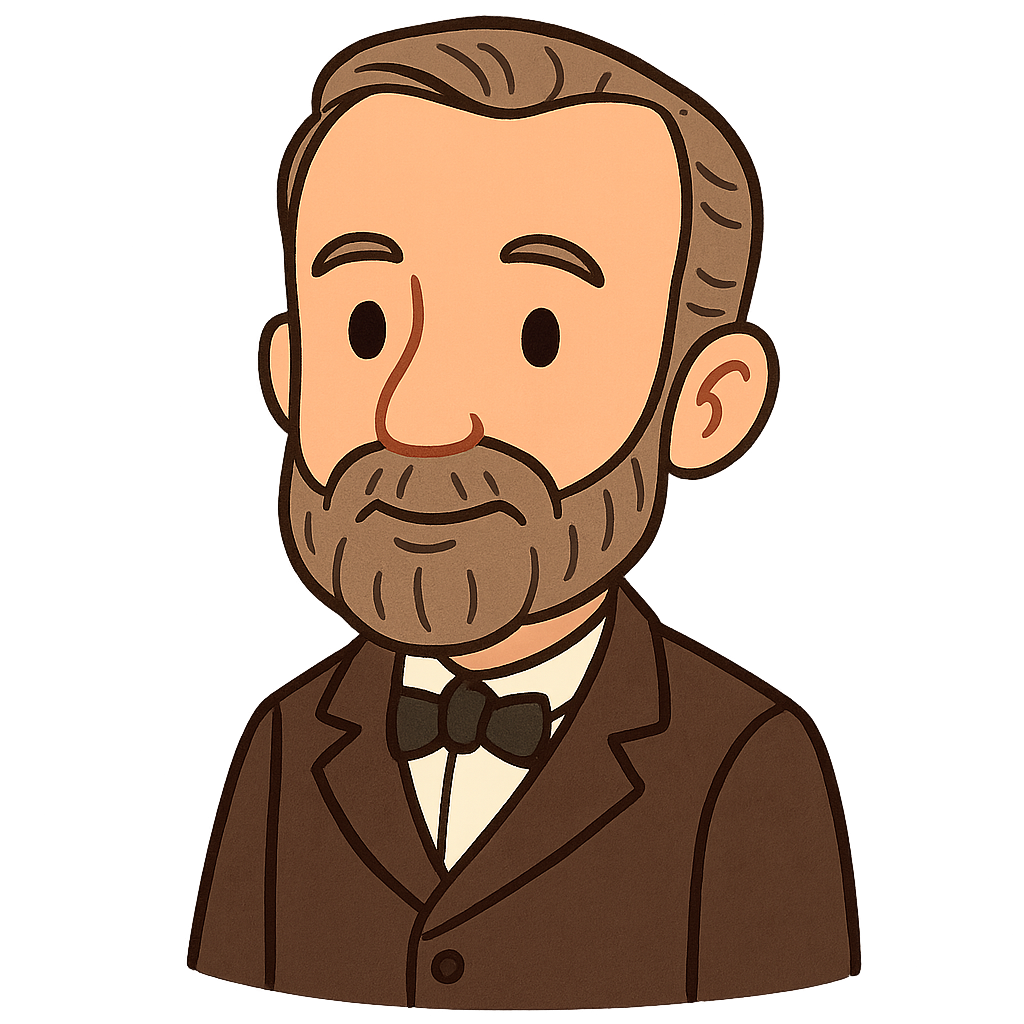
Hello! My name is Pierre Curie, and I was a scientist who loved solving the universe's puzzles. I was born in Paris, France, on May 15th, 1859. As a boy, I didn't go to a regular school. Instead, my father taught me at home. I loved spending my time outdoors, observing plants and animals, but my real passion was for science and mathematics. I was a bit of a dreamer, always lost in thought, but I had a knack for understanding how things worked, especially in the worlds of physics and geometry.
Before I became famous for my work on radioactivity, I worked with my older brother, Jacques. In 1880, we made a very exciting discovery called piezoelectricity. It sounds complicated, but it's a neat trick: we found that if you squeeze certain types of crystals, they create a tiny electric spark. This discovery is still used today in things like watches and microphones. After my work with Jacques, I became fascinated by magnets. I spent years studying how they behave in different temperatures. In 1895, I discovered that there is a special temperature for every magnetic material where it suddenly loses its magnetism. This temperature is now named the 'Curie point' in my honor.
In 1894, my life changed forever when I met a brilliant student from Poland named Maria Skłodowska. Everyone just called her Marie. She was studying science in Paris, and we were introduced by a friend. We immediately started talking about science, and I was amazed by her passion and intelligence. We fell in love and got married on July 26th, 1895. I knew we would be a wonderful team, not just as husband and wife, but as partners in the laboratory. Around that time, in 1896, another scientist named Henri Becquerel discovered that a substance called uranium gave off mysterious, invisible rays. Marie was fascinated by this puzzle, and she decided to make it the subject of her research. I was so intrigued by her work that I put my own research on crystals aside to help her.
Pierre Curie
Hello! My name is Pierre Curie, and I was a scientist who loved solving the universe's puzzles. I was born in Paris, France, on May 15th, 1859. As a boy, I didn't go to a regular school. Instead, my father taught me at home. I loved spending my time outdoors, observing plants and animals, but my real passion was for science and mathematics. I was a bit of a dreamer, always lost in thought, but I had a knack for understanding how things worked, especially in the worlds of physics and geometry.
Before I became famous for my work on radioactivity, I worked with my older brother, Jacques. In 1880, we made a very exciting discovery called piezoelectricity. It sounds complicated, but it's a neat trick: we found that if you squeeze certain types of crystals, they create a tiny electric spark. This discovery is still used today in things like watches and microphones. After my work with Jacques, I became fascinated by magnets. I spent years studying how they behave in different temperatures. In 1895, I discovered that there is a special temperature for every magnetic material where it suddenly loses its magnetism. This temperature is now named the 'Curie point' in my honor.
In 1894, my life changed forever when I met a brilliant student from Poland named Maria Skłodowska. Everyone just called her Marie. She was studying science in Paris, and we were introduced by a friend. We immediately started talking about science, and I was amazed by her passion and intelligence. We fell in love and got married on July 26th, 1895. I knew we would be a wonderful team, not just as husband and wife, but as partners in the laboratory. Around that time, in 1896, another scientist named Henri Becquerel discovered that a substance called uranium gave off mysterious, invisible rays. Marie was fascinated by this puzzle, and she decided to make it the subject of her research. I was so intrigued by her work that I put my own research on crystals aside to help her.
Our laboratory wasn't fancy at all—it was more like a cold, drafty shed. But inside, we were making some of the most exciting discoveries in the world. We spent hours and hours testing different minerals to see if they also gave off these strange rays. We soon realized that some minerals were far more powerful than uranium. We knew this meant there must be something new inside them. In 1898, after a lot of hard work, we announced that we had discovered two new chemical elements. We named the first one 'polonium' after Marie's beloved home country, Poland. We named the second one 'radium' because it was so incredibly radiant. We invented a new word to describe this phenomenon: 'radioactivity.' For this groundbreaking work, Marie, myself, and Henri Becquerel were awarded the Nobel Prize in Physics in 1903. It was an incredible honor to see our hard work recognized by the whole world.
Sadly, my life ended unexpectedly after a street accident in Paris on April 19th, 1906. I lived to be 46 years old. Although my time was short, the work Marie and I started together continued. Our discoveries about radioactivity opened up a whole new field of science and helped other scientists understand the atom, the tiny particle that makes up everything. Our work has been used in medicine to help treat diseases and in creating new sources of energy. I am remembered as a dedicated scientist and as part of a team with my wife, Marie, that changed our understanding of the universe forever.
Wow facts
About
Pierre Curie was a French physicist, a pioneer in crystallography, magnetism, piezoelectricity, and radioactivity, and a Nobel laureate.
Take a Quiz
Question 1 of 5
In the story, I said I had a 'knack' for understanding how things worked. What does the word 'knack' mean in this sentence?
Explore next




Want to do even more?
Go beyond exploring. Unlock tools that turn every story into real learning.

Storypie Plus for families
Full stories, quizzes, and printables. Nights and car rides, sorted.
- Unlimited audio stories
- Create Mode: your child stars in the story
- Offline downloads
- Printable worksheets & coloring pages

Why Storypie for Schools
Students engaged. Prep in seconds. Evenings back to you.
- Worksheets & Quizzes
- Classroom Management
- Formative Assessment
- Custom Curriculum & Lesson Plans
- 27 Languages

Why Storypie for Homeschool
Curriculum done. They'll ask for more. Hours back in your day.
- Worksheet Generator
- First-Person Audio Stories
- Built-in Comprehension Quizzes
- Custom Curriculum & Lesson Plans
- Print & Go Activities