English

Mario Molina
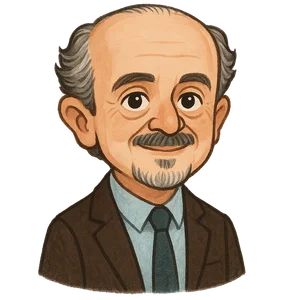
Mario Molina was a Mexican chemist who was a co-recipient of the 1995 Nobel Prize in Chemistry for his role…
Reads at Grades 6–8 Listens at Grades 4–8
Print & create
Answer keys·No prep·Free with an account
28 worksheets · answer keys · full story · quiz · Ages 10-12 · CEFR B2
Plus adds 164,000+ more stories in 27 languages, audio for every one, and printables for all of them.
Just want Mario Molina?
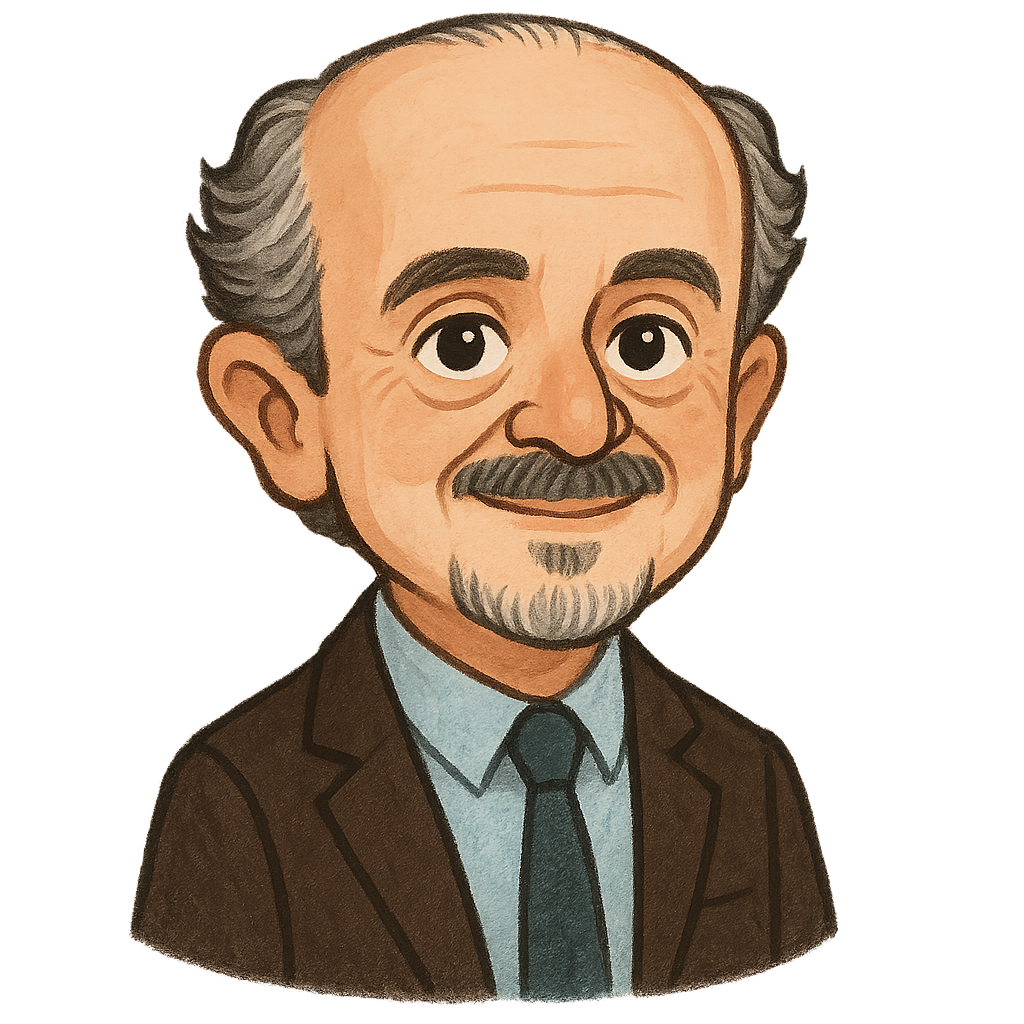
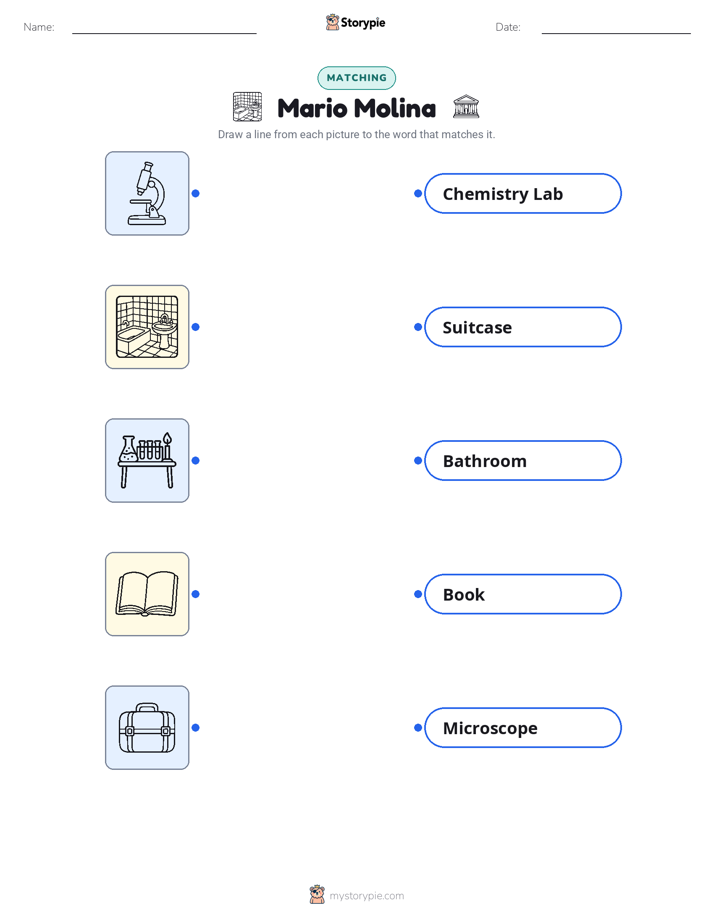
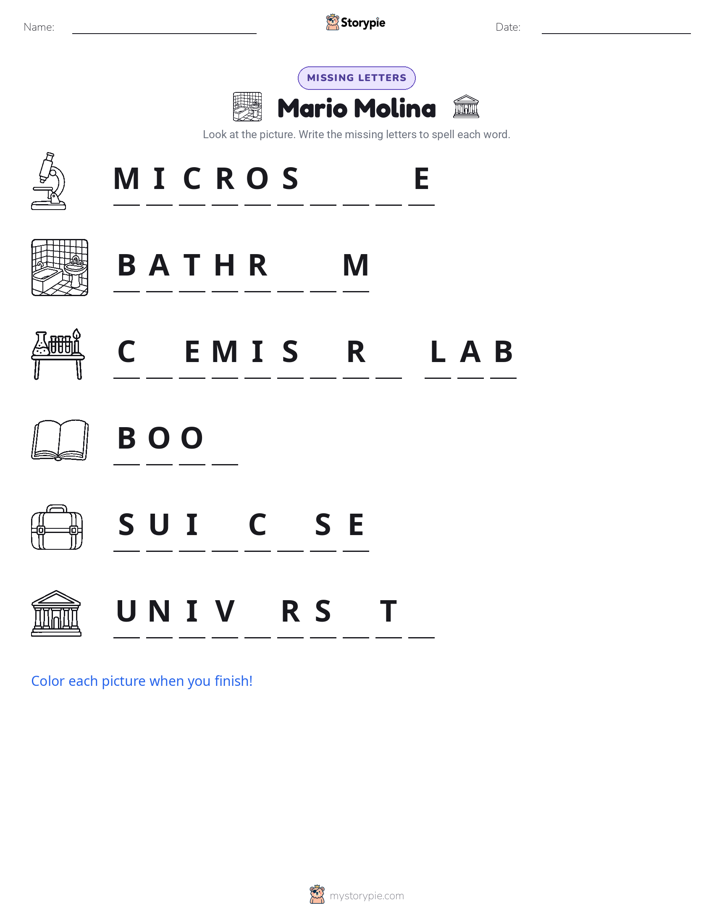
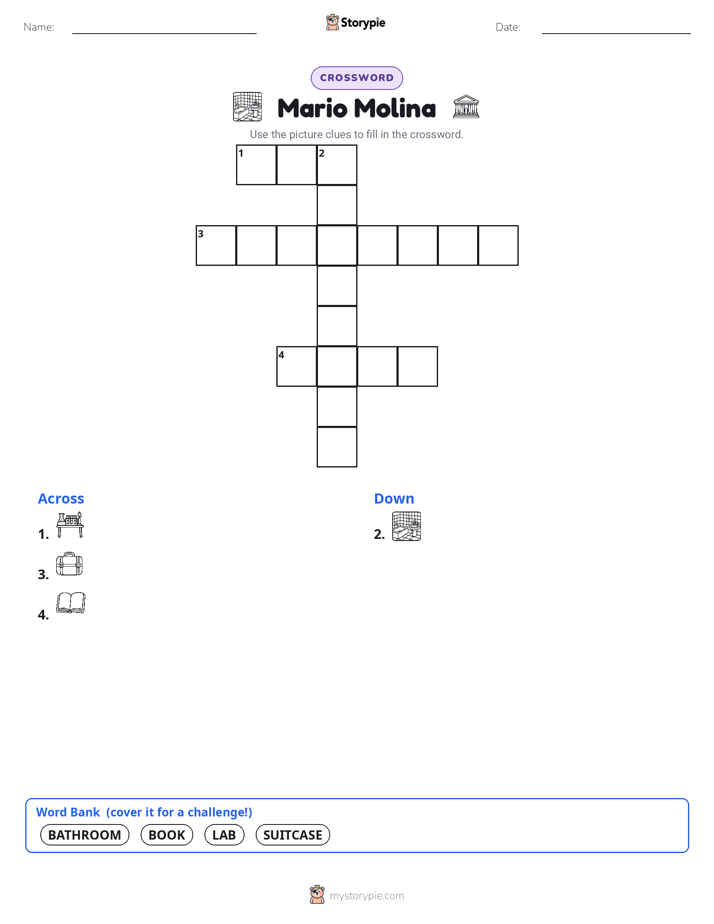
Hello! My name is Mario Molina, and I am a scientist who helped the world understand how to protect the air we all share. I was born in Mexico City, Mexico, on March 19th, 1943. From a very young age, I was fascinated by science. When I was just a boy, my parents bought me a toy microscope, which opened up a microscopic world I never knew existed. I was so inspired that I converted our family’s spare bathroom into my very own chemistry lab. My aunt, Esther Molina, who was a chemist herself, saw my passion and encouraged me. She helped me with experiments that were much more advanced than what I was learning in school, sparking a lifelong curiosity about the invisible world of molecules and chemical reactions.
My love for science led me on a journey around the world. In 1954, when I was 11 years old, my parents sent me to a boarding school in Switzerland. Their goal was for me to learn German, as it was considered an essential language for chemists at the time. After my time in Europe, I returned to Mexico to study chemical engineering at the National Autonomous University of Mexico, known as UNAM, and graduated in 1965. But my quest for knowledge was far from over. I went on to continue my studies in Germany and then moved to the United States. In 1972, I achieved a major goal by earning my doctorate, a Ph.D., from the University of California, Berkeley. My extensive education taught me not just scientific facts, but how to ask important questions and use the scientific method to find answers.
Mario Molina: The Scientist Who Helped Save Our Planet
Hello! My name is Mario Molina, and I am a scientist who helped the world understand how to protect the air we all share. I was born in Mexico City, Mexico, on March 19th, 1943. From a very young age, I was fascinated by science. When I was just a boy, my parents bought me a toy microscope, which opened up a microscopic world I never knew existed. I was so inspired that I converted our family’s spare bathroom into my very own chemistry lab. My aunt, Esther Molina, who was a chemist herself, saw my passion and encouraged me. She helped me with experiments that were much more advanced than what I was learning in school, sparking a lifelong curiosity about the invisible world of molecules and chemical reactions.
My love for science led me on a journey around the world. In 1954, when I was 11 years old, my parents sent me to a boarding school in Switzerland. Their goal was for me to learn German, as it was considered an essential language for chemists at the time. After my time in Europe, I returned to Mexico to study chemical engineering at the National Autonomous University of Mexico, known as UNAM, and graduated in 1965. But my quest for knowledge was far from over. I went on to continue my studies in Germany and then moved to the United States. In 1972, I achieved a major goal by earning my doctorate, a Ph.D., from the University of California, Berkeley. My extensive education taught me not just scientific facts, but how to ask important questions and use the scientific method to find answers.
In 1973, I joined the University of California, Irvine, and began working with a brilliant scientist named F. Sherwood Rowland, whom I called Sherry. Together, we decided to investigate a group of chemicals called chlorofluorocarbons, or CFCs. In those days, CFCs were used in many common products, like aerosol hairspray cans, refrigerators, and air conditioners, and everyone believed they were harmless. Sherry and I were curious about a simple question: what happened to these chemicals after they were sprayed or leaked into the air? Our research led to a shocking discovery. The CFCs weren't just vanishing. They were floating high into the stratosphere, where powerful ultraviolet rays from the sun broke them apart. This process released atoms that were rapidly destroying the Earth’s ozone layer, our planet's protective shield. We published our alarming findings in a major science journal called Nature in June of 1974.
At first, our discovery was met with a lot of doubt. Many scientists were skeptical, and the large companies that produced CFCs were especially critical of our work. But Sherry and I knew the danger was real and that we had a responsibility to speak out. The ozone layer is vital for life, as it protects us all—plants, animals, and humans—from the sun’s most harmful ultraviolet radiation. We felt it was our duty to inform the world. We traveled widely, presenting our findings at conferences and speaking to politicians and journalists to explain the science. It was a long and difficult struggle, but we refused to give up. Then, in 1985, other scientists discovered a massive hole in the ozone layer over Antarctica. It was the undeniable proof the world needed. Our theory was correct.
Our discovery was frightening, but it also carried a message of hope. It proved that human activities could cause global harm, but it also showed that we could work together as a global community to solve the problem. Spurred by our research and the confirmation of the ozone hole, countries from all around the world came together. In 1987, they signed a historic agreement called the Montreal Protocol, pledging to phase out the production and use of CFCs. This international cooperation was a tremendous success, and over time, the ozone layer began to heal. In 1995, for our work in atmospheric chemistry, I, along with Sherry Rowland and another scientist named Paul Crutzen, was awarded the Nobel Prize in Chemistry. It was an incredible honor that recognized the power of science to protect our shared home.
I spent the rest of my career working on other critical environmental issues, including air pollution in cities and the growing threat of climate change. I lived to be 77 years old, passing away in my hometown of Mexico City on October 7th, 2020. I am remembered as a scientist who helped humanity understand its deep connection to the atmosphere. My story shows that a single person's curiosity, when combined with scientific evidence and the courage to speak the truth, can truly make a difference in protecting our planet for future generations.
Wow facts
About
Mario Molina was a Mexican chemist who was a co-recipient of the 1995 Nobel Prize in Chemistry for his role in discovering the threat to the Earth's ozone layer from chlorofluorocarbon (CFC) gases.
Take a Quiz
Question 1 of 5
What event in 1985 provided the proof the world needed to believe Molina and Rowland's research about CFCs?
Explore next




Want to do even more?
Go beyond exploring. Unlock tools that turn every story into real learning.

Storypie Plus for families
Full stories, quizzes, and printables. Nights and car rides, sorted.
- Unlimited audio stories
- Create Mode: your child stars in the story
- Offline downloads
- Printable worksheets & coloring pages

Why Storypie for Schools
Students engaged. Prep in seconds. Evenings back to you.
- Worksheets & Quizzes
- Classroom Management
- Formative Assessment
- Custom Curriculum & Lesson Plans
- 27 Languages

Why Storypie for Homeschool
Curriculum done. They'll ask for more. Hours back in your day.
- Worksheet Generator
- First-Person Audio Stories
- Built-in Comprehension Quizzes
- Custom Curriculum & Lesson Plans
- Print & Go Activities