English

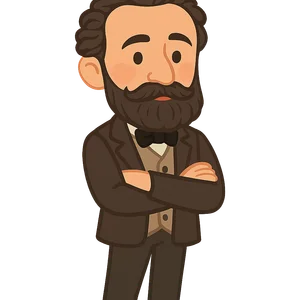
Marius Petipa
Marius Petipa was a French and Russian ballet dancer, teacher…
Reads at Grades 6–8 Listens at Grades 4–8
Print & create
Answer keys·No prep·Free with an account
28 worksheets · answer keys · full story · quiz · Ages 10-12 · CEFR B2
Plus adds 244,000+ more stories in 27 languages, audio for every one, and printables for all of them.
Just want Marius Petipa?
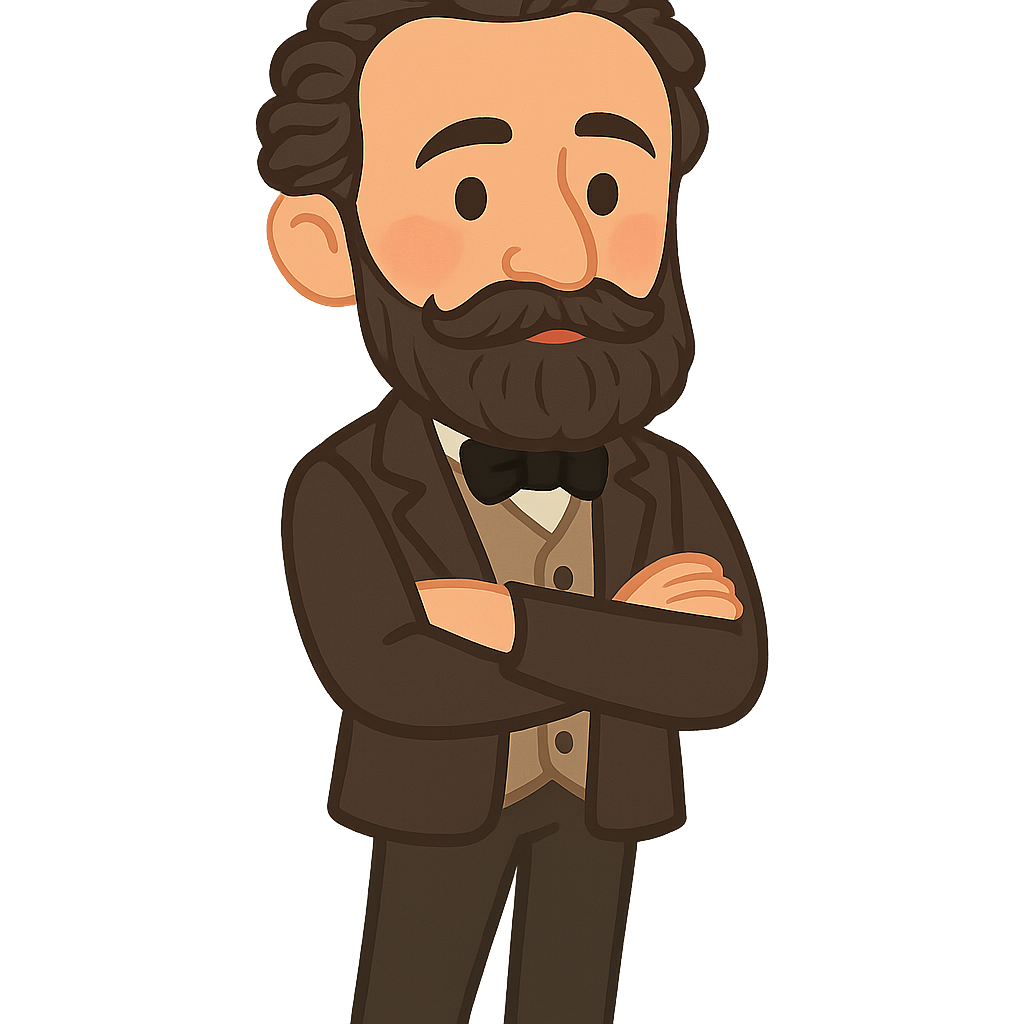
Hello! My name is Marius Petipa, and I am often called the "father of classical ballet." My story begins in the sunny city of Marseille, France, where I was born on March 11th, 1818. My entire world revolved around the theater. My father, Jean-Antoine Petipa, was a well-known dancer and teacher, while my mother, Victorine Grasseau, was a talented actress. It was my father who gave me my first ballet lessons. The training was incredibly demanding, and I must admit, I did not enjoy it at first. But as I grew, so did my love for the art form, and I soon fell in love with expressing myself through movement and music. As a young man, my career took me all across Europe, where I had the privilege of performing in grand theaters in Belgium, France, and Spain.
The year 1847 marked a turning point in my life. At 29 years old, I received an invitation to become the principal dancer for the Imperial Ballet in Saint Petersburg, Russia. This was a land of glittering snow and magnificent palaces, so different from my home in France, and I was excited by the opportunity. I performed for the Tsar and his court in the opulent Imperial Theatres. While I enjoyed being a dancer, a greater ambition was stirring within me. I had stories and ideas swirling in my head, and I knew I wanted to create ballets, not just perform in them. I began to choreograph, telling my own tales through dance. My first major success as a choreographer came in 1862 with a spectacular ballet called *The Pharaoh's Daughter*, which transported audiences to the mysterious world of ancient Egypt.
Marius Petipa: The Father of Classical Ballet
Hello! My name is Marius Petipa, and I am often called the "father of classical ballet." My story begins in the sunny city of Marseille, France, where I was born on March 11th, 1818. My entire world revolved around the theater. My father, Jean-Antoine Petipa, was a well-known dancer and teacher, while my mother, Victorine Grasseau, was a talented actress. It was my father who gave me my first ballet lessons. The training was incredibly demanding, and I must admit, I did not enjoy it at first. But as I grew, so did my love for the art form, and I soon fell in love with expressing myself through movement and music. As a young man, my career took me all across Europe, where I had the privilege of performing in grand theaters in Belgium, France, and Spain.
The year 1847 marked a turning point in my life. At 29 years old, I received an invitation to become the principal dancer for the Imperial Ballet in Saint Petersburg, Russia. This was a land of glittering snow and magnificent palaces, so different from my home in France, and I was excited by the opportunity. I performed for the Tsar and his court in the opulent Imperial Theatres. While I enjoyed being a dancer, a greater ambition was stirring within me. I had stories and ideas swirling in my head, and I knew I wanted to create ballets, not just perform in them. I began to choreograph, telling my own tales through dance. My first major success as a choreographer came in 1862 with a spectacular ballet called The Pharaoh's Daughter, which transported audiences to the mysterious world of ancient Egypt.
The success of my work led to the most important position of my career. In 1871, I was appointed the Maître de Ballet, or First Ballet Master, of the Imperial Theatres. This meant I was in charge of creating nearly all of the ballets for the entire company—it was my dream come true. I believed a ballet should be a grand spectacle, a piece of magic that takes the audience on a journey. I planned everything meticulously, from the story and the specific music I wanted to every single step the dancers would perform. I also designed the elaborate costumes and breathtaking scenery. During the next thirty years, I created more than fifty ballets. Among my most famous works from this period are Don Quixote, which I created in 1869, telling the lively story of a Spanish knight, and La Bayadère, a dramatic tale of love and betrayal in ancient India, which premiered in 1877.
A choreographer is nothing without inspiring music, and I was incredibly fortunate to collaborate with one of history's most brilliant composers, Pyotr Ilyich Tchaikovsky. His music was overflowing with such passion and beautiful melodies that it seemed destined for the ballet stage. Our first major collaboration was in 1890 with The Sleeping Beauty, a classic fairy tale we brought to life with his unforgettable music and my intricate choreography. Just two years later, in 1892, we created a ballet that would become a beloved holiday tradition around the world: The Nutcracker. For that production, I wrote the detailed story and instructions for the composer, and my talented assistant, Lev Ivanov, helped create the choreography for Tchaikovsky's magical score. We also worked together to re-imagine an older ballet, Swan Lake. Our new version, which premiered in 1895, transformed it into the timeless masterpiece that is still cherished today.
I dedicated my entire life to the art of ballet, serving as the Ballet Master until my retirement in 1903. My life was long and filled with music, creativity, and dance. I lived to be 92 years old and passed away in the summer of 1910. Although my time on this Earth came to an end, my ballets have continued to live on. They are still performed by the world's greatest ballet companies on stages across the globe. When you watch the Sugar Plum Fairy dance in The Nutcracker or see the graceful swans in Swan Lake, you are witnessing a part of my story. It is because my work and style helped shape ballet into the beautiful art form we know today that many people call me the "father of classical ballet."
Wow facts
About
Marius Petipa was a French and Russian ballet dancer, teacher, and choreographer who is considered one of the most influential figures in ballet history and is often called the 'father of modern ballet.'
Take a Quiz
Question 1 of 5
In your own words, explain why Marius Petipa is often called the "father of classical ballet."
Explore next





Want to do even more?
Go beyond exploring. Unlock tools that turn every story into real learning.

Storypie Plus for families
Full stories, quizzes, and printables. Nights and car rides, sorted.
- Unlimited audio stories
- Create Mode: your child stars in the story
- Offline downloads
- Printable worksheets & coloring pages

Why Storypie for Schools
Students engaged. Prep in seconds. Evenings back to you.
- Worksheets & Quizzes
- Classroom Management
- Formative Assessment
- Custom Curriculum & Lesson Plans
- 27 Languages

Why Storypie for Homeschool
Curriculum done. They'll ask for more. Hours back in your day.
- Worksheet Generator
- First-Person Audio Stories
- Built-in Comprehension Quizzes
- Custom Curriculum & Lesson Plans
- Print & Go Activities