English

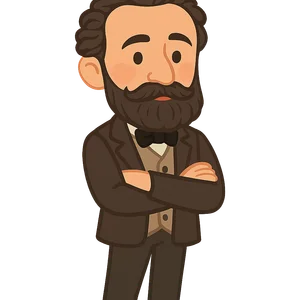
Marius Petipa
Marius Petipa was a French and Russian ballet dancer, teacher…
Reads at Grades 3–5 Listens at Grades 1–5
Print & create
Answer keys·No prep·Free with an account
28 worksheets · answer keys · full story · quiz · Ages 8-10 · CEFR B1
Plus adds 244,000+ more stories in 27 languages, audio for every one, and printables for all of them.
Just want Marius Petipa?
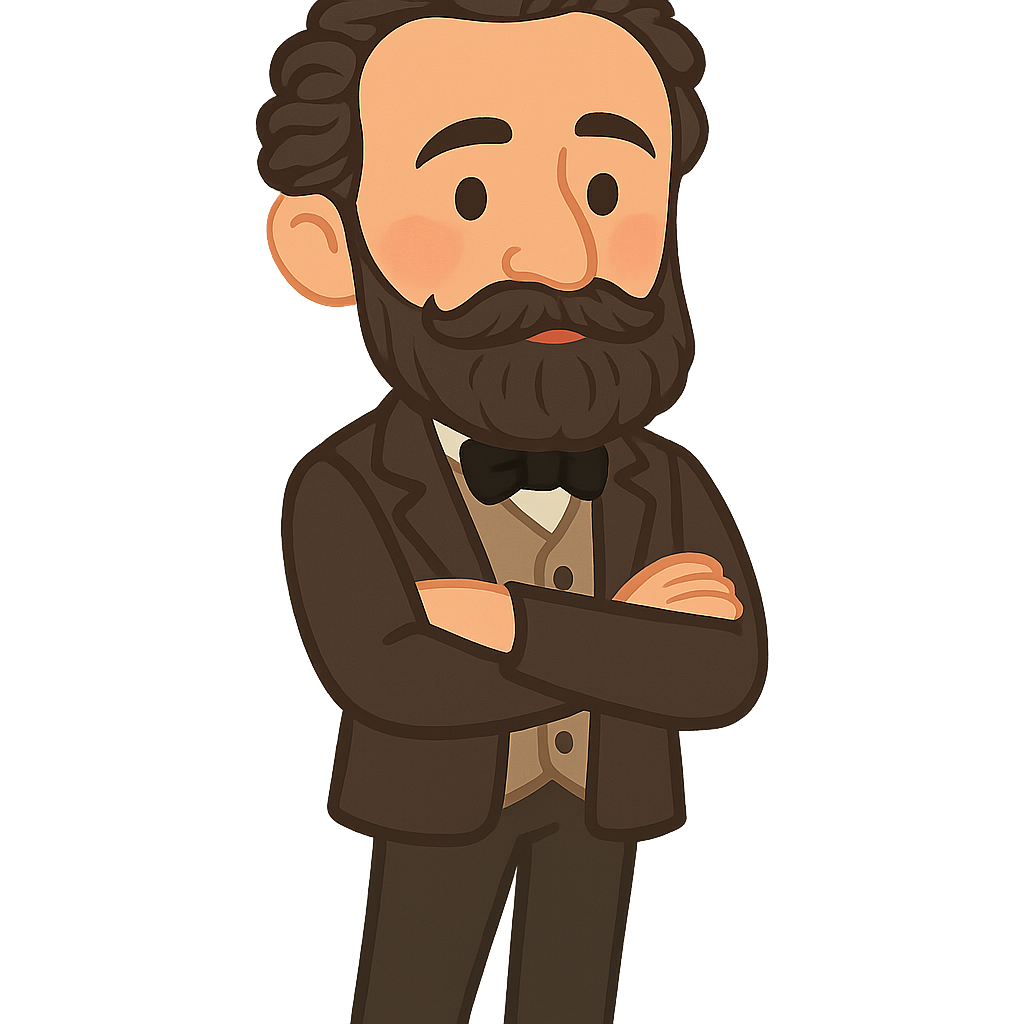
Bonjour! My name is Marius Petipa, and I am going to tell you the story of how I became known as the 'father of classical ballet.' My story begins in Marseille, France, where I was born on March 11th, 1818. My father was a famous dancer and my mother was an actress, so the theater was my home! When I was seven years old, my father began teaching me ballet. I’ll tell you a secret—at first, I didn’t like it at all! But I kept practicing, and soon, I fell in love with telling stories through dance. I performed on stage for the first time with my father in Brussels in 1831.
As a young man, I traveled all over Europe to dance. I learned so much with every new place I visited. I performed in France, and in 1839, I even sailed across the ocean to America for a short time. My favorite adventure was in Spain, where I lived and danced starting in 1844. I loved the exciting and passionate Spanish dances, with their stomping feet and clicking castanets. I learned these new styles and wove them into my own dancing. This experience was very important because it taught me how to bring different cultures and feelings into my choreography later in life. It filled my head with new ideas for stories I wanted to tell on stage.
A huge change came in 1847 when I received an invitation to go to a faraway, snowy land: Russia! I was asked to become the principal dancer for the Imperial Ballet in St. Petersburg. It was one of the most famous ballet companies in the entire world. I was so excited. I packed my bags and moved to Russia, which would become my home for the rest of my life. The theaters there were grand, and the dancers were incredibly talented. I danced the lead roles in many ballets, but I felt a new dream growing in my heart. I didn’t just want to dance the stories—I wanted to create them.
Marius Petipa
Bonjour! My name is Marius Petipa, and I am going to tell you the story of how I became known as the 'father of classical ballet.' My story begins in Marseille, France, where I was born on March 11th, 1818. My father was a famous dancer and my mother was an actress, so the theater was my home! When I was seven years old, my father began teaching me ballet. I’ll tell you a secret—at first, I didn’t like it at all! But I kept practicing, and soon, I fell in love with telling stories through dance. I performed on stage for the first time with my father in Brussels in 1831.
As a young man, I traveled all over Europe to dance. I learned so much with every new place I visited. I performed in France, and in 1839, I even sailed across the ocean to America for a short time. My favorite adventure was in Spain, where I lived and danced starting in 1844. I loved the exciting and passionate Spanish dances, with their stomping feet and clicking castanets. I learned these new styles and wove them into my own dancing. This experience was very important because it taught me how to bring different cultures and feelings into my choreography later in life. It filled my head with new ideas for stories I wanted to tell on stage.
A huge change came in 1847 when I received an invitation to go to a faraway, snowy land: Russia! I was asked to become the principal dancer for the Imperial Ballet in St. Petersburg. It was one of the most famous ballet companies in the entire world. I was so excited. I packed my bags and moved to Russia, which would become my home for the rest of my life. The theaters there were grand, and the dancers were incredibly talented. I danced the lead roles in many ballets, but I felt a new dream growing in my heart. I didn’t just want to dance the stories—I wanted to create them.
My dream started to come true. I began creating my own dances, and people loved them! In 1871, I was given the most important job at the Imperial Ballet: I was named the Ballet Master. This meant I was in charge of creating all the new ballets. For over thirty years, I was the head choreographer. It was a lot of hard work! I planned every single step, every pattern the dancers made, and every part of the story. I created over fifty ballets, like The Pharaoh's Daughter in 1862, which was a huge spectacle, and Don Quixote in 1869, which was full of Spanish flair I remembered from my travels. I wanted my ballets to be beautiful, grand, and tell a clear story that everyone could understand.
My most famous work happened when I began working with a brilliant composer named Pyotr Ilyich Tchaikovsky. His music was pure magic, and it inspired me to create my greatest masterpieces. Together, we created The Sleeping Beauty in 1890, a fairy tale ballet about a princess who sleeps for one hundred years. Then, in 1892, we created a Christmas fantasy called The Nutcracker, which children all over the world still love to watch during the holidays. Finally, in 1895, I worked with my assistant Lev Ivanov to create a new version of Tchaikovsky's Swan Lake. Our version, about a princess who turns into a swan, is the one that is still performed today. Our ballets were grand stories filled with emotion, beautiful dancing, and unforgettable music.
I worked with the Imperial Ballet until I retired in 1903. I lived a very long and happy life filled with music and dance. I lived to be 92 years old. Even though my time on Earth ended, my ballets have danced on. Today, I am remembered as the 'father of classical ballet' because the style I created and the stories I told are still the foundation of ballet. When you see dancers in The Nutcracker or Swan Lake, you are seeing my dreams and my choreography, alive and spinning across the stage for a new generation to enjoy.
Wow facts
About
Marius Petipa was a French and Russian ballet dancer, teacher, and choreographer who is considered one of the most influential figures in ballet history and is often called the 'father of modern ballet.'
Take a Quiz
Question 1 of 5
In what country was Marius Petipa invited to be the principal dancer for the Imperial Ballet in 1847?
Explore next





Want to do even more?
Go beyond exploring. Unlock tools that turn every story into real learning.

Storypie Plus for families
Full stories, quizzes, and printables. Nights and car rides, sorted.
- Unlimited audio stories
- Create Mode: your child stars in the story
- Offline downloads
- Printable worksheets & coloring pages

Why Storypie for Schools
Students engaged. Prep in seconds. Evenings back to you.
- Worksheets & Quizzes
- Classroom Management
- Formative Assessment
- Custom Curriculum & Lesson Plans
- 27 Languages

Why Storypie for Homeschool
Curriculum done. They'll ask for more. Hours back in your day.
- Worksheet Generator
- First-Person Audio Stories
- Built-in Comprehension Quizzes
- Custom Curriculum & Lesson Plans
- Print & Go Activities