English

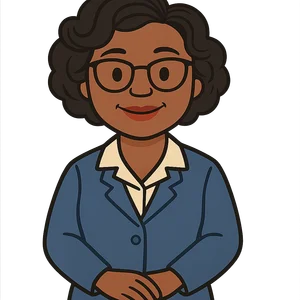
Mary Jackson
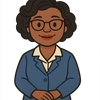
Mary Jackson was an American mathematician and aerospace engineer at NASA…
Reads at Grades 3–5 Listens at Grades 1–5
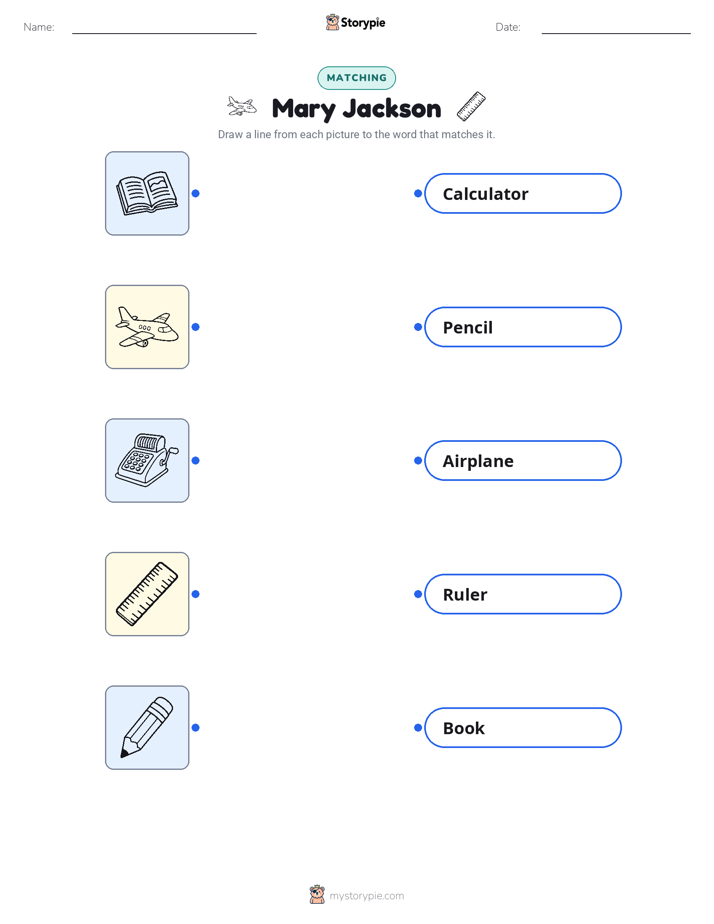
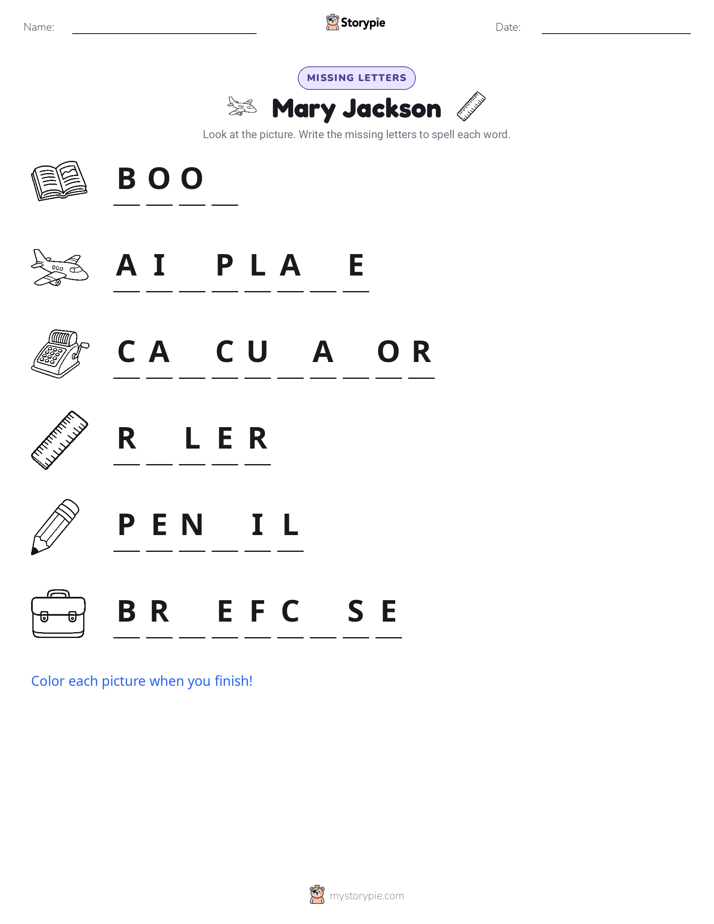
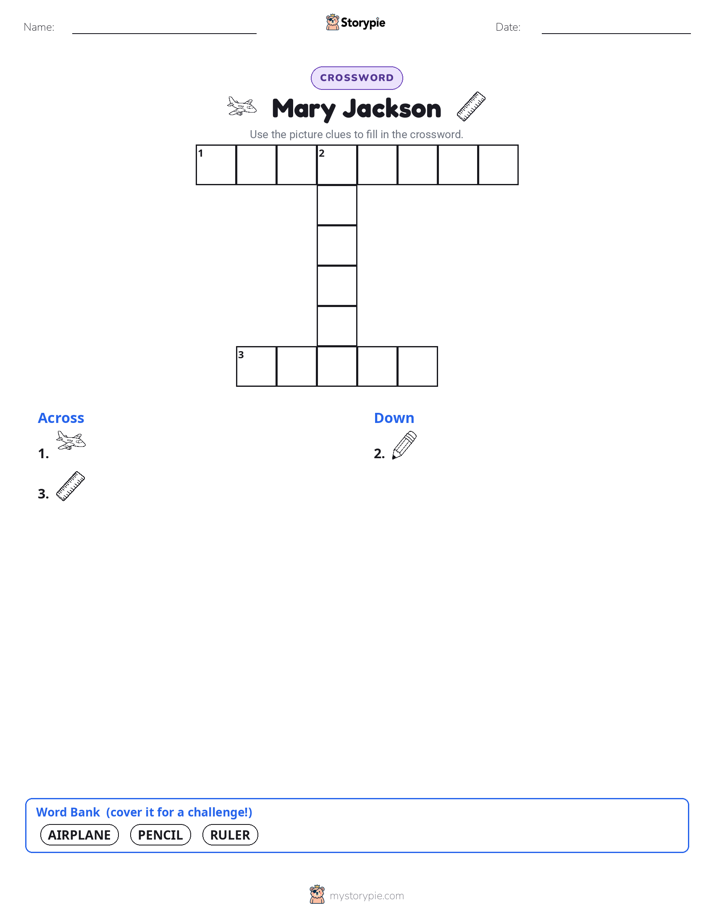
Print & create
Answer keys·No prep·Free with an account
28 worksheets · answer keys · full story · quiz · Ages 8-10 · CEFR B1
Plus adds 208,000+ more stories in 27 languages, audio for every one, and printables for all of them.
Just want Mary Jackson?
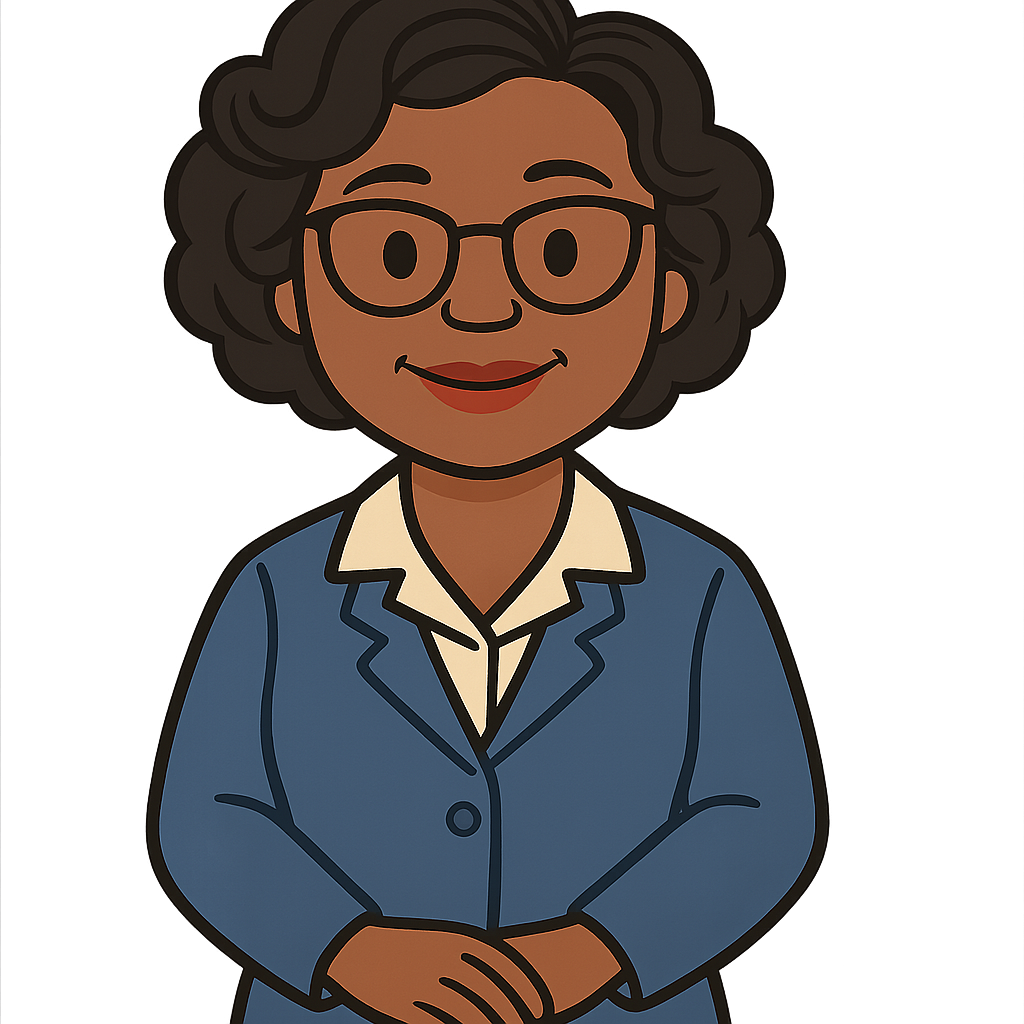
Hello! My name is Mary Jackson, and I always loved to figure things out. I was born on April 9th, 1921, in Hampton, Virginia. Even as a little girl, numbers and science felt like puzzles just waiting to be solved. I worked very hard in school and was proud to graduate from the Hampton Institute in 1942 with degrees in two of my favorite subjects: mathematics and physical science. I dreamed of using my skills to work on exciting projects, but back then, I wasn't sure what the future held for a Black woman who loved math as much as I did.
In 1951, I got an amazing opportunity. I was hired to work at a place called the National Advisory Committee for Aeronautics, or NACA for short. You probably know it by the name it was given later: NASA. In those days, there were no super-fast electronic computers like you have today. Instead, they hired people, mostly women, to be 'human computers.' My job was to solve very long and difficult math problems for the engineers who were designing new airplanes. I worked in a special group called the West Area Computing Section with other brilliant African American women, like my friends Dorothy Vaughan and Katherine Johnson. It was challenging work, but we were proud to be part of America's mission to fly faster and higher than ever before.
I loved my job as a human computer, but I watched the engineers doing fascinating work and I knew I could do it, too. I wanted to become an engineer, but there was a big problem. In those days, laws kept Black and white people separate, which was called segregation. The special classes I needed to take to become an engineer were only offered at a high school that didn't allow Black students to attend. I refused to give up on my dream. I had to get special permission from a judge just to attend the night classes. I went to court and explained why it was so important for me to learn, and he said yes. After completing all the courses, I was promoted in 1958. I had done it! I became NASA's very first African American female engineer. For the next two decades, I spent my days working on experiments in wind tunnels, helping to improve the airplanes that flew faster than the speed of sound.
Mary Jackson: Reaching for the Stars
Hello! My name is Mary Jackson, and I always loved to figure things out. I was born on April 9th, 1921, in Hampton, Virginia. Even as a little girl, numbers and science felt like puzzles just waiting to be solved. I worked very hard in school and was proud to graduate from the Hampton Institute in 1942 with degrees in two of my favorite subjects: mathematics and physical science. I dreamed of using my skills to work on exciting projects, but back then, I wasn't sure what the future held for a Black woman who loved math as much as I did.
In 1951, I got an amazing opportunity. I was hired to work at a place called the National Advisory Committee for Aeronautics, or NACA for short. You probably know it by the name it was given later: NASA. In those days, there were no super-fast electronic computers like you have today. Instead, they hired people, mostly women, to be 'human computers.' My job was to solve very long and difficult math problems for the engineers who were designing new airplanes. I worked in a special group called the West Area Computing Section with other brilliant African American women, like my friends Dorothy Vaughan and Katherine Johnson. It was challenging work, but we were proud to be part of America's mission to fly faster and higher than ever before.
I loved my job as a human computer, but I watched the engineers doing fascinating work and I knew I could do it, too. I wanted to become an engineer, but there was a big problem. In those days, laws kept Black and white people separate, which was called segregation. The special classes I needed to take to become an engineer were only offered at a high school that didn't allow Black students to attend. I refused to give up on my dream. I had to get special permission from a judge just to attend the night classes. I went to court and explained why it was so important for me to learn, and he said yes. After completing all the courses, I was promoted in 1958. I had done it! I became NASA's very first African American female engineer. For the next two decades, I spent my days working on experiments in wind tunnels, helping to improve the airplanes that flew faster than the speed of sound.
After working as an engineer for many years, I realized I had a new goal. I had faced so many challenges to get where I was, and I wanted to make the path easier for others who would come after me. In 1979, I took a new job at NASA as a manager for the Federal Women’s Program. My new mission was to help other women and people of all backgrounds get hired and promoted in science, engineering, and mathematics careers at NASA. It felt just as important as my engineering work to make sure that everyone with a dream and the talent to back it up had a fair chance to succeed.
I lived to be 83 years old, and I was so proud of the life I built. For a long time, not many people knew about the important work that I and my fellow 'human computers' did. But our story was finally told in a book and a movie called 'Hidden Figures.' In 2021, NASA even named its headquarters building in Washington, D.C., after me. I hope when you look up at the stars, you remember that with passion and determination, you can solve any problem and reach your dreams, no matter the obstacles.
Wow facts
About
Mary Jackson was an American mathematician and aerospace engineer at NASA, who became the agency's first Black female engineer in 1958. She was a key figure among the African American women mathematicians known as 'human computers.'
Take a Quiz
Question 1 of 5
In the story, I mention that laws kept people separate because of 'segregation.' What does segregation mean?
Explore next




Want to do even more?
Go beyond exploring. Unlock tools that turn every story into real learning.

Storypie Plus for families
Full stories, quizzes, and printables. Nights and car rides, sorted.
- Unlimited audio stories
- Create Mode: your child stars in the story
- Offline downloads
- Printable worksheets & coloring pages

Why Storypie for Schools
Students engaged. Prep in seconds. Evenings back to you.
- Worksheets & Quizzes
- Classroom Management
- Formative Assessment
- Custom Curriculum & Lesson Plans
- 27 Languages

Why Storypie for Homeschool
Curriculum done. They'll ask for more. Hours back in your day.
- Worksheet Generator
- First-Person Audio Stories
- Built-in Comprehension Quizzes
- Custom Curriculum & Lesson Plans
- Print & Go Activities