English

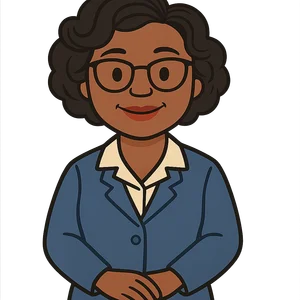
Mary Jackson
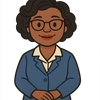
Mary Jackson was an American mathematician and aerospace engineer at NASA…
Reads at Grades K-2 Listens at K–3
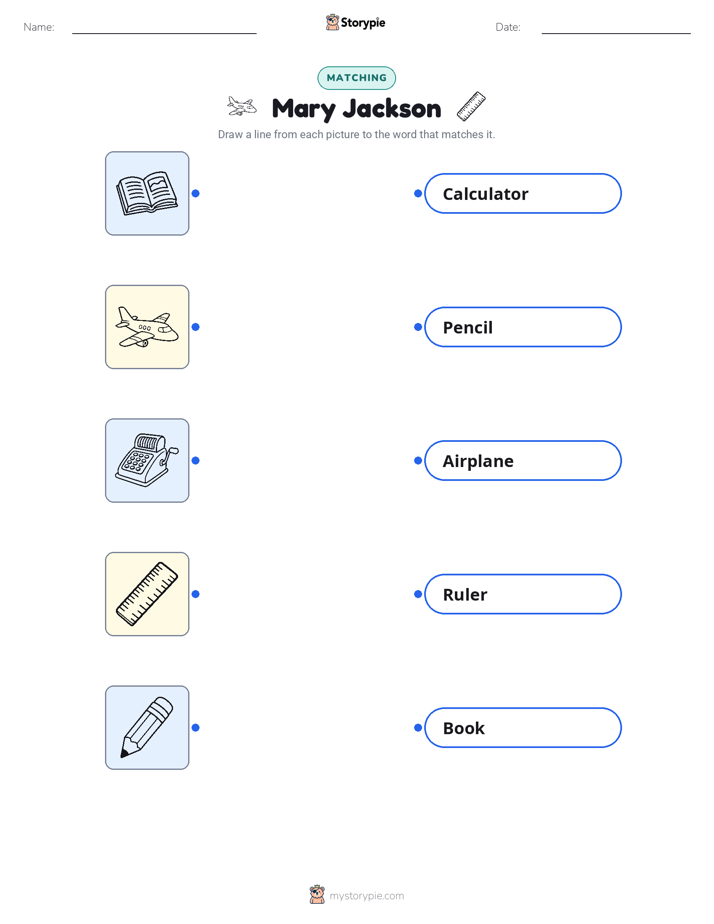
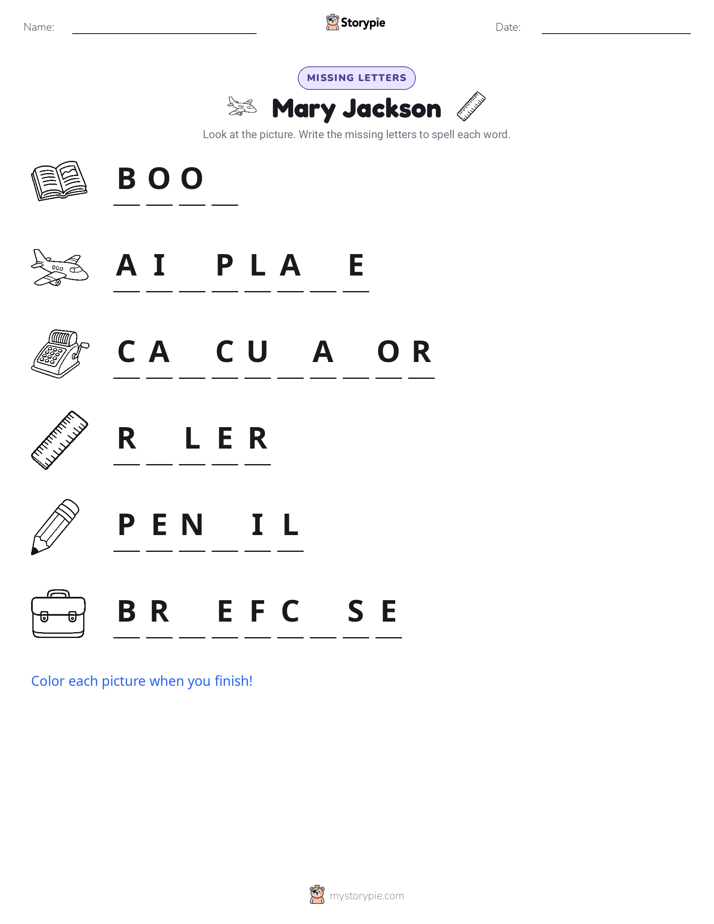
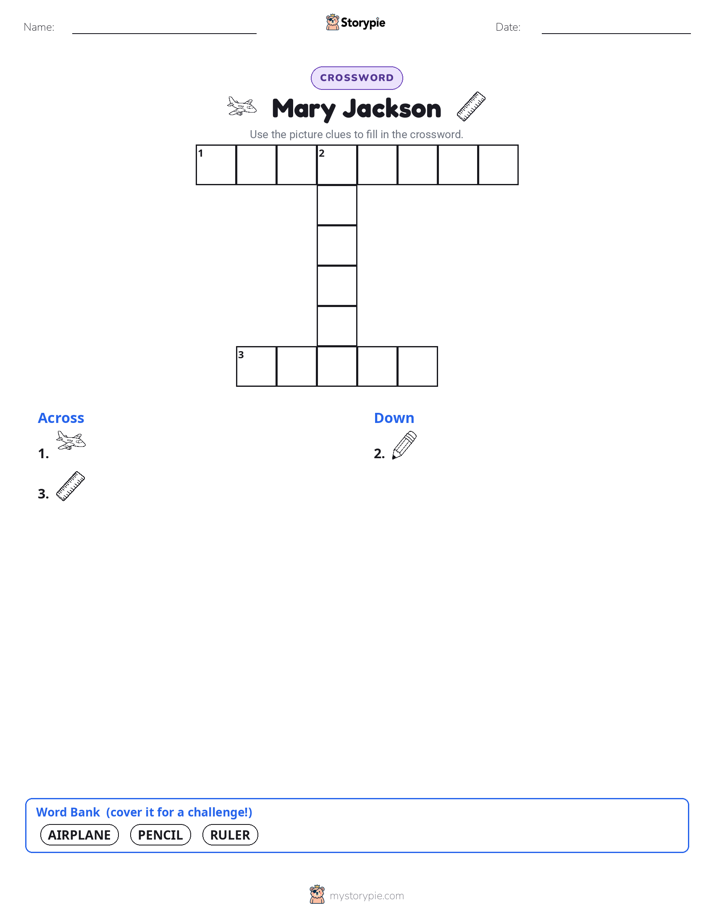
Print & create
Answer keys·No prep·Free with an account
28 worksheets · answer keys · full story · quiz · Ages 6-8 · CEFR A2
Plus adds 208,000+ more stories in 27 languages, audio for every one, and printables for all of them.
Just want Mary Jackson?
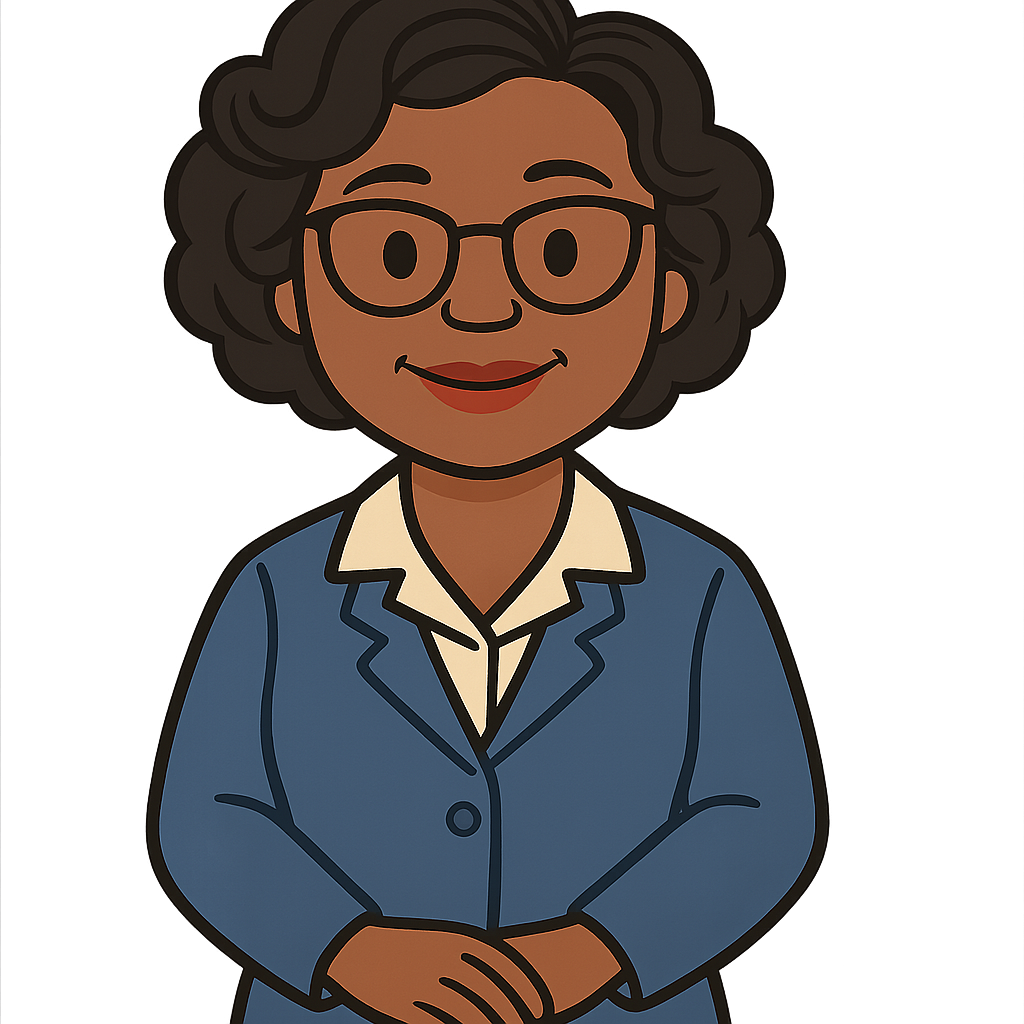
Hello. My name is Mary Jackson, and I want to tell you my story. I was born in a town called Hampton, Virginia, on April 9th, 1921. Even when I was a little girl, I loved going to school. My favorite subjects were the ones with puzzles and numbers, like math and science. They just made sense to me. I worked very hard, and my love for numbers helped me all the way through college. In 1942, I graduated from a school called the Hampton Institute with a degree in mathematics. I was so proud that I had followed my passion, and I was excited to see where it would take me next.
In 1951, I started a very important job at a place called NACA. You might know it by its other name, NASA, which is what it was called later. My job title was a 'human computer.' That sounds a bit funny, doesn't it? It meant that before there were electronic computers, people like me had to solve very difficult math problems by hand for the engineers. We used our brains, pencils, and paper to help them design better and safer airplanes. Back then, things were different, and Black people and white people worked in separate areas. My group was an amazing team of Black women called the West Area Computing unit. It was there that I worked with other smart women, like Dorothy Vaughan and Katherine Johnson, and we helped each other do our best work.
I loved my job as a human computer, but I wanted to do even more. One day, an engineer I worked with named Kazimierz Czarnecki saw how much I enjoyed the work. He told me I should become an engineer myself. I was so excited by the idea. But there was a problem. To become an engineer, I needed to take special classes after work. The classes were taught at a high school that did not allow Black students to attend. I knew it wasn't fair, but I didn't let that stop me. I asked for special permission to join the classes. I had to be brave, but it worked. They said yes. After a lot of hard work, I finished my classes, and in 1958, I became NASA's very first Black female engineer. It was one of the proudest days of my life.
Mary Jackson: Reaching for the Stars
Hello. My name is Mary Jackson, and I want to tell you my story. I was born in a town called Hampton, Virginia, on April 9th, 1921. Even when I was a little girl, I loved going to school. My favorite subjects were the ones with puzzles and numbers, like math and science. They just made sense to me. I worked very hard, and my love for numbers helped me all the way through college. In 1942, I graduated from a school called the Hampton Institute with a degree in mathematics. I was so proud that I had followed my passion, and I was excited to see where it would take me next.
In 1951, I started a very important job at a place called NACA. You might know it by its other name, NASA, which is what it was called later. My job title was a 'human computer.' That sounds a bit funny, doesn't it? It meant that before there were electronic computers, people like me had to solve very difficult math problems by hand for the engineers. We used our brains, pencils, and paper to help them design better and safer airplanes. Back then, things were different, and Black people and white people worked in separate areas. My group was an amazing team of Black women called the West Area Computing unit. It was there that I worked with other smart women, like Dorothy Vaughan and Katherine Johnson, and we helped each other do our best work.
I loved my job as a human computer, but I wanted to do even more. One day, an engineer I worked with named Kazimierz Czarnecki saw how much I enjoyed the work. He told me I should become an engineer myself. I was so excited by the idea. But there was a problem. To become an engineer, I needed to take special classes after work. The classes were taught at a high school that did not allow Black students to attend. I knew it wasn't fair, but I didn't let that stop me. I asked for special permission to join the classes. I had to be brave, but it worked. They said yes. After a lot of hard work, I finished my classes, and in 1958, I became NASA's very first Black female engineer. It was one of the proudest days of my life.
For many years, I worked as an engineer on projects that helped us understand how air flows over airplanes. It was exciting work. But after a while, I saw another way I could help. In 1979, I decided to change jobs at NASA. My new role was to help make sure that all women and people of different backgrounds had the same chance to get good jobs and promotions as everyone else. I wanted to help other people follow their dreams, just like I had. It was important to me to help them reach for the stars, too.
I retired from NASA in 1985 after a long and happy career. I lived to be 83 years old. I hope when you hear my story, you remember that it’s important to never give up on your dreams, even when things are hard. I wasn't afraid to be the first to do something, and my work helped show that anyone can be an engineer or a scientist if they work hard. In 2020, NASA honored me by naming its main building in Washington, D.C. after me. Knowing that my story still inspires people today is the greatest honor of all.
Wow facts
About
Mary Jackson was an American mathematician and aerospace engineer at NASA, who became the agency's first Black female engineer in 1958. She was a key figure among the African American women mathematicians known as 'human computers.'
Take a Quiz
Question 1 of 4
What was Mary Jackson's job called at NACA before she became an engineer?
Explore next


Want to do even more?
Go beyond exploring. Unlock tools that turn every story into real learning.

Storypie Plus for families
Full stories, quizzes, and printables. Nights and car rides, sorted.
- Unlimited audio stories
- Create Mode: your child stars in the story
- Offline downloads
- Printable worksheets & coloring pages

Why Storypie for Schools
Students engaged. Prep in seconds. Evenings back to you.
- Worksheets & Quizzes
- Classroom Management
- Formative Assessment
- Custom Curriculum & Lesson Plans
- 27 Languages

Why Storypie for Homeschool
Curriculum done. They'll ask for more. Hours back in your day.
- Worksheet Generator
- First-Person Audio Stories
- Built-in Comprehension Quizzes
- Custom Curriculum & Lesson Plans
- Print & Go Activities