English

Max Weber
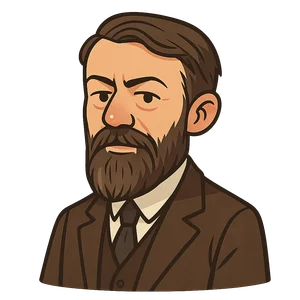
Max Weber was a German sociologist, philosopher…
Reads at Grades 6–8 Listens at Grades 4–8
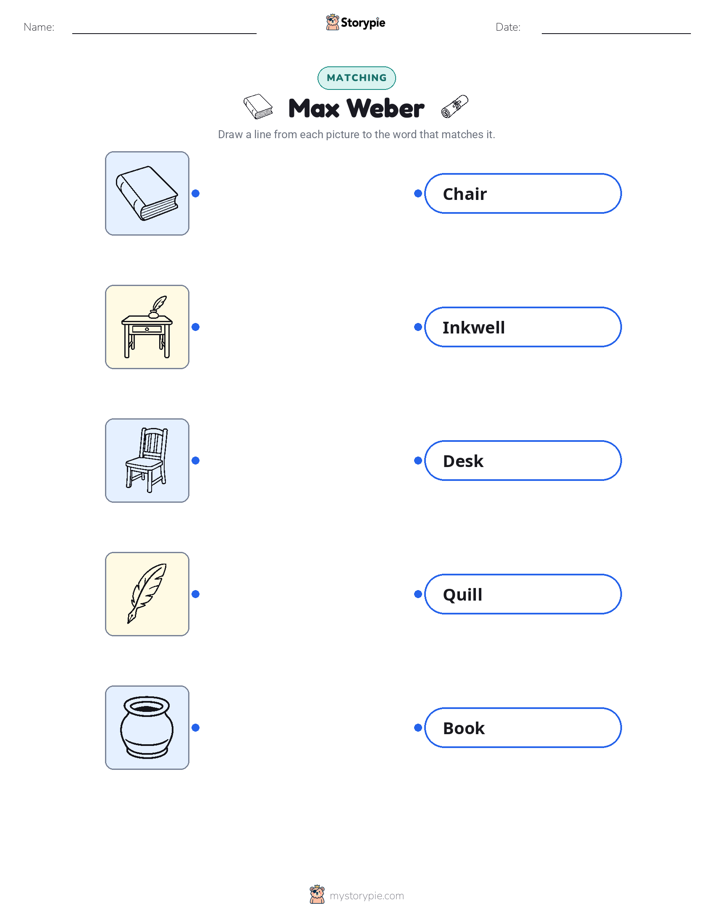
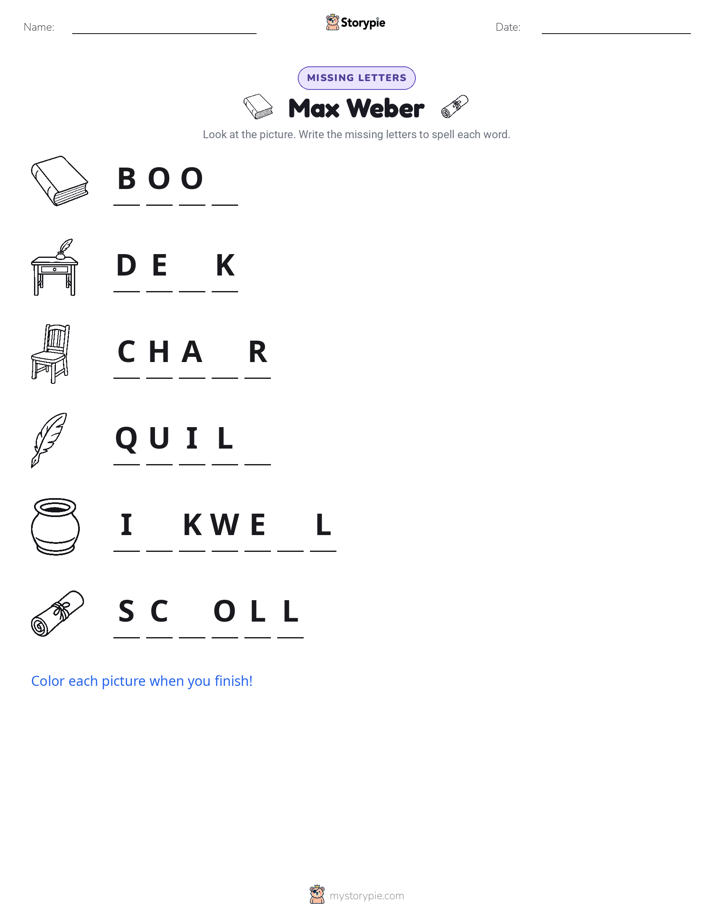
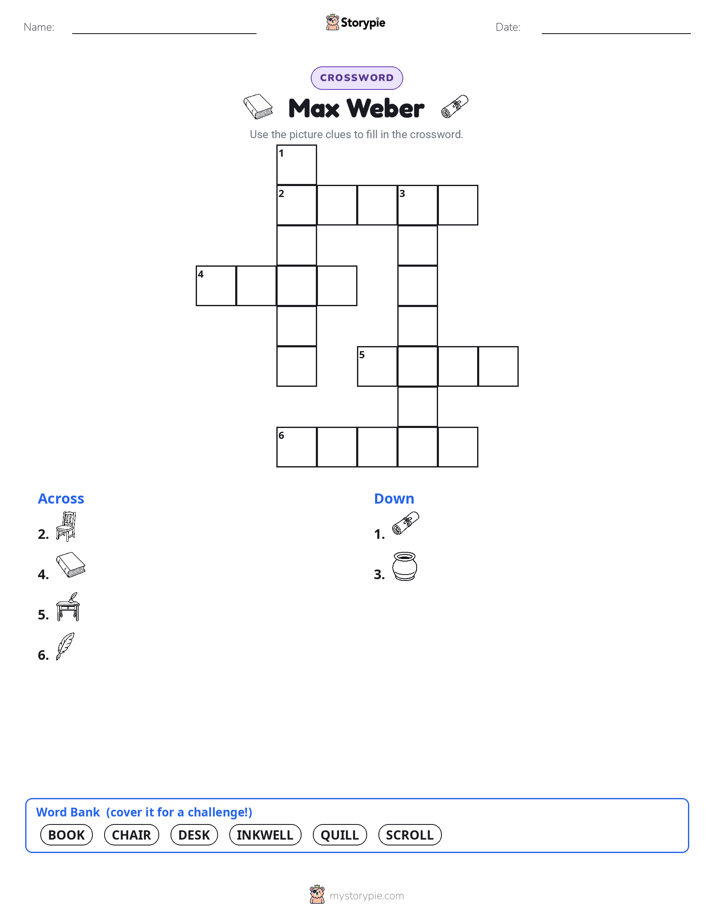
Print & create
Answer keys·No prep·Free with an account
28 worksheets · answer keys · full story · quiz · Ages 10-12 · CEFR B2
Plus adds 279,000+ more stories in 27 languages, audio for every one, and printables for all of them.
Just want Max Weber?
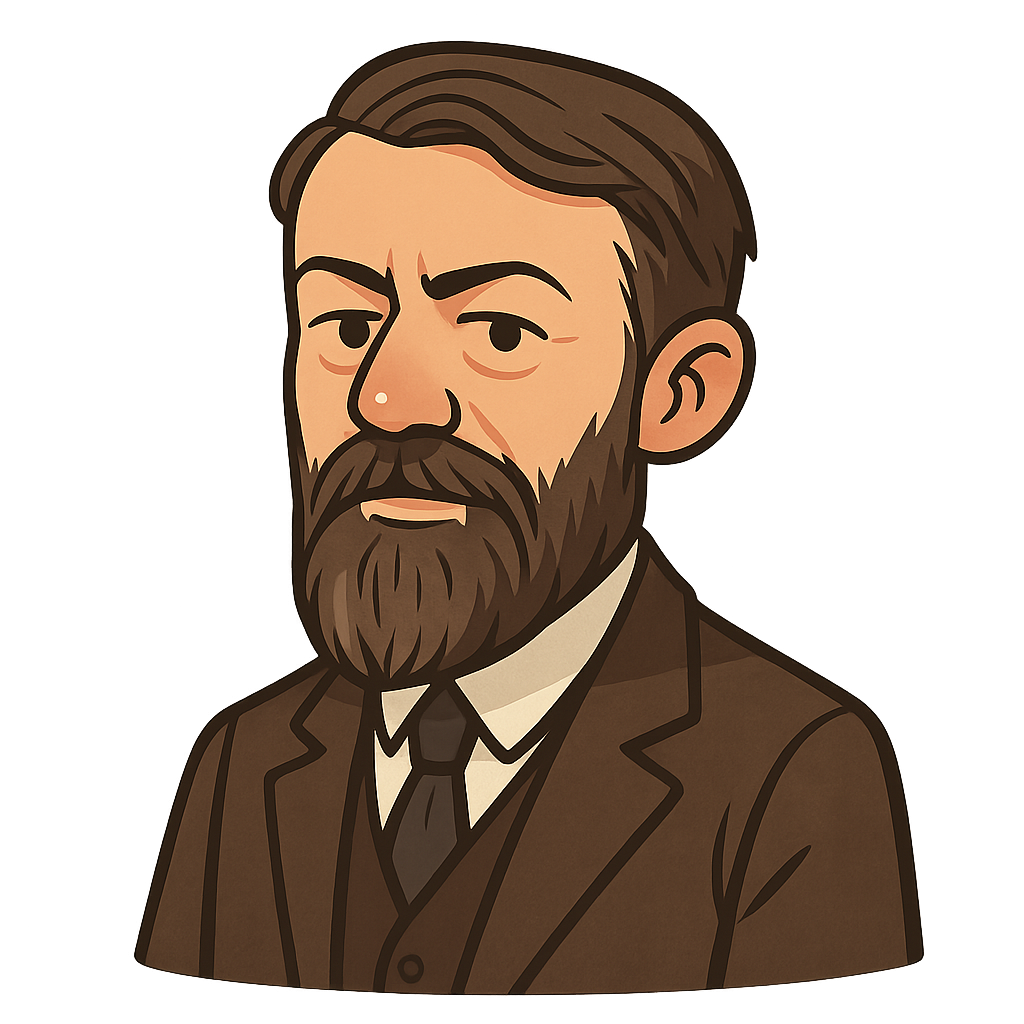
Hello, my name is Max Weber, and I spent my life asking big questions about the world. You might know me as one of the founders of sociology, which is the study of how people live and work together in societies. I was born on April 21st, 1864, in Erfurt, Prussia, a place that is now part of modern Germany. My childhood home was a fascinating place filled with contrasting ideas. My father was a successful politician, always busy with the practical matters of law and government. My mother, on the other hand, was deeply religious and thoughtful, focused on matters of faith and personal values. Living between their two very different worlds made me incredibly curious. I began to wonder how people's inner beliefs and their outward actions shaped the course of history and the structure of entire nations. This curiosity fueled a great love for reading. Even as a teenager, I wasn't just reading stories; I was writing my own serious essays, trying to answer historical questions that even adults found challenging.
My hunger for knowledge led me to the University of Heidelberg in 1882. As a student, my interests were broad, and I couldn't settle on just one subject. I dove into law, history, economics, and philosophy, because I believed they all held pieces to a much larger puzzle. To me, society wasn't just a random collection of people; it was a giant, complicated system with its own rules and patterns. I wanted to understand the powerful, often invisible forces that held everything together. I studied everything from the ancient laws of Rome to the economic systems of my own time. I was driven by a single goal: to understand the fundamental principles that governed how human societies operated. I wanted to see how all the different pieces—the laws people created, the economies they built, and the gods they worshipped—fit together to form the world we live in.
Max Weber: A Life of Big Questions
Hello, my name is Max Weber, and I spent my life asking big questions about the world. You might know me as one of the founders of sociology, which is the study of how people live and work together in societies. I was born on April 21st, 1864, in Erfurt, Prussia, a place that is now part of modern Germany. My childhood home was a fascinating place filled with contrasting ideas. My father was a successful politician, always busy with the practical matters of law and government. My mother, on the other hand, was deeply religious and thoughtful, focused on matters of faith and personal values. Living between their two very different worlds made me incredibly curious. I began to wonder how people's inner beliefs and their outward actions shaped the course of history and the structure of entire nations. This curiosity fueled a great love for reading. Even as a teenager, I wasn't just reading stories; I was writing my own serious essays, trying to answer historical questions that even adults found challenging.
My hunger for knowledge led me to the University of Heidelberg in 1882. As a student, my interests were broad, and I couldn't settle on just one subject. I dove into law, history, economics, and philosophy, because I believed they all held pieces to a much larger puzzle. To me, society wasn't just a random collection of people; it was a giant, complicated system with its own rules and patterns. I wanted to understand the powerful, often invisible forces that held everything together. I studied everything from the ancient laws of Rome to the economic systems of my own time. I was driven by a single goal: to understand the fundamental principles that governed how human societies operated. I wanted to see how all the different pieces—the laws people created, the economies they built, and the gods they worshipped—fit together to form the world we live in.
After I became a professor, I dedicated myself to one of the biggest questions of all: why did modern capitalism, the economic system based on private ownership and competition, develop so strongly in Western Europe and not elsewhere? This question consumed me, and between 1904 and 1905, I published my most famous work to try and answer it. The book was called The Protestant Ethic and the Spirit of Capitalism. In it, I presented a bold new idea. I had observed that many of the early business leaders and owners of capital were Protestants. I argued that certain Protestant beliefs, particularly those that encouraged a lifestyle of intense hard work, discipline, and saving money, played a crucial role. This mindset, which discouraged spending on luxuries and instead promoted reinvesting profits, created what I called a 'spirit' of capitalism. This way of life wasn't intentionally designed to create an economic system, but I believed it provided the perfect cultural environment for modern capitalism to grow and thrive.
Beyond economics and religion, I was also fascinated by how modern societies were organized. I spent a great deal of time studying a concept I called 'bureaucracy.' I didn't mean it as a negative word, but as a specific way of organizing large groups of people to get things done efficiently. A bureaucracy, as I saw it, is a system with a clear hierarchy, where everyone has a specific job and must follow a set of logical rules. Think of a large government office or a modern corporation—these are bureaucracies. I recognized that these systems were essential for running complex societies. However, I also had a major concern. I worried that these highly rational and impersonal systems could trap people in what I called an 'iron cage.' In this cage, life would be dominated by rules and logic, leaving little space for human creativity, emotion, and individual freedom. I also explored how leaders gain their authority, identifying different types of power that shape our world.
My life was not only filled with intense intellectual work but also with significant personal challenges. A major turning point came after my father passed away in 1897. His death affected me deeply, and I suffered from a period of severe illness that left me unable to work. For several years, I had to step away from my university teaching duties, a time of great personal turmoil and sadness for me. It was a long and difficult journey, but I eventually recovered enough to return to my research and writing with renewed focus. Later in my life, after the devastation of World War I, I felt a duty to help my country rebuild. In 1919, I served as an advisor to the group drafting the new constitution for Germany, hoping that my understanding of society and government could help create a more stable and just future for my nation.
I lived to be 56 years old, and my life came to an end on June 14th, 1920. Although my time on Earth was over, the questions I asked and the ideas I developed continued to influence thinkers for generations. Today, I am remembered as one of the principal architects of modern sociology. My writings, including The Protestant Ethic and the Spirit of Capitalism, are still required reading for students all over the world who want to understand how our societies function. They explore the connections between our economies, our governments, our religions, and our personal values. My greatest hope is that my story encourages you to look at the world with the same curiosity and to never be afraid to ask your own big questions.
Wow facts
About
Max Weber was a German sociologist, philosopher, and political economist who is considered one of the founders of modern sociology. His ideas on bureaucracy and the Protestant work ethic have greatly influenced social theory.
Take a Quiz
Question 1 of 5
What was the main idea Max Weber presented in his book *The Protestant Ethic and the Spirit of Capitalism*?
Explore next






Want to do even more?
Go beyond exploring. Unlock tools that turn every story into real learning.

Storypie Plus for families
Full stories, quizzes, and printables. Nights and car rides, sorted.
- Unlimited audio stories
- Create Mode: your child stars in the story
- Offline downloads
- Printable worksheets & coloring pages

Why Storypie for Schools
Students engaged. Prep in seconds. Evenings back to you.
- Worksheets & Quizzes
- Classroom Management
- Formative Assessment
- Custom Curriculum & Lesson Plans
- 27 Languages

Why Storypie for Homeschool
Curriculum done. They'll ask for more. Hours back in your day.
- Worksheet Generator
- First-Person Audio Stories
- Built-in Comprehension Quizzes
- Custom Curriculum & Lesson Plans
- Print & Go Activities