English

Max Weber
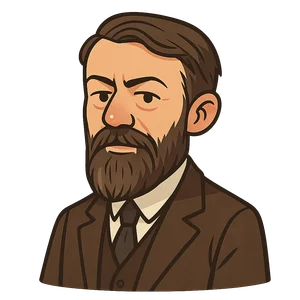
Max Weber was a German sociologist, philosopher…
Reads at Grades 3–5 Listens at Grades 1–5
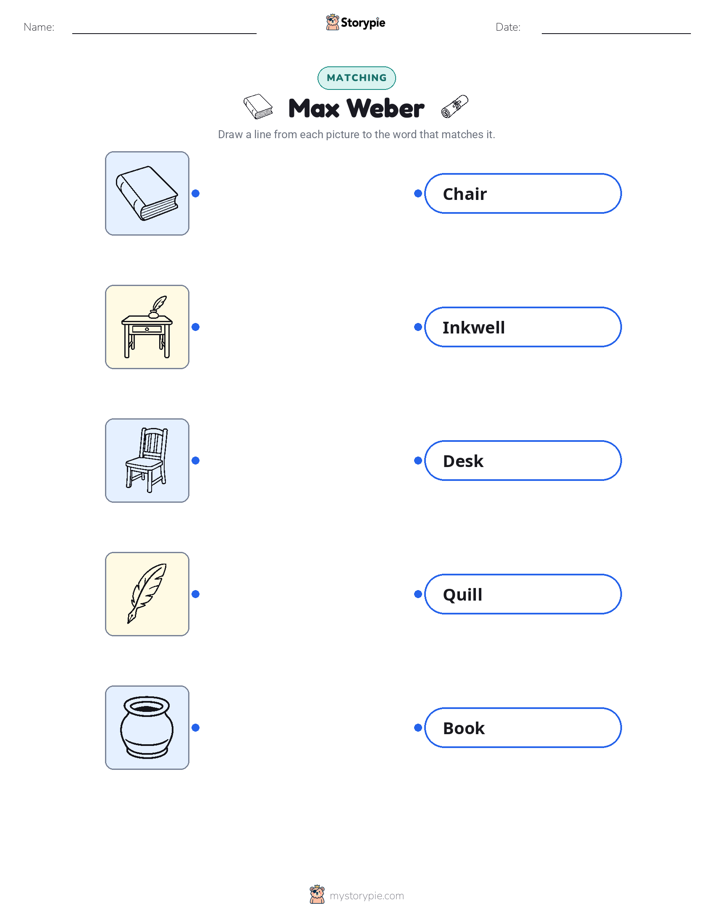
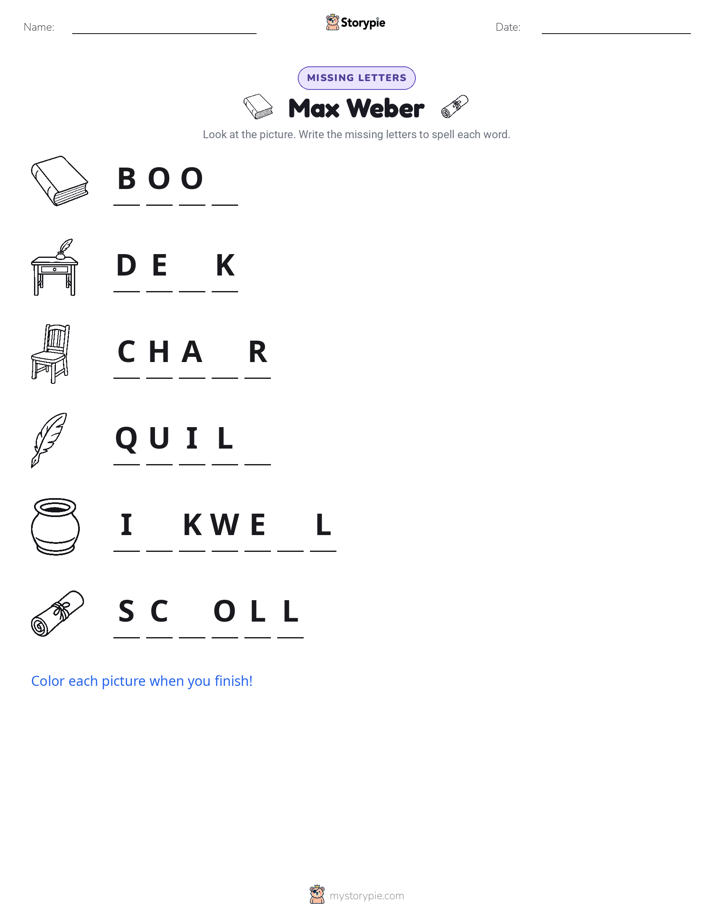
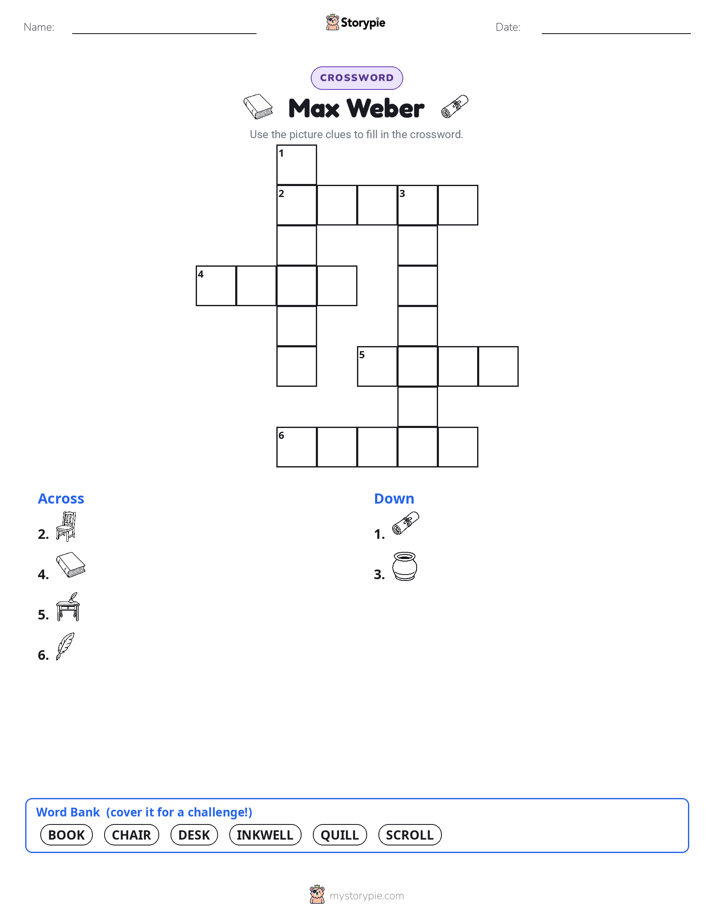
Print & create
Answer keys·No prep·Free with an account
28 worksheets · answer keys · full story · quiz · Ages 8-10 · CEFR B1
Plus adds 279,000+ more stories in 27 languages, audio for every one, and printables for all of them.
Just want Max Weber?
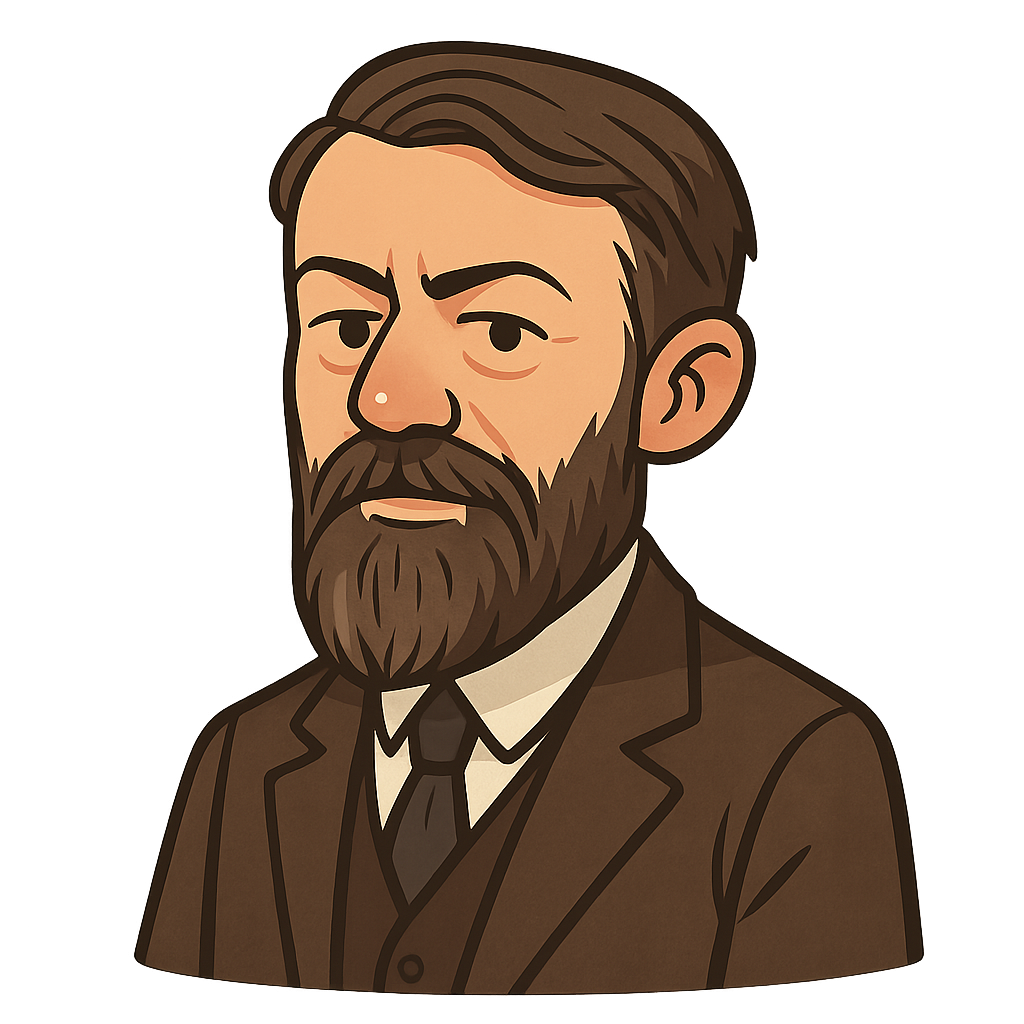
Hello! My name is Max Weber. My story begins on April 21st, 1864, in a town called Erfurt, in what is now Germany. I grew up in a house that was always buzzing with excitement. My father was a politician, so important people were always visiting, talking about politics, laws, and how the world worked. I was a very curious boy and loved to read. While other children might have been playing outside, you could often find me tucked away with a big book, learning about history and faraway places.
When I was old enough, in the early 1880s, I went to university. I was fascinated by so many subjects, especially law, history, and economics. I wanted to understand the big questions, like 'Why do people in a society behave the way they do?' and 'How do governments and businesses work?' After my studies and some time in the army, I became a professor. I loved teaching and sharing ideas with my students. It was during this time that I met a wonderful and very smart woman named Marianne Schnitger. We shared a love for learning and big ideas, and we got married in 1893. She was my partner in everything.
The world was changing fast, and I wanted to understand why. I studied how large organizations, which I called 'bureaucracies,' were becoming more common. Think about a school or a government office—they have lots of rules, special jobs for different people, and a clear way of doing things. I explained how this system helped societies become very organized and efficient. I also wrote one of my most famous books in 1905, called *The Protestant Ethic and the Spirit of Capitalism*. In it, I explored how people's religious beliefs and values could shape how they thought about work and money, which helped create our modern economy.
Max Weber: A Life of Big Ideas
Hello! My name is Max Weber. My story begins on April 21st, 1864, in a town called Erfurt, in what is now Germany. I grew up in a house that was always buzzing with excitement. My father was a politician, so important people were always visiting, talking about politics, laws, and how the world worked. I was a very curious boy and loved to read. While other children might have been playing outside, you could often find me tucked away with a big book, learning about history and faraway places.
When I was old enough, in the early 1880s, I went to university. I was fascinated by so many subjects, especially law, history, and economics. I wanted to understand the big questions, like 'Why do people in a society behave the way they do?' and 'How do governments and businesses work?' After my studies and some time in the army, I became a professor. I loved teaching and sharing ideas with my students. It was during this time that I met a wonderful and very smart woman named Marianne Schnitger. We shared a love for learning and big ideas, and we got married in 1893. She was my partner in everything.
The world was changing fast, and I wanted to understand why. I studied how large organizations, which I called 'bureaucracies,' were becoming more common. Think about a school or a government office—they have lots of rules, special jobs for different people, and a clear way of doing things. I explained how this system helped societies become very organized and efficient. I also wrote one of my most famous books in 1905, called The Protestant Ethic and the Spirit of Capitalism. In it, I explored how people's religious beliefs and values could shape how they thought about work and money, which helped create our modern economy.
Besides being a writer and professor, I also cared deeply about my country. After a big conflict called World War I ended in 1918, Germany needed to rebuild and create a new, fair government. Around 1919, I was asked to help write a new constitution, which is the set of rules for how a country is run. I used my knowledge of history and society to share my ideas on how to build a strong and democratic nation where people's rights were protected. It was very important to me to help in any way I could.
I lived to be 56 years old, passing away in 1920. Even though my life ended, my ideas have lived on. Today, I am remembered as one of the founders of sociology, which is the study of how people live together in societies. Students all over the world still read my books to understand how governments, economies, and cultures work. I hope my work continues to help people ask big questions and better understand the world around them.
Wow facts
About
Max Weber was a German sociologist, philosopher, and political economist who is considered one of the founders of modern sociology. His ideas on bureaucracy and the Protestant work ethic have greatly influenced social theory.
Take a Quiz
Question 1 of 5
In the story, I mention studying 'bureaucracies.' What is the best description of a bureaucracy?
Explore next






Want to do even more?
Go beyond exploring. Unlock tools that turn every story into real learning.

Storypie Plus for families
Full stories, quizzes, and printables. Nights and car rides, sorted.
- Unlimited audio stories
- Create Mode: your child stars in the story
- Offline downloads
- Printable worksheets & coloring pages

Why Storypie for Schools
Students engaged. Prep in seconds. Evenings back to you.
- Worksheets & Quizzes
- Classroom Management
- Formative Assessment
- Custom Curriculum & Lesson Plans
- 27 Languages

Why Storypie for Homeschool
Curriculum done. They'll ask for more. Hours back in your day.
- Worksheet Generator
- First-Person Audio Stories
- Built-in Comprehension Quizzes
- Custom Curriculum & Lesson Plans
- Print & Go Activities