English

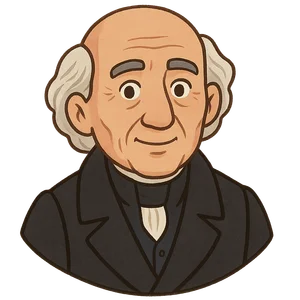
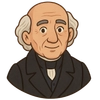
Miguel Hidalgo y Costilla
A Mexican Catholic priest and a leader of the Mexican War of Independence…
Reads at Grades 6–8 Listens at Grades 4–8
Print & create
Answer keys·No prep·Free with an account
28 worksheets · answer keys · full story · quiz · Ages 10-12 · CEFR B2
Plus adds 102,000+ more stories in 27 languages, audio for every one, and printables for all of them.
Just want Miguel Hidalgo y Costilla?
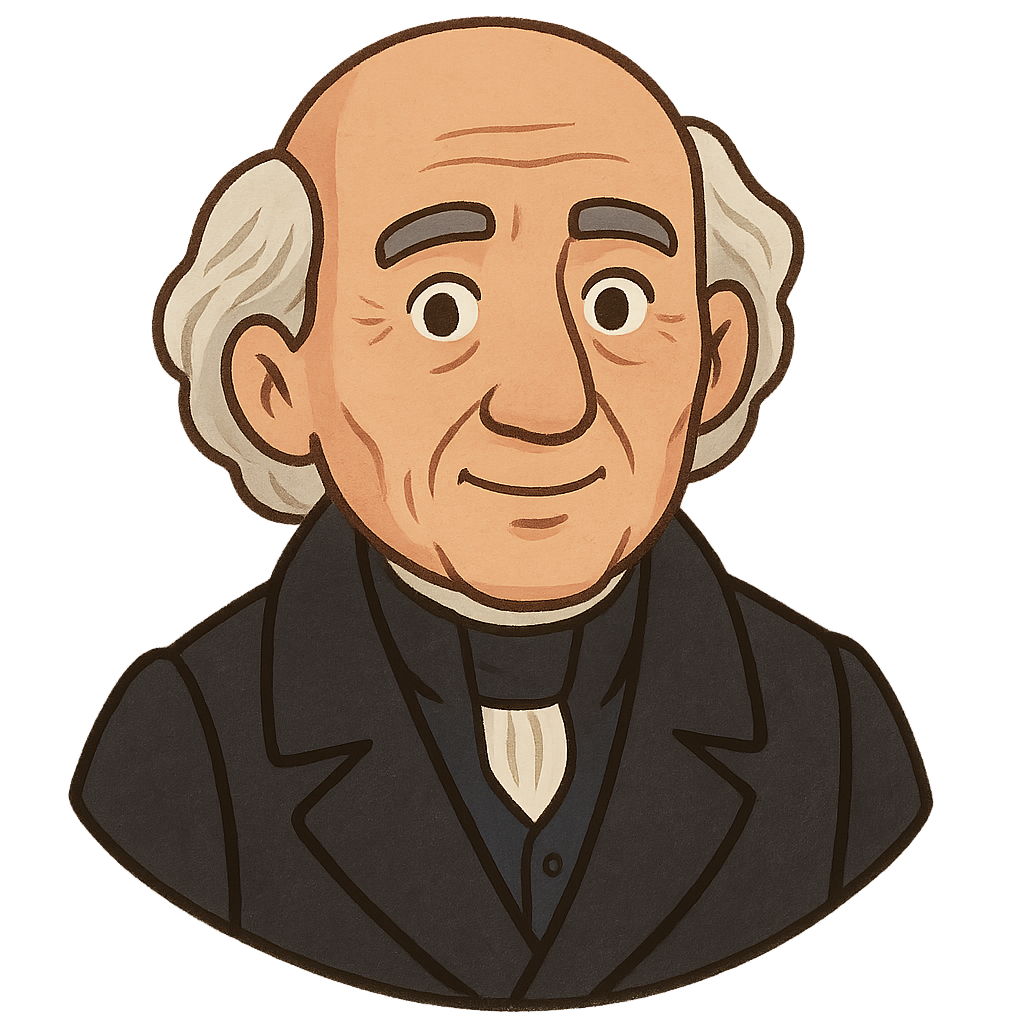
Hello, my name is Miguel Hidalgo y Costilla, and I want to share my story with you. I was born on May 8th, 1753, in a place that was then called New Spain, but you know it today as the country of Mexico. From a young age, I was filled with a deep curiosity for the world. I loved learning everything I could, from different languages to the new ideas about fairness and government that were spreading across the globe. My mind was so quick and clever that my friends and teachers at the Colegio de San Nicolás gave me a nickname: ‘El Zorro,’ which means ‘The Fox.’ This love for knowledge wasn’t just for myself. I believed that understanding the world was the first step toward making it better. In 1778, I became a Catholic priest, hoping to use my education and my position to serve and help the people of my homeland.
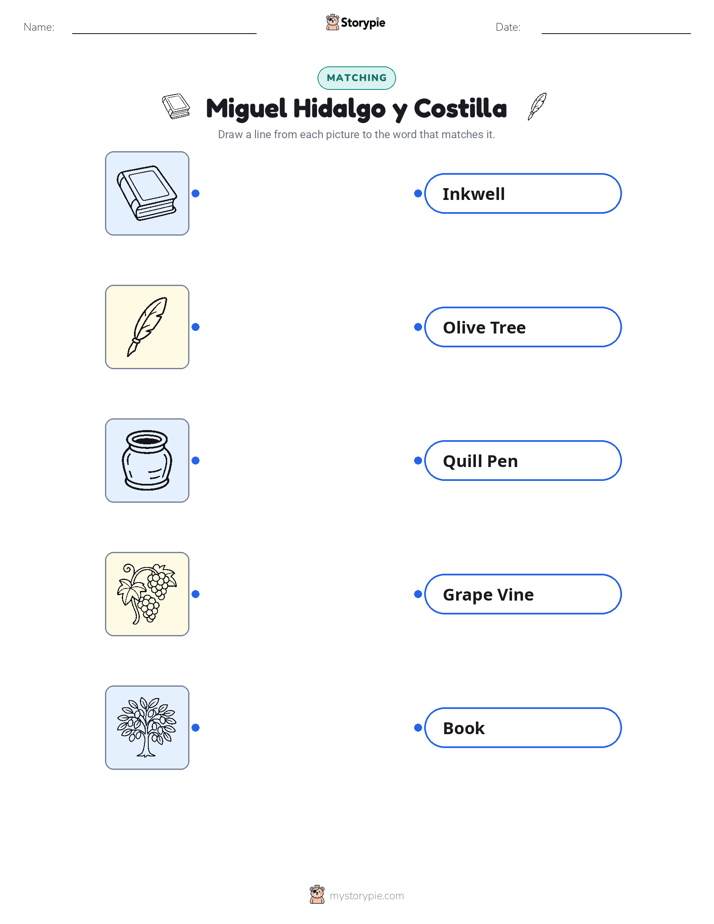
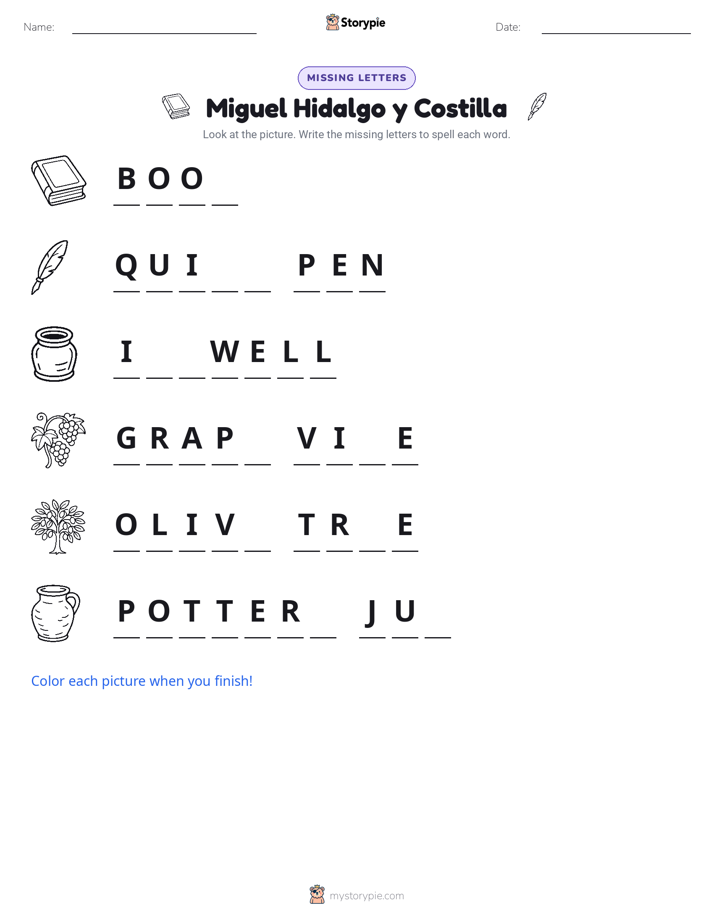
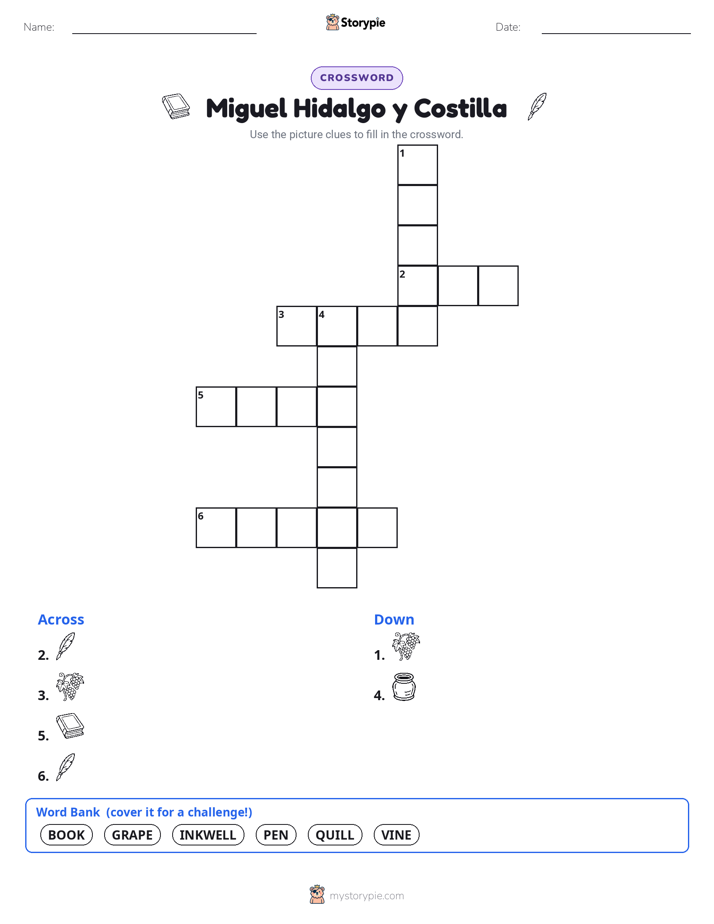
My journey led me to the small town of Dolores, where I served as the parish priest. It was there that my eyes were fully opened to the great struggles of my people. I saw firsthand the deep poverty and unfair treatment that the indigenous and mestizo people endured under the rule of Spain. The Spanish government had many rules that kept them from improving their lives. I knew this was not right. I decided to act, even if it was against the law. I began teaching the people of Dolores practical skills that the Spanish had forbidden them from learning, such as how to grow their own grapes and olives and how to make their own pottery and leather goods. These skills gave them a chance to earn money and have some independence. My belief that everyone deserved a better, fairer life grew stronger every day. This conviction led me, in the year 1810, to join a secret society in the city of Querétaro. We were a group of thinkers and leaders who met in secret to discuss a bold idea: a future where our land was free from Spanish control.
Miguel Hidalgo y Costilla: The Father of Mexico
Hello, my name is Miguel Hidalgo y Costilla, and I want to share my story with you. I was born on May 8th, 1753, in a place that was then called New Spain, but you know it today as the country of Mexico. From a young age, I was filled with a deep curiosity for the world. I loved learning everything I could, from different languages to the new ideas about fairness and government that were spreading across the globe. My mind was so quick and clever that my friends and teachers at the Colegio de San Nicolás gave me a nickname: ‘El Zorro,’ which means ‘The Fox.’ This love for knowledge wasn’t just for myself. I believed that understanding the world was the first step toward making it better. In 1778, I became a Catholic priest, hoping to use my education and my position to serve and help the people of my homeland.
My journey led me to the small town of Dolores, where I served as the parish priest. It was there that my eyes were fully opened to the great struggles of my people. I saw firsthand the deep poverty and unfair treatment that the indigenous and mestizo people endured under the rule of Spain. The Spanish government had many rules that kept them from improving their lives. I knew this was not right. I decided to act, even if it was against the law. I began teaching the people of Dolores practical skills that the Spanish had forbidden them from learning, such as how to grow their own grapes and olives and how to make their own pottery and leather goods. These skills gave them a chance to earn money and have some independence. My belief that everyone deserved a better, fairer life grew stronger every day. This conviction led me, in the year 1810, to join a secret society in the city of Querétaro. We were a group of thinkers and leaders who met in secret to discuss a bold idea: a future where our land was free from Spanish control.
Our secret discussions were not meant to stay secret forever, but our timeline was forced upon us when our plans were discovered by the Spanish authorities. We had to act immediately, or our dream of freedom would be lost before it even began. In the early morning hours of September 16th, 1810, I walked to my church in Dolores and did something no one expected. I rang the church bells, not for a service, but as a call to action. People came running from their homes, wondering what the emergency was. Standing before them, I delivered a passionate speech that would become known as the ‘Grito de Dolores,’ or the Cry of Dolores. I called on them to rise up against centuries of bad government and to fight for their liberty. The response was incredible. Thousands of ordinary people—farmers, miners, and workers—answered the call. They had few weapons, many armed with only their farming tools, but they were united by a powerful sense of courage and hope. We marched forward under a banner showing the Virgin of Guadalupe, a symbol of our shared faith and identity.
In the beginning, our fight for freedom was filled with success. Our passionate, growing army managed to capture the important city of Guanajuato. We then achieved a significant victory against Spanish forces at the Battle of Monte de las Cruces, which brought us near the capital, Mexico City. However, our army, while full of spirit, was not made of professional soldiers. We lacked the training, discipline, and equipment of the Spanish royalist army. This disadvantage became painfully clear at the Battle of Calderón Bridge on January 17th, 1811. We suffered a terrible defeat, and our forces were scattered. In the confusion that followed, my fellow leaders and I tried to escape to the north to regroup and gather more support for our cause. But our journey was cut short. On March 21st, 1811, while traveling through the countryside, my remaining followers and I were ambushed and captured by Spanish forces.
My capture marked the end of my part in the physical battle for independence. My journey came to an end when I was executed on July 30th, 1811. I lived to be 58 years old. But a leader’s life is not the only thing that matters; the idea they fight for is what truly lasts. Though I was gone, the movement I had started did not die with me. The torch of freedom was picked up by other brave leaders, like José María Morelos, who continued the struggle. The war for independence continued for ten more years, and finally, in 1821, Mexico was declared an independent nation. Today, I am honored to be remembered as the ‘Father of the Nation.’ Every year on the night of September 15th, the President of Mexico stands on the balcony of the National Palace and repeats my Cry of Dolores, reminding every generation of the spark that ignited the flame of Mexican freedom.
Wow facts
About
A Mexican Catholic priest and a leader of the Mexican War of Independence, widely known as the 'Father of the Nation' in Mexico for his role in initiating the conflict with his 1810 'Grito de Dolores'.
Take a Quiz
Question 1 of 5
In your own words, describe the events of September 16th, 1810, starting from when I rang the church bells.
Explore next

Want to do even more?
Go beyond exploring. Unlock tools that turn every story into real learning.

Storypie Plus for families
Full stories, quizzes, and printables. Nights and car rides, sorted.
- Unlimited audio stories
- Create Mode: your child stars in the story
- Offline downloads
- Printable worksheets & coloring pages

Why Storypie for Schools
Students engaged. Prep in seconds. Evenings back to you.
- Worksheets & Quizzes
- Classroom Management
- Formative Assessment
- Custom Curriculum & Lesson Plans
- 27 Languages

Why Storypie for Homeschool
Curriculum done. They'll ask for more. Hours back in your day.
- Worksheet Generator
- First-Person Audio Stories
- Built-in Comprehension Quizzes
- Custom Curriculum & Lesson Plans
- Print & Go Activities