English

Mumtaz Mahal
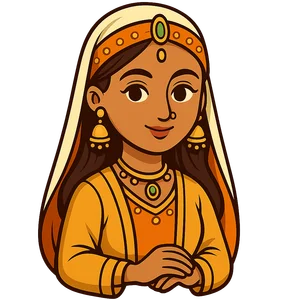
Mumtaz Mahal was a Mughal Empress and the chief consort of Emperor Shah Jahan.
Reads at Grades 6–8 Listens at Grades 4–8
Print & create
Answer keys·No prep·Free with an account
28 worksheets · answer keys · full story · quiz · Ages 10-12 · CEFR B2
Plus adds 244,000+ more stories in 27 languages, audio for every one, and printables for all of them.
Just want Mumtaz Mahal?
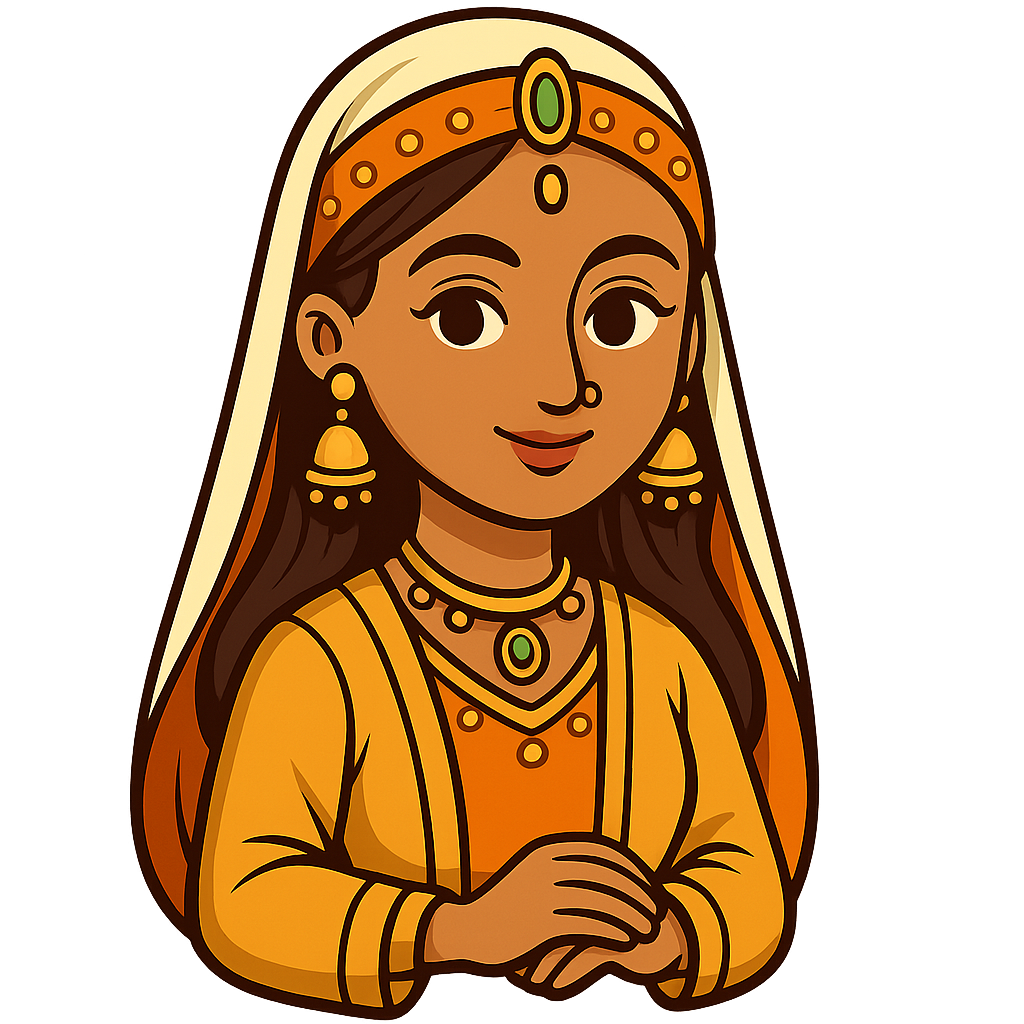
Hello, my name is Arjumand Banu Begum, but history remembers me by the beautiful name my husband gave me: Mumtaz Mahal. I was born on April 27th, 1593, in the magnificent city of Agra, which was the heart of the Mughal Empire. My father was a high-ranking noble in the court, so my childhood was filled with art, poetry, and learning. I was fortunate to be taught how to read and write both Persian and Arabic, and through my studies, I developed a great love for literature and architecture. I never imagined then that my own life would become part of one of the greatest love stories ever told.
In the year 1607, when I was fourteen years old, I met Prince Khurram, the son of Emperor Jahangir. Our first meeting took place at the Meena Bazaar, a special market where the ladies of the court sold luxurious items like silks, perfumes, and jewels. He was handsome and kind, and it is said that it was love at first sight for both of us. We were soon betrothed, but our marriage had to wait. We waited five long years because the court astrologers needed to find the most perfect and lucky day for our wedding. Finally, on May 10th, 1612, we were married in a grand celebration. On that day, I joined my life with the man who would one day be known as the great Emperor Shah Jahan.
Our marriage was much more than a typical royal match; it was a true partnership built on a foundation of love, trust, and deep respect. Prince Khurram and I were inseparable. I traveled with him everywhere he went, even on his long and difficult military campaigns across the empire. I was not just his wife; I was also his closest friend and most trusted advisor. He valued my opinion on important matters of the state, from political decisions to how best to help the needy. In 1628, he became the Emperor and took the name Shah Jahan, which means 'King of the World.' It was at this time that he gave me my new name, Mumtaz Mahal, which translates to 'the Chosen One of the Palace.' It was the greatest honor he could give me, and a name I cherished.
The Story of Mumtaz Mahal
Hello, my name is Arjumand Banu Begum, but history remembers me by the beautiful name my husband gave me: Mumtaz Mahal. I was born on April 27th, 1593, in the magnificent city of Agra, which was the heart of the Mughal Empire. My father was a high-ranking noble in the court, so my childhood was filled with art, poetry, and learning. I was fortunate to be taught how to read and write both Persian and Arabic, and through my studies, I developed a great love for literature and architecture. I never imagined then that my own life would become part of one of the greatest love stories ever told.
In the year 1607, when I was fourteen years old, I met Prince Khurram, the son of Emperor Jahangir. Our first meeting took place at the Meena Bazaar, a special market where the ladies of the court sold luxurious items like silks, perfumes, and jewels. He was handsome and kind, and it is said that it was love at first sight for both of us. We were soon betrothed, but our marriage had to wait. We waited five long years because the court astrologers needed to find the most perfect and lucky day for our wedding. Finally, on May 10th, 1612, we were married in a grand celebration. On that day, I joined my life with the man who would one day be known as the great Emperor Shah Jahan.
Our marriage was much more than a typical royal match; it was a true partnership built on a foundation of love, trust, and deep respect. Prince Khurram and I were inseparable. I traveled with him everywhere he went, even on his long and difficult military campaigns across the empire. I was not just his wife; I was also his closest friend and most trusted advisor. He valued my opinion on important matters of the state, from political decisions to how best to help the needy. In 1628, he became the Emperor and took the name Shah Jahan, which means 'King of the World.' It was at this time that he gave me my new name, Mumtaz Mahal, which translates to 'the Chosen One of the Palace.' It was the greatest honor he could give me, and a name I cherished.
As Empress, my life was very busy. I was the mother to our fourteen children, and I was responsible for overseeing the entire royal household. But my duties extended far beyond the palace walls. Shah Jahan trusted me so completely that he gave me the imperial seal, the Muhr Uzah. This was an incredible responsibility, as it meant that official state documents had to have my approval before they could be issued. I used my powerful position to help others, especially women and children who were in need. I made sure that widows received pensions to support themselves and that orphans were properly cared for. I also loved seeing the beautiful gardens and magnificent buildings my husband commissioned, and we often discussed the architectural designs together. Our life was full of love, family, and a shared dream for the future of our empire.
In 1631, I was traveling with my husband on a military campaign in a place called Burhanpur. I was there to support him, just as I always was. Tragically, after giving birth to our fourteenth child, a daughter we named Gauhar Ara, I became very ill. My husband stayed by my side the entire time, but I knew my time was short. I died on June 17th, 1631. Shah Jahan was overcome with grief. The entire court mourned for two years, and he lost all interest in the luxuries of being an emperor. Before I passed, he made me a solemn promise: he would build a resting place for me that was as beautiful as our love, a monument the world would never forget.
I lived to be 38 years old. True to his word, Shah Jahan dedicated the rest of his life to fulfilling that final promise. In 1632, he began the construction of my tomb in our beloved city of Agra, on the banks of the Yamuna River. It was an enormous project that took more than 20,000 workers over 20 years to complete. He named the magnificent white marble mausoleum the Taj Mahal. It is a symbol of eternal love, decorated with precious stones and intricate carvings that shimmer in the sunlight. Today, people from all over the world travel to see its beauty. My story and the love I shared with my husband are not forgotten; they are told in every glowing stone of the Taj Mahal, a monument that proves that great love can truly last forever.
Wow facts
About
Mumtaz Mahal was a Mughal Empress and the chief consort of Emperor Shah Jahan. The Taj Mahal, a UNESCO World Heritage Site, was built in her memory.
Take a Quiz
Question 1 of 5
What is the central theme of Mumtaz Mahal's life story?
Explore next




Want to do even more?
Go beyond exploring. Unlock tools that turn every story into real learning.

Storypie Plus for families
Full stories, quizzes, and printables. Nights and car rides, sorted.
- Unlimited audio stories
- Create Mode: your child stars in the story
- Offline downloads
- Printable worksheets & coloring pages

Why Storypie for Schools
Students engaged. Prep in seconds. Evenings back to you.
- Worksheets & Quizzes
- Classroom Management
- Formative Assessment
- Custom Curriculum & Lesson Plans
- 27 Languages

Why Storypie for Homeschool
Curriculum done. They'll ask for more. Hours back in your day.
- Worksheet Generator
- First-Person Audio Stories
- Built-in Comprehension Quizzes
- Custom Curriculum & Lesson Plans
- Print & Go Activities