English

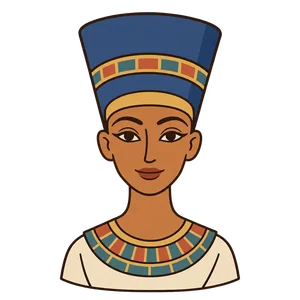
Nefertiti
Nefertiti was a powerful queen of Ancient Egypt during the 18th Dynasty and the Great Royal Wife of Pharaoh…
Reads at Grades 6–8 Listens at Grades 4–8
Print & create
Answer keys·No prep·Free with an account
28 worksheets · answer keys · full story · quiz · Ages 10-12 · CEFR B2
Plus adds 290,000+ more stories in 27 languages, audio for every one, and printables for all of them.
Just want Nefertiti?
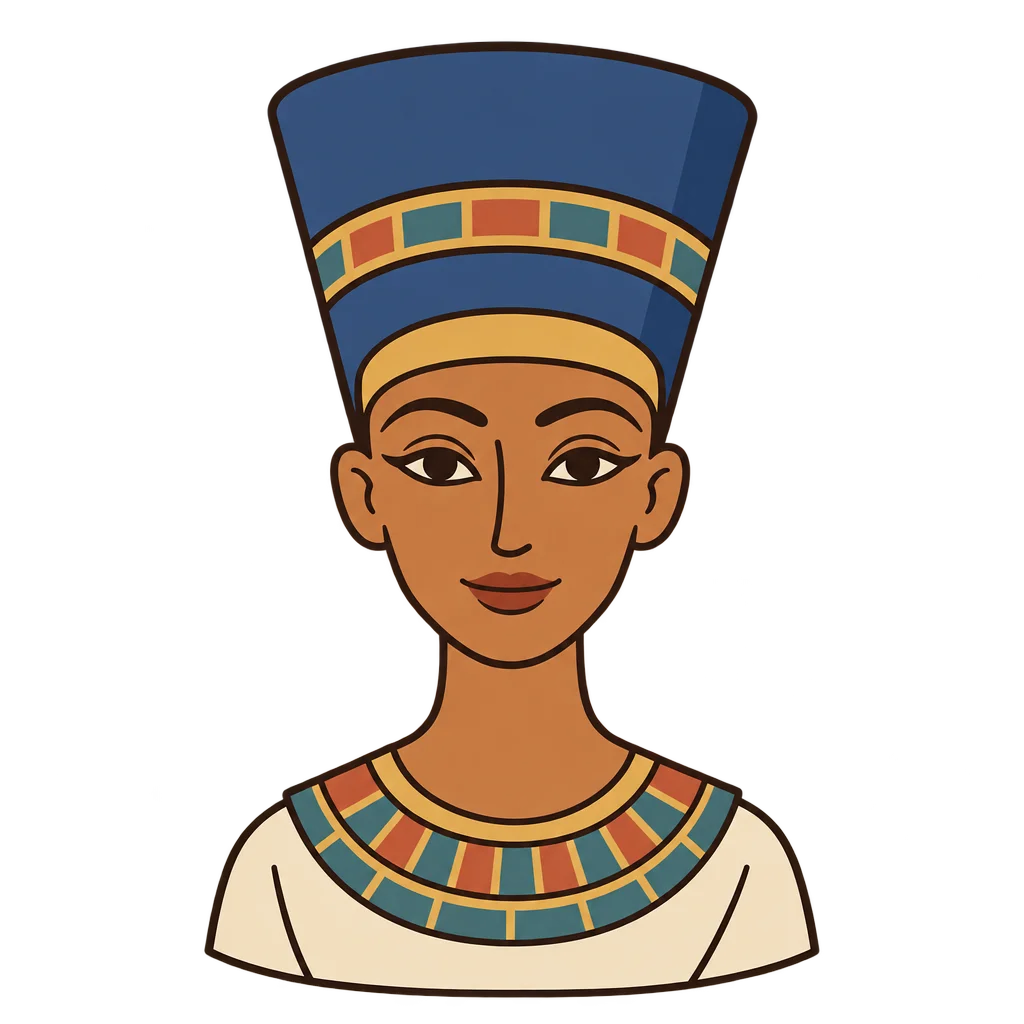
Hello, I am Nefertiti, and I was a queen in the magnificent land of ancient Egypt. My name means 'the beautiful one has come,' and my story is one of great power, deep love, and enduring mystery. I lived during Egypt's prosperous 18th Dynasty, a time of wealth and incredible artistry. My life began around the year 1370 BCE in the vibrant city of Thebes. Thebes was the heart of our empire, a bustling place filled with grand temples and palaces along the Nile River. It was there that I married a prince who would soon become the pharaoh Amenhotep IV. My husband was not like the rulers who came before him; he was a man with revolutionary ideas that would soon change our entire world.
My husband and I believed in a new way of seeing the divine. Instead of worshipping the many gods of our ancestors, we chose to honor a single, all-powerful god: the Aten, which was represented by the disk of the sun. To show his devotion, my husband changed his name to Akhenaten around 1348 BCE, which means 'devoted to the Aten.' We knew that to truly begin this new era, we could not stay in Thebes, with its old temples and traditions. So, we made a bold decision. We left the capital and journeyed into the desert to build a brand-new city dedicated to our god. We called it Akhetaten, 'the Horizon of the Aten,' though today it is known as Amarna. This magnificent city was designed to honor the sun, with open-air temples and wide avenues that allowed the sun's rays to flood every corner. It was here, in this city of light, that we raised our six beloved daughters.
Nefertiti: A Queen of Ancient Egypt
Hello, I am Nefertiti, and I was a queen in the magnificent land of ancient Egypt. My name means 'the beautiful one has come,' and my story is one of great power, deep love, and enduring mystery. I lived during Egypt's prosperous 18th Dynasty, a time of wealth and incredible artistry. My life began around the year 1370 BCE in the vibrant city of Thebes. Thebes was the heart of our empire, a bustling place filled with grand temples and palaces along the Nile River. It was there that I married a prince who would soon become the pharaoh Amenhotep IV. My husband was not like the rulers who came before him; he was a man with revolutionary ideas that would soon change our entire world.
My husband and I believed in a new way of seeing the divine. Instead of worshipping the many gods of our ancestors, we chose to honor a single, all-powerful god: the Aten, which was represented by the disk of the sun. To show his devotion, my husband changed his name to Akhenaten around 1348 BCE, which means 'devoted to the Aten.' We knew that to truly begin this new era, we could not stay in Thebes, with its old temples and traditions. So, we made a bold decision. We left the capital and journeyed into the desert to build a brand-new city dedicated to our god. We called it Akhetaten, 'the Horizon of the Aten,' though today it is known as Amarna. This magnificent city was designed to honor the sun, with open-air temples and wide avenues that allowed the sun's rays to flood every corner. It was here, in this city of light, that we raised our six beloved daughters.
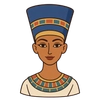
In our new city, I was far more than just the pharaoh's wife. I was my husband's partner in ruling our kingdom. In the art of our time, I was shown in ways no queen had ever been depicted before. You could see me leading religious ceremonies, driving my own chariot in royal processions, and standing as a powerful figure right beside the pharaoh. We encouraged a new form of art known as the 'Amarna style.' Unlike the stiff and formal art of the past, this style was more realistic and full of life. It showed our family in loving, everyday moments—playing with our daughters or sharing a quiet glance. Perhaps the most famous piece from this time is a painted bust of me, created around 1345 BCE by the royal sculptor, Thutmose. In his workshop, he captured not only my royal status with my tall blue crown, but also my personality and what he saw as my inner strength. It is this image that many people think of when they hear my name.
Despite the power and visibility I had, my life is also one of history's greatest puzzles. For twelve years, my name and image were everywhere in our city of Akhetaten. I was a central figure in the art and inscriptions of my husband's reign. But then, something strange happened. After the 12th year of Akhenaten's rule, around 1336 BCE, my name suddenly vanished from all new monuments and records. It was as if I had simply disappeared. To this day, no one knows for sure what became of me. Historians have different ideas. Some believe I may have passed away from an illness. Others have a more intriguing theory: that I took on a new name and continued to rule as a pharaoh myself after my husband's death. My final chapter remains an open question, a royal mystery waiting to be solved.
My story, and the city we built, was lost for thousands of years, buried beneath the desert sands of Egypt. The memory of the Aten and our unique era faded from history. Then, on December 6th, 1912, a team of archaeologists was digging in the ruins of Amarna. They uncovered the workshop of my sculptor, Thutmose, and inside they found my painted bust, preserved almost perfectly. This incredible discovery brought my face back into the light, and I became famous all over the modern world. Although my life ended long ago and many questions about my fate remain, I am remembered today. My bust has made me a symbol of ancient beauty, of a queen's power, and of a time of incredible and revolutionary change in one of the world's greatest civilizations.
Wow facts
About
Nefertiti was a powerful queen of Ancient Egypt during the 18th Dynasty and the Great Royal Wife of Pharaoh Akhenaten. She is renowned for her influential role in a religious revolution and for her famous bust, discovered in 1912.
Take a Quiz
Question 1 of 5
In your own words, retell the story of the major changes Nefertiti and Akhenaten brought to Egypt.
Explore next


Want to do even more?
Go beyond exploring. Unlock tools that turn every story into real learning.

Storypie Plus for families
Full stories, quizzes, and printables. Nights and car rides, sorted.
- Unlimited audio stories
- Create Mode: your child stars in the story
- Offline downloads
- Printable worksheets & coloring pages

Why Storypie for Schools
Students engaged. Prep in seconds. Evenings back to you.
- Worksheets & Quizzes
- Classroom Management
- Formative Assessment
- Custom Curriculum & Lesson Plans
- 27 Languages

Why Storypie for Homeschool
Curriculum done. They'll ask for more. Hours back in your day.
- Worksheet Generator
- First-Person Audio Stories
- Built-in Comprehension Quizzes
- Custom Curriculum & Lesson Plans
- Print & Go Activities