English

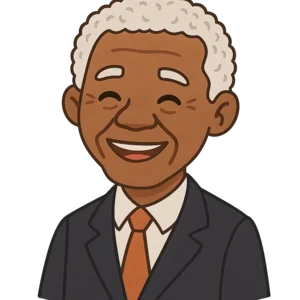
Nelson Mandela
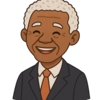
Nelson Mandela was a South African anti-apartheid activist and political leader who served as the first…
Reads at Grades 6–8 Listens at Grades 4–8
Print & create
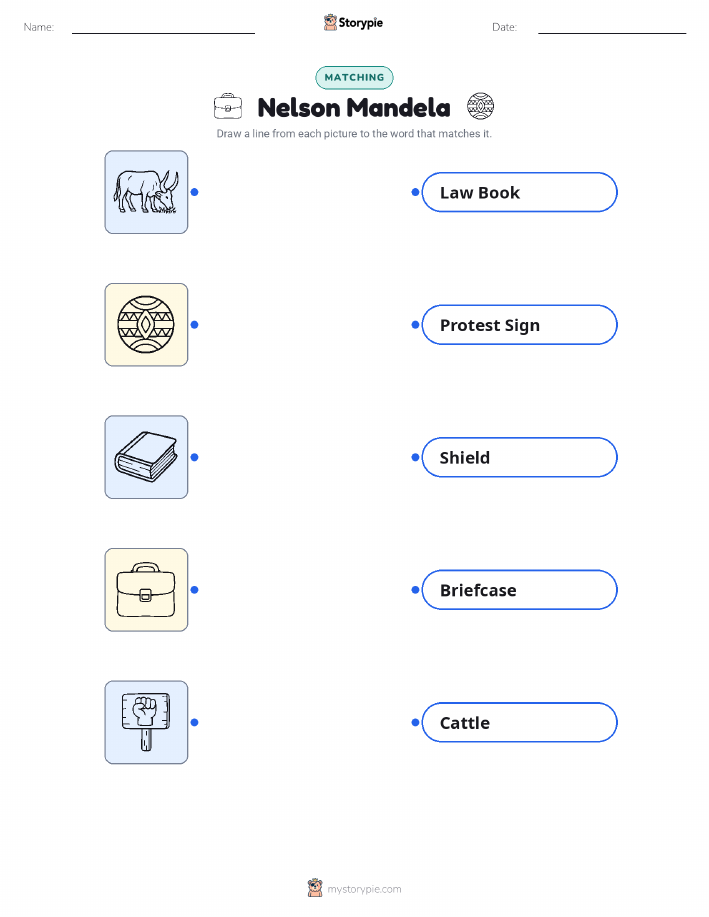
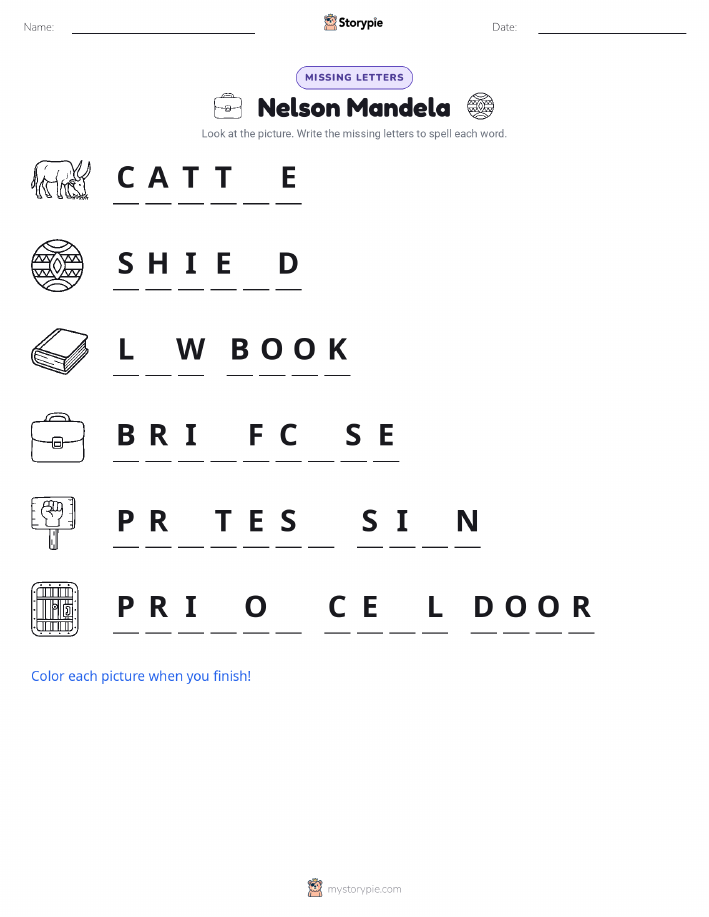
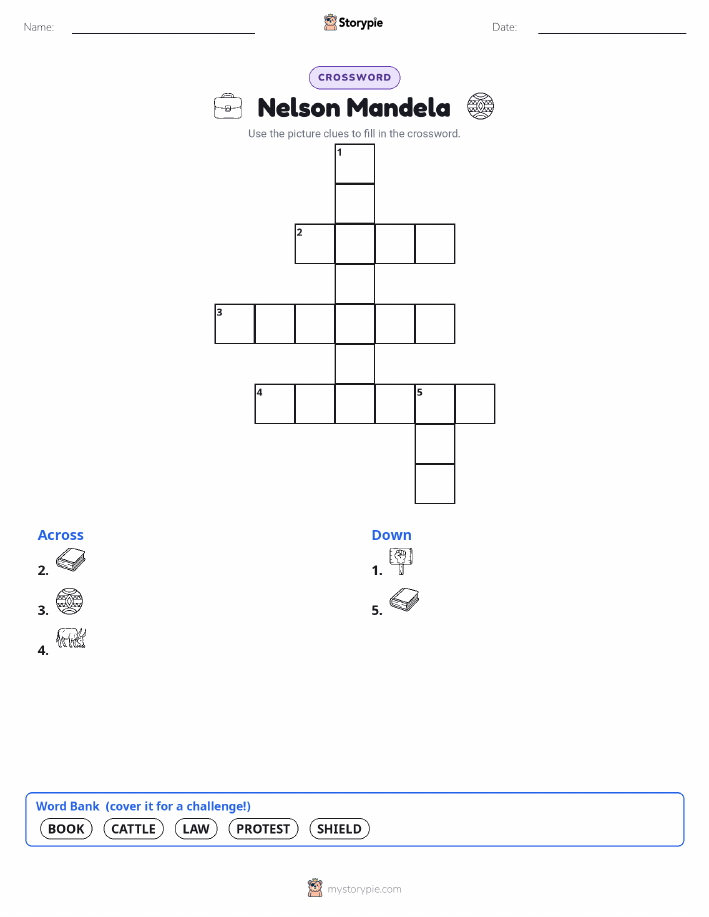
Answer keys·No prep·Free with an account
28 worksheets · answer keys · full story · quiz · Ages 10-12 · CEFR B2
Plus adds 280,000+ more stories in 27 languages, audio for every one, and printables for all of them.
Just want Nelson Mandela?
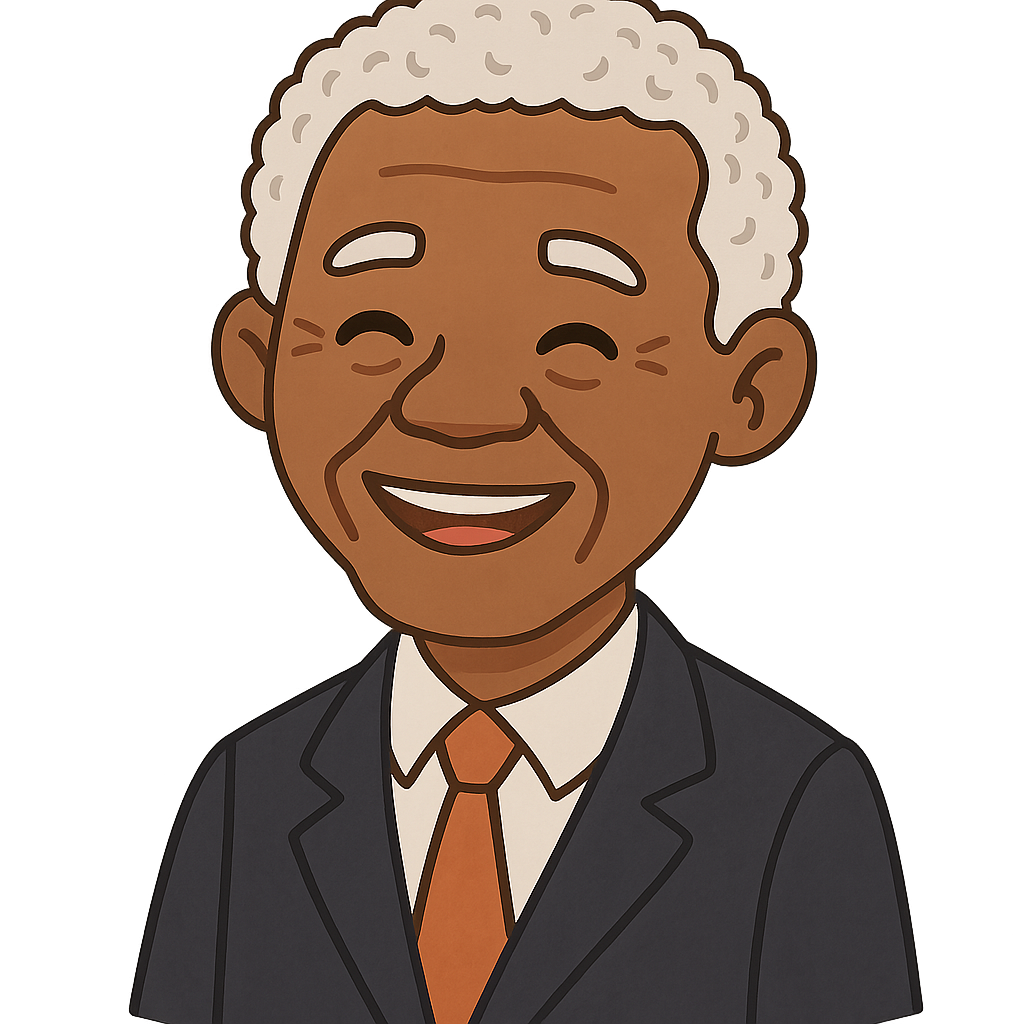
My story begins on July 18, 1918, in a small village called Mvezo in the Transkei region of South Africa. My father named me Rolihlahla, which in my Xhosa language means ‘pulling the branch of a tree,’ or more simply, ‘troublemaker.’ Perhaps it was a sign of the life I was destined to live. After my father lost his position, we moved to the village of Qunu, a place of rolling green hills and endless fields. My childhood there was simple and joyful. I herded cattle, played games with the other boys, and spent my evenings listening to the elders of my Thembu tribe tell stories of our ancestors, stories of courage and wisdom that planted the seeds of justice deep within my heart. My father was a counselor to the regent of the Thembu people, and from him, I learned about leadership and fairness. When I was about seven years old, I was sent to a local school. On my very first day, my teacher, Miss Mdingane, gave me a new name: Nelson. In those days, it was common for African children to be given English names by their teachers, names that were easier for the British colonists to pronounce. I did not know then that the whole world would one day know me by this name.
As a young man, my path led me away from the peaceful hills of Qunu to the crowded, energetic city of Johannesburg. I went there to study law, hoping to build a future for myself. But in Johannesburg, I saw a world that was deeply and terribly unfair. I came face to face with a system the government called apartheid, which is an Afrikaans word for ‘apartness.’ This system was designed to separate people based on the color of their skin. It meant that Black people like me could not live in certain areas, could not attend the same schools as white people, and had no voice in the government that ruled our lives. Everywhere I looked, I saw signs of this injustice—separate entrances for ‘Europeans Only,’ park benches we were forbidden to sit on, and jobs we were not allowed to have. My heart ached for my people. I knew I could not simply stand by. In 1952, my friend Oliver Tambo and I opened the first Black-owned law firm in South Africa. We wanted to use our knowledge to defend those who had no one else to turn to, people who had been unfairly treated by the apartheid laws. This work fueled my determination, and I became more involved with the African National Congress, or ANC, an organization dedicated to fighting for a South Africa where everyone, no matter their race, could be free and equal.
Nelson Mandela: A Journey for Freedom
My story begins on July 18, 1918, in a small village called Mvezo in the Transkei region of South Africa. My father named me Rolihlahla, which in my Xhosa language means ‘pulling the branch of a tree,’ or more simply, ‘troublemaker.’ Perhaps it was a sign of the life I was destined to live. After my father lost his position, we moved to the village of Qunu, a place of rolling green hills and endless fields. My childhood there was simple and joyful. I herded cattle, played games with the other boys, and spent my evenings listening to the elders of my Thembu tribe tell stories of our ancestors, stories of courage and wisdom that planted the seeds of justice deep within my heart. My father was a counselor to the regent of the Thembu people, and from him, I learned about leadership and fairness. When I was about seven years old, I was sent to a local school. On my very first day, my teacher, Miss Mdingane, gave me a new name: Nelson. In those days, it was common for African children to be given English names by their teachers, names that were easier for the British colonists to pronounce. I did not know then that the whole world would one day know me by this name.
As a young man, my path led me away from the peaceful hills of Qunu to the crowded, energetic city of Johannesburg. I went there to study law, hoping to build a future for myself. But in Johannesburg, I saw a world that was deeply and terribly unfair. I came face to face with a system the government called apartheid, which is an Afrikaans word for ‘apartness.’ This system was designed to separate people based on the color of their skin. It meant that Black people like me could not live in certain areas, could not attend the same schools as white people, and had no voice in the government that ruled our lives. Everywhere I looked, I saw signs of this injustice—separate entrances for ‘Europeans Only,’ park benches we were forbidden to sit on, and jobs we were not allowed to have. My heart ached for my people. I knew I could not simply stand by. In 1952, my friend Oliver Tambo and I opened the first Black-owned law firm in South Africa. We wanted to use our knowledge to defend those who had no one else to turn to, people who had been unfairly treated by the apartheid laws. This work fueled my determination, and I became more involved with the African National Congress, or ANC, an organization dedicated to fighting for a South Africa where everyone, no matter their race, could be free and equal.
Our struggle for freedom began with peaceful protests. We organized marches, boycotts, and strikes, believing that we could change the government's mind with our words and our unity. But our peaceful calls for justice were met with violence. In 1960, a terrible event in the town of Sharpeville, where police opened fire on unarmed protesters, convinced me and my comrades that we could no longer remain nonviolent. It was a heavy decision, but we felt we had no other choice but to fight back. This new path led to my arrest. In 1964, I stood trial in what became known as the Rivonia Trial. I looked the judge in the eye and told the court and the world what I believed. I spoke of an ideal of a democratic and free society in which all persons live together in harmony and with equal opportunities. I told them it was an ideal for which I was prepared to die. The court sentenced me to life in prison. I spent the next 27 years as a political prisoner, with 18 of those years on the harsh, windswept Robben Island. Life there was difficult. We were forced to do hard labor in a lime quarry, and the conditions were poor. Yet, even in that dark place, we never lost hope. We turned the prison into a university, secretly teaching each other and debating the future of our country. We smuggled out messages of encouragement to our people. We held onto the unbreakable belief that one day, justice would prevail and we would be free.
That day finally came on February 11, 1990. I walked out of Victor Verster Prison, a free man at last. The world had changed in the 27 years I had been away, but our mission had not. The work to end apartheid was not yet finished. I began negotiations with the government, led by President F.W. de Klerk, to dismantle the system of racial segregation and build a new nation. It required trust and a willingness to forgive the past. Then, on April 27, 1994, an incredible moment arrived. For the first time in South African history, every single citizen, no matter their skin color, was allowed to vote. It was a day of immense joy and celebration. Lines of people snaked for miles, all waiting patiently to cast their vote for the future they dreamed of. I was elected the first president of this new, democratic South Africa, which I called our ‘Rainbow Nation’—a country made of many different colors, living together in peace. My greatest mission as president was reconciliation, to heal the deep wounds of apartheid. After my presidency, I continued to work for peace and social justice around the world. My long walk came to an end on December 5, 2013, but my story is a reminder to you. It shows that no struggle is too great and no barrier is too high if you hold onto hope and fight for what is right. Remember that with courage, determination, and a belief in the goodness of humanity, you too can change the world.
Wow facts
About
Nelson Mandela was a South African anti-apartheid activist and political leader who served as the first president of a democratic South Africa from 1994 to 1999. He is celebrated globally as an icon of democracy and social justice.
Take a Quiz
Question 1 of 5
Describe Nelson Mandela's journey from his childhood in Qunu to becoming an anti-apartheid activist in Johannesburg. What were the key events that shaped his path?
Explore next



Want to do even more?
Go beyond exploring. Unlock tools that turn every story into real learning.

Storypie Plus for families
Full stories, quizzes, and printables. Nights and car rides, sorted.
- Unlimited audio stories
- Create Mode: your child stars in the story
- Offline downloads
- Printable worksheets & coloring pages

Why Storypie for Schools
Students engaged. Prep in seconds. Evenings back to you.
- Worksheets & Quizzes
- Classroom Management
- Formative Assessment
- Custom Curriculum & Lesson Plans
- 27 Languages

Why Storypie for Homeschool
Curriculum done. They'll ask for more. Hours back in your day.
- Worksheet Generator
- First-Person Audio Stories
- Built-in Comprehension Quizzes
- Custom Curriculum & Lesson Plans
- Print & Go Activities