English

Oscar Niemeyer
Oscar Niemeyer was a Brazilian architect considered to be one of the key figures in the development of modern…
Reads at Grades 6–8 Listens at Grades 4–8
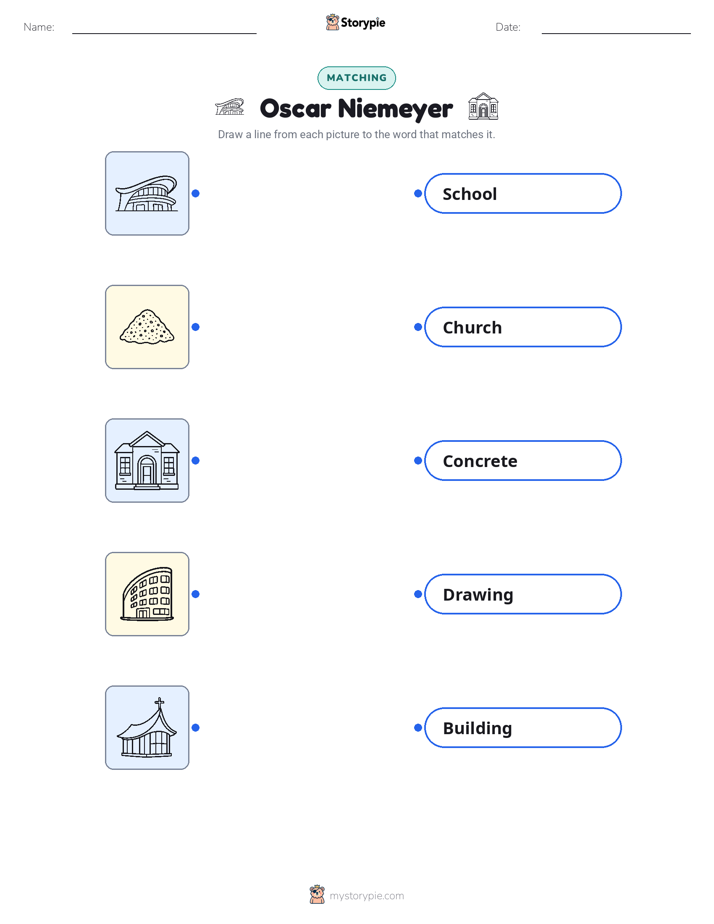
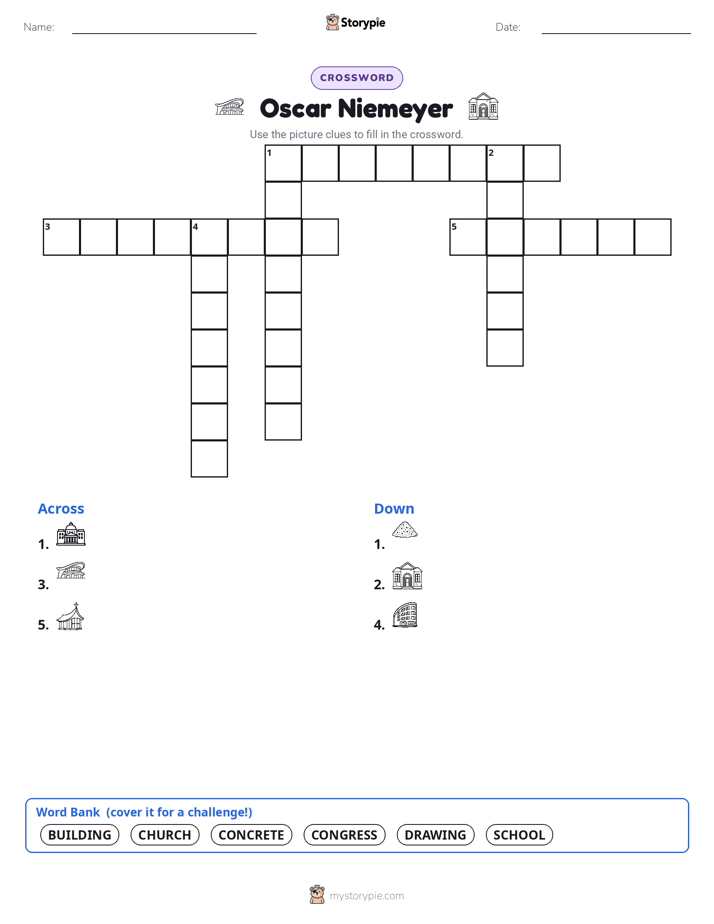
Print & create
Answer keys·No prep·Free with an account
28 worksheets · answer keys · full story · quiz · Ages 10-12 · CEFR B2
Plus adds 164,000+ more stories in 27 languages, audio for every one, and printables for all of them.
Just want Oscar Niemeyer?
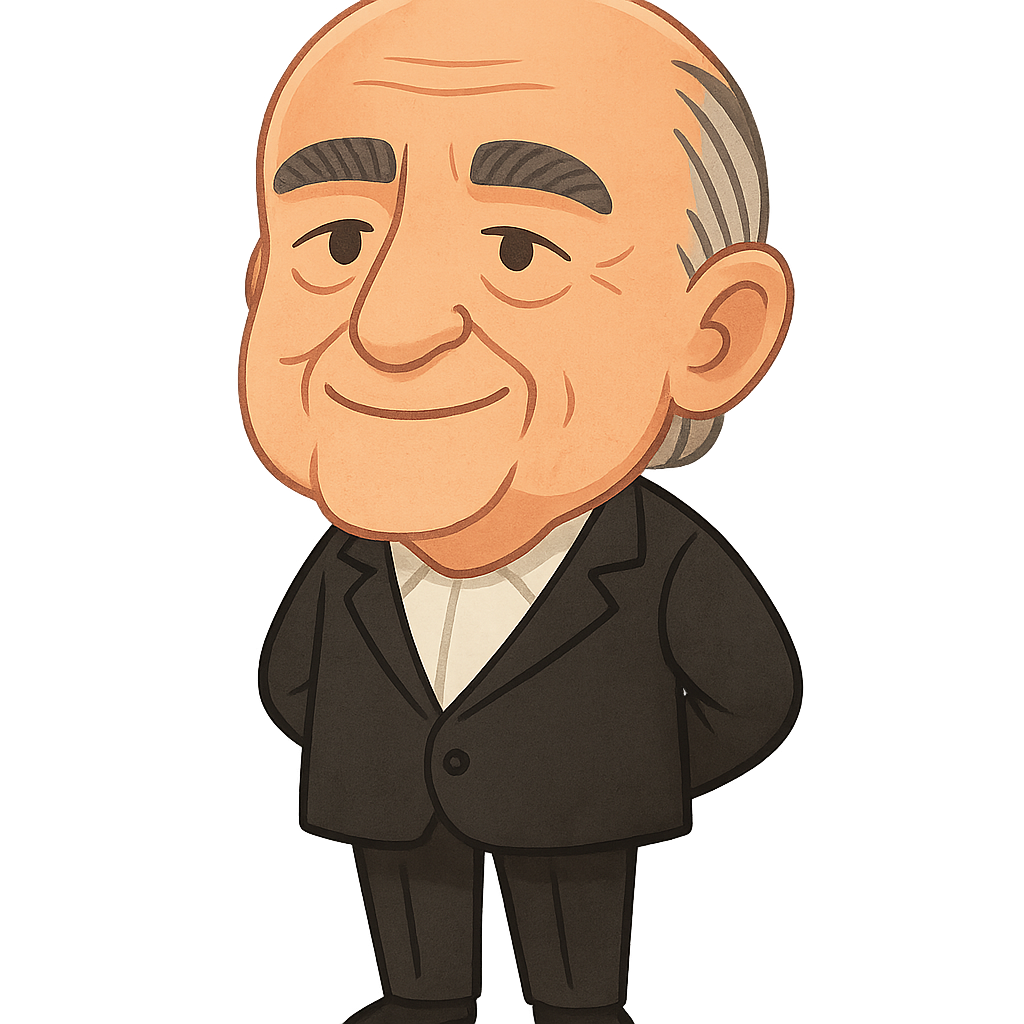
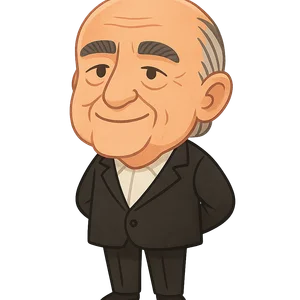
Hello, my name is Oscar Niemeyer, and I am an architect who loved to fill the world with beautiful, flowing curves. My story begins in the vibrant city of Rio de Janeiro, Brazil, where I was born on December 15th, 1907. Growing up in a country with such breathtaking landscapes, I was surrounded by inspiration. I didn’t see beauty in the stiff, straight lines and right angles that most buildings were made of. Instead, I was captivated by the natural curves all around me—the winding rivers, the rolling mountains, and the endless waves of the ocean. These flowing shapes felt alive and full of possibility. I knew I wanted to create buildings that felt the same way. This passion led me to study at the National School of Fine Arts, where I learned the skills I needed to turn my visions into reality. I graduated in 1934, ready to challenge the idea of what a building could be.
After finishing school, I began my career working alongside my mentor, an architect named Lùcio Costa. It was during this time that I discovered the magic of a material called reinforced concrete. To me, it was not just a building material; it was like sculptor's clay. Reinforced concrete was strong but also flexible, which meant I could use it to create the sweeping curves and daring shapes that I had always imagined. It allowed me to design buildings that seemed to float, bend, and surprise the eye. My first opportunity to truly showcase this new style came in 1943. A man named Juscelino Kubitschek, who would later become the president of Brazil, asked me to design a series of buildings called the Pampulha Architectural Complex. The most famous building from this project was the Church of Saint Francis of Assisi. Instead of a traditional roof, I designed one that rose and fell in graceful waves, echoing the hills of Brazil. This project was a turning point, announcing to the world that architecture could be fluid, artistic, and deeply connected to nature.
Oscar Niemeyer: The Architect of Curves
Hello, my name is Oscar Niemeyer, and I am an architect who loved to fill the world with beautiful, flowing curves. My story begins in the vibrant city of Rio de Janeiro, Brazil, where I was born on December 15th, 1907. Growing up in a country with such breathtaking landscapes, I was surrounded by inspiration. I didn’t see beauty in the stiff, straight lines and right angles that most buildings were made of. Instead, I was captivated by the natural curves all around me—the winding rivers, the rolling mountains, and the endless waves of the ocean. These flowing shapes felt alive and full of possibility. I knew I wanted to create buildings that felt the same way. This passion led me to study at the National School of Fine Arts, where I learned the skills I needed to turn my visions into reality. I graduated in 1934, ready to challenge the idea of what a building could be.
After finishing school, I began my career working alongside my mentor, an architect named Lùcio Costa. It was during this time that I discovered the magic of a material called reinforced concrete. To me, it was not just a building material; it was like sculptor's clay. Reinforced concrete was strong but also flexible, which meant I could use it to create the sweeping curves and daring shapes that I had always imagined. It allowed me to design buildings that seemed to float, bend, and surprise the eye. My first opportunity to truly showcase this new style came in 1943. A man named Juscelino Kubitschek, who would later become the president of Brazil, asked me to design a series of buildings called the Pampulha Architectural Complex. The most famous building from this project was the Church of Saint Francis of Assisi. Instead of a traditional roof, I designed one that rose and fell in graceful waves, echoing the hills of Brazil. This project was a turning point, announcing to the world that architecture could be fluid, artistic, and deeply connected to nature.
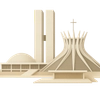
My greatest and most ambitious adventure began in 1956. My friend, Juscelino Kubitschek, was now the president of Brazil, and he came to me with an incredible request: to design the main government buildings for an entirely new capital city. This city, built from scratch in the middle of the country, would be called Brasília. My mentor, Lùcio Costa, was chosen to create the master plan for the city's layout, and I was given the honor of designing its most important structures. I poured all of my ideas about flowing lines and open spaces into this project. I designed the twin towers and domed chambers of the National Congress building, the elegant columns of the Palácio da Alvorada, the president's residence, and the stunning Cathedral of Brasília. With its crown-like structure of concrete columns reaching upward, the cathedral looks like a pair of hands lifted toward the heavens. Our goal was to build a modern, hopeful city for the future of Brazil. The city of Brasília was officially opened in 1960, a testament to a shared dream.
While Brasília was the heart of my work, my architectural vision reached far beyond the borders of Brazil. I had the opportunity to share my ideas with the entire world. In 1947, I was part of a distinguished international team of architects chosen to design the United Nations Headquarters in New York City. It was an honor to contribute my ideas to a building that symbolized global unity and cooperation. Later in my career, I spent time living and working in Europe. There, I designed several significant buildings, including the headquarters for the French Communist Party in Paris, which featured a striking, curved glass facade. My work continued to be recognized over the years, and in 1988, I received one of the greatest honors an architect can earn: the Pritzker Architecture Prize. This award was a wonderful acknowledgment of a lifetime spent dedicated to creating architecture that was not only functional but also a source of beauty and surprise.
I continued to work, dream, and draw for my entire life, always finding new ways to express the beauty of the curve. I lived to be 104 years old, and my buildings stand as a record of a long and joyful career. Though my designs can be found all over the globe, I am most remembered for the futuristic city of Brasília, a project that captured the spirit of a nation. I hope that when people see my work, they feel a sense of lightness and freedom. More than anything, I hope they remember that architecture doesn't have to be confined to rigid boxes; it can be art that reflects the wonderful, flowing energy of the natural world, just like the mountains and rivers of my beloved Brazil.
Wow facts
About
Oscar Niemeyer was a Brazilian architect considered to be one of the key figures in the development of modern architecture, best known for his designs of civic buildings for Brasília.
Take a Quiz
Question 1 of 5
What does the biography suggest was Oscar Niemeyer's primary source of inspiration for his architectural style?
Explore next



Want to do even more?
Go beyond exploring. Unlock tools that turn every story into real learning.

Storypie Plus for families
Full stories, quizzes, and printables. Nights and car rides, sorted.
- Unlimited audio stories
- Create Mode: your child stars in the story
- Offline downloads
- Printable worksheets & coloring pages

Why Storypie for Schools
Students engaged. Prep in seconds. Evenings back to you.
- Worksheets & Quizzes
- Classroom Management
- Formative Assessment
- Custom Curriculum & Lesson Plans
- 27 Languages

Why Storypie for Homeschool
Curriculum done. They'll ask for more. Hours back in your day.
- Worksheet Generator
- First-Person Audio Stories
- Built-in Comprehension Quizzes
- Custom Curriculum & Lesson Plans
- Print & Go Activities