English

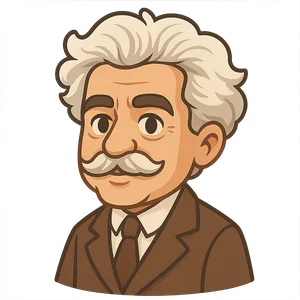
Oswaldo Cruz
Oswaldo Cruz was a Brazilian doctor, disease expert…
Reads at Grades 6–8 Listens at Grades 4–8
Print & create
Answer keys·No prep·Free with an account
28 worksheets · answer keys · full story · quiz · Ages 10-12 · CEFR B2
Plus adds 164,000+ more stories in 27 languages, audio for every one, and printables for all of them.
Just want Oswaldo Cruz?
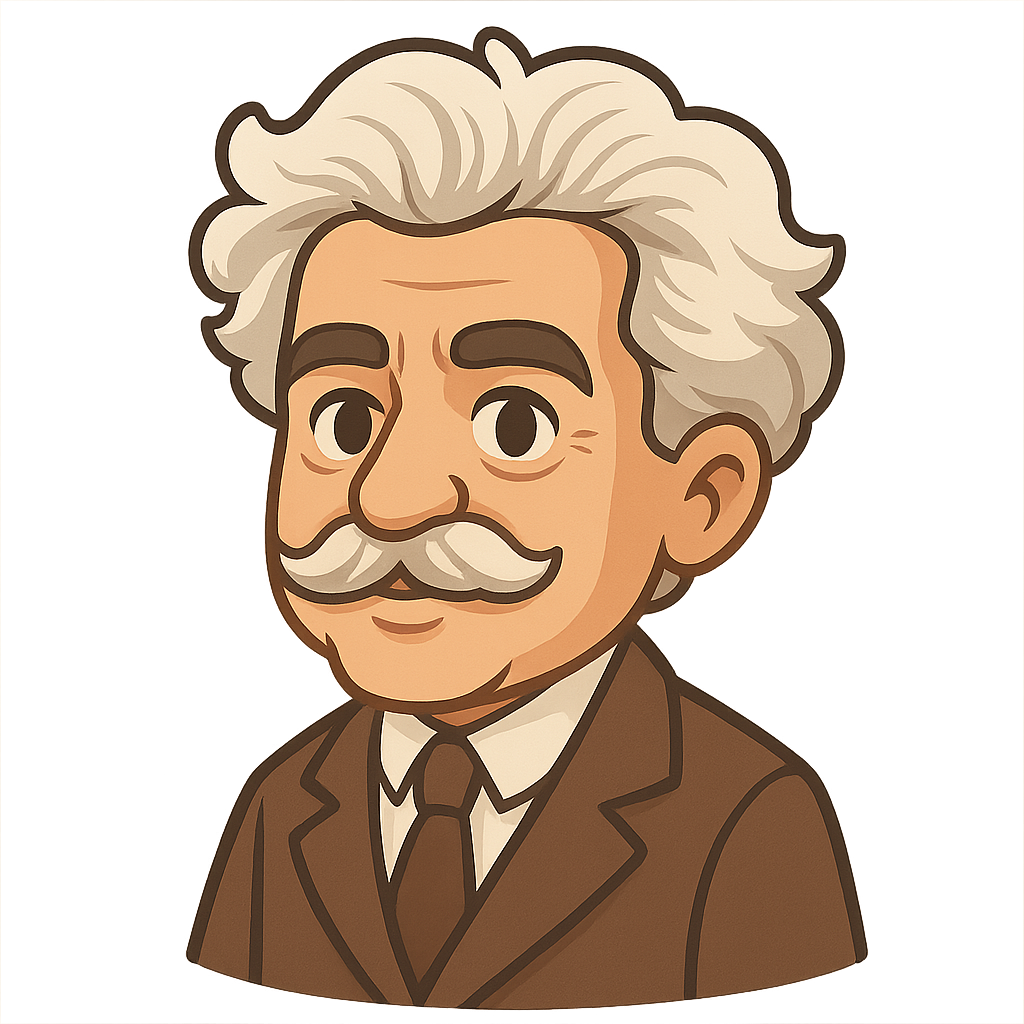
Hello. My name is Oswaldo Cruz, and I want to share the story of my life's mission to fight disease with science. I was born on August 5th, 1872, in a small Brazilian town called São Luiz do Paraitinga. My world was shaped by medicine from the very beginning, as my father was a doctor. I was completely fascinated by his work, and the invisible world of science he dealt with every day. When I was a child, my family moved to the bustling city of Rio de Janeiro. Inspired by my father, I knew I wanted to follow in his footsteps. I was so passionate about learning that I entered the Faculty of Medicine of Rio de Janeiro when I was just 15 years old. My focus was on microbiology, the study of tiny living things like germs and bacteria. In 1892, I graduated with a thesis explaining how water could be a vehicle for spreading these microbes. This was the first step on a journey that would define my entire life.
To truly make a difference, I knew I needed to learn from the greatest scientific minds in the world. So, in 1896, I traveled across the ocean to Paris, France, to study at the world-famous Pasteur Institute. This incredible institution was founded by the legendary scientist Louis Pasteur, the very man who proved that germs were the cause of many diseases. At the institute, I dove deep into the study of bacteriology. I learned the precise methods for creating serums and vaccines, which are powerful tools designed to help the body fight off dangerous illnesses. My time in Paris was transformative, equipping me with the knowledge and confidence I would need to face the enormous public health challenges that were waiting for me back home in Brazil.
Oswaldo Cruz: Brazil's Scientific Hero
Hello. My name is Oswaldo Cruz, and I want to share the story of my life's mission to fight disease with science. I was born on August 5th, 1872, in a small Brazilian town called São Luiz do Paraitinga. My world was shaped by medicine from the very beginning, as my father was a doctor. I was completely fascinated by his work, and the invisible world of science he dealt with every day. When I was a child, my family moved to the bustling city of Rio de Janeiro. Inspired by my father, I knew I wanted to follow in his footsteps. I was so passionate about learning that I entered the Faculty of Medicine of Rio de Janeiro when I was just 15 years old. My focus was on microbiology, the study of tiny living things like germs and bacteria. In 1892, I graduated with a thesis explaining how water could be a vehicle for spreading these microbes. This was the first step on a journey that would define my entire life.
To truly make a difference, I knew I needed to learn from the greatest scientific minds in the world. So, in 1896, I traveled across the ocean to Paris, France, to study at the world-famous Pasteur Institute. This incredible institution was founded by the legendary scientist Louis Pasteur, the very man who proved that germs were the cause of many diseases. At the institute, I dove deep into the study of bacteriology. I learned the precise methods for creating serums and vaccines, which are powerful tools designed to help the body fight off dangerous illnesses. My time in Paris was transformative, equipping me with the knowledge and confidence I would need to face the enormous public health challenges that were waiting for me back home in Brazil.
I returned to Brazil in 1899, and the situation I found in Rio de Janeiro was dire. The beautiful city was being terrorized by invisible enemies. Epidemics of bubonic plague, yellow fever, and smallpox were sweeping through the population, causing widespread fear and death. The problem was so severe that in 1903, the president of Brazil appointed me as the Director-General of Public Health, trusting me to lead the fight. I knew we couldn't combat these diseases with fear; we had to use science. My research showed that the bubonic plague was spread by fleas living on rats, and that yellow fever was transmitted by a specific type of mosquito. To wage this war, I organized special teams called 'sanitary brigades.' These dedicated workers went block by block through the city to clean the streets, get rid of the rat populations, and most importantly, destroy the stagnant water where mosquitoes laid their eggs. It was a massive and difficult undertaking, and at first, many people did not understand or support our methods.
My most difficult challenge, however, came when we tried to stop smallpox. The only effective way to prevent this terrible disease was through vaccination. In 1904, the government, following my advice, passed a law that made smallpox vaccination mandatory for all citizens. This decision caused an uproar. Many people at the time were deeply suspicious of this new medical procedure. They were scared, and they felt the government was taking away their freedom to make their own choices. This anger exploded into riots in the streets of Rio, a period that became known as the Vaccine Revolt. It was a heartbreaking time for me, seeing the city in turmoil. The government eventually canceled the mandatory vaccination law because of the public pressure. But I knew that science was on our side, and I refused to give up. My mission became even clearer: I had to continue my work and patiently educate people to show them that science was the path to a healthier future.
Despite all the challenges and setbacks, my scientific plans ultimately proved successful. By 1907, we had completely eliminated yellow fever from Rio de Janeiro. This achievement was celebrated not just in Brazil, but all around the world, as a major victory for public health. The people of Rio began to see the results of our hard work and finally understood that a healthy city was essential for a bright future. In 1909, the institute where I did much of my research was renamed in my honor, becoming the Oswaldo Cruz Institute. My life's journey came to an end in 1917, when I passed away from kidney failure. I lived to be 44 years old. My true legacy is not just in a name on a building, but in the millions of lives saved by public health measures and in the world-renowned research center that continues my mission, using science to fight disease and protect people to this very day.
Wow facts
About
Oswaldo Cruz was a Brazilian doctor, disease expert, and public health officer who led important efforts to get rid of yellow fever, smallpox, and bubonic plague from Rio de Janeiro in the early 20th century. Cruz started a required smallpox vaccination campaign in 1904, which faced a lot of public resistance and was not successful right away.
Take a Quiz
Question 1 of 5
What was the main conflict described in the section titled 'The Vaccine Revolt'?
Explore next




Want to do even more?
Go beyond exploring. Unlock tools that turn every story into real learning.

Storypie Plus for families
Full stories, quizzes, and printables. Nights and car rides, sorted.
- Unlimited audio stories
- Create Mode: your child stars in the story
- Offline downloads
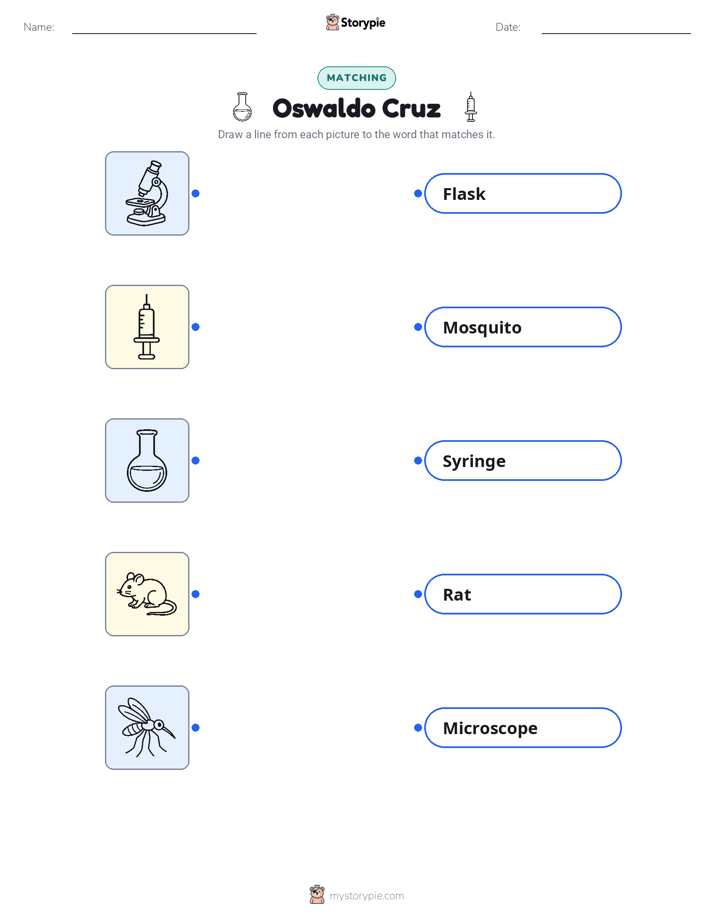
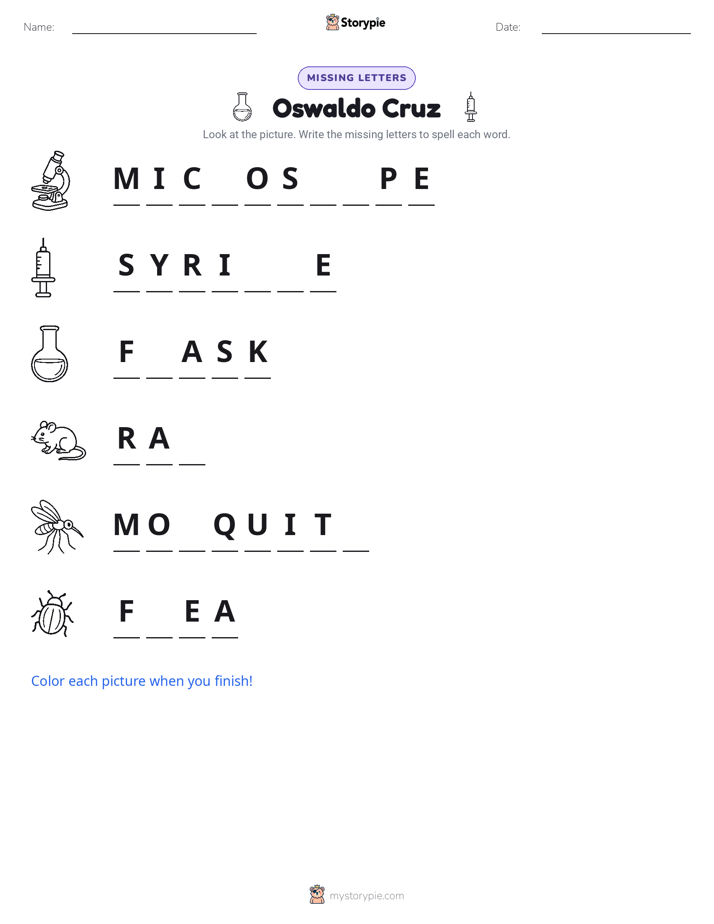
- Printable worksheets & coloring pages

Why Storypie for Schools
Students engaged. Prep in seconds. Evenings back to you.
- Worksheets & Quizzes
- Classroom Management
- Formative Assessment
- Custom Curriculum & Lesson Plans
- 27 Languages

Why Storypie for Homeschool
Curriculum done. They'll ask for more. Hours back in your day.
- Worksheet Generator
- First-Person Audio Stories
- Built-in Comprehension Quizzes
- Custom Curriculum & Lesson Plans
- Print & Go Activities