English

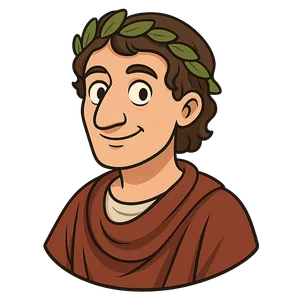
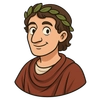
Ovid
Ovid was a celebrated Roman poet who lived during the reign of Emperor Augustus.
Reads at Grades 6–8 Listens at Grades 4–8
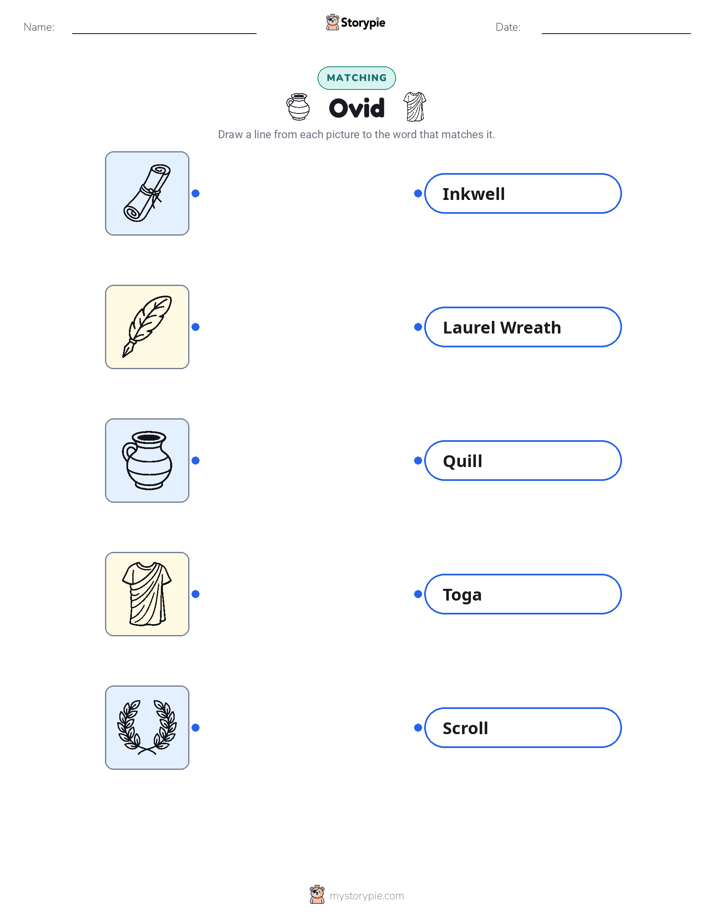
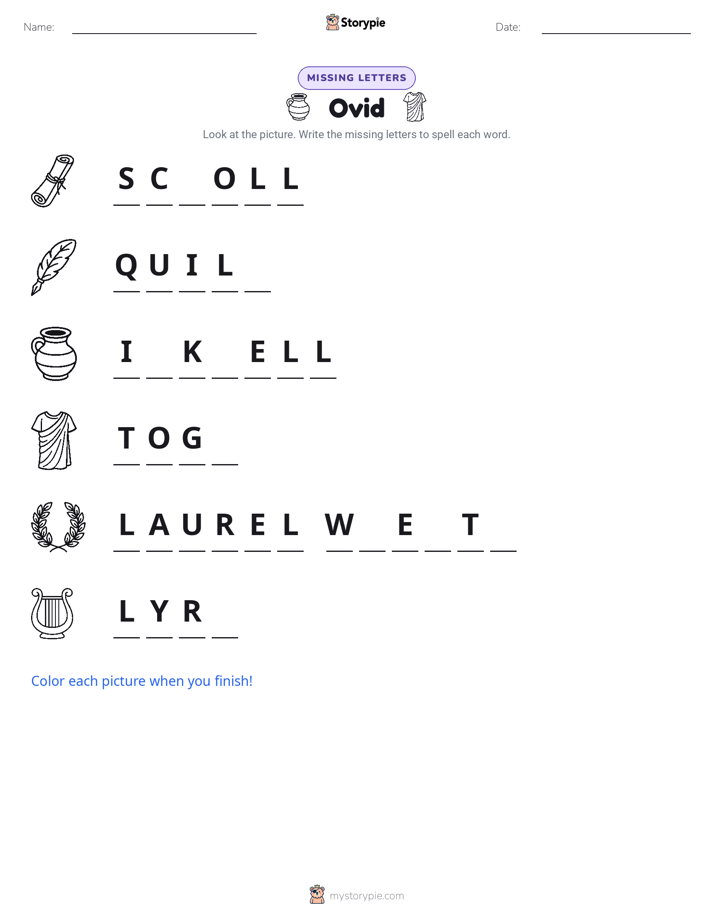
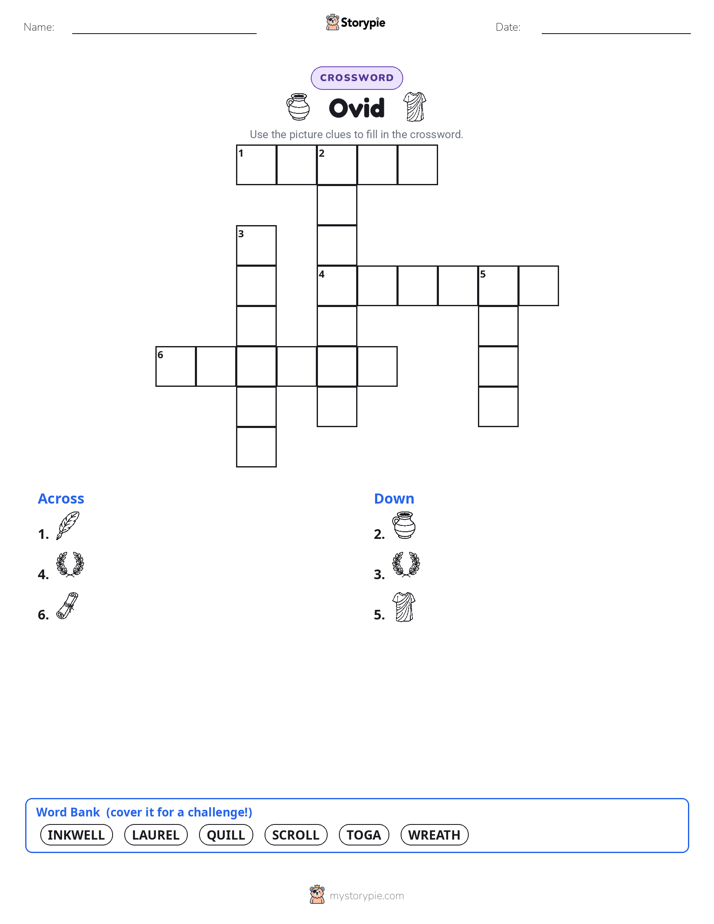
Print & create
Answer keys·No prep·Free with an account
28 worksheets · answer keys · full story · quiz · Ages 10-12 · CEFR B2
Plus adds 208,000+ more stories in 27 languages, audio for every one, and printables for all of them.
Just want Ovid?
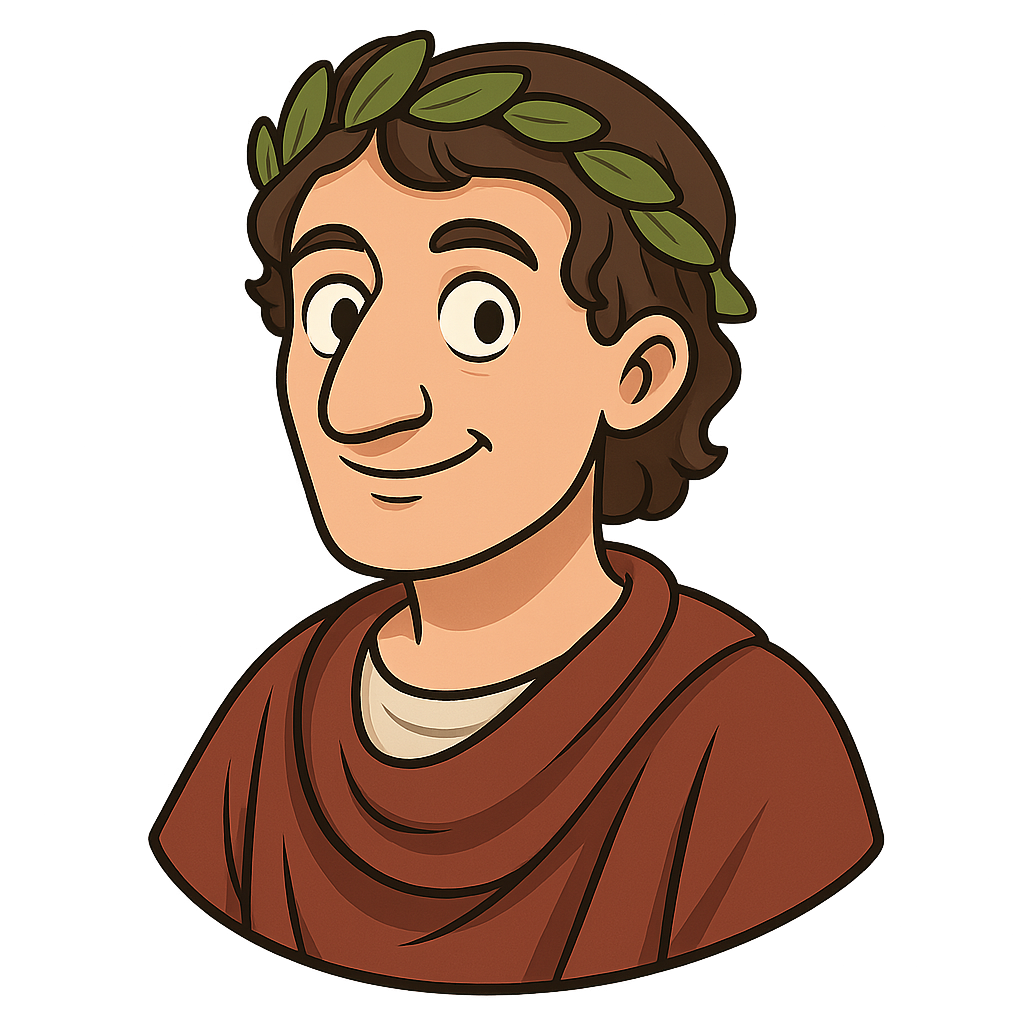
Hello. My name is Publius Ovidius Naso, but you can call me Ovid. I was a poet who lived a very long time ago. My story begins on March 20th, 43 BCE, in a town called Sulmo, which wasn't too far from the magnificent city of Rome. My family was part of the equestrian class, which meant we were wealthy and well-respected. My father had a clear plan for my brother and me: we were to travel to Rome, study rhetoric—the art of public speaking—and law, and eventually become powerful politicians. I followed his wishes for a time and was quite good at my studies. I even held a few minor official posts. However, my heart was not in legal arguments or political debates. From a young age, I found that words arranged themselves into poetry in my mind. My true passion was writing verses, and despite my father's plans, I knew I had to follow my own path and dedicate my life to poetry.
During the reign of the first Roman emperor, Augustus, I moved to Rome and soon became one of the most famous poets in the city. It was a thrilling time to be an artist. Rome was the center of the world, a bustling hub of culture, power, and ideas, and this period is often called a golden age for literature. I found myself at the heart of its vibrant literary scene, surrounded by other talented writers. My early works, such as the 'Amores,' were collections of poems about love, and they were very popular with the Roman public. They were known for being clever, elegant, and sometimes a bit mischievous. My fame grew with another work called 'Ars Amatoria,' or 'The Art of Love.' In this poem, I offered witty advice on romance. Being celebrated for my art in the most powerful city on Earth was an incredible feeling. I was the toast of Rome, and it felt like my words could capture the very spirit of the age.
Ovid
Hello. My name is Publius Ovidius Naso, but you can call me Ovid. I was a poet who lived a very long time ago. My story begins on March 20th, 43 BCE, in a town called Sulmo, which wasn't too far from the magnificent city of Rome. My family was part of the equestrian class, which meant we were wealthy and well-respected. My father had a clear plan for my brother and me: we were to travel to Rome, study rhetoric—the art of public speaking—and law, and eventually become powerful politicians. I followed his wishes for a time and was quite good at my studies. I even held a few minor official posts. However, my heart was not in legal arguments or political debates. From a young age, I found that words arranged themselves into poetry in my mind. My true passion was writing verses, and despite my father's plans, I knew I had to follow my own path and dedicate my life to poetry.
During the reign of the first Roman emperor, Augustus, I moved to Rome and soon became one of the most famous poets in the city. It was a thrilling time to be an artist. Rome was the center of the world, a bustling hub of culture, power, and ideas, and this period is often called a golden age for literature. I found myself at the heart of its vibrant literary scene, surrounded by other talented writers. My early works, such as the 'Amores,' were collections of poems about love, and they were very popular with the Roman public. They were known for being clever, elegant, and sometimes a bit mischievous. My fame grew with another work called 'Ars Amatoria,' or 'The Art of Love.' In this poem, I offered witty advice on romance. Being celebrated for my art in the most powerful city on Earth was an incredible feeling. I was the toast of Rome, and it felt like my words could capture the very spirit of the age.
After achieving success with my earlier poems, I began my most ambitious project, a work that would become my masterpiece: the 'Metamorphoses.' This wasn't just a single story but a massive epic poem, a collection of more than 250 myths I gathered from ancient Greek and Roman traditions. I wanted to weave them all together into one grand narrative, starting from the creation of the world and ending in my own time. The one theme that connects every single tale is transformation, or as it's known in Greek, 'metamorphosis.' In my poem, you can read about gods, goddesses, and mortals who are changed into new forms—animals, plants, or even constellations. I included many famous tales that people still tell today, like the story of King Midas, whose touch turned everything to gold, and the tragic flight of Daedalus and his son Icarus, who flew too close to the sun on wings made of feathers and wax. I had just put the finishing touches on this great work in the year 8 CE when my life was suddenly and completely turned upside down.
In that same year, 8 CE, my successful life in Rome came to an abrupt and devastating end. Without a trial or a public explanation, Emperor Augustus issued an order banishing me from the city forever. To this day, the exact reasons remain something of a mystery. In my own writings, I explained it was the result of 'carmen et error'—a poem and a mistake. The poem was almost certainly my 'Ars Amatoria,' 'The Art of Love,' which the emperor, who was promoting stricter public morals, found offensive. The mistake, however, is less clear. I hinted that I had accidentally seen something I was not supposed to see, but I never revealed what it was. As punishment, I was exiled to Tomis, a cold, remote town on the shores of the Black Sea. It was at the very edge of the Roman Empire, a harsh and lonely place. I was forced to leave my home, my friends, and my beloved wife, never to set foot in Rome again.
I spent my final years in Tomis, a place so different from the vibrant city I had always known. The pain of exile was immense, and I poured my sorrow and longing for home into my writing. I composed new collections of poetry, including the 'Tristia,' which means 'Sorrows,' where I described my lonely life and pleaded for the emperor to allow my return. My pleas were never answered. I lived there until I was about 60 years old, and my life came to an end around the year 17 CE. Although I died in a distant land, far from everything I loved, my words found their way back to Rome. My poetry, especially my 'Metamorphoses,' survived. For more than two thousand years, my stories of transformation have inspired countless writers, painters, and composers. In this way, even though my life ended in exile, my voice was never silenced, and I live on through my stories, just as I had always hoped.
Wow facts
About
Ovid was a celebrated Roman poet who lived during the reign of Emperor Augustus. He is best known for his epic mythological poem, 'Metamorphoses,' and was exiled from Rome in his later life.
Take a Quiz
Question 1 of 5
What does the word 'metamorphosis' mean, and how did Ovid use this as a central theme?
Explore next




Want to do even more?
Go beyond exploring. Unlock tools that turn every story into real learning.

Storypie Plus for families
Full stories, quizzes, and printables. Nights and car rides, sorted.
- Unlimited audio stories
- Create Mode: your child stars in the story
- Offline downloads
- Printable worksheets & coloring pages

Why Storypie for Schools
Students engaged. Prep in seconds. Evenings back to you.
- Worksheets & Quizzes
- Classroom Management
- Formative Assessment
- Custom Curriculum & Lesson Plans
- 27 Languages

Why Storypie for Homeschool
Curriculum done. They'll ask for more. Hours back in your day.
- Worksheet Generator
- First-Person Audio Stories
- Built-in Comprehension Quizzes
- Custom Curriculum & Lesson Plans
- Print & Go Activities