English

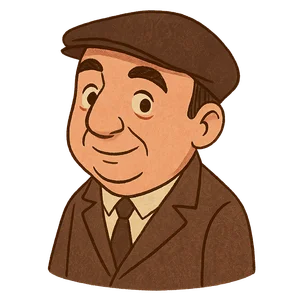
Pablo Neruda
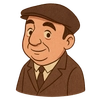
Pablo Neruda was a celebrated Chilean poet, diplomat…
Reads at Grades 3–5 Listens at Grades 1–5
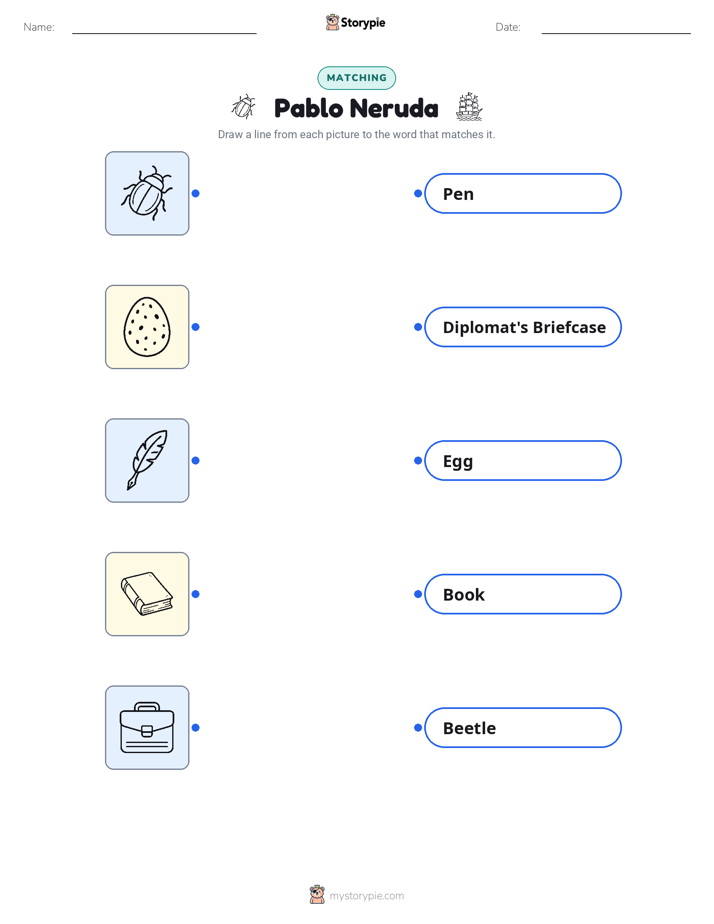
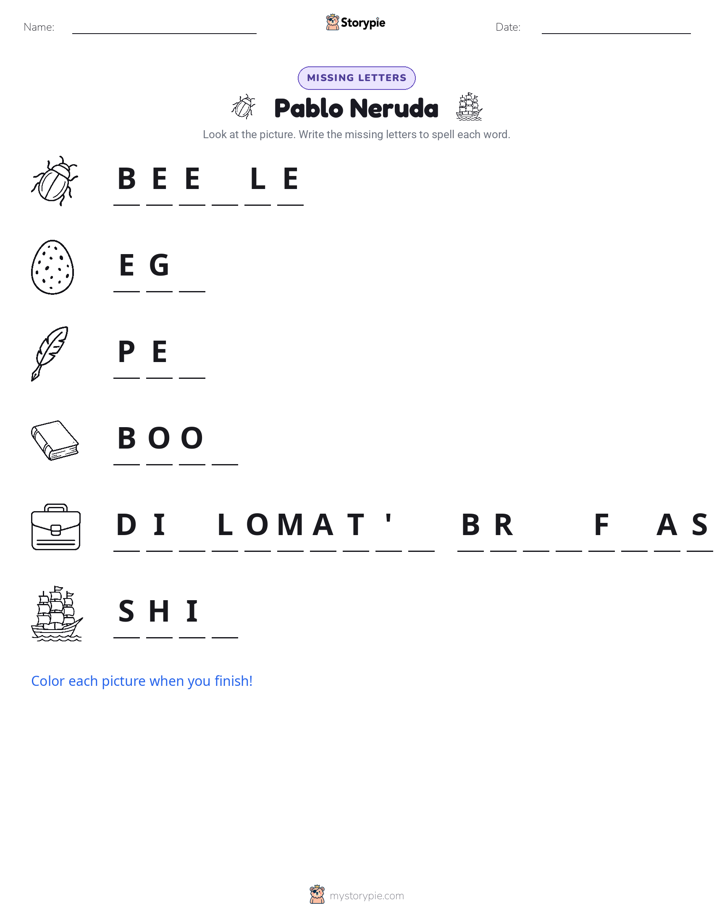
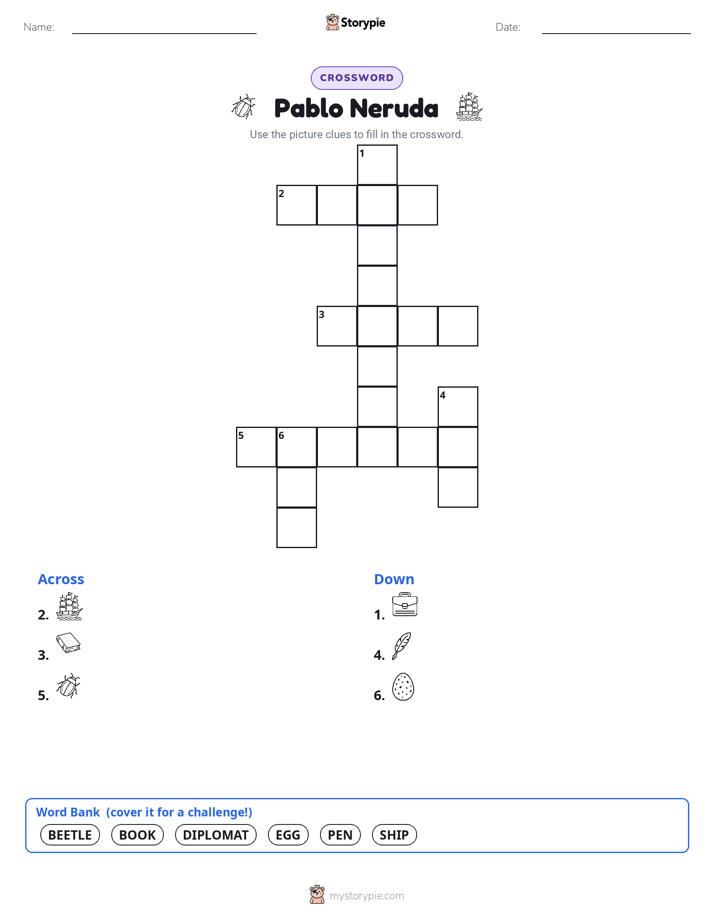
Print & create
Answer keys·No prep·Free with an account
28 worksheets · answer keys · full story · quiz · Ages 8-10 · CEFR B1
Plus adds 273,000+ more stories in 27 languages, audio for every one, and printables for all of them.
Just want Pablo Neruda?
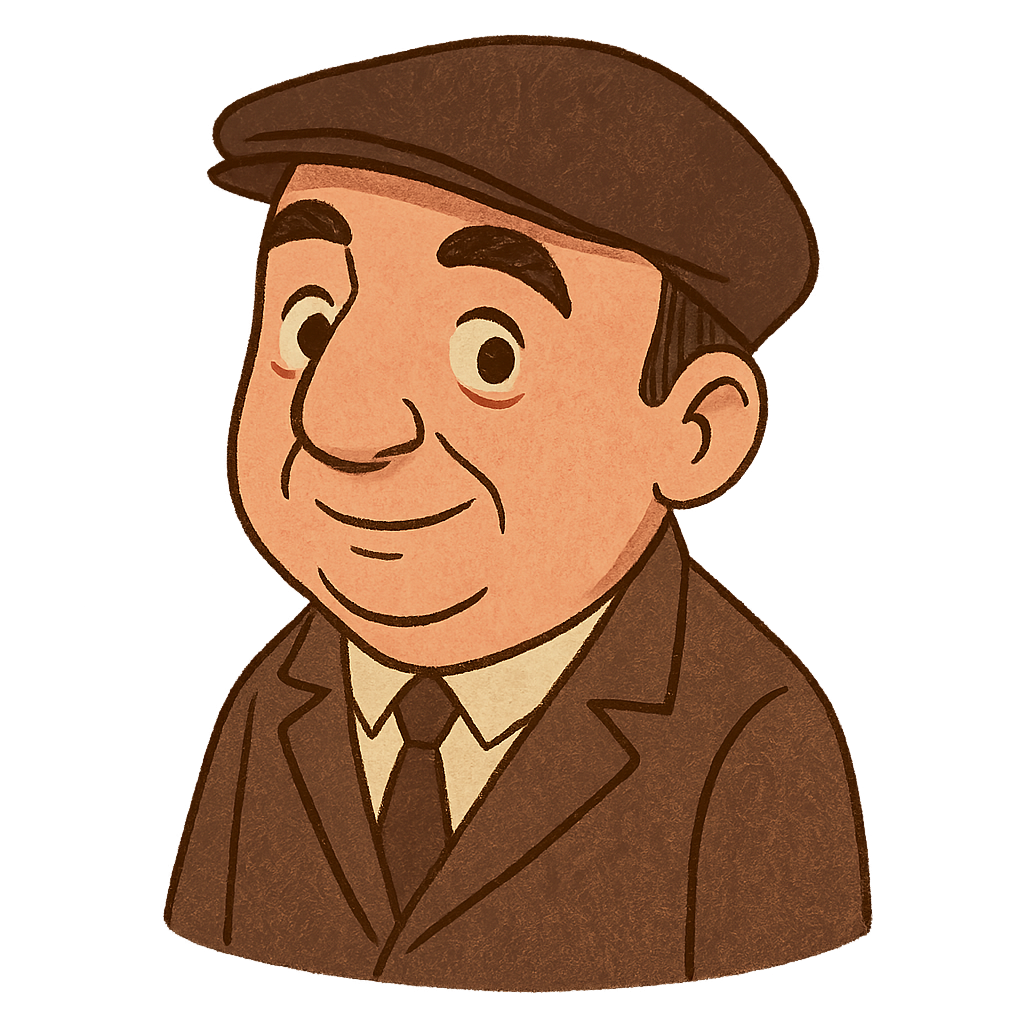
Hello! My name is Pablo Neruda, but I was born with a much longer name: Ricardo Eliécer Neftalí Reyes Basoalto. I was born on July 12th, 1904, in a small town in Chile called Parral. The world I grew up in was full of wonders—rainy forests, buzzing beetles, and the wild Pacific Ocean. I loved collecting things like seashells and birds' nests. I also loved words, and I started writing poems when I was just a boy. My father, who worked on the railroad, thought writing was a waste of time. To keep my poems a secret from him, I started using a pen name. In 1920, I chose 'Pablo Neruda,' and it stuck with me for the rest of my life. Luckily, not everyone discouraged me. The head of my school was a wonderful poet named Gabriela Mistral, and she encouraged me to keep writing.
When I was 17 years old, in 1921, I moved to the big city of Santiago to go to the university. I was supposed to be studying to become a teacher, but my heart was still with poetry. I wrote and wrote, and in 1924, when I was only 20 years old, I published a book called 'Twenty Love Poems and a Song of Despair.' To my surprise, people loved it. It quickly became one of the most famous books of poetry ever written in Spanish. I believed that poetry shouldn't be complicated or only for a few people. I thought poetry was everywhere. So, I wrote about everything: love and sadness, of course, but also about simple things like tomatoes, a pair of woolly socks, or the salt from the sea. I wanted my words to feel like a gift for everyone.
A Poet's Voice: The Story of Pablo Neruda
Hello! My name is Pablo Neruda, but I was born with a much longer name: Ricardo Eliécer Neftalí Reyes Basoalto. I was born on July 12th, 1904, in a small town in Chile called Parral. The world I grew up in was full of wonders—rainy forests, buzzing beetles, and the wild Pacific Ocean. I loved collecting things like seashells and birds' nests. I also loved words, and I started writing poems when I was just a boy. My father, who worked on the railroad, thought writing was a waste of time. To keep my poems a secret from him, I started using a pen name. In 1920, I chose 'Pablo Neruda,' and it stuck with me for the rest of my life. Luckily, not everyone discouraged me. The head of my school was a wonderful poet named Gabriela Mistral, and she encouraged me to keep writing.
When I was 17 years old, in 1921, I moved to the big city of Santiago to go to the university. I was supposed to be studying to become a teacher, but my heart was still with poetry. I wrote and wrote, and in 1924, when I was only 20 years old, I published a book called 'Twenty Love Poems and a Song of Despair.' To my surprise, people loved it. It quickly became one of the most famous books of poetry ever written in Spanish. I believed that poetry shouldn't be complicated or only for a few people. I thought poetry was everywhere. So, I wrote about everything: love and sadness, of course, but also about simple things like tomatoes, a pair of woolly socks, or the salt from the sea. I wanted my words to feel like a gift for everyone.
My poetry took me on amazing adventures. Starting in 1927, I began working as a diplomat for my country, Chile. This job was like being a messenger between countries, and it allowed me to live in faraway places like Burma, Argentina, and Spain. Traveling showed me how different people lived, and it made me think a lot about fairness and justice. In the 1930s, I was in Spain during a terrible time called the Spanish Civil War. Seeing the suffering there changed me deeply. I decided my poems needed to do more than just describe beautiful things; they needed to be a voice for people who didn't have one. I wanted my words to help make the world a better, fairer place for everyone.
Because I cared so much about people, I became involved in politics back home in Chile. In 1945, I was even elected to be a senator. But my ideas about fairness were not popular with the government at the time. In 1948, things became so difficult that I had to go into hiding and even leave my beloved country. After a few years, I was able to return home in 1952. The greatest honor of my life came in 1971, when I was awarded the Nobel Prize in Literature. It was a wonderful feeling, not just for me, but for all of Chile and Latin America. It felt like the world was finally listening to our stories and our voices.
I lived to be 69 years old, and my life was as full of twists and turns as one of my poems. Today, my words are still read by children and grown-ups all around the globe. My three houses in Chile are now museums where people can see the quirky things I collected and feel the magic of the places where I wrote. I hope my poems continue to remind people to look for the wonder in ordinary things and to use their own voices to speak up for what they believe in.
Wow facts
About
Pablo Neruda was a celebrated Chilean poet, diplomat, and politician who won the Nobel Prize in Literature in 1971 for his vast and influential body of work.
Take a Quiz
Question 1 of 5
Why did the narrator start using the pen name 'Pablo Neruda' in 1920?
Explore next


Want to do even more?
Go beyond exploring. Unlock tools that turn every story into real learning.

Storypie Plus for families
Full stories, quizzes, and printables. Nights and car rides, sorted.
- Unlimited audio stories
- Create Mode: your child stars in the story
- Offline downloads
- Printable worksheets & coloring pages

Why Storypie for Schools
Students engaged. Prep in seconds. Evenings back to you.
- Worksheets & Quizzes
- Classroom Management
- Formative Assessment
- Custom Curriculum & Lesson Plans
- 27 Languages

Why Storypie for Homeschool
Curriculum done. They'll ask for more. Hours back in your day.
- Worksheet Generator
- First-Person Audio Stories
- Built-in Comprehension Quizzes
- Custom Curriculum & Lesson Plans
- Print & Go Activities