English

Patricia Bath
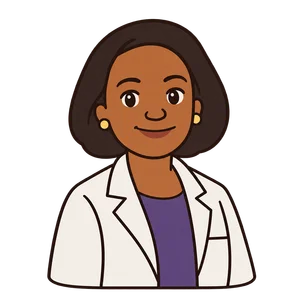
Patricia Bath was an American ophthalmologist, inventor, and academic.
Reads at Grades 3–5 Listens at Grades 1–5
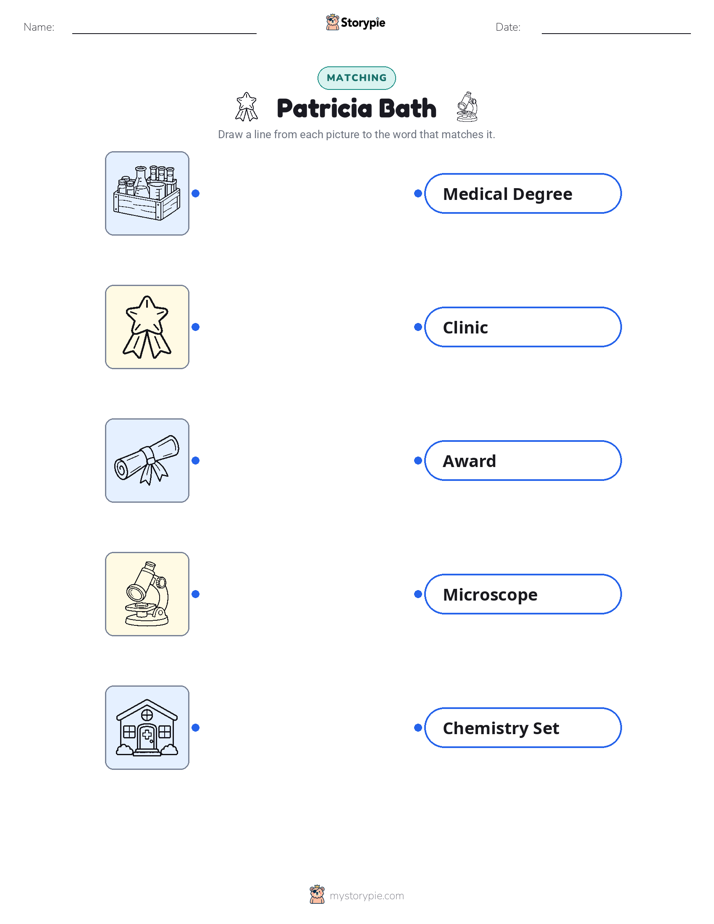
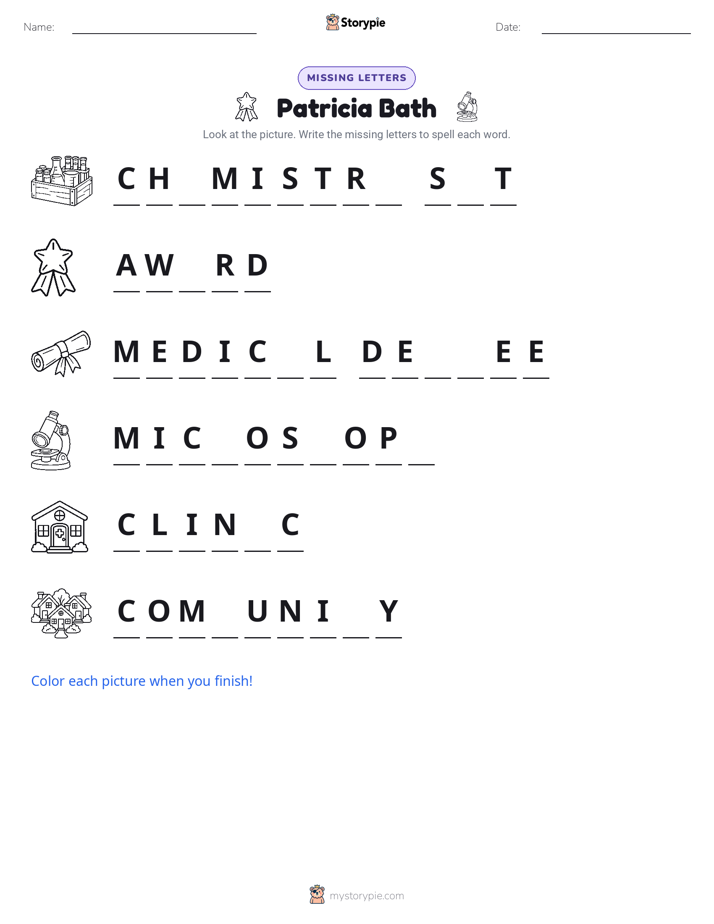
Print & create
Answer keys·No prep·Free with an account
28 worksheets · answer keys · full story · quiz · Ages 8-10 · CEFR B1
Plus adds 290,000+ more stories in 27 languages, audio for every one, and printables for all of them.
Just want Patricia Bath?

Hello, my name is Patricia Bath, and I am a doctor and an inventor who believed that everyone deserves the right to see. My story begins on November 4th, 1942, in a neighborhood in New York City called Harlem. I was lucky to have parents who saw how curious I was about the world and always encouraged me to ask questions and learn. One Christmas, I received a gift that changed everything: a chemistry set. Mixing the colorful chemicals and watching them react sparked my love for science. That simple gift wasn't just a toy; it was the first step on my journey to making discoveries that would help people all over the world.
My love for science grew stronger every year. When I was just 16 years old, in 1959, I was chosen for a special summer science program at Yeshiva University. It was an amazing opportunity. For my project, I decided to study cancer. My research led to findings that were so important that one of the doctors at the program presented them at a major science conference. The next year, in 1960, a popular magazine called Mademoiselle gave me a big award for my work. This recognition made me feel proud and showed me that I could make a real difference through science. From that moment on, I was more determined than ever to become a doctor.
My dream of becoming a doctor was a long journey that required a lot of hard work and studying. In 1968, I proudly graduated from Howard University College of Medicine. After graduation, I began my internship at Harlem Hospital, right back in the community where I grew up. While I was working there, I began to notice something that startled me. I saw that my Black patients had much higher rates of blindness and vision problems compared to patients at other hospitals I had been to. This discovery was a turning point for me. It wasn't just a medical problem; it was an issue of fairness. I knew then that I had a new mission: to fight for everyone’s right to sight, no matter who they were or where they lived.
Patricia Bath
Hello, my name is Patricia Bath, and I am a doctor and an inventor who believed that everyone deserves the right to see. My story begins on November 4th, 1942, in a neighborhood in New York City called Harlem. I was lucky to have parents who saw how curious I was about the world and always encouraged me to ask questions and learn. One Christmas, I received a gift that changed everything: a chemistry set. Mixing the colorful chemicals and watching them react sparked my love for science. That simple gift wasn't just a toy; it was the first step on my journey to making discoveries that would help people all over the world.
My love for science grew stronger every year. When I was just 16 years old, in 1959, I was chosen for a special summer science program at Yeshiva University. It was an amazing opportunity. For my project, I decided to study cancer. My research led to findings that were so important that one of the doctors at the program presented them at a major science conference. The next year, in 1960, a popular magazine called Mademoiselle gave me a big award for my work. This recognition made me feel proud and showed me that I could make a real difference through science. From that moment on, I was more determined than ever to become a doctor.
My dream of becoming a doctor was a long journey that required a lot of hard work and studying. In 1968, I proudly graduated from Howard University College of Medicine. After graduation, I began my internship at Harlem Hospital, right back in the community where I grew up. While I was working there, I began to notice something that startled me. I saw that my Black patients had much higher rates of blindness and vision problems compared to patients at other hospitals I had been to. This discovery was a turning point for me. It wasn't just a medical problem; it was an issue of fairness. I knew then that I had a new mission: to fight for everyone’s right to sight, no matter who they were or where they lived.
To fulfill my mission, I decided to become an ophthalmologist, which is a doctor who specializes in eyes and vision care. My career took me to California, where I began teaching at the University of California, Los Angeles, also known as UCLA. There, I continued my work to make eye care available to more people. In 1976, I co-founded the American Institute for the Prevention of Blindness with a simple but powerful goal: to protect and restore sight. I developed a new idea I called 'community ophthalmology.' This meant we would bring eye care and health education directly into neighborhoods where people needed it most, instead of waiting for them to come to a hospital. This way, we could prevent blindness before it even started.
One of the biggest challenges in my work was treating cataracts, which are cloudy spots that form on the lens of the eye and can cause blindness. I knew there had to be a better way to remove them. In 1981, a bright idea came to me: what if I could use a laser to treat cataracts more precisely and less painfully? This idea led me to invent a new tool. I worked on my invention for years, putting in countless hours of research. I even traveled all the way to Germany to use the advanced lasers I needed to perfect my device. Finally, on May 17th, 1988, all my hard work paid off. I received a patent for my invention, the Laserphaco Probe. This made me the first African American female doctor to receive a patent for a medical invention.
Looking back on my life, I am proud of the work I did. My invention, the Laserphaco Probe, has been used to help restore sight to people all around the world, allowing them to see their loved ones and the world's beauty again. I always held the strong belief that eyesight is a basic human right, and I dedicated my life to that idea. I lived to be 76 years old. Though I am no longer here, I am remembered for my inventions and for helping to create a world where more people have the precious gift of sight.
Wow facts
About
Patricia Bath was an American ophthalmologist, inventor, and academic. She was the first African American female doctor to receive a patent for a medical purpose for her invention, the Laserphaco Probe for cataract treatment.
Take a Quiz
Question 1 of 5
What problem did Patricia Bath notice during her internship at Harlem Hospital?
Explore next






Want to do even more?
Go beyond exploring. Unlock tools that turn every story into real learning.

Storypie Plus for families
Full stories, quizzes, and printables. Nights and car rides, sorted.
- Unlimited audio stories
- Create Mode: your child stars in the story
- Offline downloads
- Printable worksheets & coloring pages

Why Storypie for Schools
Students engaged. Prep in seconds. Evenings back to you.
- Worksheets & Quizzes
- Classroom Management
- Formative Assessment
- Custom Curriculum & Lesson Plans
- 27 Languages

Why Storypie for Homeschool
Curriculum done. They'll ask for more. Hours back in your day.
- Worksheet Generator
- First-Person Audio Stories
- Built-in Comprehension Quizzes
- Custom Curriculum & Lesson Plans
- Print & Go Activities