English


Ray Tomlinson
Ray Tomlinson was an American computer programmer who implemented the first email system on the ARPANET in…
Reads at Grades 3–5 Listens at Grades 1–5
Print & create
Answer keys·No prep·Free with an account
28 worksheets · answer keys · full story · quiz · Ages 8-10 · CEFR B1
Plus adds 244,000+ more stories in 27 languages, audio for every one, and printables for all of them.
Just want Ray Tomlinson?

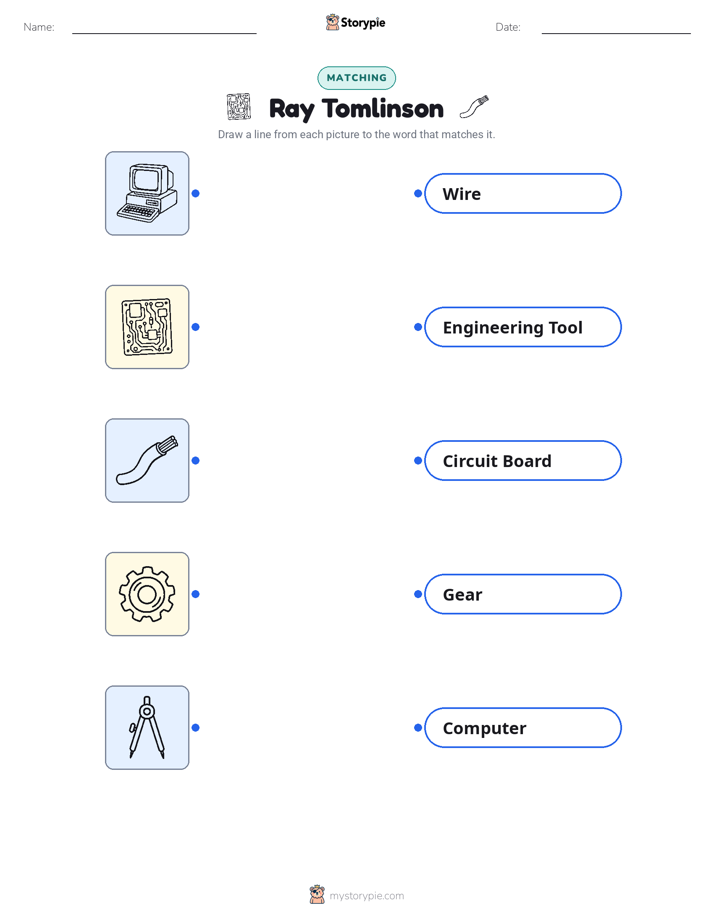
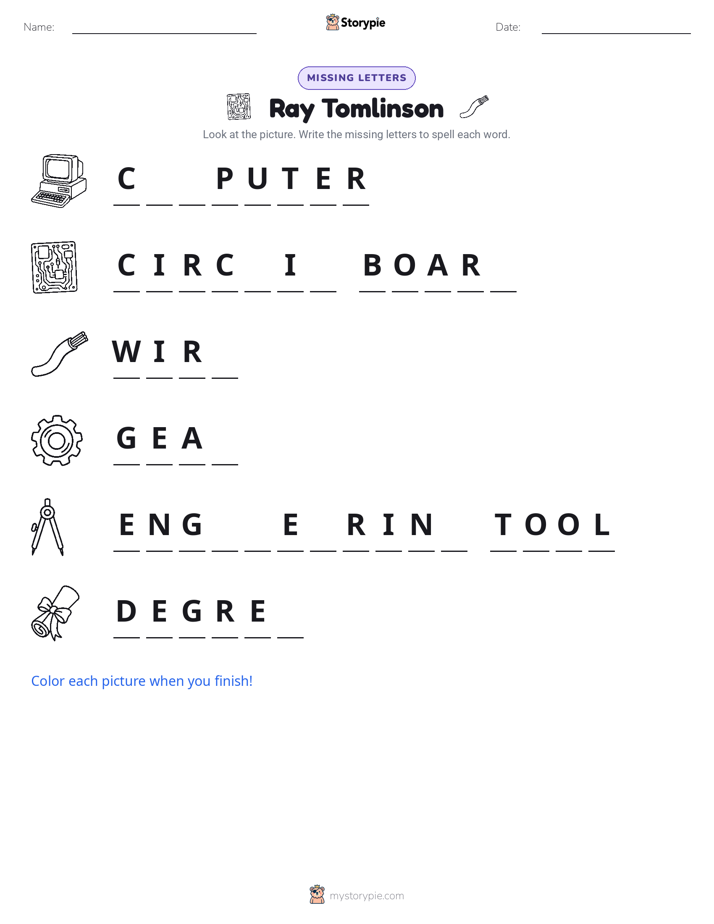
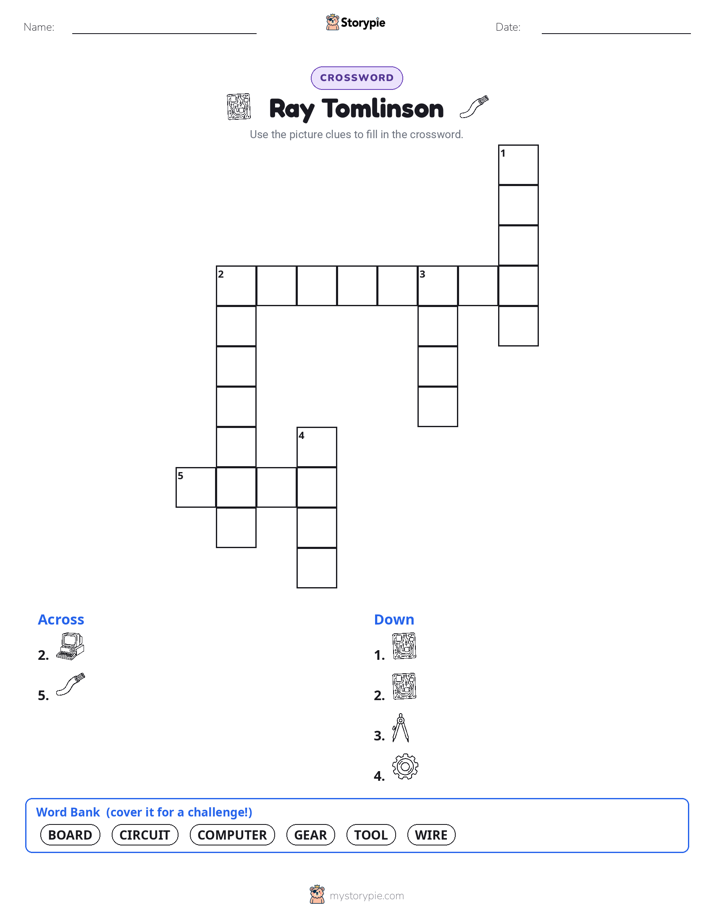
Hello! My name is Ray Tomlinson. I was born on April 23rd, 1941, in a small town called Amsterdam, New York. Even as a kid, I was always curious about how things worked. I loved taking things apart, like old clocks or radios, just to see the gears and wires inside. I didn't always know how to put them back together, but that curiosity was the beginning of my journey as an inventor.
When it was time for college in the early 1960s, I went to a school called Rensselaer Polytechnic Institute and later to the Massachusetts Institute of Technology, or MIT. This was a super exciting time because computers were just starting to become a big deal! They weren't small like the ones you see today. They were huge machines that filled entire rooms, with whirring tapes and blinking lights. I thought they were amazing, and I knew I wanted to be part of this new technological world.
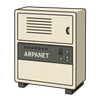
In 1967, I got a job as an engineer at a company called Bolt, Beranek and Newman, which most people just called BBN. We were working on a very important project for the U.S. government called the ARPANET. You can think of the ARPANET as the grandfather of the internet! At the time, programmers could leave messages for each other, but only if they were using the exact same giant computer. It was like leaving a note on a refrigerator for your family. I wanted to figure out a way to send a note to a friend who had a different 'refrigerator' in a different room, or even in a different city, using the ARPANET network.
In late 1971, I had an idea. I took two different computer programs that weren't meant to work together and tinkered with them. One program let you send messages, and the other could move files between computers. I combined them to create something new. Now, I needed a way to address the message. How would the computer know who the message was for and where they were? I looked down at my keyboard and saw the perfect symbol: @. It meant 'at'! So, you could send a message to a 'user' at a 'computer.' I set up two computers right next to each other in my lab, typed out a message—probably just something silly like 'QWERTYUIOP'—and sent it from one machine to the other. It worked! I had just sent the world's first network email.
Ray Tomlinson
Hello! My name is Ray Tomlinson. I was born on April 23rd, 1941, in a small town called Amsterdam, New York. Even as a kid, I was always curious about how things worked. I loved taking things apart, like old clocks or radios, just to see the gears and wires inside. I didn't always know how to put them back together, but that curiosity was the beginning of my journey as an inventor.
When it was time for college in the early 1960s, I went to a school called Rensselaer Polytechnic Institute and later to the Massachusetts Institute of Technology, or MIT. This was a super exciting time because computers were just starting to become a big deal! They weren't small like the ones you see today. They were huge machines that filled entire rooms, with whirring tapes and blinking lights. I thought they were amazing, and I knew I wanted to be part of this new technological world.
In 1967, I got a job as an engineer at a company called Bolt, Beranek and Newman, which most people just called BBN. We were working on a very important project for the U.S. government called the ARPANET. You can think of the ARPANET as the grandfather of the internet! At the time, programmers could leave messages for each other, but only if they were using the exact same giant computer. It was like leaving a note on a refrigerator for your family. I wanted to figure out a way to send a note to a friend who had a different 'refrigerator' in a different room, or even in a different city, using the ARPANET network.
In late 1971, I had an idea. I took two different computer programs that weren't meant to work together and tinkered with them. One program let you send messages, and the other could move files between computers. I combined them to create something new. Now, I needed a way to address the message. How would the computer know who the message was for and where they were? I looked down at my keyboard and saw the perfect symbol: @. It meant 'at'! So, you could send a message to a 'user' at a 'computer.' I set up two computers right next to each other in my lab, typed out a message—probably just something silly like 'QWERTYUIOP'—and sent it from one machine to the other. It worked! I had just sent the world's first network email.
I didn't think it was a big deal at the time. I told a coworker, 'Don't tell anyone! This isn't what we're supposed to be working on.' But soon, everyone working on the ARPANET started using my email program. It was so much faster and easier than sending letters or making phone calls. It was amazing to watch my small idea grow and spread across the world, becoming the email we all know and use today.
I lived to be 74 years old, and I spent my life working with computers and technology. It makes me happy to know that a little bit of tinkering in a lab in 1971 helped connect billions of people all over the world. Every time you send an email to a friend, a teacher, or a family member, you're using a part of my idea to reach out and say hello.
Wow facts
About
Ray Tomlinson was an American computer programmer who implemented the first email system on the ARPANET in 1971 and is credited with developing the first networked email system and selecting the '@' symbol for email addresses.
Take a Quiz
Question 1 of 5
The story says the ARPANET was 'the grandfather of the internet.' What does this phrase mean?
Explore next





Want to do even more?
Go beyond exploring. Unlock tools that turn every story into real learning.

Storypie Plus for families
Full stories, quizzes, and printables. Nights and car rides, sorted.
- Unlimited audio stories
- Create Mode: your child stars in the story
- Offline downloads
- Printable worksheets & coloring pages

Why Storypie for Schools
Students engaged. Prep in seconds. Evenings back to you.
- Worksheets & Quizzes
- Classroom Management
- Formative Assessment
- Custom Curriculum & Lesson Plans
- 27 Languages

Why Storypie for Homeschool
Curriculum done. They'll ask for more. Hours back in your day.
- Worksheet Generator
- First-Person Audio Stories
- Built-in Comprehension Quizzes
- Custom Curriculum & Lesson Plans
- Print & Go Activities