English


Ray Tomlinson
Ray Tomlinson was an American computer programmer who implemented the first email system on the ARPANET in…
Reads at Grades 6–8 Listens at Grades 4–8
Print & create
Answer keys·No prep·Free with an account
28 worksheets · answer keys · full story · quiz · Ages 10-12 · CEFR B2
Plus adds 244,000+ more stories in 27 languages, audio for every one, and printables for all of them.
Just want Ray Tomlinson?

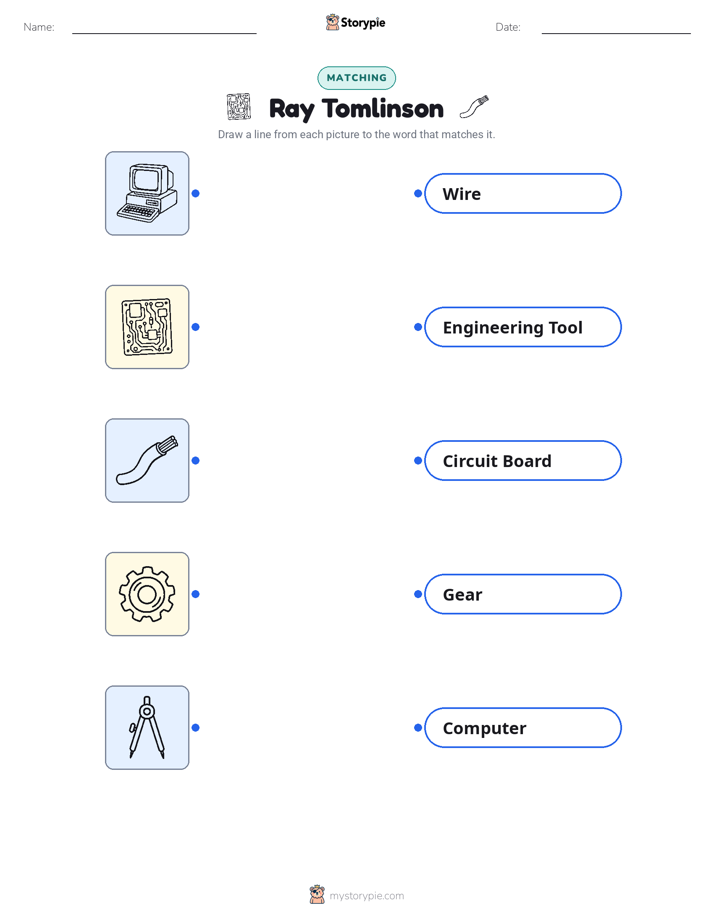
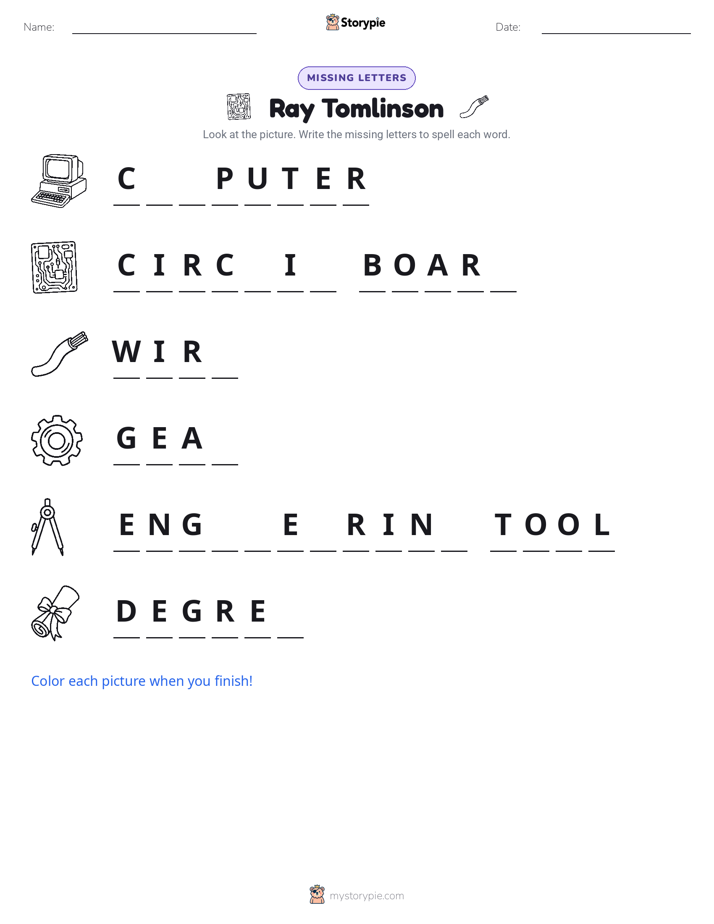
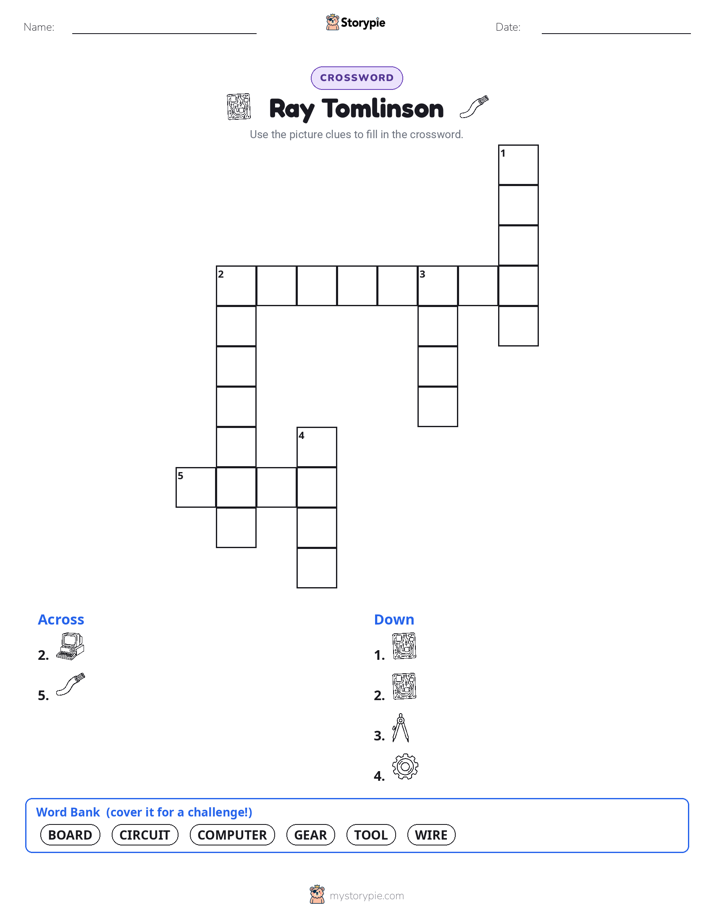
Hello, my name is Ray Tomlinson, and I’m the person who came up with a new way for people to communicate using computers. I was born on April 23rd, 1941, in a town called Amsterdam, New York. From a young age, I was completely fascinated with how things worked. I loved taking things apart to see the gears, wires, and circuits inside, especially when it came to electronics. This curiosity guided me to study engineering at Rensselaer Polytechnic Institute. The world of technology was just beginning to explode with new ideas, and I wanted to be a part of it. In 1963, I earned my first degree, ready to build things that could solve interesting problems and change the way we interact with machines and with each other.
After finishing my first degree, I knew I wanted to continue learning. I moved on to the prestigious Massachusetts Institute of Technology, better known as MIT, where I completed my master's degree in 1965. A couple of years later, in 1967, I began working at a technology company called Bolt, Beranek and Newman, which most of us just called BBN. It was an exciting place to be, filled with brilliant minds working on groundbreaking projects. One of the most important projects at BBN was for the U.S. government. We were tasked with building something called the ARPANET. You can think of the ARPANET as the grandparent of the modern internet. It was a revolutionary computer network designed to connect computers at different universities and research labs across the country, allowing them to share information directly for the first time in history. It was a world of wires and codes, and I was right in the middle of it.
Ray Tomlinson: The Man Who Sent the First Email
Hello, my name is Ray Tomlinson, and I’m the person who came up with a new way for people to communicate using computers. I was born on April 23rd, 1941, in a town called Amsterdam, New York. From a young age, I was completely fascinated with how things worked. I loved taking things apart to see the gears, wires, and circuits inside, especially when it came to electronics. This curiosity guided me to study engineering at Rensselaer Polytechnic Institute. The world of technology was just beginning to explode with new ideas, and I wanted to be a part of it. In 1963, I earned my first degree, ready to build things that could solve interesting problems and change the way we interact with machines and with each other.
After finishing my first degree, I knew I wanted to continue learning. I moved on to the prestigious Massachusetts Institute of Technology, better known as MIT, where I completed my master's degree in 1965. A couple of years later, in 1967, I began working at a technology company called Bolt, Beranek and Newman, which most of us just called BBN. It was an exciting place to be, filled with brilliant minds working on groundbreaking projects. One of the most important projects at BBN was for the U.S. government. We were tasked with building something called the ARPANET. You can think of the ARPANET as the grandparent of the modern internet. It was a revolutionary computer network designed to connect computers at different universities and research labs across the country, allowing them to share information directly for the first time in history. It was a world of wires and codes, and I was right in the middle of it.
By the year 1971, the ARPANET was growing, but communication had its limits. At the time, you could leave a message for another person, but only if you were both using the exact same massive, room-sized computer. There was no system in place to send a message from a computer in one location to a different computer somewhere else on the network. It was like having a mailbox that only worked for people living in your own house. During this time, I was working with two different computer programs. The first was called SNDMSG, which stood for 'send message,' and it let users leave those simple messages on a single machine. The other program was called CPYNET, which was designed to send entire files between computers connected to the ARPANET. One day, a simple but powerful idea struck me: what if I could combine them? What if I could use the file-transfer ability of CPYNET to send a message file created by SNDMSG to someone on another computer?
With that idea in mind, I got to work writing the code that would make it a reality. Soon, I ran into a new problem: I needed a way to address the message. How would the network know who the message was for and which computer they were using? The address needed to connect a user’s name with their computer’s name, or 'host.' I looked down at my Teletype keyboard, which looked a lot like a typewriter, and my eyes landed on the '@' symbol. It was the perfect solution. Nobody used it in their names, and computers didn't use it in their names either. Plus, it already meant 'at,' which was exactly what I needed. The address format became user@host. In late 1971, I sent the very first network email. It traveled from one computer to another one sitting right next to it in my lab. I honestly don’t remember what I wrote—it was probably just a test message like 'QWERTYUIOP'. I remember turning to a colleague and saying, 'Don't tell anyone! We're not supposed to be working on this.'
I may have treated it like a small side project, but my invention quickly took on a life of its own. The scientists and researchers using the ARPANET found it incredibly useful. It was a much more direct and faster way to communicate than anything else they had. Instead of waiting for letters or trying to coordinate phone calls, they could send detailed messages instantly. The idea spread like wildfire. Just two years later, in 1973, a study was conducted on the ARPANET's usage. The results were astounding: the study showed that a full three-quarters of all the traffic on the entire network was email. My little experiment, born out of a desire to make something work a little better, had become the most popular feature of the early internet.
I continued my career in technology for many years, always working on new and interesting challenges. I lived to be 74 years old, and my work continued long after I was gone. Today, the '@' sign is used billions of times every single day, not just for email but in social media handles and across the entire digital world. I am incredibly proud that a simple idea, born from curiosity about how to connect two programs, ended up helping connect the entire world in a whole new way.
Wow facts
About
Ray Tomlinson was an American computer programmer who implemented the first email system on the ARPANET in 1971 and is credited with developing the first networked email system and selecting the '@' symbol for email addresses.
Take a Quiz
Question 1 of 5
In your own words, summarize the main events of Ray Tomlinson's story.
Explore next






Want to do even more?
Go beyond exploring. Unlock tools that turn every story into real learning.

Storypie Plus for families
Full stories, quizzes, and printables. Nights and car rides, sorted.
- Unlimited audio stories
- Create Mode: your child stars in the story
- Offline downloads
- Printable worksheets & coloring pages

Why Storypie for Schools
Students engaged. Prep in seconds. Evenings back to you.
- Worksheets & Quizzes
- Classroom Management
- Formative Assessment
- Custom Curriculum & Lesson Plans
- 27 Languages

Why Storypie for Homeschool
Curriculum done. They'll ask for more. Hours back in your day.
- Worksheet Generator
- First-Person Audio Stories
- Built-in Comprehension Quizzes
- Custom Curriculum & Lesson Plans
- Print & Go Activities