English

ARPANET
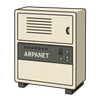
ARPANET (Advanced Research Projects Agency Network) was the first wide-area packet-switching network and was…
Reads at Grades 3–5 Listens at Grades 1–5
Print & create
Answer keys·No prep·Free with an account
28 worksheets · answer keys · full story · quiz · Ages 8-10 · CEFR B1
Plus adds 244,000+ more stories in 27 languages, audio for every one, and printables for all of them.
Just want ARPANET?
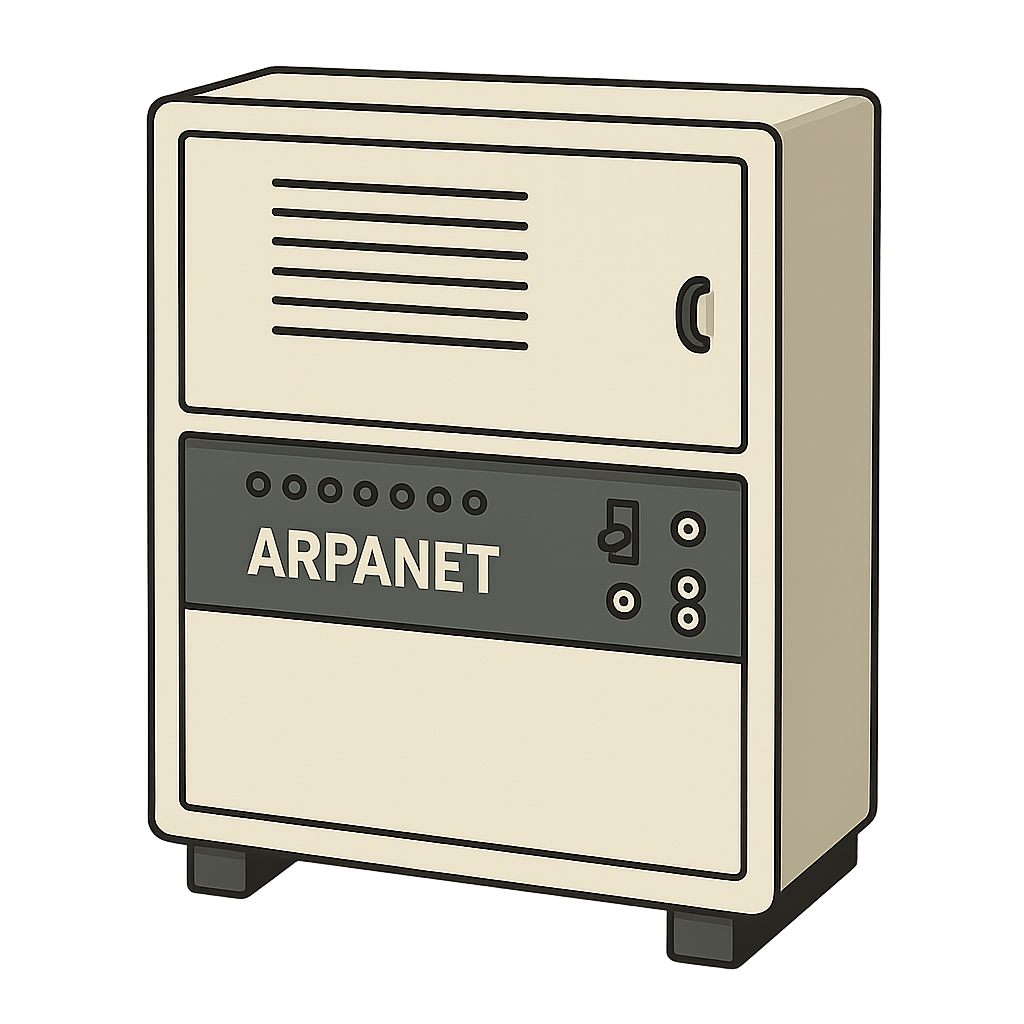
Hello. You might not know my name, but you know my grandchild, the Internet, very well. My name is ARPANET, and I am the network that first taught computers how to talk to each other across long distances. Before I was born, back in the 1960s, the world of computers was a very quiet and lonely place. Imagine giant, room-sized computers as separate islands. Each one was powerful and smart, but it couldn't share its knowledge with any other computer island. Scientists and researchers had to physically travel or mail heavy magnetic tapes just to share their work. This was slow and frustrating. A very clever man named J.C.R. Licklider had a big dream. In 1962, he imagined what he called an 'Intergalactic Computer Network,' a way for all these computer islands to be connected by bridges, sharing information instantly. His idea was like a tiny seed planted in the minds of other brilliant thinkers, a seed that would eventually grow into me.
My creation was a big project funded by a part of the United States government called the Advanced Research Projects Agency, or ARPA for short. That's where I got my name. The scientists and engineers worked for years to build the bridges between the computer islands. Then came the big day: October 29th, 1969. It was late at night, and a scientist named Leonard Kleinrock at a university called UCLA was ready to send my very first message. The plan was to send a message to another computer hundreds of miles away at the Stanford Research Institute. The message was simple: 'LOGIN.' A student began typing. He typed the 'L.' On the other end, they confirmed they received it. He typed the 'O.' They received that, too. Then, he typed the 'G,' and the whole system crashed. My first word was 'LO.' It wasn't the full message they planned, but it was a spectacular success. For the first time in history, two computers had communicated over a network. It was a shaky first breath, but I was alive. By the end of 1969, I connected four whole universities, and my small world began to grow.
The Network That Learned to Talk
Hello. You might not know my name, but you know my grandchild, the Internet, very well. My name is ARPANET, and I am the network that first taught computers how to talk to each other across long distances. Before I was born, back in the 1960s, the world of computers was a very quiet and lonely place. Imagine giant, room-sized computers as separate islands. Each one was powerful and smart, but it couldn't share its knowledge with any other computer island. Scientists and researchers had to physically travel or mail heavy magnetic tapes just to share their work. This was slow and frustrating. A very clever man named J.C.R. Licklider had a big dream. In 1962, he imagined what he called an 'Intergalactic Computer Network,' a way for all these computer islands to be connected by bridges, sharing information instantly. His idea was like a tiny seed planted in the minds of other brilliant thinkers, a seed that would eventually grow into me.
My creation was a big project funded by a part of the United States government called the Advanced Research Projects Agency, or ARPA for short. That's where I got my name. The scientists and engineers worked for years to build the bridges between the computer islands. Then came the big day: October 29th, 1969. It was late at night, and a scientist named Leonard Kleinrock at a university called UCLA was ready to send my very first message. The plan was to send a message to another computer hundreds of miles away at the Stanford Research Institute. The message was simple: 'LOGIN.' A student began typing. He typed the 'L.' On the other end, they confirmed they received it. He typed the 'O.' They received that, too. Then, he typed the 'G,' and the whole system crashed. My first word was 'LO.' It wasn't the full message they planned, but it was a spectacular success. For the first time in history, two computers had communicated over a network. It was a shaky first breath, but I was alive. By the end of 1969, I connected four whole universities, and my small world began to grow.
Once I was born, I had a lot to learn. Connecting four computers was one thing, but connecting dozens, and then hundreds, was much harder. I needed better ways to talk and share. In 1971, a programmer named Ray Tomlinson had a brilliant idea. He created a way for people to send letters to each other through my network. He called it electronic mail, or email. To make sure the message went to the right person at the right computer, he chose a symbol to separate the person’s name from the computer’s name. He looked down at his keyboard and picked the '@' symbol, a choice that you still see in every email address today. As I grew, I faced a new problem. Different kinds of computers spoke different languages. To connect them all, I needed one universal language everyone could understand. Two brilliant engineers, Vint Cerf and Bob Kahn, spent years creating this language. They called it TCP/IP. On January 1st, 1983, I made a huge change. Every computer connected to me officially switched over to speaking TCP/IP. This was a massive step that made me stronger and more reliable, setting the stage for a worldwide network.
My new language, TCP/IP, was so good that it inspired other networks to pop up and use it, too. Soon, there were many networks all speaking the same language, and they all began to connect to each other. It was like I had started a small club that grew into a giant, global party. I had done my job. I had shown the world that connecting computers was possible and powerful. So, in 1990, I was officially retired. It wasn’t a sad ending for me. It felt more like a graduation. I had passed the torch to my child, the worldwide collection of networks that you now call the Internet. My job was complete. My legacy is in every click, every search, and every connection you make. Every time you watch a video, play a game with a friend far away, or learn something new online, you are living the dream that started with me, ARPANET, and a simple message: 'LO.'
Wow facts
About
ARPANET (Advanced Research Projects Agency Network) was the first wide-area packet-switching network and was among the first to implement the TCP/IP protocol suite. It served as the technical foundation and direct precursor to the modern Internet.
Take a Quiz
Question 1 of 5
In the story, I said computers were like 'lonely islands.' What does the phrase 'lonely islands' mean in this context?
Explore next





Want to do even more?
Go beyond exploring. Unlock tools that turn every story into real learning.

Storypie Plus for families
Full stories, quizzes, and printables. Nights and car rides, sorted.
- Unlimited audio stories
- Create Mode: your child stars in the story
- Offline downloads
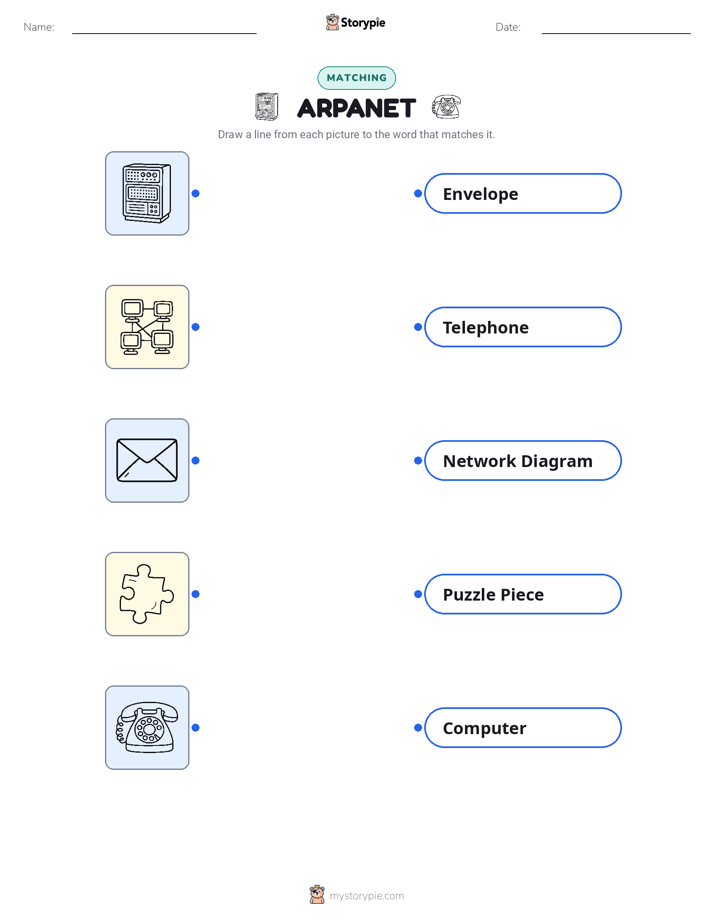
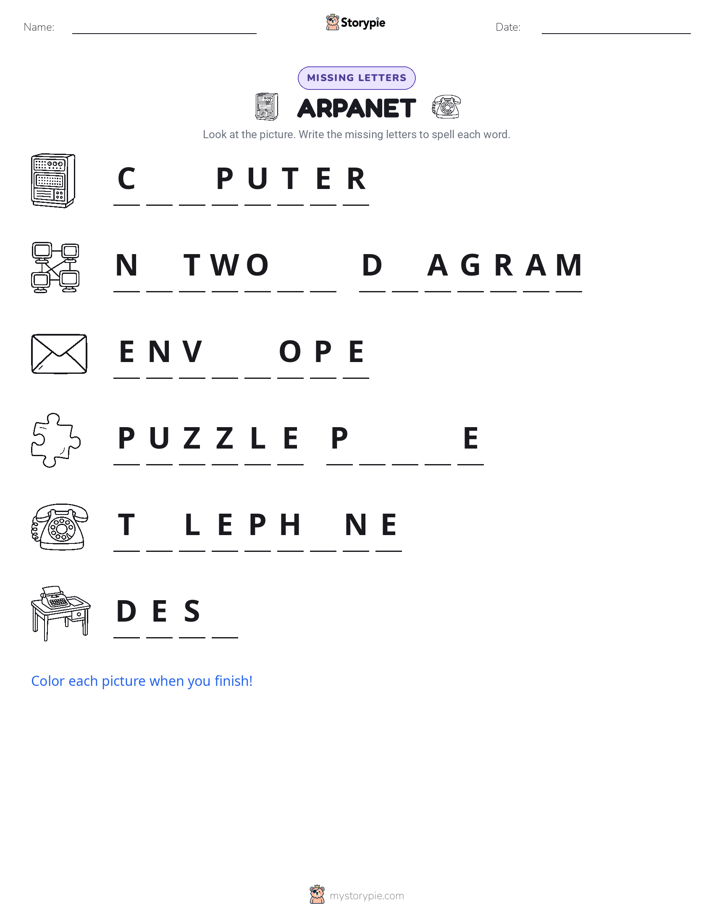
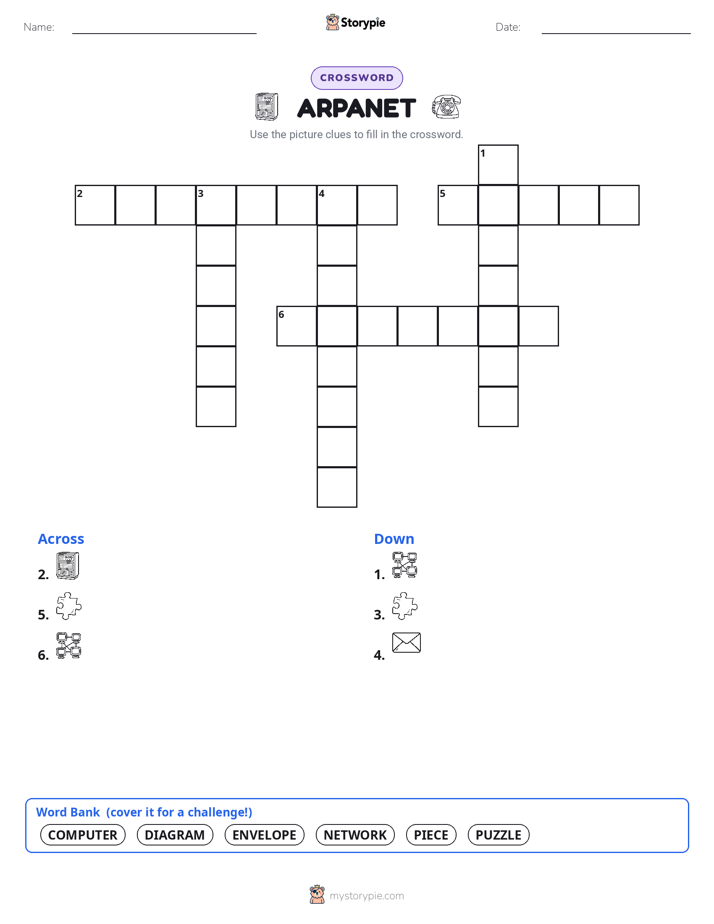
- Printable worksheets & coloring pages

Why Storypie for Schools
Students engaged. Prep in seconds. Evenings back to you.
- Worksheets & Quizzes
- Classroom Management
- Formative Assessment
- Custom Curriculum & Lesson Plans
- 27 Languages

Why Storypie for Homeschool
Curriculum done. They'll ask for more. Hours back in your day.
- Worksheet Generator
- First-Person Audio Stories
- Built-in Comprehension Quizzes
- Custom Curriculum & Lesson Plans
- Print & Go Activities