English

ARPANET
ARPANET (Advanced Research Projects Agency Network) was the first wide-area packet-switching network and was…
Reads at Grades 6–8 Listens at Grades 4–8
Print & create
Answer keys·No prep·Free with an account
28 worksheets · answer keys · full story · quiz · Ages 10-12 · CEFR B2
Plus adds 244,000+ more stories in 27 languages, audio for every one, and printables for all of them.
Just want ARPANET?
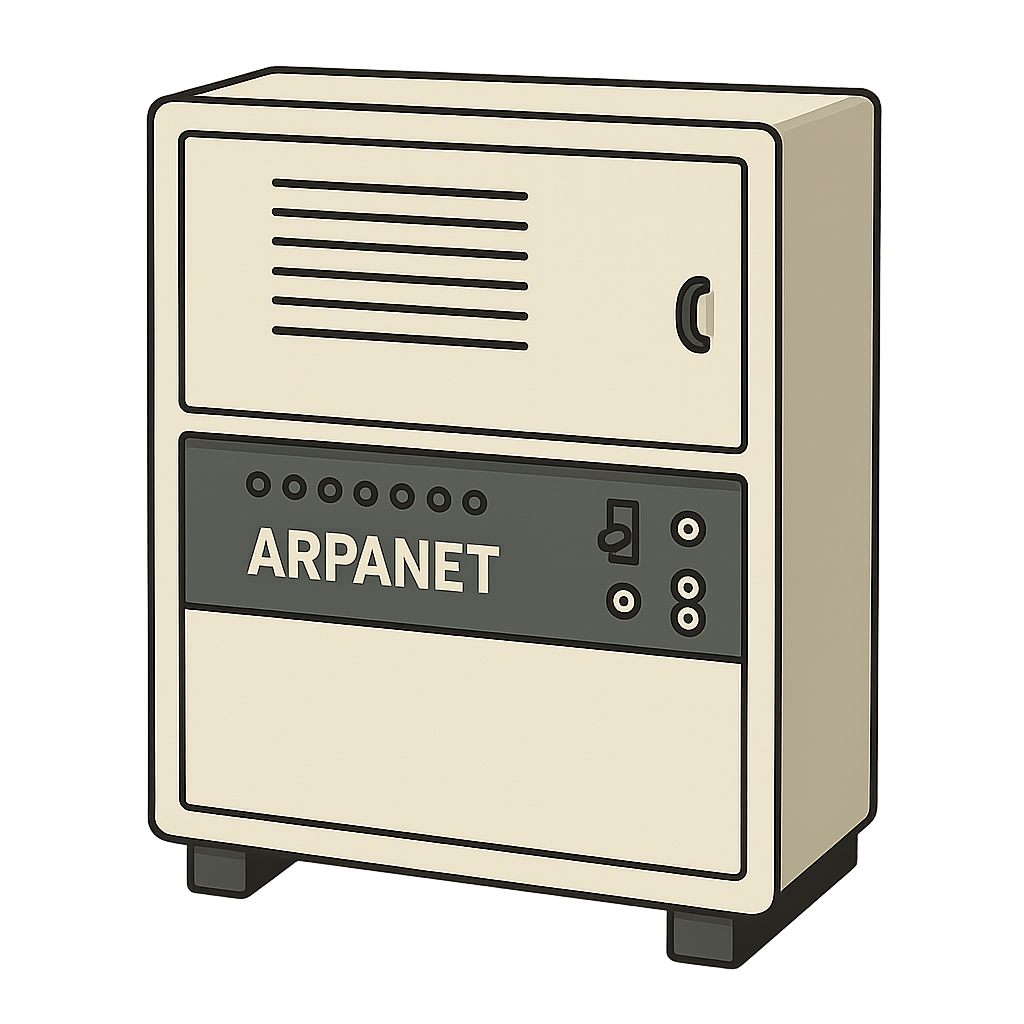
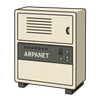
Before I tell you my story, you should know my name: ARPANET. It stands for the Advanced Research Projects Agency Network, which sounds very official, I know. But before I existed, the world of computers was a quiet, lonely place. Imagine the 1960s. In laboratories and universities across the United States, giant computers whirred and blinked, solving complex mathematical problems. They were brilliant, like wise old hermits living on separate islands, each filled with priceless knowledge. The problem was, these islands had no bridges. A computer in California couldn't speak to one in Massachusetts. They were powerful, but profoundly isolated. Some very forward-thinking people at the U.S. Department of Defense's Advanced Research Projects Agency, or ARPA, saw a great danger in this. If a disaster struck and destroyed one of these computer islands, all the unique information it held would be lost forever. They began to dream of a new kind of connection, a web that could link these islands together. They imagined a network so robust that if one path was broken, messages could simply find another way. It was a radical idea: to build a system with no single point of failure, a community of machines that could share, collaborate, and survive together. That dream was the spark that gave birth to me.
Bringing me to life was a monumental task, undertaken by some of the brightest minds of the era. The scientists and engineers at ARPA knew they couldn't just string a long wire between two computers; they needed a completely new way for machines to talk. The genius solution was an idea called 'packet switching,' a concept developed by thinkers like Leonard Kleinrock in the United States, Donald Davies in the United Kingdom, and Paul Baran. Think of it like this: instead of sending one enormous, fragile letter through the mail, you write your message on a single page, tear it into a hundred tiny puzzle pieces, and mail each piece in its own envelope. Each piece, or 'packet,' is numbered and addressed. They might all take different routes, some fast and some slow, but eventually, they all arrive at the destination. There, they are reassembled in the correct order to recreate the original message. This method meant that no single piece was too important; if one packet got lost, it could be resent without having to start all over. It was the key to building the strong, decentralized network everyone had imagined. My official birthday was October 29th, 1969. At Professor Kleinrock's lab at the University of California, Los Angeles (UCLA), a student programmer named Charley Kline sat down to send the very first message. The destination was another one of my nodes, a computer at the Stanford Research Institute hundreds of miles away. The message was supposed to be 'LOGIN.' He typed the 'L.' The scientist on the phone at Stanford said, 'We got the L!' He typed the 'O.' 'We got the O!' Then, he typed the 'G'... and the whole system crashed. My very first word to the world wasn't 'LOGIN' or 'HELLO.' It was 'LO.' It may sound like a failure, but it was the most important failure in history. It was proof that two computers, miles apart, could communicate. I had spoken.
My First Word Was 'LO'
Before I tell you my story, you should know my name: ARPANET. It stands for the Advanced Research Projects Agency Network, which sounds very official, I know. But before I existed, the world of computers was a quiet, lonely place. Imagine the 1960s. In laboratories and universities across the United States, giant computers whirred and blinked, solving complex mathematical problems. They were brilliant, like wise old hermits living on separate islands, each filled with priceless knowledge. The problem was, these islands had no bridges. A computer in California couldn't speak to one in Massachusetts. They were powerful, but profoundly isolated. Some very forward-thinking people at the U.S. Department of Defense's Advanced Research Projects Agency, or ARPA, saw a great danger in this. If a disaster struck and destroyed one of these computer islands, all the unique information it held would be lost forever. They began to dream of a new kind of connection, a web that could link these islands together. They imagined a network so robust that if one path was broken, messages could simply find another way. It was a radical idea: to build a system with no single point of failure, a community of machines that could share, collaborate, and survive together. That dream was the spark that gave birth to me.
Bringing me to life was a monumental task, undertaken by some of the brightest minds of the era. The scientists and engineers at ARPA knew they couldn't just string a long wire between two computers; they needed a completely new way for machines to talk. The genius solution was an idea called 'packet switching,' a concept developed by thinkers like Leonard Kleinrock in the United States, Donald Davies in the United Kingdom, and Paul Baran. Think of it like this: instead of sending one enormous, fragile letter through the mail, you write your message on a single page, tear it into a hundred tiny puzzle pieces, and mail each piece in its own envelope. Each piece, or 'packet,' is numbered and addressed. They might all take different routes, some fast and some slow, but eventually, they all arrive at the destination. There, they are reassembled in the correct order to recreate the original message. This method meant that no single piece was too important; if one packet got lost, it could be resent without having to start all over. It was the key to building the strong, decentralized network everyone had imagined. My official birthday was October 29th, 1969. At Professor Kleinrock's lab at the University of California, Los Angeles (UCLA), a student programmer named Charley Kline sat down to send the very first message. The destination was another one of my nodes, a computer at the Stanford Research Institute hundreds of miles away. The message was supposed to be 'LOGIN.' He typed the 'L.' The scientist on the phone at Stanford said, 'We got the L!' He typed the 'O.' 'We got the O!' Then, he typed the 'G'... and the whole system crashed. My very first word to the world wasn't 'LOGIN' or 'HELLO.' It was 'LO.' It may sound like a failure, but it was the most important failure in history. It was proof that two computers, miles apart, could communicate. I had spoken.
That first, fragmented word was just the beginning. From those two initial nodes at UCLA and Stanford, I quickly began to grow. By the end of 1969, I had connected four major research centers. Within a few years, I was a sprawling network linking dozens of universities and government facilities across the country. I was the digital backbone for a new era of collaborative research. But my most transformative moment came in 1971, thanks to a programmer named Ray Tomlinson. He was working on a way for developers to leave messages for each other on the same computer. He realized he could adapt this program to send messages across my network, from one computer to another. He created electronic mail, or email. To make it work, he needed a way to separate a user's name from the name of their host computer. He looked down at his keyboard and chose a symbol that wasn't used in anyone's name: the '@' sign, which meant 'at.' Suddenly, a scientist at MIT could send a detailed message to a colleague at the University of Utah in an instant. No more waiting for letters in the mail. This invention changed everything. I was no longer just a way for machines to share data; I was a way for people to share ideas, to argue, to collaborate, and to build friendships. I was becoming a community, a bustling, invisible city of minds working together, all thanks to the simple act of sending a message.
As I grew through the 1970s and into the 1980s, a new challenge emerged. I was my own, unique network, but other networks were being born, each with its own way of communicating. How could we all talk to each other? The solution came from two visionary computer scientists, Vint Cerf and Bob Kahn. They developed a universal set of rules, a common language that any network could use to connect with any other network. They called it the Transmission Control Protocol/Internet Protocol, or TCP/IP. It was the key to creating a true 'network of networks.' A historic day was chosen for the switch. On January 1st, 1983, every single computer connected to me transitioned to the new TCP/IP language. Many people consider this moment the true birth of the internet as we know it. I, the original ARPANET, continued to operate for a few more years, but my primary mission was complete. I had proven the concept and provided the foundation. In 1990, I was officially decommissioned, my job passed on to a new generation of networks. But I didn't truly disappear. My spirit, my fundamental design of packet switching and resilient connections, is the DNA of the internet you use every single day. Every time you send an email, watch a video, or talk to a friend across the globe, you are using the ideas I helped pioneer. I was the seed, a humble experiment that grew into a forest connecting the entire world.
Wow facts
About
ARPANET (Advanced Research Projects Agency Network) was the first wide-area packet-switching network and was among the first to implement the TCP/IP protocol suite. It served as the technical foundation and direct precursor to the modern Internet.
Take a Quiz
Question 1 of 5
In your own words, describe the event that happened on October 29th, 1969, and explain why it was both a failure and a success.
Explore next





Want to do even more?
Go beyond exploring. Unlock tools that turn every story into real learning.

Storypie Plus for families
Full stories, quizzes, and printables. Nights and car rides, sorted.
- Unlimited audio stories
- Create Mode: your child stars in the story
- Offline downloads
- Printable worksheets & coloring pages

Why Storypie for Schools
Students engaged. Prep in seconds. Evenings back to you.
- Worksheets & Quizzes
- Classroom Management
- Formative Assessment
- Custom Curriculum & Lesson Plans
- 27 Languages

Why Storypie for Homeschool
Curriculum done. They'll ask for more. Hours back in your day.
- Worksheet Generator
- First-Person Audio Stories
- Built-in Comprehension Quizzes
- Custom Curriculum & Lesson Plans
- Print & Go Activities