English

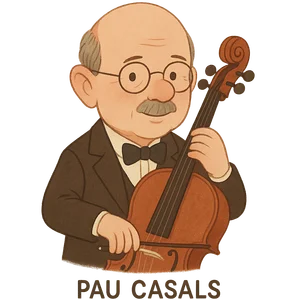
Pau Casals
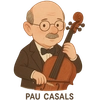
Pau Casals was a world-renowned Spanish Catalan cellist, conductor, and composer…
Reads at Grades 6–8 Listens at Grades 4–8
Print & create
Answer keys·No prep·Free with an account
28 worksheets · answer keys · full story · quiz · Ages 10-12 · CEFR B2
Plus adds 280,000+ more stories in 27 languages, audio for every one, and printables for all of them.
Just want Pau Casals?
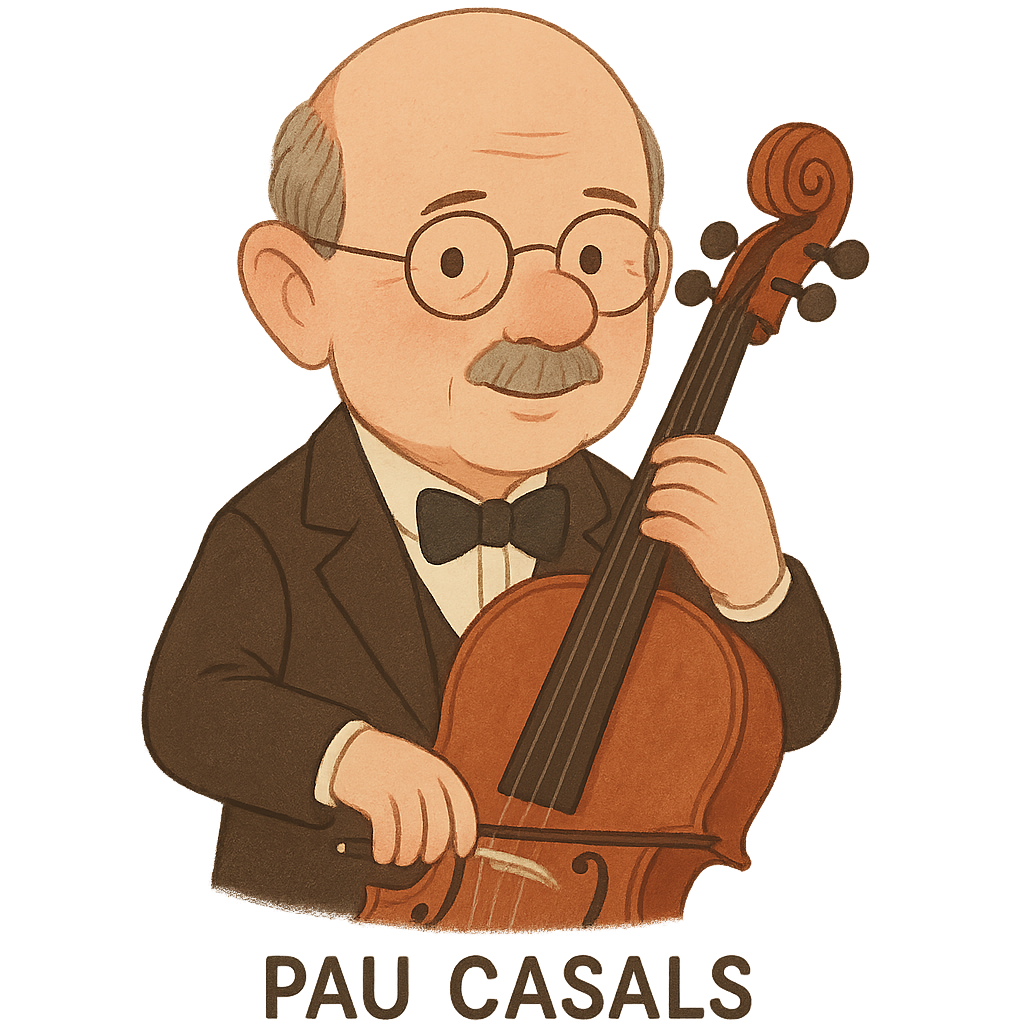
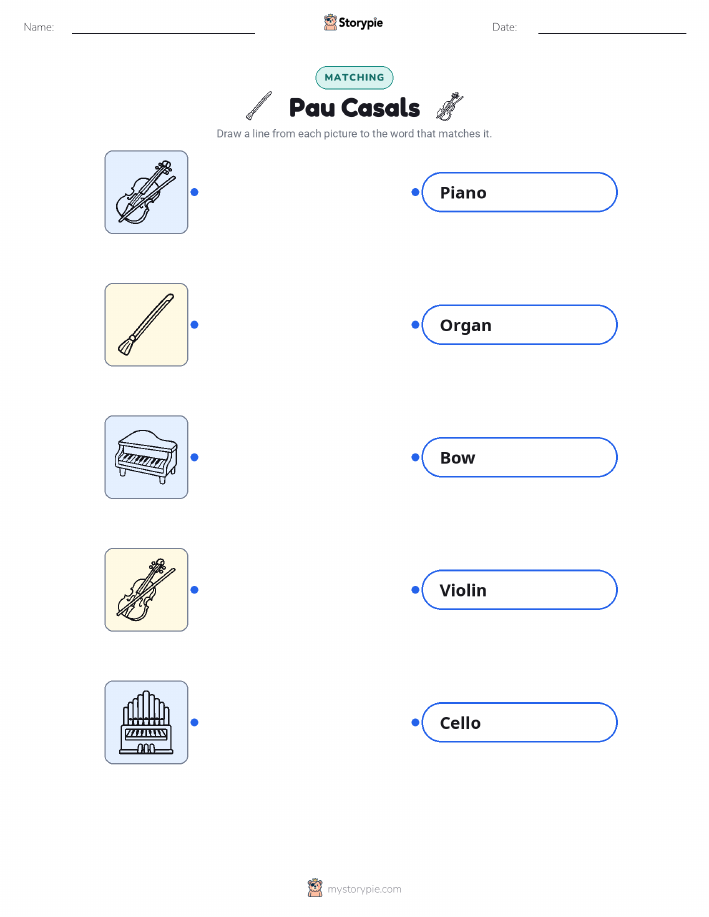
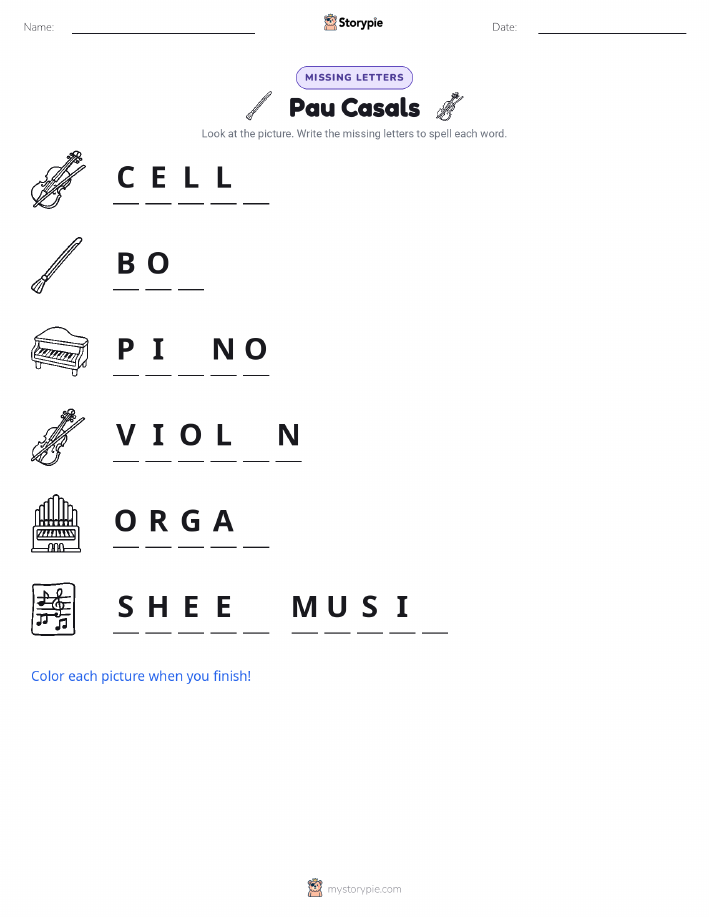
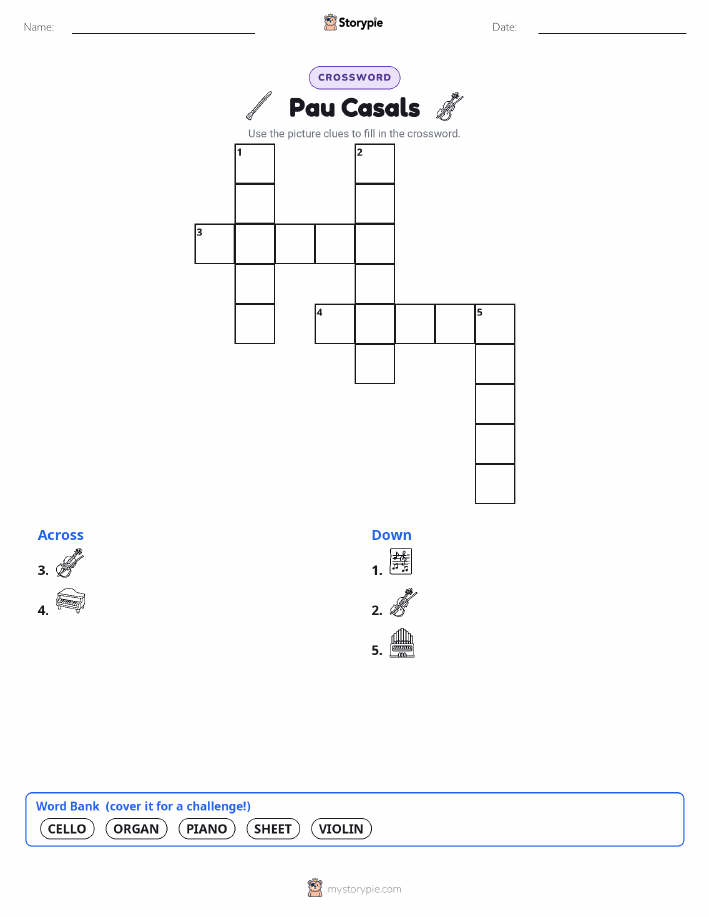
Hello! My name is Pau Casals, and I want to share my story with you. My life was filled with music, from the very beginning. I was born on December 29th, 1876, in a small town called El Vendrell in Catalonia, Spain. My father was the church organist and choirmaster, so our home was always filled with melodies. Before I could even speak, I could sing, and by the age of four, I was playing the piano. I also learned the violin and the organ. When I was eleven years old, on a trip to a nearby town, I saw the instrument that would change my life: the cello. I begged my father for one, and from the moment I first held its bow, I knew I had found my true voice.
My family supported my passion, and I went to study music in the big city of Barcelona. Around the year 1890, when I was thirteen, something incredible happened. While wandering through the old city streets, I came across a dusty, old music shop. Inside, I found a book of sheet music that no one had paid much attention to for over a hundred years: the Six Suites for Unaccompanied Cello by Johann Sebastian Bach. At the time, people thought they were just simple practice exercises. But as I began to play them, I discovered they were masterpieces filled with beauty, emotion, and incredible complexity. For the next twelve years, I practiced them every single day, unlocking their secrets and preparing to share their magic with the world.
My hard work paid off. I traveled the world, playing in the grandest concert halls for kings, queens, and presidents. I wanted to show everyone how powerful and expressive the cello could be. I even changed the way people played it, developing new techniques that allowed for a more natural and beautiful sound. Music wasn't just for performing; it was for building community. In 1920, I returned to Barcelona and founded the Orquestra Pau Casals, an orchestra made of talented musicians who shared my love for music. My dream was to bring the best classical music to everyone, including working-class people who couldn't always afford concert tickets.
Pau Casals: A Voice for Peace
Hello! My name is Pau Casals, and I want to share my story with you. My life was filled with music, from the very beginning. I was born on December 29th, 1876, in a small town called El Vendrell in Catalonia, Spain. My father was the church organist and choirmaster, so our home was always filled with melodies. Before I could even speak, I could sing, and by the age of four, I was playing the piano. I also learned the violin and the organ. When I was eleven years old, on a trip to a nearby town, I saw the instrument that would change my life: the cello. I begged my father for one, and from the moment I first held its bow, I knew I had found my true voice.
My family supported my passion, and I went to study music in the big city of Barcelona. Around the year 1890, when I was thirteen, something incredible happened. While wandering through the old city streets, I came across a dusty, old music shop. Inside, I found a book of sheet music that no one had paid much attention to for over a hundred years: the Six Suites for Unaccompanied Cello by Johann Sebastian Bach. At the time, people thought they were just simple practice exercises. But as I began to play them, I discovered they were masterpieces filled with beauty, emotion, and incredible complexity. For the next twelve years, I practiced them every single day, unlocking their secrets and preparing to share their magic with the world.
My hard work paid off. I traveled the world, playing in the grandest concert halls for kings, queens, and presidents. I wanted to show everyone how powerful and expressive the cello could be. I even changed the way people played it, developing new techniques that allowed for a more natural and beautiful sound. Music wasn't just for performing; it was for building community. In 1920, I returned to Barcelona and founded the Orquestra Pau Casals, an orchestra made of talented musicians who shared my love for music. My dream was to bring the best classical music to everyone, including working-class people who couldn't always afford concert tickets.
My beloved country of Spain went through a very difficult time. The Spanish Civil War began in 1936, and a dictator named Francisco Franco came to power. I believed deeply in peace, democracy, and freedom. I could not support a government that took those things away from its people. I openly spoke out against the new regime, which was very dangerous. When the war ended in 1939 with Franco's victory, I made a heartbreaking decision. I went into exile, leaving my home and vowing never to return to Spain or perform in public again until my country was free. My cello, my voice, fell silent as a protest for justice.
I settled in a small French town called Prades. For years, I refused to perform. But in 1950, to honor the 200th anniversary of Bach's death, musicians from all over the world begged me to lead a festival. I agreed, and the Prades Festival was born. I realized I could use my music not just for art, but as a powerful message for peace. I decided to perform again, but only for special occasions that honored peace and humanity. In 1971, when I was 94 years old, I played at the United Nations. I performed a Catalan folk song called 'El Cant dels Ocells'—The Song of the Birds—and told the world that the birds singing in the sky sing a message of 'Peace, Peace, Peace.'
I eventually moved to Puerto Rico, the homeland of my mother and my wife, and continued to teach and conduct. I lived to be 96 years old, passing away on October 22nd, 1973. Although I did not live to see Spain become a democracy again, my wish was eventually honored. After Franco's rule ended, my remains were returned to my beloved hometown of El Vendrell. Today, people remember me not only for my music and for giving the world the gift of Bach's Cello Suites, but also as a man who used his voice, and his cello, to stand up for peace and the rights of all people.
Wow facts
About
Pau Casals was a world-renowned Spanish Catalan cellist, conductor, and composer, celebrated for his virtuosic performances and his firm public stance for peace and democracy, most notably his opposition to the Franco regime in Spain.
Take a Quiz
Question 1 of 5
What is the main lesson we can learn from Pau Casals's life story?
Explore next





Want to do even more?
Go beyond exploring. Unlock tools that turn every story into real learning.

Storypie Plus for families
Full stories, quizzes, and printables. Nights and car rides, sorted.
- Unlimited audio stories
- Create Mode: your child stars in the story
- Offline downloads
- Printable worksheets & coloring pages

Why Storypie for Schools
Students engaged. Prep in seconds. Evenings back to you.
- Worksheets & Quizzes
- Classroom Management
- Formative Assessment
- Custom Curriculum & Lesson Plans
- 27 Languages

Why Storypie for Homeschool
Curriculum done. They'll ask for more. Hours back in your day.
- Worksheet Generator
- First-Person Audio Stories
- Built-in Comprehension Quizzes
- Custom Curriculum & Lesson Plans
- Print & Go Activities