English

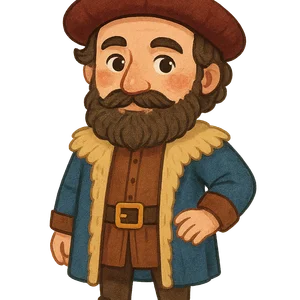
Pedro Álvares Cabral
A Portuguese nobleman, military commander, navigator…
Reads at Grades 6–8 Listens at Grades 4–8
Print & create
Answer keys·No prep·Free with an account
28 worksheets · answer keys · full story · quiz · Ages 10-12 · CEFR B2
Plus adds 208,000+ more stories in 27 languages, audio for every one, and printables for all of them.
Just want Pedro Álvares Cabral?
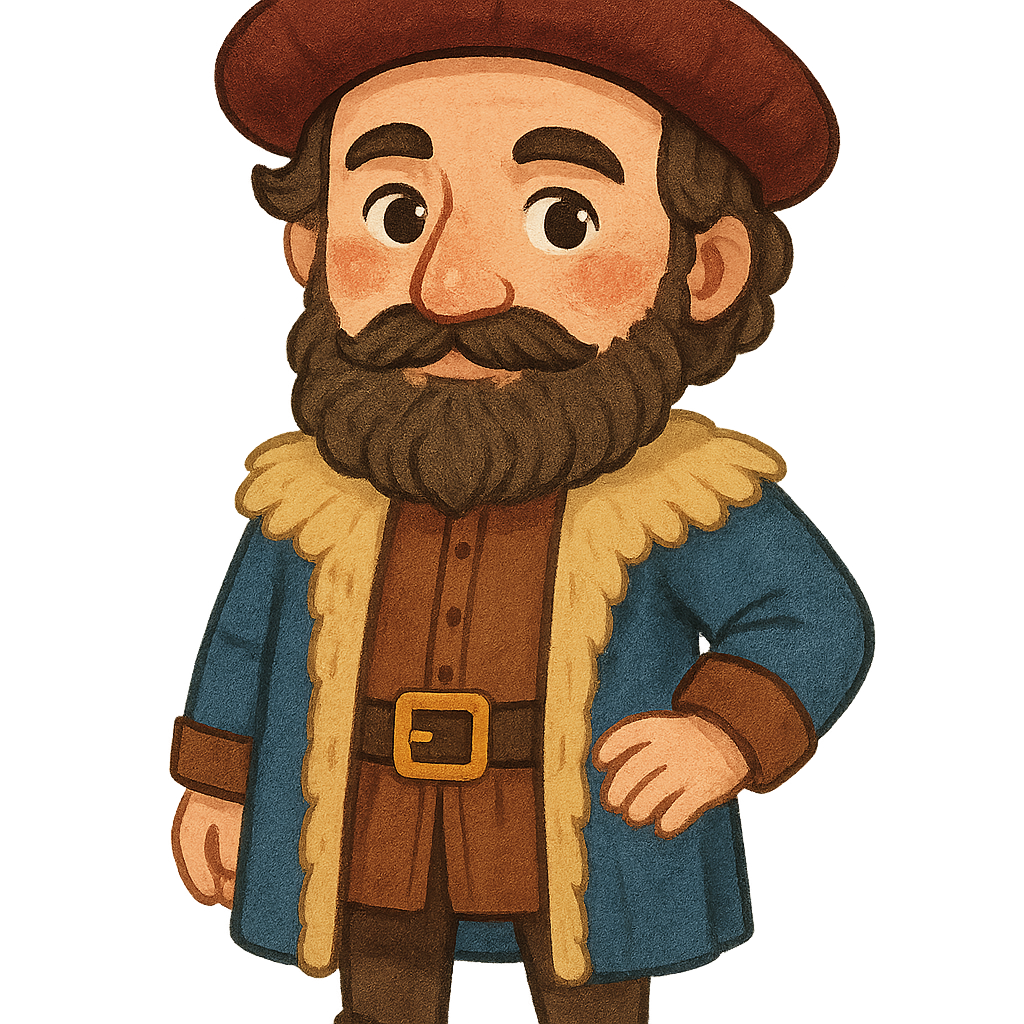
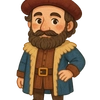
My name is Pedro Álvares Cabral, and I am known as a nobleman and explorer from Portugal. I was born into a noble family around the year 1467 in the town of Belmonte, Portugal. As a young man, I was granted the great honor of being sent to the royal court of King John II. There, I studied and learned the ways of the court, which prepared me for a lifetime of service to my king and country. I grew up during a truly remarkable era known as the Age of Discovery. It was a time of immense excitement and ambition, as Portugal was at the forefront of sending brave sailors in magnificent ships to explore unknown parts of the world, seeking new routes and new lands.
In the year 1500, a new king, Manuel I, sat on the throne, and he entrusted me with a mission of tremendous importance. He appointed me the commander of a grand fleet consisting of 13 ships and hundreds of sailors. My official destination was India. My orders were to follow the new sea route that had been successfully navigated by the famous explorer Vasco da Gama only a few years before. The primary goal of this expedition was to establish trade agreements for valuable spices like pepper, which were highly sought after in Europe. I felt the immense weight of this responsibility, but also a deep sense of excitement to lead such a significant journey into dangerous and distant waters.
Our voyage began on March 9th, 1500, as we set sail from the shores of Portugal. To find the most favorable winds for our long journey around Africa, I made a critical navigational decision. I steered my fleet far to the west into the Atlantic Ocean, taking a much wider arc than previous expeditions. This was a calculated risk to make our journey faster. Then, after weeks at sea, a surprising event changed everything. On April 22nd, 1500, a lookout high on the mast of my ship shouted the words every sailor longs to hear: 'Land ho!'. We were all stunned. Before us was a land that did not appear on any of our maps. The first thing we saw was a tall, rounded mountain, which we named Monte Pascoal, meaning 'Easter Mountain,' because it was near the Easter holiday.
Pedro Álvares Cabral: The Accidental Discoverer
My name is Pedro Álvares Cabral, and I am known as a nobleman and explorer from Portugal. I was born into a noble family around the year 1467 in the town of Belmonte, Portugal. As a young man, I was granted the great honor of being sent to the royal court of King John II. There, I studied and learned the ways of the court, which prepared me for a lifetime of service to my king and country. I grew up during a truly remarkable era known as the Age of Discovery. It was a time of immense excitement and ambition, as Portugal was at the forefront of sending brave sailors in magnificent ships to explore unknown parts of the world, seeking new routes and new lands.
In the year 1500, a new king, Manuel I, sat on the throne, and he entrusted me with a mission of tremendous importance. He appointed me the commander of a grand fleet consisting of 13 ships and hundreds of sailors. My official destination was India. My orders were to follow the new sea route that had been successfully navigated by the famous explorer Vasco da Gama only a few years before. The primary goal of this expedition was to establish trade agreements for valuable spices like pepper, which were highly sought after in Europe. I felt the immense weight of this responsibility, but also a deep sense of excitement to lead such a significant journey into dangerous and distant waters.
Our voyage began on March 9th, 1500, as we set sail from the shores of Portugal. To find the most favorable winds for our long journey around Africa, I made a critical navigational decision. I steered my fleet far to the west into the Atlantic Ocean, taking a much wider arc than previous expeditions. This was a calculated risk to make our journey faster. Then, after weeks at sea, a surprising event changed everything. On April 22nd, 1500, a lookout high on the mast of my ship shouted the words every sailor longs to hear: 'Land ho!'. We were all stunned. Before us was a land that did not appear on any of our maps. The first thing we saw was a tall, rounded mountain, which we named Monte Pascoal, meaning 'Easter Mountain,' because it was near the Easter holiday.
We anchored our ships and went ashore, becoming the first Europeans to set foot on this vast, unknown land. There, we met the native inhabitants, the Tupiniquim people. Our first encounters were peaceful and filled with curiosity on both sides. We exchanged gifts with them; they were fascinated by our iron tools and metal objects, while we admired their beautiful headdresses made from the colorful feathers of parrots. Following the customs of my time, I claimed this new land for the crown of Portugal. I named it 'Ilha de Vera Cruz,' which means the Island of the True Cross. I understood immediately that this discovery was of monumental importance, so I dispatched one of my ships to sail directly back to Portugal with a letter to inform King Manuel I of our find. This land I had claimed would one day be known by a different name: Brazil.
After spending about ten days exploring the coast and resupplying, we had to resume our original mission. We raised our anchors and sailed east, charting a course for India. However, the journey soon turned perilous. As we sailed near the southern tip of Africa, a sudden and violent storm struck our fleet. The waves and wind were merciless, and four of our ships were lost to the sea. Tragically, the renowned explorer Bartolomeu Dias, who had been the first European to round that very cape years earlier, was on one of those ships. We eventually reached our destination of Calicut, India, but our troubles were not over. We faced conflict with local traders who were not eager to do business with us. Despite these setbacks, we successfully loaded our remaining ships with precious spices like pepper and ginger before beginning the long voyage home. We finally arrived back in Portugal in the summer of 1501, nearly a year and a half after we had departed.
Although my expedition to India was considered only partly successful due to the loss of so many ships and men, my accidental discovery of Brazil reshaped the map of the world. This unexpected find gave Portugal a claim to a vast and resource-rich territory in South America, which would become a cornerstone of its empire. After my return, I did not lead any more major expeditions and chose to retire to my family estate. I lived to be about 53 years old and passed away around the year 1520. Today, I am remembered not for the spices I brought back, but as the European discoverer of Brazil. My journey connected continents and cultures in a way no one had planned, and it is because of my voyage that the people of the great nation of Brazil speak Portuguese to this day.
Wow facts
About
A Portuguese nobleman, military commander, navigator, and explorer who is regarded as the first European to discover Brazil while leading the second Portuguese expedition to India in 1500.
Take a Quiz
Question 1 of 5
What is the main reason Pedro Álvares Cabral is remembered in history?
Explore next


Want to do even more?
Go beyond exploring. Unlock tools that turn every story into real learning.

Storypie Plus for families
Full stories, quizzes, and printables. Nights and car rides, sorted.
- Unlimited audio stories
- Create Mode: your child stars in the story
- Offline downloads
- Printable worksheets & coloring pages

Why Storypie for Schools
Students engaged. Prep in seconds. Evenings back to you.
- Worksheets & Quizzes
- Classroom Management
- Formative Assessment
- Custom Curriculum & Lesson Plans
- 27 Languages

Why Storypie for Homeschool
Curriculum done. They'll ask for more. Hours back in your day.
- Worksheet Generator
- First-Person Audio Stories
- Built-in Comprehension Quizzes
- Custom Curriculum & Lesson Plans
- Print & Go Activities