English

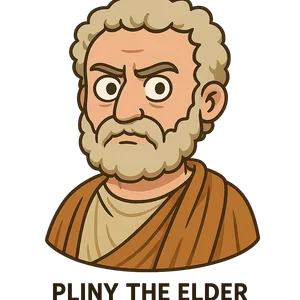
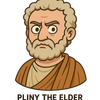
Pliny the Elder
Pliny the Elder was a Roman author, naturalist, and naval commander best known for his encyclopedic work…
Reads at Grades 6–8 Listens at Grades 4–8
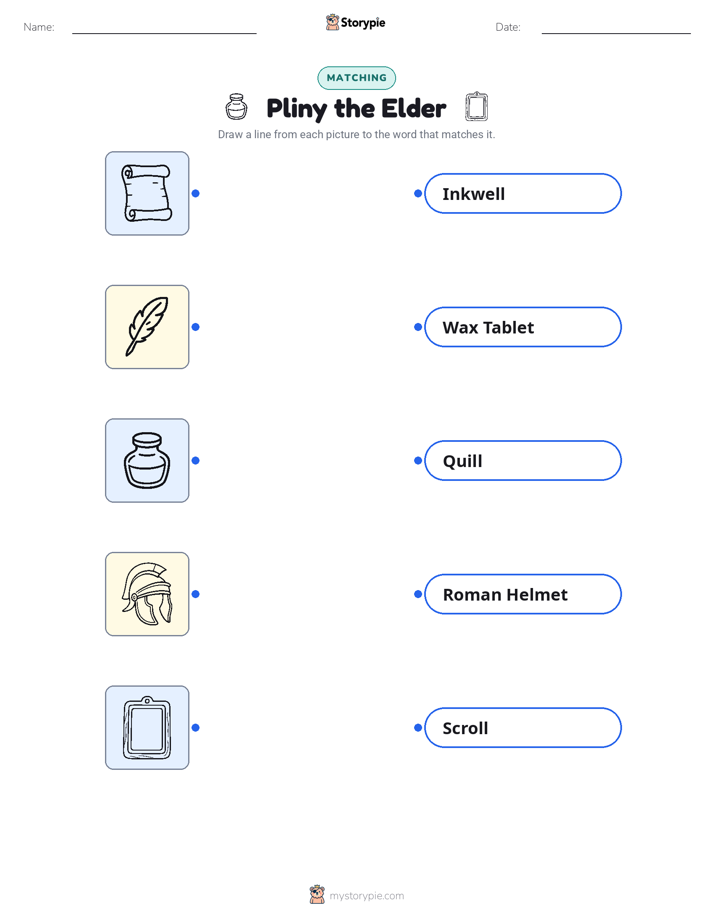
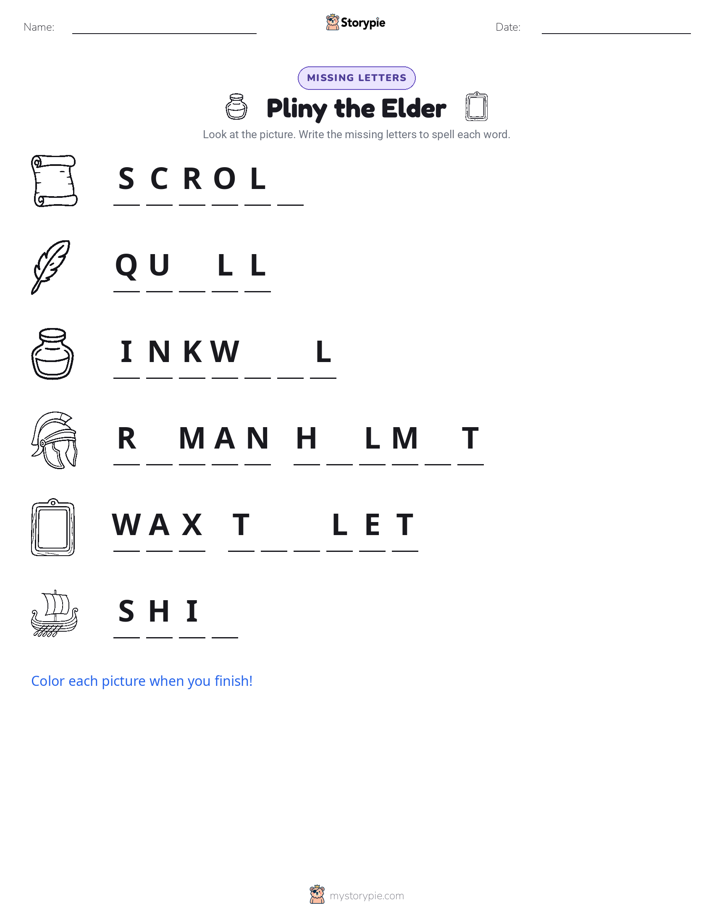
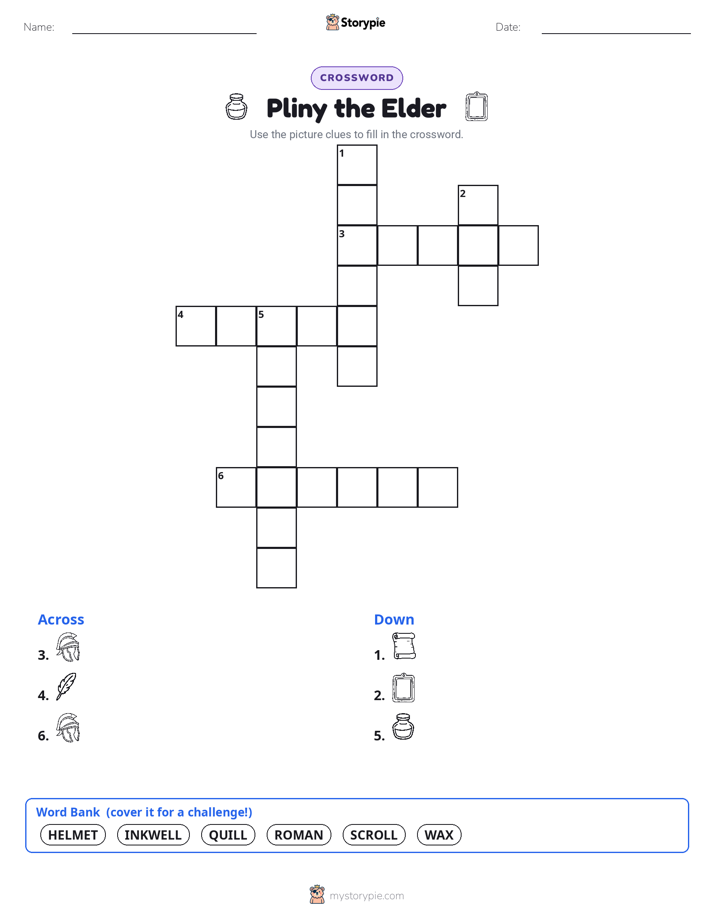
Print & create
Answer keys·No prep·Free with an account
28 worksheets · answer keys · full story · quiz · Ages 10-12 · CEFR B2
Plus adds 208,000+ more stories in 27 languages, audio for every one, and printables for all of them.
Just want Pliny the Elder?
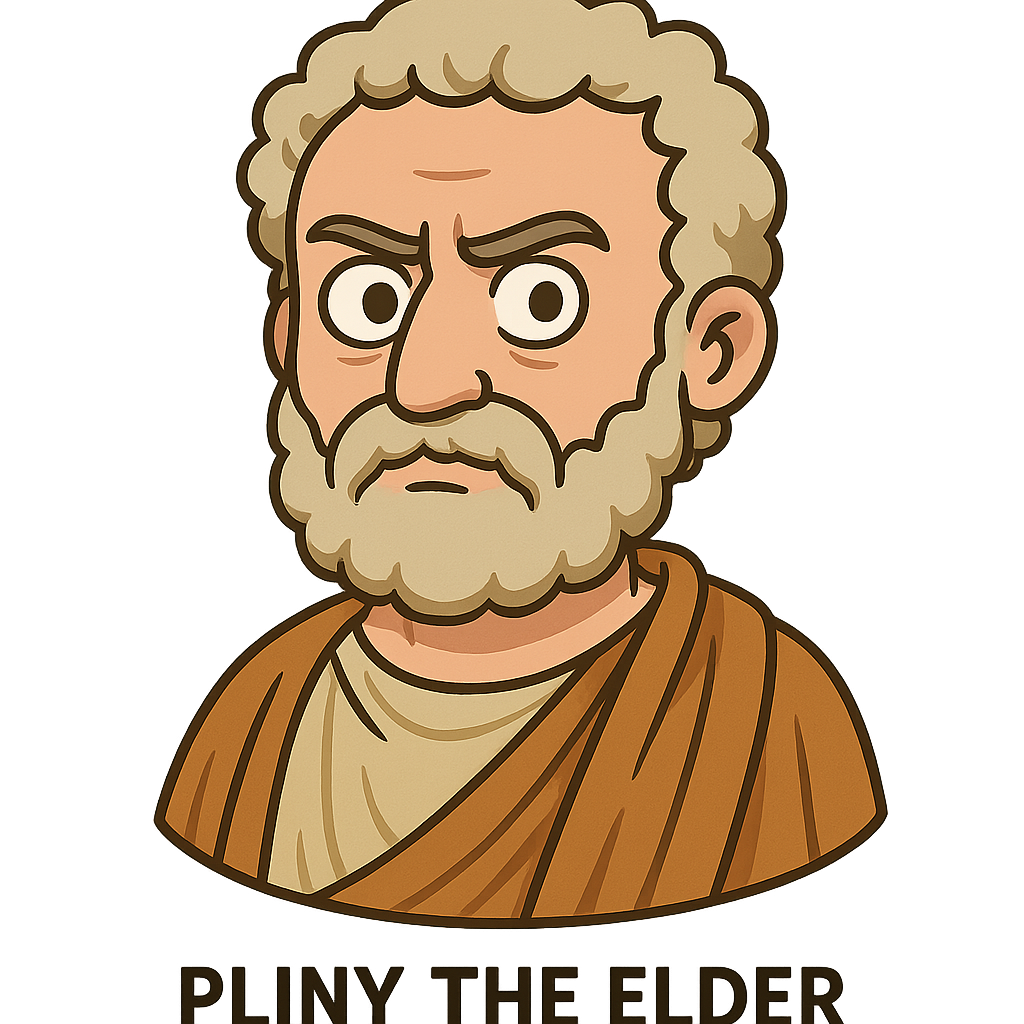
Hello! My name is Gaius Plinius Secundus, but you probably know me as Pliny the Elder. I was born in a town called Comum, in the part of the world we now call Italy, way back in the year 23 CE. From my earliest days, my mind was a whirlwind of questions. I looked at the world around me and wondered about everything. Why is the sky blue? How do plants grow from tiny seeds? What do fish dream of in the deep sea? To me, the world was like a giant, fascinating book, and I was determined to read every single page. I spent my youth studying in the great city of Rome. It was there I realized that to truly find the answers to my questions, I couldn't just read what others had written. I had to observe everything with my own eyes, listen carefully to what everyone had to say, and, most importantly, write it all down.
My life was not solely dedicated to scrolls and ink; I was also a proud Roman commander. Around the year 47 CE, I served in the army in a distant land the Romans called Germania. The experience was incredible for a curious mind like mine. I saw different kinds of forests, mighty rivers, and people with customs that were completely new to me. True to my nature, I took detailed notes on everything I encountered. Later in my life, I had the honor of working for the great Emperor Vespasian. He trusted me as an advisor and an official, sending me to govern areas in what are now Spain and France. These important jobs gave me the opportunity to travel all over the vast Roman Empire. No matter where my duties took me—whether I was on horseback, on the deck of a ship, or in a government building—I was always learning. I lived by a personal rule: no book was so poorly written that it wasn't useful in some way. I firmly believed that knowledge was the greatest treasure a person could find, and I considered myself a dedicated treasure hunter.
Pliny the Elder: A Life of Curiosity
Hello! My name is Gaius Plinius Secundus, but you probably know me as Pliny the Elder. I was born in a town called Comum, in the part of the world we now call Italy, way back in the year 23 CE. From my earliest days, my mind was a whirlwind of questions. I looked at the world around me and wondered about everything. Why is the sky blue? How do plants grow from tiny seeds? What do fish dream of in the deep sea? To me, the world was like a giant, fascinating book, and I was determined to read every single page. I spent my youth studying in the great city of Rome. It was there I realized that to truly find the answers to my questions, I couldn't just read what others had written. I had to observe everything with my own eyes, listen carefully to what everyone had to say, and, most importantly, write it all down.
My life was not solely dedicated to scrolls and ink; I was also a proud Roman commander. Around the year 47 CE, I served in the army in a distant land the Romans called Germania. The experience was incredible for a curious mind like mine. I saw different kinds of forests, mighty rivers, and people with customs that were completely new to me. True to my nature, I took detailed notes on everything I encountered. Later in my life, I had the honor of working for the great Emperor Vespasian. He trusted me as an advisor and an official, sending me to govern areas in what are now Spain and France. These important jobs gave me the opportunity to travel all over the vast Roman Empire. No matter where my duties took me—whether I was on horseback, on the deck of a ship, or in a government building—I was always learning. I lived by a personal rule: no book was so poorly written that it wasn't useful in some way. I firmly believed that knowledge was the greatest treasure a person could find, and I considered myself a dedicated treasure hunter.
After all my years of traveling, serving the empire, and studying, I decided it was time to undertake my greatest project. I wanted to create something truly magnificent: a single, comprehensive work that contained all the knowledge of the natural world that I could gather. I called it Naturalis Historia, which translates to Natural History. This was no small task; it took me years of relentless work, but around 77 CE, it was finally complete. The finished work was enormous—it was made up of 37 separate books! Within its pages, I wrote about the stars and planets that fill the night sky, the different lands and peoples across the known world, and every kind of animal I could find information on. I also detailed thousands of plants and their uses in medicine, and I even wrote about minerals, precious metals, and the most famous works of art created by human hands. To gather all this information, I read nearly 2,000 books written by other authors, carefully collecting facts and observations. My goal was simple but ambitious: I wanted to give the world a gift, an entire library's worth of knowledge contained in one single work.
My life took a dramatic turn in the year 79 CE. At that time, I was serving as the commander of the Roman navy, stationed at Misenum on the beautiful Bay of Naples. On the afternoon of August 24th, we witnessed something both terrifying and unbelievable. The nearby volcano, Mount Vesuvius, which had been quiet for centuries, suddenly roared to life and exploded. It shot a gigantic cloud of ash, rock, and smoke miles into the sky, which took on the strange shape of a pine tree. My scientific curiosity was immediately sparked—I knew I had to get a closer look at this incredible natural event. I ordered a ship to be prepared. However, just as we were about to leave, urgent messages began to arrive. They were from people trapped on the coast near the volcano, and they were begging for rescue. In that moment, my mission changed. It was no longer about science; it was about my duty as a commander and a fellow human being. I ordered my fleet of ships to sail directly into the danger zone to save as many people as we possibly could.
As we sailed closer to the shore, the danger became clear. Hot ash and lightweight pumice stones rained down from the sky, covering the decks of our ships. I went ashore at a town called Stabiae to rescue a friend and to try and calm the terrified people there, assuring them that the danger would pass. But the air grew thick and heavy with poisonous gases flowing from the volcano. I did not survive that day. I lived to be 56 years old. My nephew, Pliny the Younger, who witnessed the eruption from a distance, wrote down the story of my brave final hours so that it would never be forgotten. My greatest work, Natural History, survived the fall of the Roman Empire and was read and studied for more than 1,500 years. My life shows that curiosity is a wonderful thing, especially when that passion for knowledge is used to help others in their time of need.
Wow facts
About
Pliny the Elder was a Roman author, naturalist, and naval commander best known for his encyclopedic work, Naturalis Historia (Natural History), which became a model for later encyclopedias.
Take a Quiz
Question 1 of 5
What was the main purpose of Pliny the Elder's book, *Naturalis Historia*?
Explore next



Want to do even more?
Go beyond exploring. Unlock tools that turn every story into real learning.

Storypie Plus for families
Full stories, quizzes, and printables. Nights and car rides, sorted.
- Unlimited audio stories
- Create Mode: your child stars in the story
- Offline downloads
- Printable worksheets & coloring pages

Why Storypie for Schools
Students engaged. Prep in seconds. Evenings back to you.
- Worksheets & Quizzes
- Classroom Management
- Formative Assessment
- Custom Curriculum & Lesson Plans
- 27 Languages

Why Storypie for Homeschool
Curriculum done. They'll ask for more. Hours back in your day.
- Worksheet Generator
- First-Person Audio Stories
- Built-in Comprehension Quizzes
- Custom Curriculum & Lesson Plans
- Print & Go Activities