English

Basalt
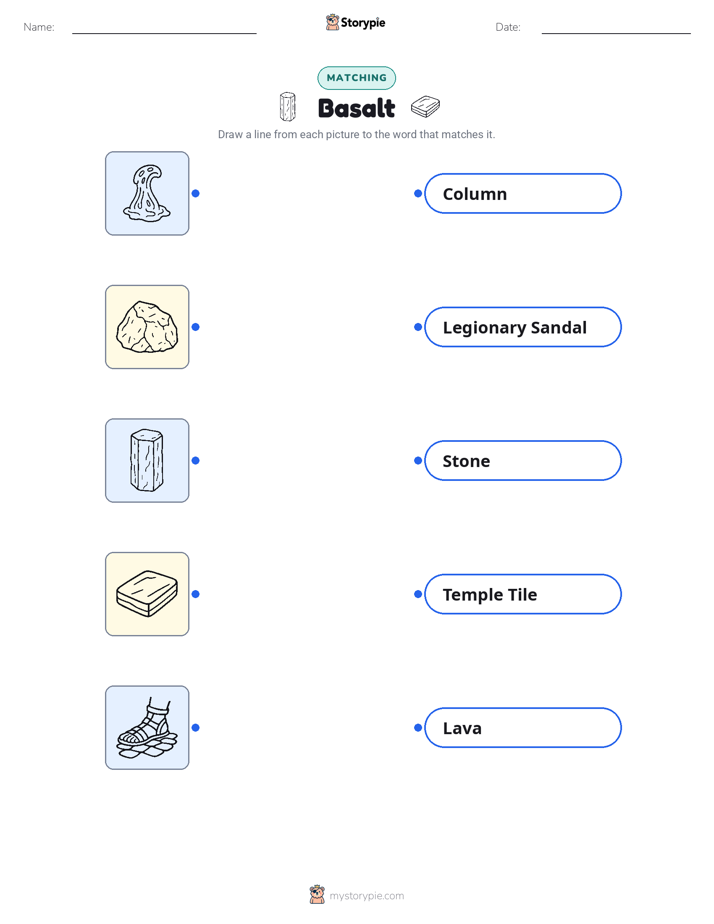
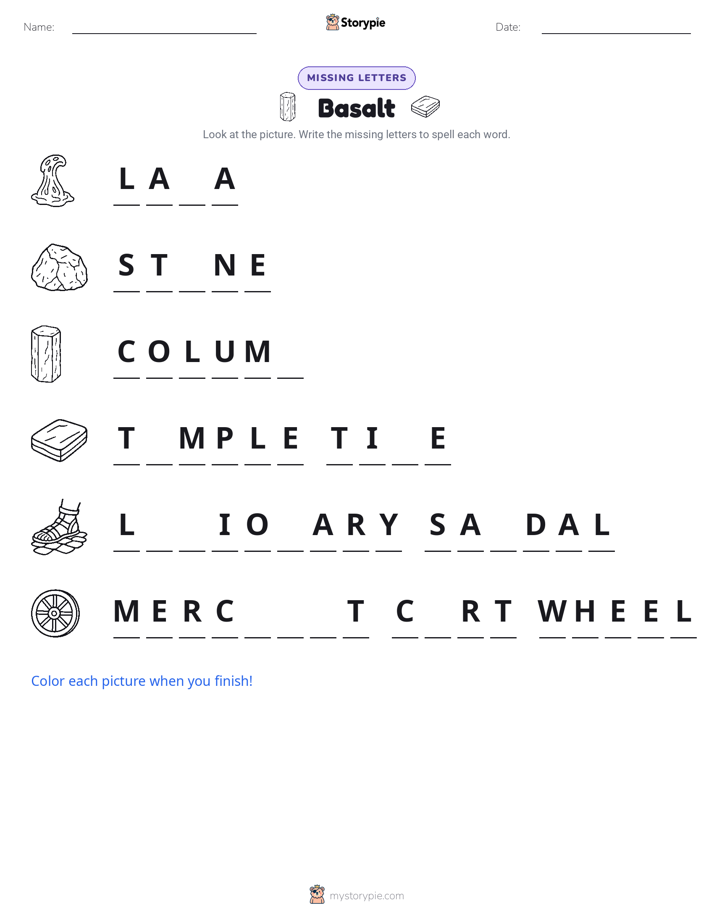
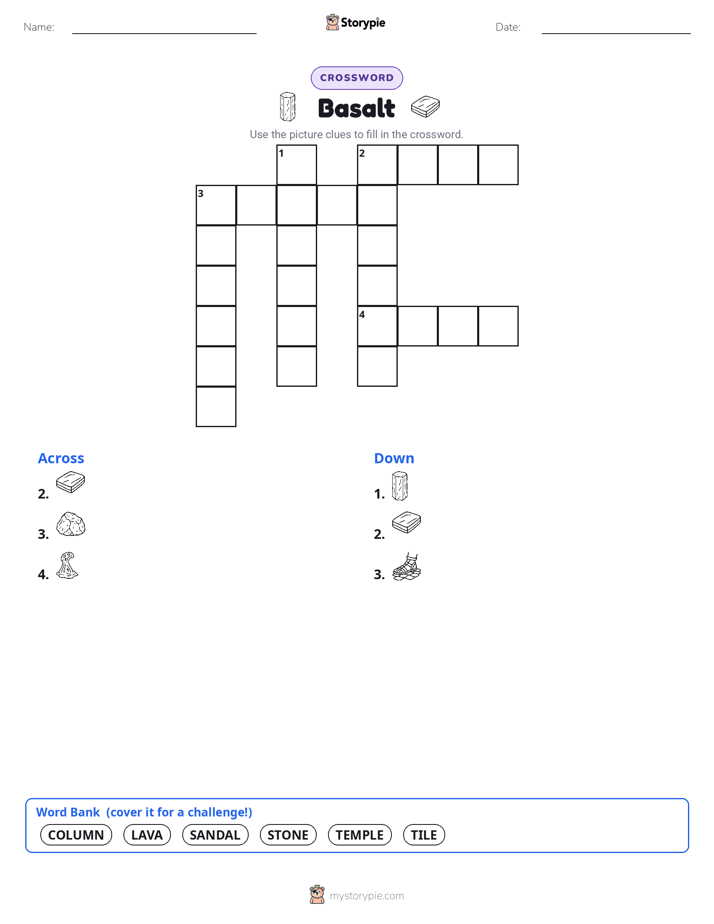
Basalt is a dark-colored, fine-grained igneous rock formed from the rapid cooling of lava.
Reads at Grades 3–5 Listens at Grades 1–5
Print & create
Answer keys·No prep·Free with an account
28 worksheets · answer keys · full story · quiz · Ages 8-10 · CEFR B1
Plus adds 244,000+ more stories in 27 languages, audio for every one, and printables for all of them.
Just want Basalt?
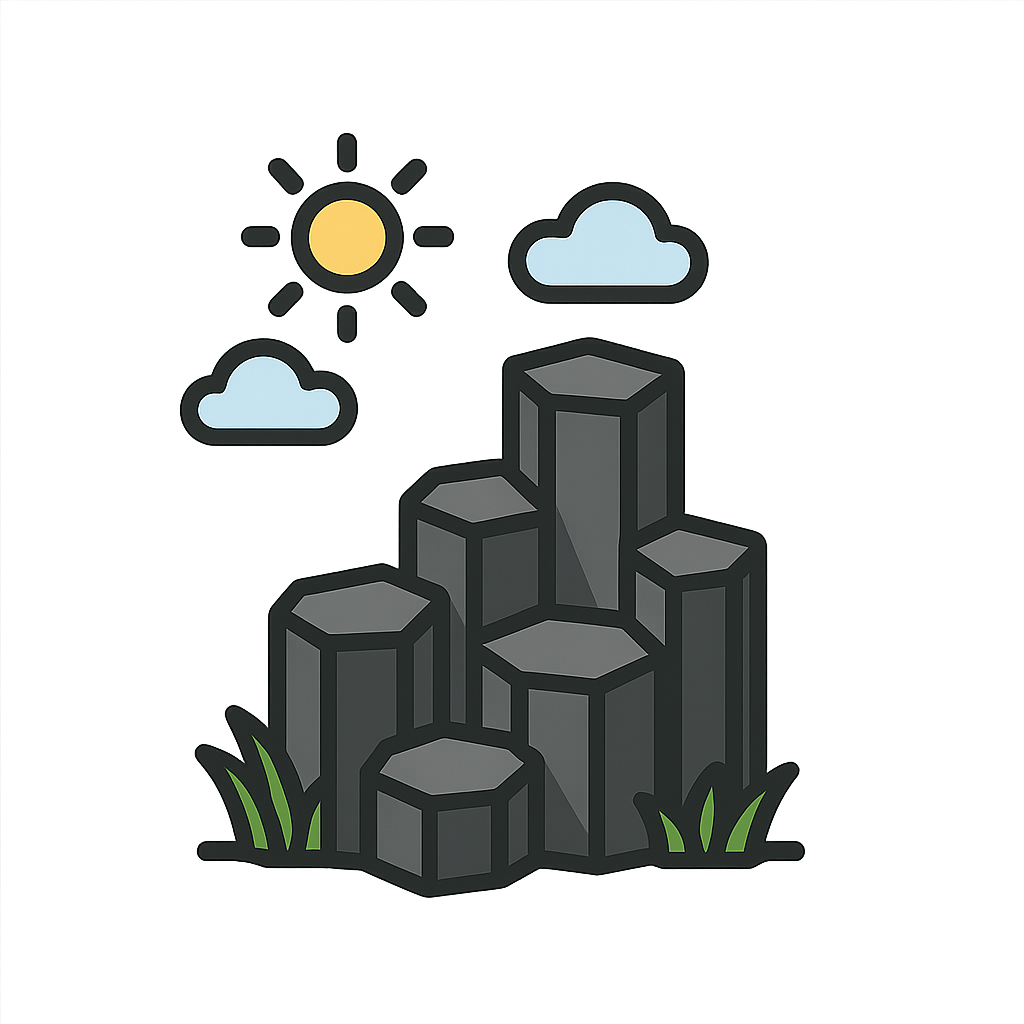
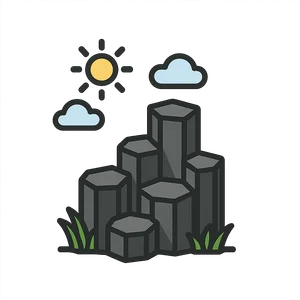
Imagine a river of fire, glowing red and orange, bubbling up from deep within the Earth. I am hotter than you can imagine, a powerful, flowing liquid pushing my way to the surface. When I finally burst out of a volcano and meet the cool, fresh air, a magical change begins. The intense heat fizzles away, and my fiery liquid body starts to harden. I become a dark, strong stone, usually black or gray, solid and dependable. Sometimes, as I cool, I shrink and crack into amazing shapes, forming tall columns with six perfect sides, like a giant’s staircase or a huge honeycomb made of stone. You can see these incredible pillars in places like the Giant's Causeway in Northern Ireland. What am I? I am Basalt, one of the most common rocks on Earth… and even beyond. My story starts with fire, but it ends with building worlds.
Long, long ago, people discovered just how strong I could be. Can you imagine a time before metal tools were common? In Ancient Egypt, thousands of years before the first pharaohs ruled around 3100 BCE, clever people found me. They picked me up and realized I was tough enough to carve other, softer stones. They used me to shape limestone and even granite, creating strong tools and polishing beautiful, dark statues of their gods and kings that still look amazing today. Centuries later, the powerful Roman Empire found a fantastic use for me. A smart Roman writer named Pliny the Elder even wrote about me in his books around the year 77 CE. He saw how dependable I was. The Romans needed strong roads to march their armies and connect their giant empire. They crushed me into gravel or cut me into paving stones to build their famous roads, like the amazing Appian Way. My dark, durable surface stood up to pounding chariot wheels and marching feet, helping their empire grow and thrive. Those roads were so well-built that you can still walk on parts of them today. Far across the ocean, on a remote island called Easter Island, the Rapa Nui people also discovered my strength. Between the years 1250 and 1500, they needed special tools to carve their world-famous giant stone heads, the Moai. They chose me to make the adzes, or carving tools, that they used to chip away at the softer volcanic rock, bringing those mysterious faces to life. From Egypt to Rome to a tiny island in the Pacific, I was there to help people build and create.
The Story of Basalt
Imagine a river of fire, glowing red and orange, bubbling up from deep within the Earth. I am hotter than you can imagine, a powerful, flowing liquid pushing my way to the surface. When I finally burst out of a volcano and meet the cool, fresh air, a magical change begins. The intense heat fizzles away, and my fiery liquid body starts to harden. I become a dark, strong stone, usually black or gray, solid and dependable. Sometimes, as I cool, I shrink and crack into amazing shapes, forming tall columns with six perfect sides, like a giant’s staircase or a huge honeycomb made of stone. You can see these incredible pillars in places like the Giant's Causeway in Northern Ireland. What am I? I am Basalt, one of the most common rocks on Earth… and even beyond. My story starts with fire, but it ends with building worlds.
Long, long ago, people discovered just how strong I could be. Can you imagine a time before metal tools were common? In Ancient Egypt, thousands of years before the first pharaohs ruled around 3100 BCE, clever people found me. They picked me up and realized I was tough enough to carve other, softer stones. They used me to shape limestone and even granite, creating strong tools and polishing beautiful, dark statues of their gods and kings that still look amazing today. Centuries later, the powerful Roman Empire found a fantastic use for me. A smart Roman writer named Pliny the Elder even wrote about me in his books around the year 77 CE. He saw how dependable I was. The Romans needed strong roads to march their armies and connect their giant empire. They crushed me into gravel or cut me into paving stones to build their famous roads, like the amazing Appian Way. My dark, durable surface stood up to pounding chariot wheels and marching feet, helping their empire grow and thrive. Those roads were so well-built that you can still walk on parts of them today. Far across the ocean, on a remote island called Easter Island, the Rapa Nui people also discovered my strength. Between the years 1250 and 1500, they needed special tools to carve their world-famous giant stone heads, the Moai. They chose me to make the adzes, or carving tools, that they used to chip away at the softer volcanic rock, bringing those mysterious faces to life. From Egypt to Rome to a tiny island in the Pacific, I was there to help people build and create.
My work didn’t stop in ancient times. Today, you see me everywhere, even if you don't realize it. I am crushed into small pieces called aggregate, which is a key ingredient in the asphalt for the roads you drive on every day. I am also mixed into the concrete that makes our skyscrapers touch the clouds and our bridges stretch across wide rivers. My strength creates the foundation for the world you live in. But I'm not just for building. Scientists love to study me. By looking at me, they can learn about the secrets hidden deep inside our planet, understanding the fiery mantle that I came from. And my story doesn't even end on Earth. When astronauts from the Apollo missions landed on the Moon in the late 1960s, what did they find? Me. I make up the dark patches you can see on the Moon's surface. Scientists have also found me on Mars, helping them piece together the history of other worlds. I began my life as wild, roaring lava, a river of fire. But as I cooled, I transformed into something solid, steady, and useful. I became a foundation for roads, statues, and cities, showing that even the most powerful things can become a source of incredible strength.
Wow facts
About
Basalt is a dark-colored, fine-grained igneous rock formed from the rapid cooling of lava. It is the most common volcanic rock on Earth's surface, forming most of the ocean floor and many lava plateaus. People have used basalt for construction and tools for thousands of years.
Take a Quiz
Question 1 of 5
Why do you think the Romans used basalt for their roads instead of a softer rock like sandstone?
Explore next




Want to do even more?
Go beyond exploring. Unlock tools that turn every story into real learning.

Storypie Plus for families
Full stories, quizzes, and printables. Nights and car rides, sorted.
- Unlimited audio stories
- Create Mode: your child stars in the story
- Offline downloads
- Printable worksheets & coloring pages

Why Storypie for Schools
Students engaged. Prep in seconds. Evenings back to you.
- Worksheets & Quizzes
- Classroom Management
- Formative Assessment
- Custom Curriculum & Lesson Plans
- 27 Languages

Why Storypie for Homeschool
Curriculum done. They'll ask for more. Hours back in your day.
- Worksheet Generator
- First-Person Audio Stories
- Built-in Comprehension Quizzes
- Custom Curriculum & Lesson Plans
- Print & Go Activities