English

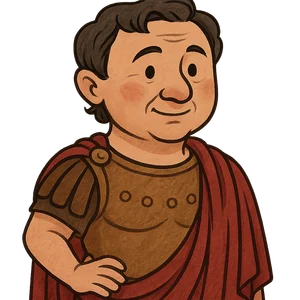
Pompey the Great
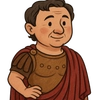
Gnaeus Pompeius Magnus, known as Pompey the Great…
Reads at Grades 6–8 Listens at Grades 4–8
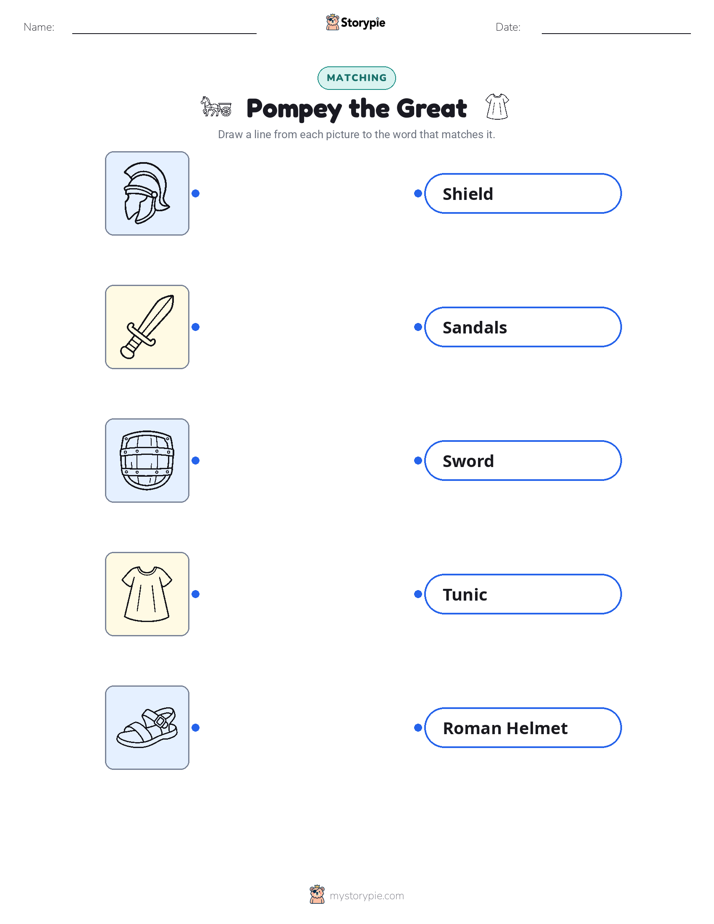
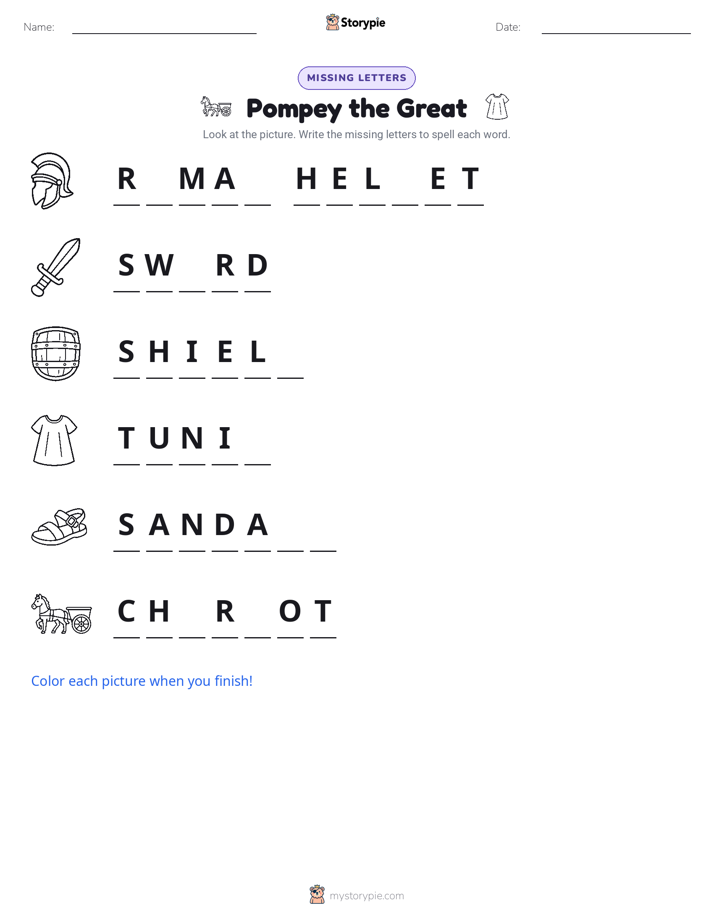
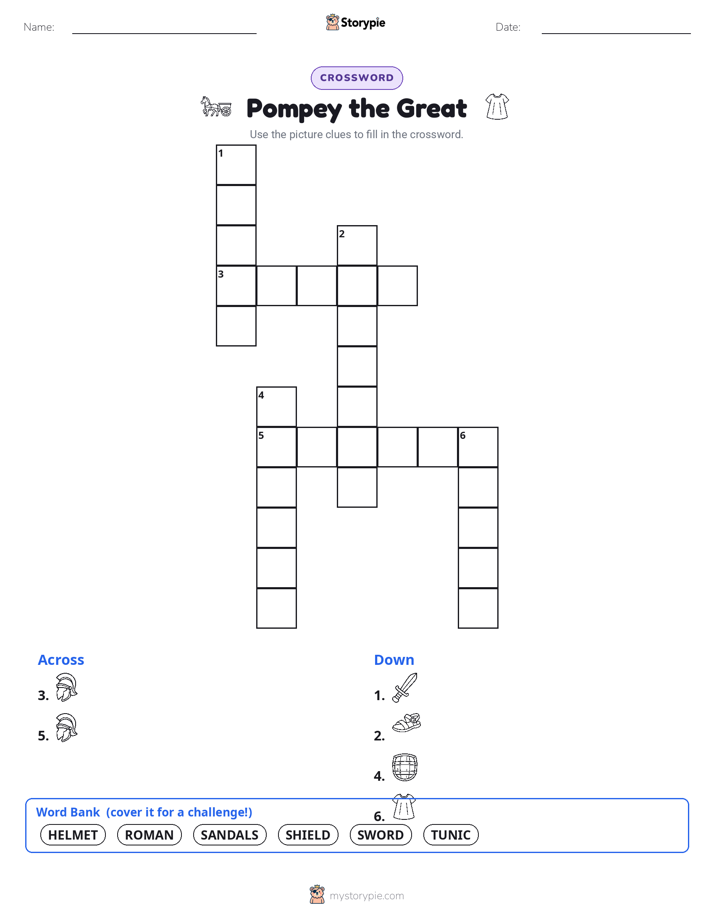
Print & create
Answer keys·No prep·Free with an account
28 worksheets · answer keys · full story · quiz · Ages 10-12 · CEFR B2
Plus adds 208,000+ more stories in 27 languages, audio for every one, and printables for all of them.
Just want Pompey the Great?
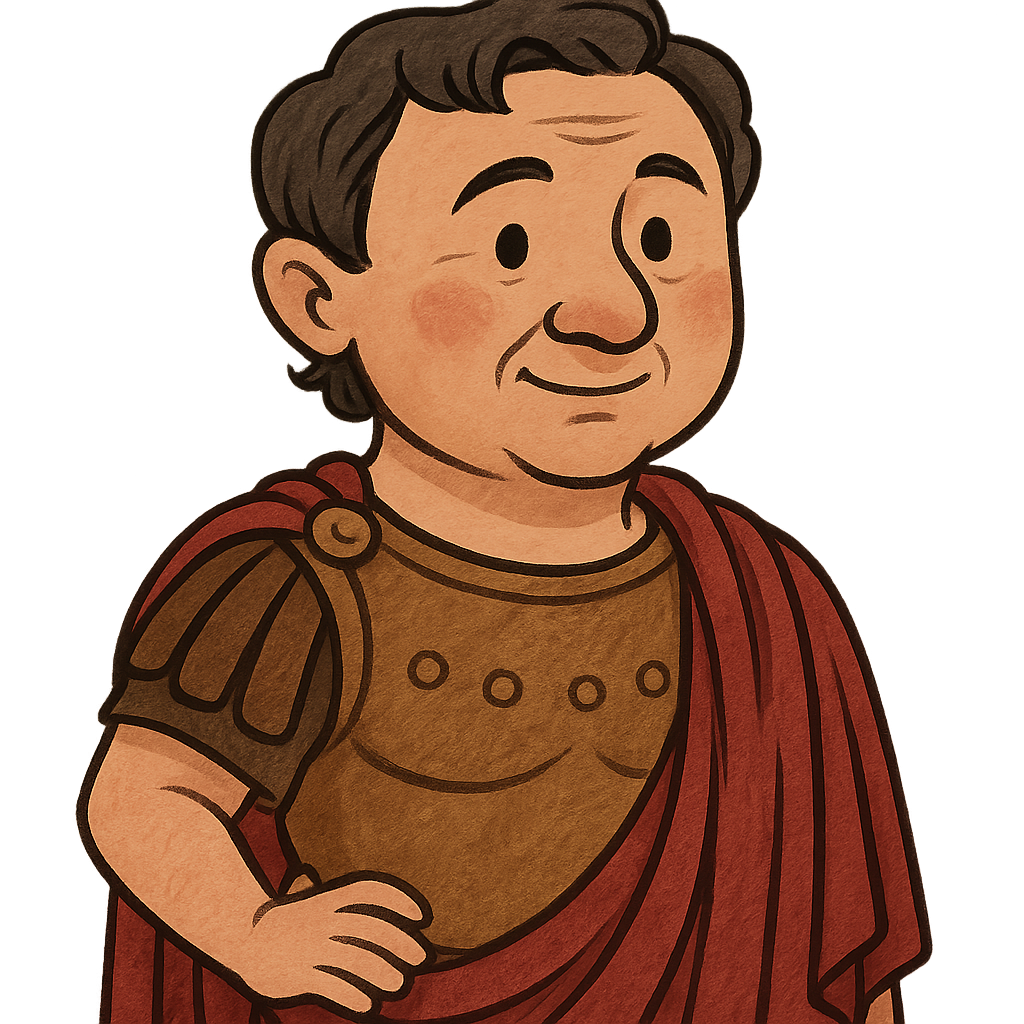
Hello, my name is Gnaeus Pompeius Magnus, but you probably know me as Pompey the Great. I was born on September 29th, 106 BCE, in a region of Italy called Picenum. My father was a respected Roman general, so my childhood was spent surrounded by soldiers and the complex world of politics. I lived during a very turbulent time in the Roman Republic, a period filled with conflict and change. From a young age, watching my father and seeing the challenges Rome faced, I knew I wanted to follow in his footsteps. My greatest ambition was to become a great military leader and to serve the Republic with honor.
My chance to prove my skills as a commander came when I was just 23 years old. In 83 BCE, a powerful Roman general named Sulla was engaged in a civil war, and I chose to support his cause. Instead of just joining his army, I raised my own legions using the veteran soldiers who had once served my father. I led them in successful campaigns, first in Sicily and then in Africa, securing important victories for Sulla. He was so impressed with my military talent and my quick successes that he gave me a special title, 'Magnus,' which means 'the Great.' It was a remarkable honor for a man so young, and it set the stage for my future career in Rome.
As my reputation grew, the people and the Senate of Rome began to trust me with immense responsibilities. In 67 BCE, I was given an extraordinary command to solve a major crisis: the Mediterranean Sea had become overrun with pirates. They were attacking ships, disrupting vital trade routes, and threatening Rome's food supply. The Senate granted me sweeping powers, and I organized a massive naval operation. In a campaign that stunned everyone with its efficiency, I cleared the entire sea of pirates in just three months. A year later, in 66 BCE, I was sent to the East to finish a long and difficult war against a powerful king, Mithridates VI of Pontus. I defeated his armies and then spent years reorganizing the entire region, adding vast new territories and incredible wealth to the Roman Republic.
Pompey the Great
Hello, my name is Gnaeus Pompeius Magnus, but you probably know me as Pompey the Great. I was born on September 29th, 106 BCE, in a region of Italy called Picenum. My father was a respected Roman general, so my childhood was spent surrounded by soldiers and the complex world of politics. I lived during a very turbulent time in the Roman Republic, a period filled with conflict and change. From a young age, watching my father and seeing the challenges Rome faced, I knew I wanted to follow in his footsteps. My greatest ambition was to become a great military leader and to serve the Republic with honor.
My chance to prove my skills as a commander came when I was just 23 years old. In 83 BCE, a powerful Roman general named Sulla was engaged in a civil war, and I chose to support his cause. Instead of just joining his army, I raised my own legions using the veteran soldiers who had once served my father. I led them in successful campaigns, first in Sicily and then in Africa, securing important victories for Sulla. He was so impressed with my military talent and my quick successes that he gave me a special title, 'Magnus,' which means 'the Great.' It was a remarkable honor for a man so young, and it set the stage for my future career in Rome.
As my reputation grew, the people and the Senate of Rome began to trust me with immense responsibilities. In 67 BCE, I was given an extraordinary command to solve a major crisis: the Mediterranean Sea had become overrun with pirates. They were attacking ships, disrupting vital trade routes, and threatening Rome's food supply. The Senate granted me sweeping powers, and I organized a massive naval operation. In a campaign that stunned everyone with its efficiency, I cleared the entire sea of pirates in just three months. A year later, in 66 BCE, I was sent to the East to finish a long and difficult war against a powerful king, Mithridates VI of Pontus. I defeated his armies and then spent years reorganizing the entire region, adding vast new territories and incredible wealth to the Roman Republic.
I returned to Rome in 62 BCE as a celebrated hero, but my success made some powerful senators jealous. They feared my influence and refused to approve the settlements I had made in the East or grant the land I had promised my veteran soldiers. To overcome this political opposition, I formed an unofficial alliance in 60 BCE with two other powerful men: Marcus Licinius Crassus, who was the wealthiest man in Rome, and a charismatic, up-and-coming politician named Julius Caesar. Together, we became known as the First Triumvirate, a three-man partnership that allowed us to control Roman politics. To solidify our pact, I married Caesar’s intelligent and beloved daughter, Julia.
For several years, our Triumvirate held firm, but the bonds connecting us were fragile. A great personal tragedy struck in 54 BCE when my dear wife, Julia, died. Her death weakened the personal connection between me and Caesar. A year later, in 53 BCE, Crassus was killed in a disastrous battle in the East. Without Julia and Crassus to mediate between us, the trust between Caesar and me began to crumble. Caesar had become an incredibly successful and popular general during his long campaign in Gaul, and many in the Senate feared he was growing too powerful and ambitious. They saw me as the defender of the Republic and chose me to be their champion. The political tension finally snapped in 49 BCE when Caesar marched his army across the Rubicon River, a clear act of war against Rome. A terrible civil war had begun.
Caesar and I, who had once been allies and family, were now sworn enemies, each leading massive Roman armies against the other. We fought several battles, but the decisive confrontation occurred at the Battle of Pharsalus in Greece in 48 BCE. On paper, I had the advantage with a much larger army. However, Caesar's soldiers were more experienced and his strategic genius was unmatched. He defeated my forces, and I was forced to flee for my life. Believing I would find a safe haven, I sailed to Egypt to seek the protection of the young pharaoh, Ptolemy XIII, whose father I had once helped.
My hope for safety in Egypt was a terrible mistake. The pharaoh's advisors decided it was too risky to help me and believed they would gain favor with Caesar by betraying me. I was killed on September 28th, 48 BCE, the day before my 58th birthday. I lived to be 57 years old. Though my life ended in defeat, I am remembered as one of Rome’s greatest generals. My military campaigns expanded the Republic's borders and brought great security and wealth to its people. My story, however, also serves as a lasting reminder of how personal ambition and political rivalry can destroy alliances and lead to devastating conflict. My struggle with Caesar was a turning point that marked the beginning of the end for the Roman Republic.
Wow facts
About
Gnaeus Pompeius Magnus, known as Pompey the Great, was a leading Roman general and statesman of the late Roman Republic. His military victories expanded Roman territory, but his rivalry with Julius Caesar led to a civil war that ultimately contributed to the end of the Republic.
Take a Quiz
Question 1 of 5
What key events caused the First Triumvirate to fall apart, leading to the civil war?
Explore next

Want to do even more?
Go beyond exploring. Unlock tools that turn every story into real learning.

Storypie Plus for families
Full stories, quizzes, and printables. Nights and car rides, sorted.
- Unlimited audio stories
- Create Mode: your child stars in the story
- Offline downloads
- Printable worksheets & coloring pages

Why Storypie for Schools
Students engaged. Prep in seconds. Evenings back to you.
- Worksheets & Quizzes
- Classroom Management
- Formative Assessment
- Custom Curriculum & Lesson Plans
- 27 Languages

Why Storypie for Homeschool
Curriculum done. They'll ask for more. Hours back in your day.
- Worksheet Generator
- First-Person Audio Stories
- Built-in Comprehension Quizzes
- Custom Curriculum & Lesson Plans
- Print & Go Activities