English

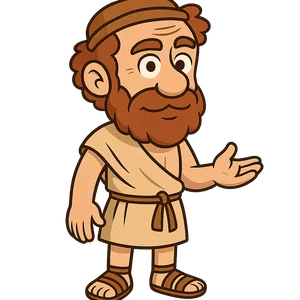
Pytheas of Massalia
Pytheas of Massalia was an ancient Greek geographer, explorer, and astronomer from the colony of Massalia.
Reads at Grades 6–8 Listens at Grades 4–8
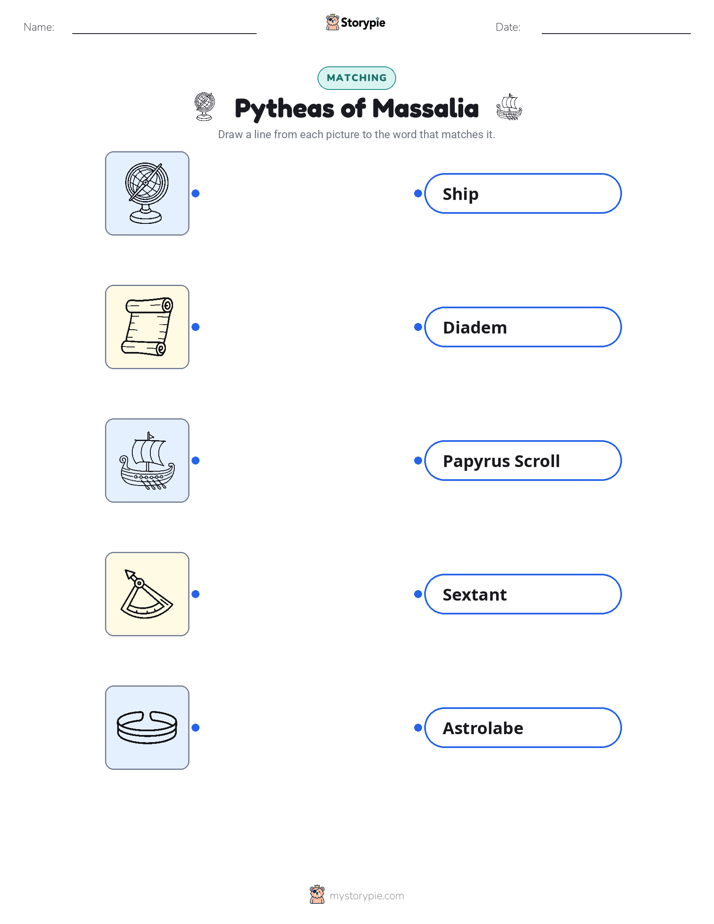
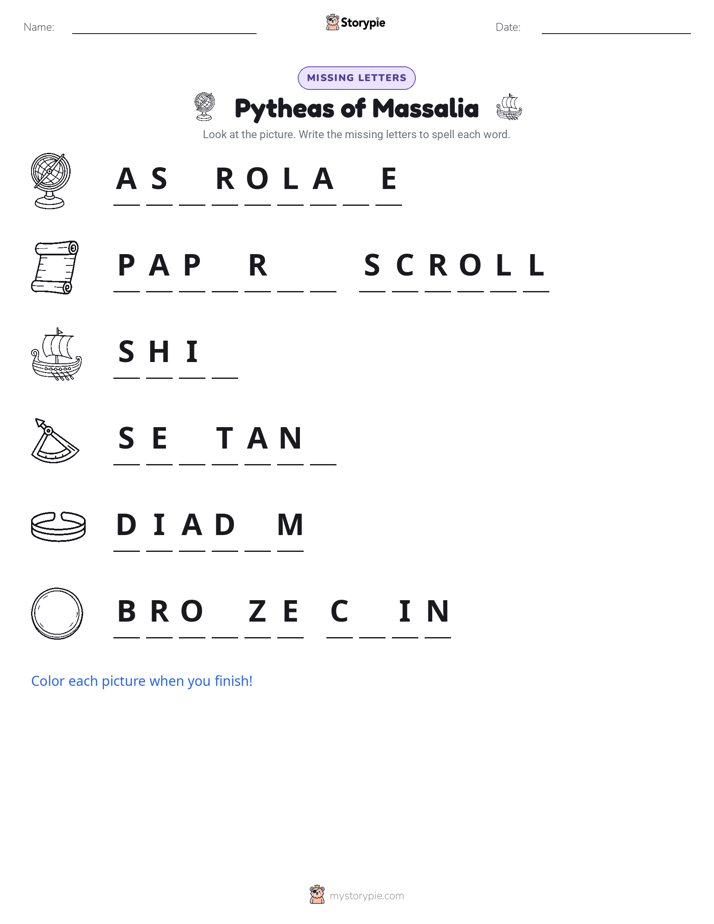
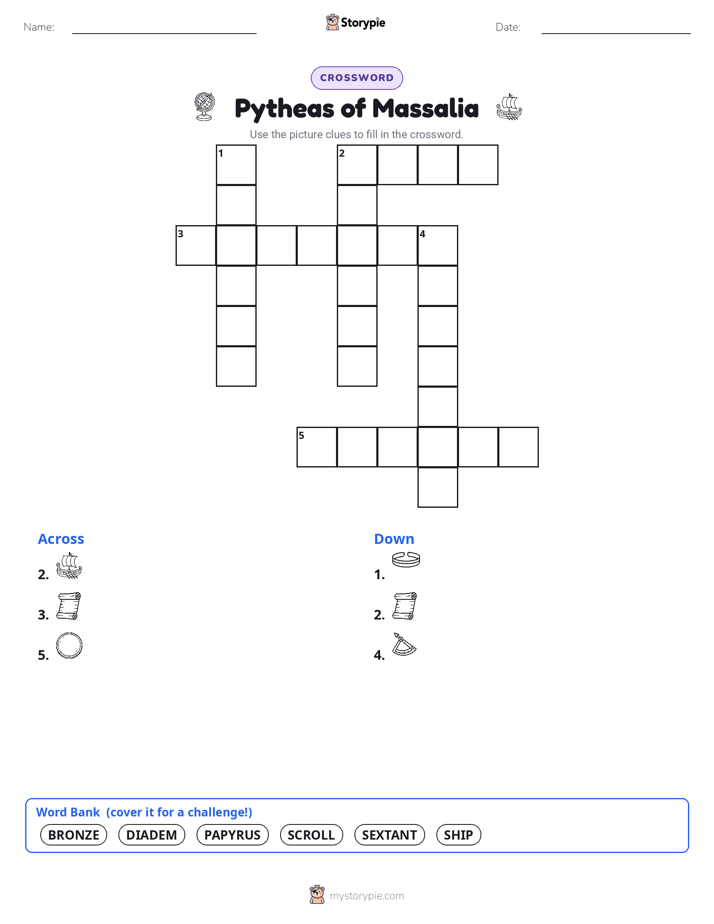
Print & create
Answer keys·No prep·Free with an account
28 worksheets · answer keys · full story · quiz · Ages 10-12 · CEFR B2
Plus adds 244,000+ more stories in 27 languages, audio for every one, and printables for all of them.
Just want Pytheas of Massalia?
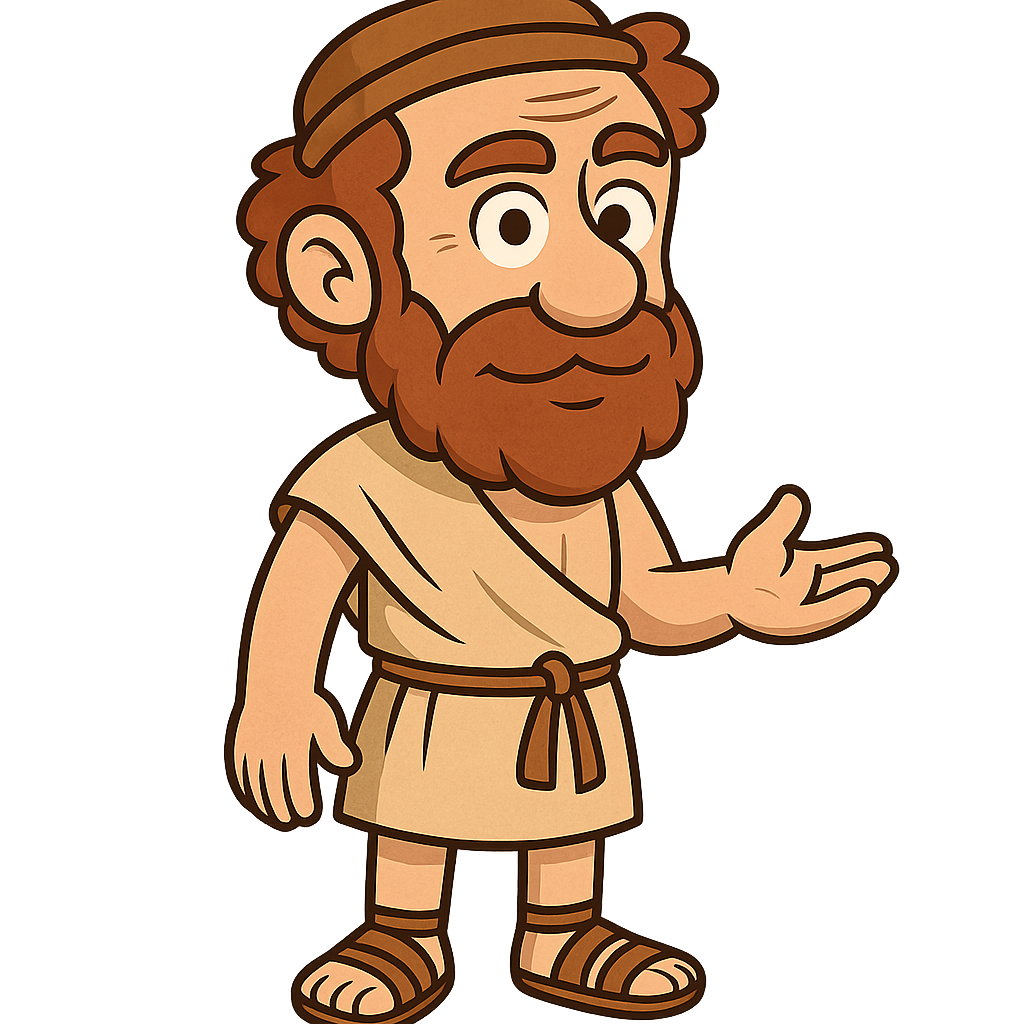
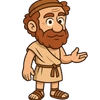
Hello! My name is Pytheas. I lived a very long time ago, in the 4th century BCE, in a busy Greek port city called Massalia, which you now know as Marseille in France. From our harbor, I could see ships coming and going from all over the Mediterranean. I spent my life studying the world around me as a geographer and an astronomer. I would gaze at the stars at night, using my knowledge of their movements to understand our planet's place in the cosmos. My mind was filled with a powerful curiosity about what lay beyond the edges of our known maps, especially past the fearsome Pillars of Hercules, the strait that separates the Mediterranean Sea from the great unknown ocean.
Around the year 325 BCE, I decided that studying maps and stars was not enough; I had to see the northern lands for myself. I organized and set sail on a journey that no Greek had ever attempted. Leaving the familiar, calm waters of the Mediterranean was a significant challenge. We sailed through the Pillars of Hercules and into the vast, mysterious Atlantic Ocean, which we called the 'Okeanos.' It was an immense and intimidating body of water. To guide our ship, I relied on my knowledge of celestial navigation, particularly using the North Star to determine our latitude. It was frightening to be so far from home, sailing toward a horizon that no one I knew had ever crossed, but it was also thrilling to be on the verge of discovery.
After many weeks at sea, we finally reached a large island the locals called Albion, which was part of what they called the Prettanic Islands. Today, you know this land as Great Britain. My curiosity drove me to do more than just land; I decided to sail all the way around it, carefully mapping its triangular shape. During my travels, I met the people who lived there and learned about their customs. In the southwestern corner, in a place you now call Cornwall, I observed them mining for tin, a metal that was very valuable for making bronze back in Greece. But the most amazing thing I witnessed was the ocean itself. The water level would rise and fall dramatically each day in a predictable rhythm. I watched the Moon night after night and carefully noted its phases. I realized that its cycle matched the ocean's tides, and I became the first person to make this scientific connection between the Moon's pull and the rising and falling of the sea.
Pytheas of Massalia
Hello! My name is Pytheas. I lived a very long time ago, in the 4th century BCE, in a busy Greek port city called Massalia, which you now know as Marseille in France. From our harbor, I could see ships coming and going from all over the Mediterranean. I spent my life studying the world around me as a geographer and an astronomer. I would gaze at the stars at night, using my knowledge of their movements to understand our planet's place in the cosmos. My mind was filled with a powerful curiosity about what lay beyond the edges of our known maps, especially past the fearsome Pillars of Hercules, the strait that separates the Mediterranean Sea from the great unknown ocean.
Around the year 325 BCE, I decided that studying maps and stars was not enough; I had to see the northern lands for myself. I organized and set sail on a journey that no Greek had ever attempted. Leaving the familiar, calm waters of the Mediterranean was a significant challenge. We sailed through the Pillars of Hercules and into the vast, mysterious Atlantic Ocean, which we called the 'Okeanos.' It was an immense and intimidating body of water. To guide our ship, I relied on my knowledge of celestial navigation, particularly using the North Star to determine our latitude. It was frightening to be so far from home, sailing toward a horizon that no one I knew had ever crossed, but it was also thrilling to be on the verge of discovery.
After many weeks at sea, we finally reached a large island the locals called Albion, which was part of what they called the Prettanic Islands. Today, you know this land as Great Britain. My curiosity drove me to do more than just land; I decided to sail all the way around it, carefully mapping its triangular shape. During my travels, I met the people who lived there and learned about their customs. In the southwestern corner, in a place you now call Cornwall, I observed them mining for tin, a metal that was very valuable for making bronze back in Greece. But the most amazing thing I witnessed was the ocean itself. The water level would rise and fall dramatically each day in a predictable rhythm. I watched the Moon night after night and carefully noted its phases. I realized that its cycle matched the ocean's tides, and I became the first person to make this scientific connection between the Moon's pull and the rising and falling of the sea.
My journey wasn't over. I heard tales from the people of Albion about a land even farther north, a mysterious place called Thule. I had to see it. So, we sailed on for six more days into the cold, gray sea. What I found there was unlike anything I could have ever imagined. During the summer, the sun never fully set below the horizon. It would dip low in the sky and then begin to rise again, creating daylight for 24 hours. We called this the 'midnight sun.' As we continued our journey, the sea became strange and slushy, almost like a thick, frozen jelly that seemed to move and breathe. I called it the 'sea lung.' I had reached the edge of the Arctic, a place of ice and perpetual light that no one from my warm, sunny home in Massalia could have ever pictured.
When I finally returned home to Massalia, I was eager to share what I had learned. I wrote a book about my extensive travels called 'On the Ocean.' In it, I described everything I had seen with scientific precision: the triangular shape of Britain, the connection between the tides and the Moon, the unbelievable land of the midnight sun, and the strange, frozen sea. But many people at home did not believe me. They thought my stories were impossible tales and fantastical inventions. Years later, even famous and respected writers like the geographer Strabo called me a liar in their own works. It was frustrating that my careful observations and discoveries were dismissed by people who had never dared to venture where I had, but I knew that what I had seen was real.
I lived a full life exploring and studying the world. Though my book, 'On the Ocean,' was lost to time, my knowledge was not forgotten. Other scholars and historians wrote about my findings, and my detailed descriptions of the north, the tides, and the Arctic helped shape maps and scientific understanding for centuries to come. I am remembered as a brave explorer who used science and observation to journey beyond the known world and bring back knowledge that changed how we see our planet.
Wow facts
About
Pytheas of Massalia was an ancient Greek geographer, explorer, and astronomer from the colony of Massalia. Pytheas is believed to have made a remarkable voyage of exploration to northwestern Europe around 310–306 BCE, becoming one of the first known Greeks to visit and describe the British Isles and the Arctic.
Take a Quiz
Question 1 of 5
What was the main conflict Pytheas faced after returning from his journey, and how was his legacy preserved?
Explore next





Want to do even more?
Go beyond exploring. Unlock tools that turn every story into real learning.

Storypie Plus for families
Full stories, quizzes, and printables. Nights and car rides, sorted.
- Unlimited audio stories
- Create Mode: your child stars in the story
- Offline downloads
- Printable worksheets & coloring pages

Why Storypie for Schools
Students engaged. Prep in seconds. Evenings back to you.
- Worksheets & Quizzes
- Classroom Management
- Formative Assessment
- Custom Curriculum & Lesson Plans
- 27 Languages

Why Storypie for Homeschool
Curriculum done. They'll ask for more. Hours back in your day.
- Worksheet Generator
- First-Person Audio Stories
- Built-in Comprehension Quizzes
- Custom Curriculum & Lesson Plans
- Print & Go Activities