English

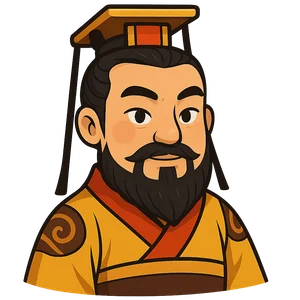
Qin Shi Huang
The founder of the Qin dynasty and the first emperor of a unified China from 221 BCE to 210 BCE.
Reads at Grades 3–5 Listens at Grades 1–5
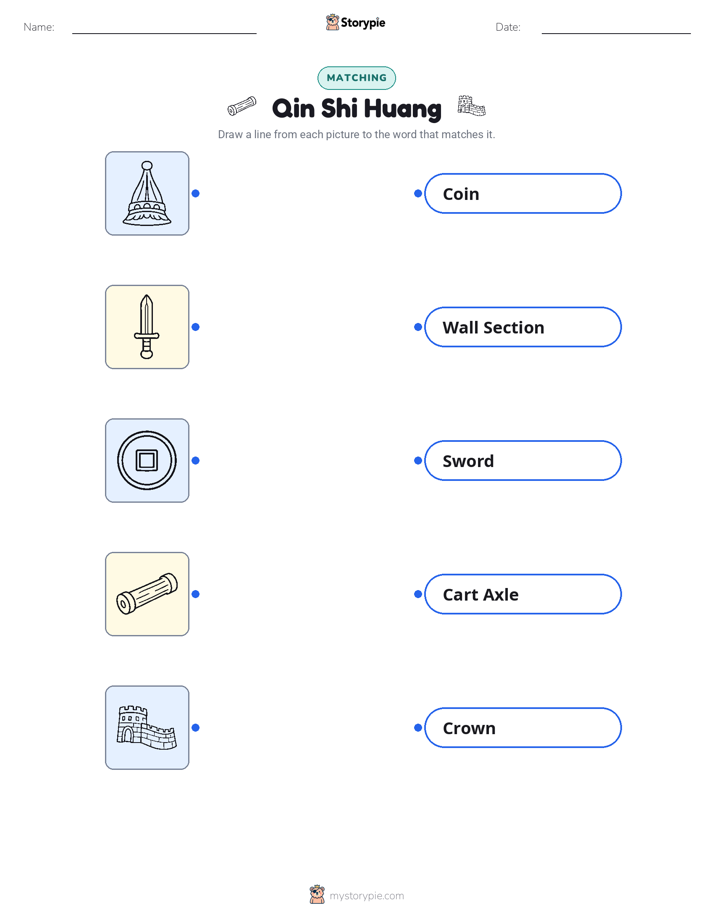
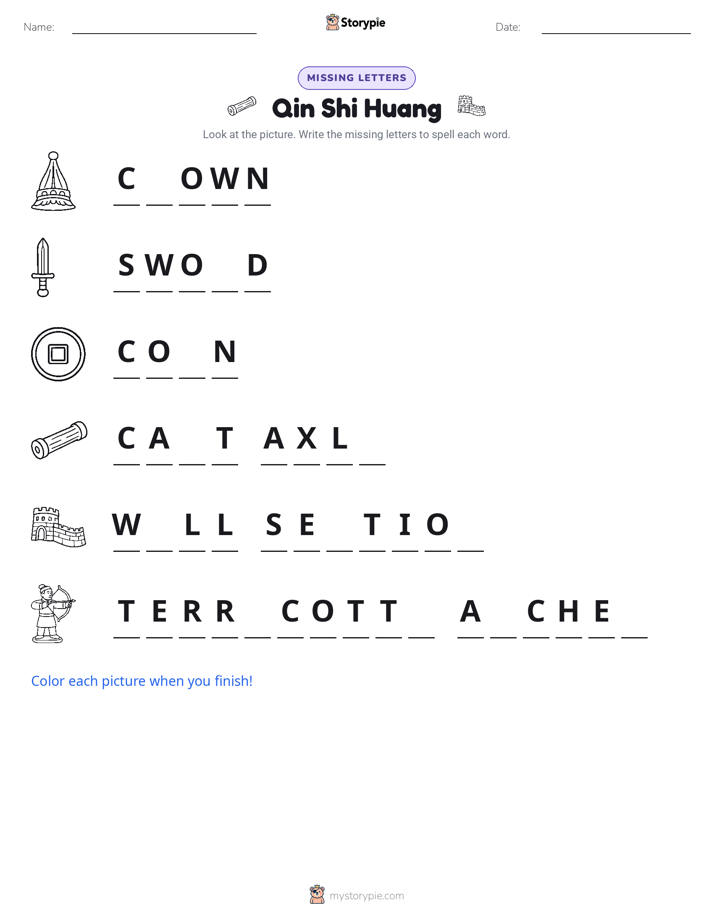
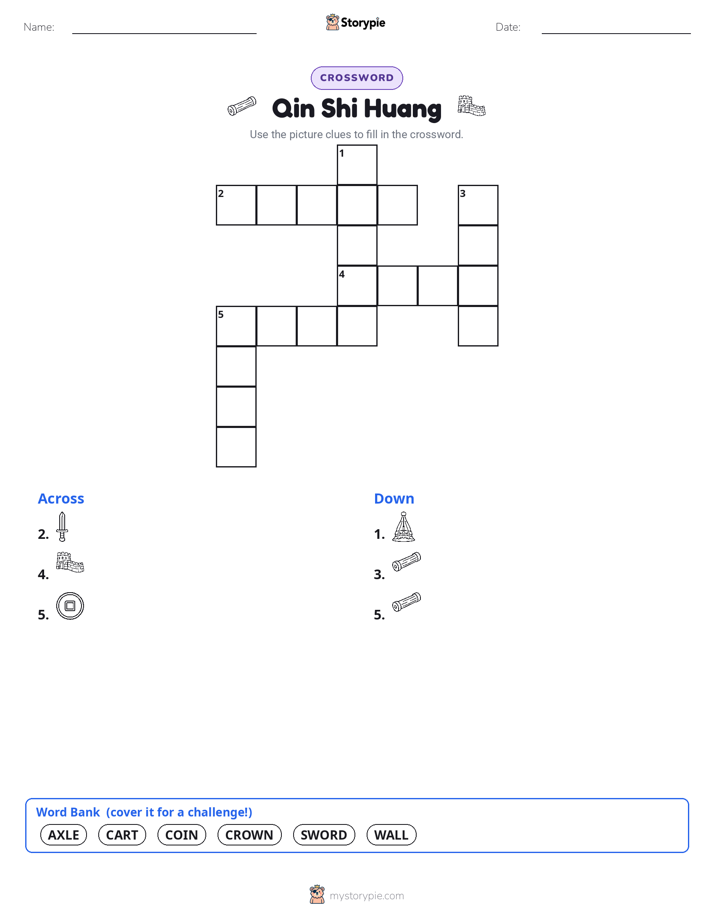
Print & create
Answer keys·No prep·Free with an account
28 worksheets · answer keys · full story · quiz · Ages 8-10 · CEFR B1
Plus adds 102,000+ more stories in 27 languages, audio for every one, and printables for all of them.
Just want Qin Shi Huang?
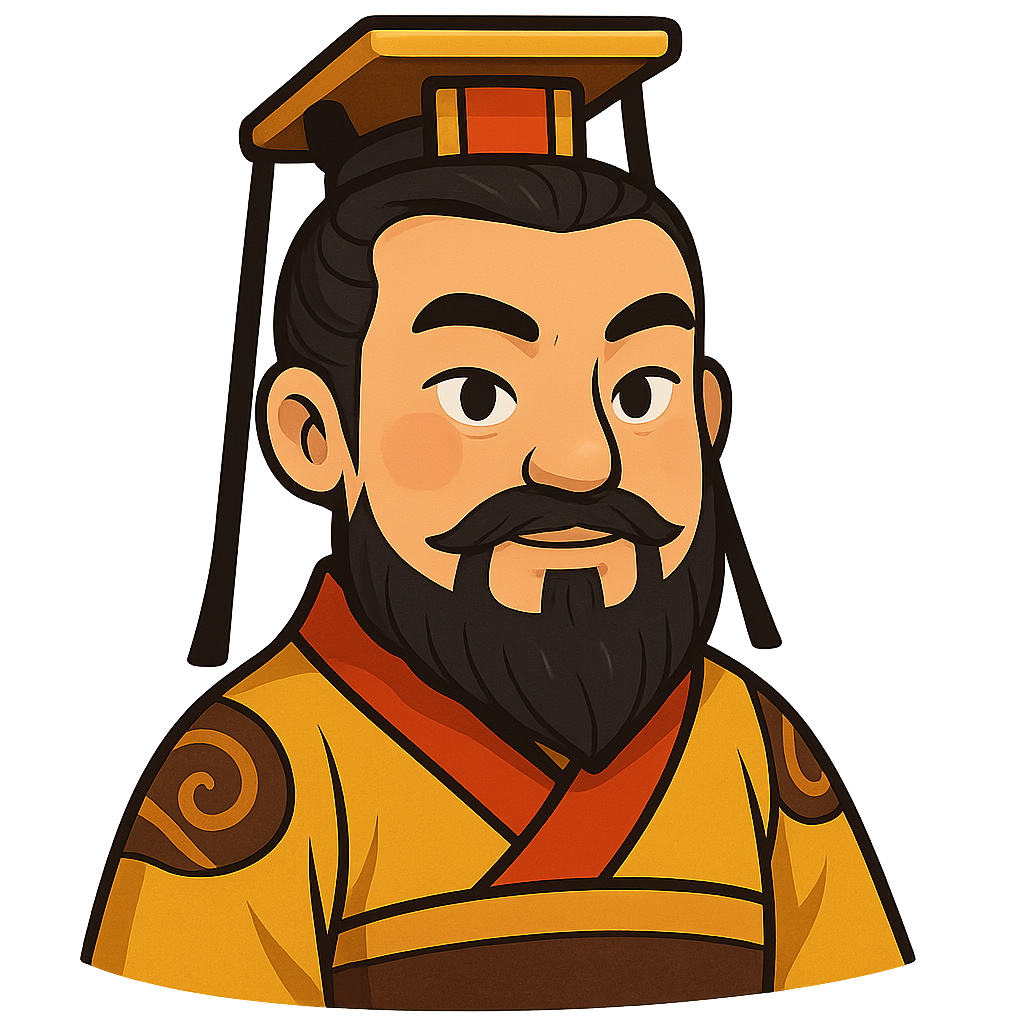
Hello, my name is Ying Zheng. I was born long ago, in the year 259 BCE, as a prince in the state of Qin. In my time, the land you now call China was not one country. It was divided into seven separate states that were constantly at war with one another. This difficult time was later called the Warring States period. Even when I was just a boy, I dreamed of a different future. I wanted to end all the fighting and bring all the people together under one peaceful rule.
My life changed forever in 246 BCE when I became the king of Qin. I was only 13 years old, and suddenly I had a very big job. It was a huge responsibility for someone so young, but I was determined to succeed. I listened carefully to my trusted advisors, like a clever man named Li Si, who helped me make important plans. My goal was not just to be a good king for my own state of Qin. I had a much bigger idea: I wanted to unite all the warring states to create a single, strong, and peaceful land.
The years that followed were full of challenges as my armies worked to achieve my dream. Starting around the year 230 BCE, we began our mission to bring the other states together. One by one, my soldiers successfully united the states of Han, Zhao, Wei, Chu, Yan, and Qi with our own. It was a long and difficult process, but by the year 221 BCE, something amazing happened. The fighting that had torn the land apart for centuries was finally over. I had united China for the very first time in its history.
Now that the land was one, I knew I needed a new title. I was no longer just the king of one state; I was the ruler of them all. In 221 BCE, I gave myself the name Qin Shi Huang, which means the 'First Emperor of Qin.' To make sure our new country would stay united, I made many important changes. I declared that everyone must use the same type of money and the same system for weighing and measuring things. Most importantly, I created one standard style of writing for everyone to use. These changes helped people from different places communicate and work together as part of one giant country.
The First Emperor of China
Hello, my name is Ying Zheng. I was born long ago, in the year 259 BCE, as a prince in the state of Qin. In my time, the land you now call China was not one country. It was divided into seven separate states that were constantly at war with one another. This difficult time was later called the Warring States period. Even when I was just a boy, I dreamed of a different future. I wanted to end all the fighting and bring all the people together under one peaceful rule.
My life changed forever in 246 BCE when I became the king of Qin. I was only 13 years old, and suddenly I had a very big job. It was a huge responsibility for someone so young, but I was determined to succeed. I listened carefully to my trusted advisors, like a clever man named Li Si, who helped me make important plans. My goal was not just to be a good king for my own state of Qin. I had a much bigger idea: I wanted to unite all the warring states to create a single, strong, and peaceful land.
The years that followed were full of challenges as my armies worked to achieve my dream. Starting around the year 230 BCE, we began our mission to bring the other states together. One by one, my soldiers successfully united the states of Han, Zhao, Wei, Chu, Yan, and Qi with our own. It was a long and difficult process, but by the year 221 BCE, something amazing happened. The fighting that had torn the land apart for centuries was finally over. I had united China for the very first time in its history.
Now that the land was one, I knew I needed a new title. I was no longer just the king of one state; I was the ruler of them all. In 221 BCE, I gave myself the name Qin Shi Huang, which means the 'First Emperor of Qin.' To make sure our new country would stay united, I made many important changes. I declared that everyone must use the same type of money and the same system for weighing and measuring things. Most importantly, I created one standard style of writing for everyone to use. These changes helped people from different places communicate and work together as part of one giant country.
To protect our newly united nation from enemies in the north, I gave a great order. I commanded my people to connect many of the smaller walls that different states had built. Together, they formed one Great Wall. It was an enormous project, but it was important to keep our people safe. I also wanted to make travel easier. I had workers build a large network of new roads that spread out across the empire like a giant spiderweb. These roads allowed my armies and messengers to travel quickly and helped merchants trade goods more easily.
I often thought about the future and what would happen after my life on Earth was over. I wanted to be protected even in the afterlife. So, I commanded that a secret army be built just for me. This wasn't an army of living people—it was made entirely of clay. Thousands of life-sized soldiers, archers, and horses were carefully sculpted. Each one was unique, with its own face and expression. This amazing army was buried near my tomb, and for thousands of years, it remained a secret hidden under the ground.
My life came to an end in the year 210 BCE. I lived to be 49 years old. The Qin dynasty that I started did not last for very long after I was gone, but my most important idea did: the idea of a united China. The writing system I standardized is still used by people today, and the country I brought together has grown to become one of the most important in the world. People remember me as the first emperor, the one who turned a land of many fighting states into a single, great nation.
Wow facts
About
The founder of the Qin dynasty and the first emperor of a unified China from 221 BCE to 210 BCE. He is known for major legal and cultural reforms, as well as massive construction projects including the precursor to the Great Wall and the Terracotta Army.
Take a Quiz
Question 1 of 5
What does the story say China was like before Ying Zheng united it?
Explore next




Want to do even more?
Go beyond exploring. Unlock tools that turn every story into real learning.

Storypie Plus for families
Full stories, quizzes, and printables. Nights and car rides, sorted.
- Unlimited audio stories
- Create Mode: your child stars in the story
- Offline downloads
- Printable worksheets & coloring pages

Why Storypie for Schools
Students engaged. Prep in seconds. Evenings back to you.
- Worksheets & Quizzes
- Classroom Management
- Formative Assessment
- Custom Curriculum & Lesson Plans
- 27 Languages

Why Storypie for Homeschool
Curriculum done. They'll ask for more. Hours back in your day.
- Worksheet Generator
- First-Person Audio Stories
- Built-in Comprehension Quizzes
- Custom Curriculum & Lesson Plans
- Print & Go Activities