English

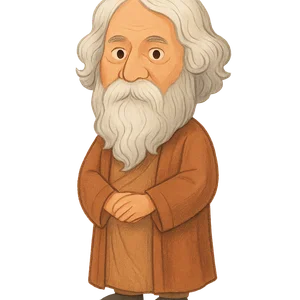
Rabindranath Tagore
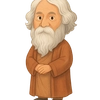
Rabindranath Tagore was a Bengali poet, writer, composer, philosopher…
Reads at Grades 3–5 Listens at Grades 1–5
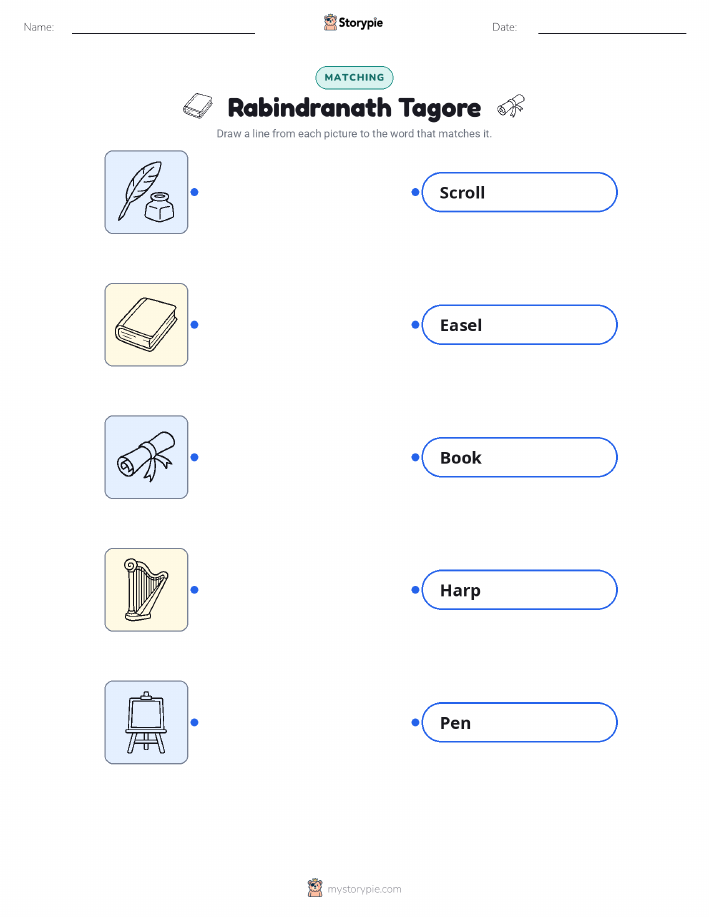
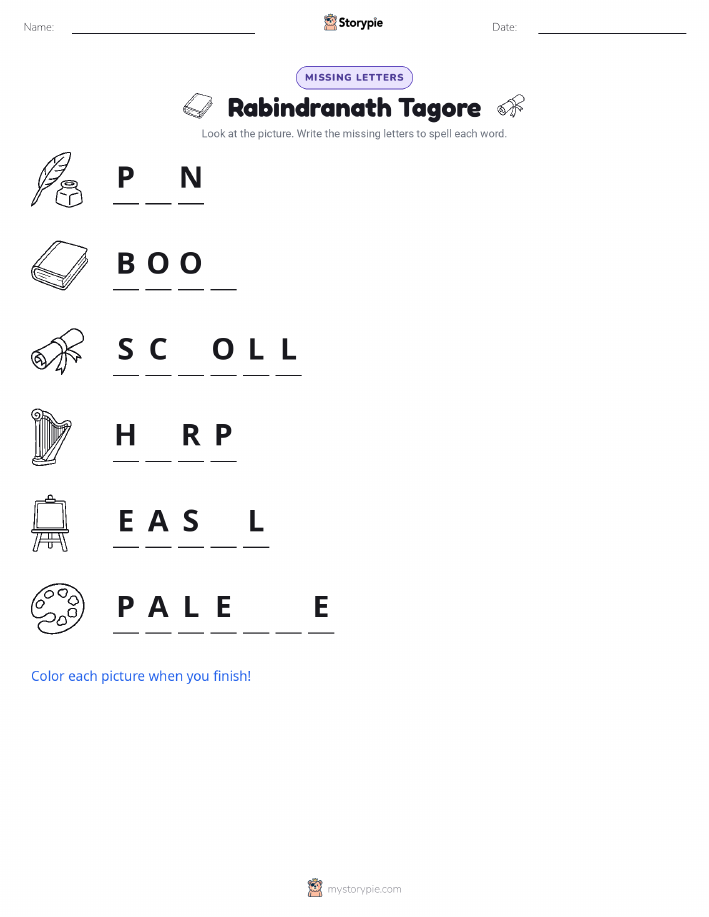
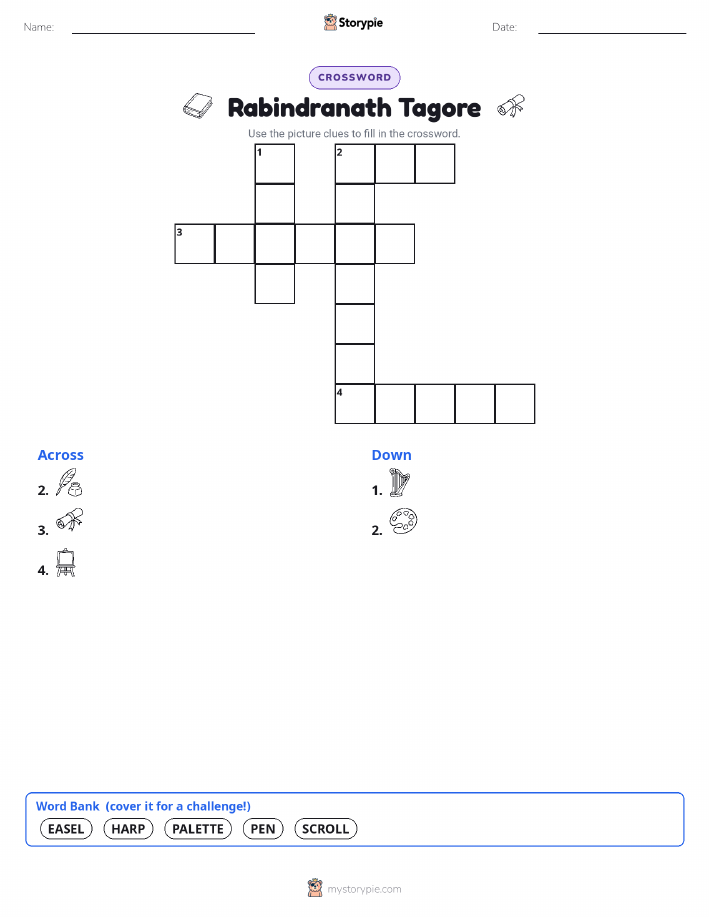
Print & create
Answer keys·No prep·Free with an account
28 worksheets · answer keys · full story · quiz · Ages 8-10 · CEFR B1
Plus adds 279,000+ more stories in 27 languages, audio for every one, and printables for all of them.
Just want Rabindranath Tagore?
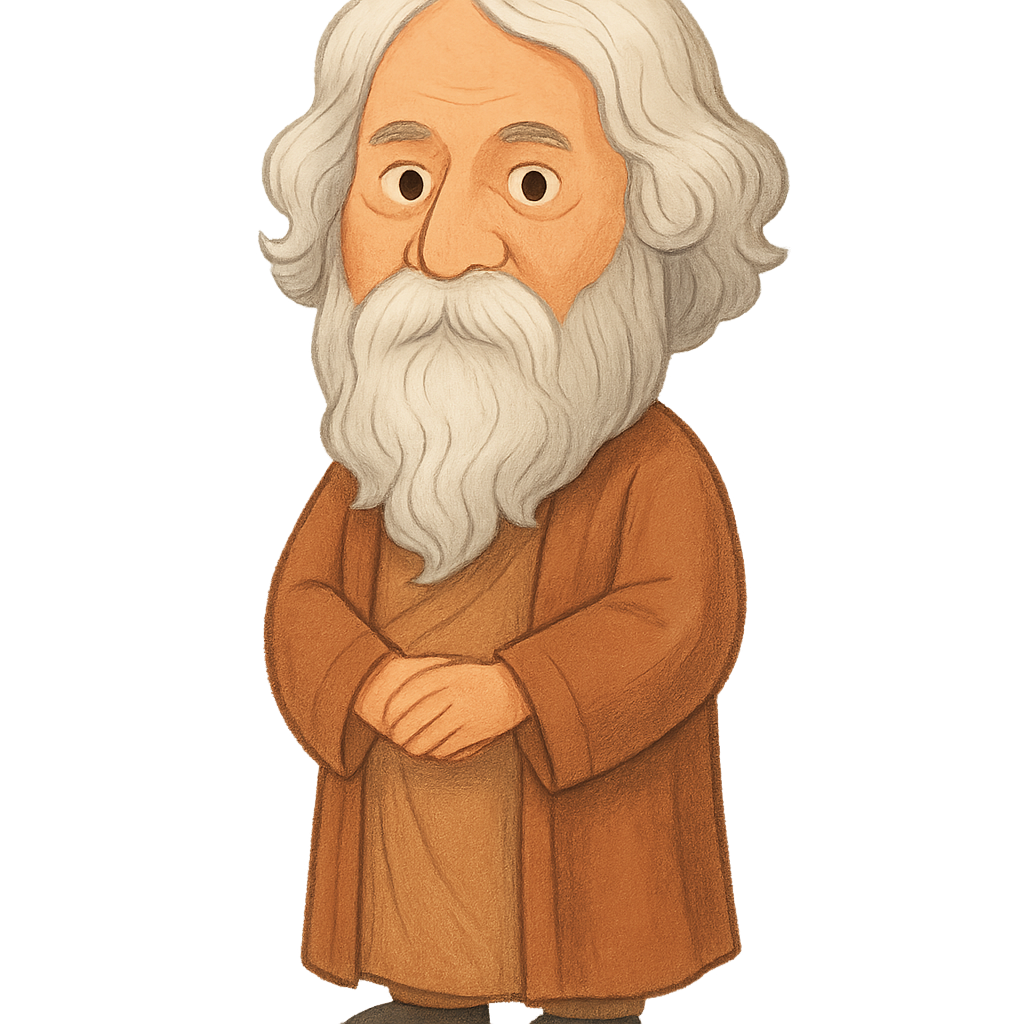
Hello, my name is Rabindranath Tagore. My story begins in a big, bustling house in Calcutta, India, where I was born on May 7th, 1861. My family was large and full of artists, writers, and musicians, so our home was always humming with creativity. I wasn't very fond of traditional school with its strict rules; I preferred to learn from the world around me. I would spend hours watching the rain, listening to the birds, and letting my imagination wander. It was during these quiet moments that poems and songs started to bubble up inside me. I wrote my very first poem when I was only eight years old!
As I grew older, I never stopped writing. Words were my way of painting pictures of the world and sharing my deepest feelings. Around 1910, I published a collection of my poems in my language, Bengali, called 'Gitanjali,' which means 'Song Offerings.' I wanted people beyond India to understand these poems, so I translated them into English. I never imagined what would happen next! In 1913, I received a message that I had been awarded the Nobel Prize in Literature. I was the very first person from Asia to receive this incredible honor. It was a wonderful feeling to know that my words had touched hearts all across the globe.
I always believed that learning should be a joyful adventure, not something confined to a stuffy classroom. I dreamed of a school where students could learn in harmony with nature. In 1901, I made this dream a reality by starting a small school in a peaceful place called Santiniketan. Here, classes were often held outside, under the cool shade of mango trees. I wanted my students to be curious, creative, and free. My little school grew, and in 1921, it became a university called Visva-Bharati. Its name means 'where the world makes a home in a single nest,' because I hoped it would be a place where people from all countries could come to learn from each other.
The Story of Rabindranath Tagore
Hello, my name is Rabindranath Tagore. My story begins in a big, bustling house in Calcutta, India, where I was born on May 7th, 1861. My family was large and full of artists, writers, and musicians, so our home was always humming with creativity. I wasn't very fond of traditional school with its strict rules; I preferred to learn from the world around me. I would spend hours watching the rain, listening to the birds, and letting my imagination wander. It was during these quiet moments that poems and songs started to bubble up inside me. I wrote my very first poem when I was only eight years old!
As I grew older, I never stopped writing. Words were my way of painting pictures of the world and sharing my deepest feelings. Around 1910, I published a collection of my poems in my language, Bengali, called 'Gitanjali,' which means 'Song Offerings.' I wanted people beyond India to understand these poems, so I translated them into English. I never imagined what would happen next! In 1913, I received a message that I had been awarded the Nobel Prize in Literature. I was the very first person from Asia to receive this incredible honor. It was a wonderful feeling to know that my words had touched hearts all across the globe.
I always believed that learning should be a joyful adventure, not something confined to a stuffy classroom. I dreamed of a school where students could learn in harmony with nature. In 1901, I made this dream a reality by starting a small school in a peaceful place called Santiniketan. Here, classes were often held outside, under the cool shade of mango trees. I wanted my students to be curious, creative, and free. My little school grew, and in 1921, it became a university called Visva-Bharati. Its name means 'where the world makes a home in a single nest,' because I hoped it would be a place where people from all countries could come to learn from each other.
During my lifetime, India was under British rule, and many of us longed for freedom. In 1915, the British king honored me with a knighthood. However, a few years later, in 1919, something terrible happened called the Jallianwala Bagh massacre, where many innocent Indians were harmed. My heart was broken, and I knew I could not keep the title. I wrote a letter and returned my knighthood as a protest. It was important for me to use my voice to stand up for justice and for my people.
Beyond poetry, I found joy in painting later in my life, and I composed thousands of songs. In fact, the music I created became so beloved that today, both India and Bangladesh use my songs as their national anthems. I lived to be 80 years old, and I spent my life sharing the beauty I found in the world. Today, people remember me as a poet, a musician, and an educator who believed in a world where everyone could learn and create together. My stories and songs continue to be shared, carrying a message of peace and creativity for new generations to discover.
Wow facts
About
Rabindranath Tagore was a Bengali poet, writer, composer, philosopher, and painter who reshaped his region's literature and music. In 1913, he became the first non-European to win the Nobel Prize in Literature.
Take a Quiz
Question 1 of 5
In the story, I said my home was 'humming with creativity.' What does that phrase mean?
Explore next





Want to do even more?
Go beyond exploring. Unlock tools that turn every story into real learning.

Storypie Plus for families
Full stories, quizzes, and printables. Nights and car rides, sorted.
- Unlimited audio stories
- Create Mode: your child stars in the story
- Offline downloads
- Printable worksheets & coloring pages

Why Storypie for Schools
Students engaged. Prep in seconds. Evenings back to you.
- Worksheets & Quizzes
- Classroom Management
- Formative Assessment
- Custom Curriculum & Lesson Plans
- 27 Languages

Why Storypie for Homeschool
Curriculum done. They'll ask for more. Hours back in your day.
- Worksheet Generator
- First-Person Audio Stories
- Built-in Comprehension Quizzes
- Custom Curriculum & Lesson Plans
- Print & Go Activities