English

Rosalind Franklin
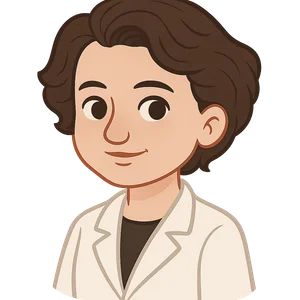
Rosalind Franklin was a British chemist and X-ray crystallographer whose work was central to the…
Reads at Grades 6–8 Listens at Grades 4–8
Print & create
Answer keys·No prep·Free with an account
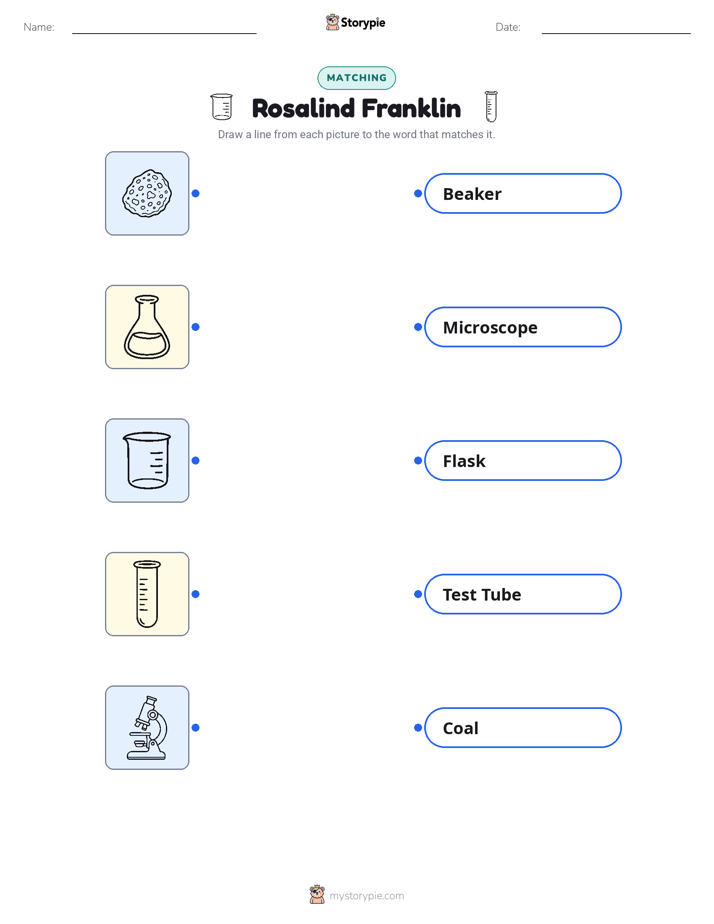
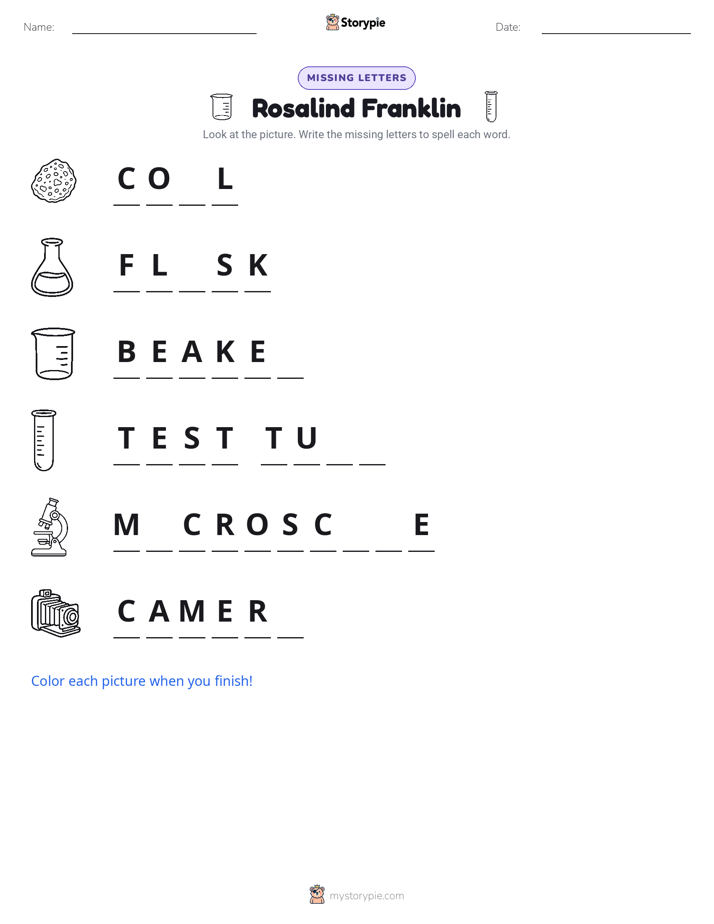
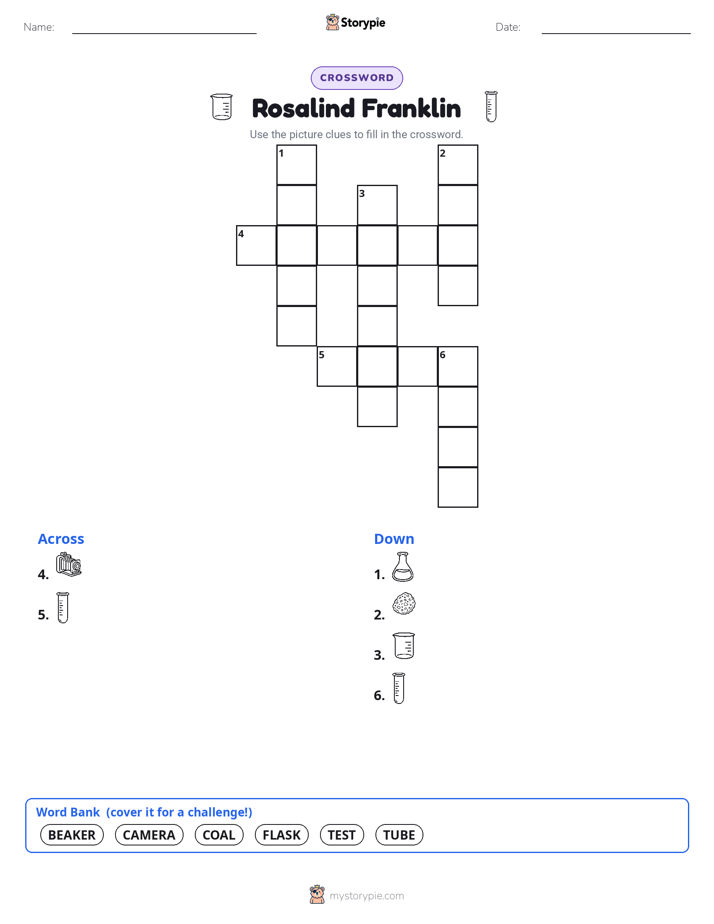
28 worksheets · answer keys · full story · quiz · Ages 10-12 · CEFR B2
Plus adds 208,000+ more stories in 27 languages, audio for every one, and printables for all of them.
Just want Rosalind Franklin?
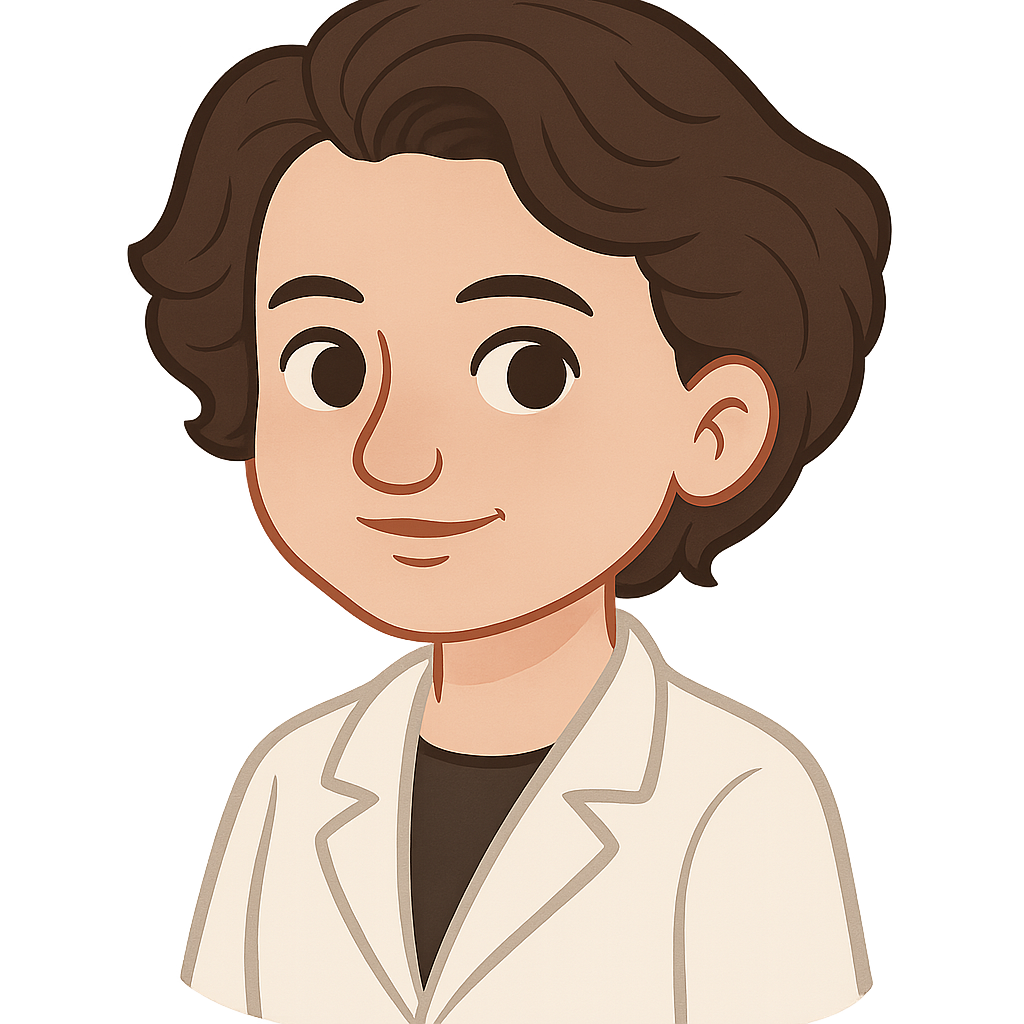
Hello, my name is Rosalind Franklin, and I would like to share my story with you. I was born in London, England, on July 25th, 1920, into a family that believed deeply in the power of education. From my earliest days, I was drawn to the world of science. I loved facts, logic, and the challenge of solving a good puzzle. This curiosity was something I carried with me throughout my life. I attended a wonderful school called St Paul's Girls' School, which was one of the few schools at the time that taught physics and chemistry to girls. It was there that my passion for chemistry truly began to grow, and I knew I wanted to dedicate my life to scientific research. My path was set, and in 1938, I made the decision to study at the prestigious Cambridge University. My father initially had other ideas for my future, as university education for women was not as common then, but he eventually supported my dream. I was determined to follow my passion and uncover the secrets hidden in the world around us.
My years at Cambridge University were transformative, though they took place during a very difficult time in history. I studied Natural Sciences, immersing myself in the world of chemistry and physics. While I was learning, World War II was raging across Europe, and it impacted every aspect of our lives. After I graduated in 1941, I knew I wanted my work to be useful. I accepted a research position at the British Coal Utilisation Research Association. It may sound like a dusty job, but it was incredibly important. My research focused on understanding the microscopic structures of coal. By studying its porosity, or how many tiny holes it had, I helped figure out how to make it a more efficient fuel. This work was not only fascinating but also contributed to the war effort. This research formed the basis of my doctoral thesis, and in 1945, I was proud to earn my PhD in physical chemistry. My early work with coal taught me how to look closely at the building blocks of materials, a skill that would become essential for my future discoveries.
Rosalind Franklin: The Woman Who Photographed DNA
Hello, my name is Rosalind Franklin, and I would like to share my story with you. I was born in London, England, on July 25th, 1920, into a family that believed deeply in the power of education. From my earliest days, I was drawn to the world of science. I loved facts, logic, and the challenge of solving a good puzzle. This curiosity was something I carried with me throughout my life. I attended a wonderful school called St Paul's Girls' School, which was one of the few schools at the time that taught physics and chemistry to girls. It was there that my passion for chemistry truly began to grow, and I knew I wanted to dedicate my life to scientific research. My path was set, and in 1938, I made the decision to study at the prestigious Cambridge University. My father initially had other ideas for my future, as university education for women was not as common then, but he eventually supported my dream. I was determined to follow my passion and uncover the secrets hidden in the world around us.
My years at Cambridge University were transformative, though they took place during a very difficult time in history. I studied Natural Sciences, immersing myself in the world of chemistry and physics. While I was learning, World War II was raging across Europe, and it impacted every aspect of our lives. After I graduated in 1941, I knew I wanted my work to be useful. I accepted a research position at the British Coal Utilisation Research Association. It may sound like a dusty job, but it was incredibly important. My research focused on understanding the microscopic structures of coal. By studying its porosity, or how many tiny holes it had, I helped figure out how to make it a more efficient fuel. This work was not only fascinating but also contributed to the war effort. This research formed the basis of my doctoral thesis, and in 1945, I was proud to earn my PhD in physical chemistry. My early work with coal taught me how to look closely at the building blocks of materials, a skill that would become essential for my future discoveries.
In 1947, I made an exciting move to Paris, France, to work at the Laboratoire Central des Services Chimiques de l'État. It was a famous government laboratory filled with brilliant minds, and living in Paris was a wonderful experience. More importantly, this was where I became an expert in a powerful scientific technique called X-ray crystallography. It might sound complicated, but the idea is quite simple. Imagine you have an object so tiny you can't see it, even with a regular microscope. X-ray crystallography allows you to shoot a beam of X-rays at the crystals of that substance. When the X-rays pass through, they create a pattern on a photographic film. By studying that pattern, you can figure out the three-dimensional structure of the atoms inside. It is like using special X-rays to take a picture of a molecule's secret internal pattern. I spent years in Paris honing this skill, and it became the key that would unlock one of the greatest mysteries in science.
I returned to London in 1951 to take a position at King's College. There, I was assigned a monumental task: to study the structure of a molecule called deoxyribonucleic acid, or DNA. At the time, scientists knew that DNA carried genetic information from one generation to the next, but no one knew what it looked like. Think of it as the instruction book for all living things, and my job was to figure out how that book was built. The work required immense patience and precision. Working with my graduate student, Raymond Gosling, I used my X-ray crystallography skills to take pictures of DNA fibers. In May of 1952, after countless hours of meticulous work, we captured a stunningly clear image. We called it 'Photograph 51.' The distinct 'X' shape in the photo was the undeniable proof that DNA had a spiral, or helical, structure. This photograph was a critical piece of the puzzle. It was shared with other scientists, including James Watson and Francis Crick, and it provided them with the crucial evidence they needed to build their famous double helix model of DNA.
After my work on DNA at King's College, I moved to a new laboratory at Birkbeck College in 1953. There, I was able to lead my own research team. We turned our attention from DNA to the structures of viruses. Using the same X-ray techniques, my team made important discoveries about the architecture of several viruses, including the one that causes polio. Our work helped reveal how viruses are built, which is a vital step in understanding how to fight them. I continued this important research until I became ill with cancer. I lived to be 37 years old and passed away on April 16th, 1958. Although my essential contribution to the discovery of DNA's structure wasn't fully recognized or celebrated during my lifetime, I am proud that my story is now known. I hope my passion for seeking answers through careful and persistent work inspires you to be curious, to ask questions, and to always look closely at the world around you.
Wow facts
About
Rosalind Franklin was a British chemist and X-ray crystallographer whose work was central to the understanding of the molecular structures of DNA, RNA, viruses, coal, and graphite.
Take a Quiz
Question 1 of 5
In your own words, retell the main events of Rosalind Franklin's scientific career, from her work on coal to her work on viruses.
Explore next






Want to do even more?
Go beyond exploring. Unlock tools that turn every story into real learning.

Storypie Plus for families
Full stories, quizzes, and printables. Nights and car rides, sorted.
- Unlimited audio stories
- Create Mode: your child stars in the story
- Offline downloads
- Printable worksheets & coloring pages

Why Storypie for Schools
Students engaged. Prep in seconds. Evenings back to you.
- Worksheets & Quizzes
- Classroom Management
- Formative Assessment
- Custom Curriculum & Lesson Plans
- 27 Languages

Why Storypie for Homeschool
Curriculum done. They'll ask for more. Hours back in your day.
- Worksheet Generator
- First-Person Audio Stories
- Built-in Comprehension Quizzes
- Custom Curriculum & Lesson Plans
- Print & Go Activities