English

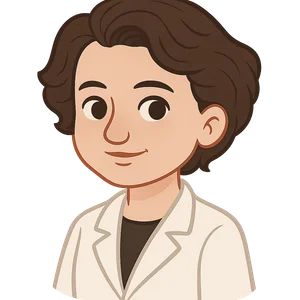
Rosalind Franklin
Rosalind Franklin was a British chemist and X-ray crystallographer whose work was central to the…
Reads at Grades 3–5 Listens at Grades 1–5
Print & create
Answer keys·No prep·Free with an account
28 worksheets · answer keys · full story · quiz · Ages 8-10 · CEFR B1
Plus adds 208,000+ more stories in 27 languages, audio for every one, and printables for all of them.
Just want Rosalind Franklin?
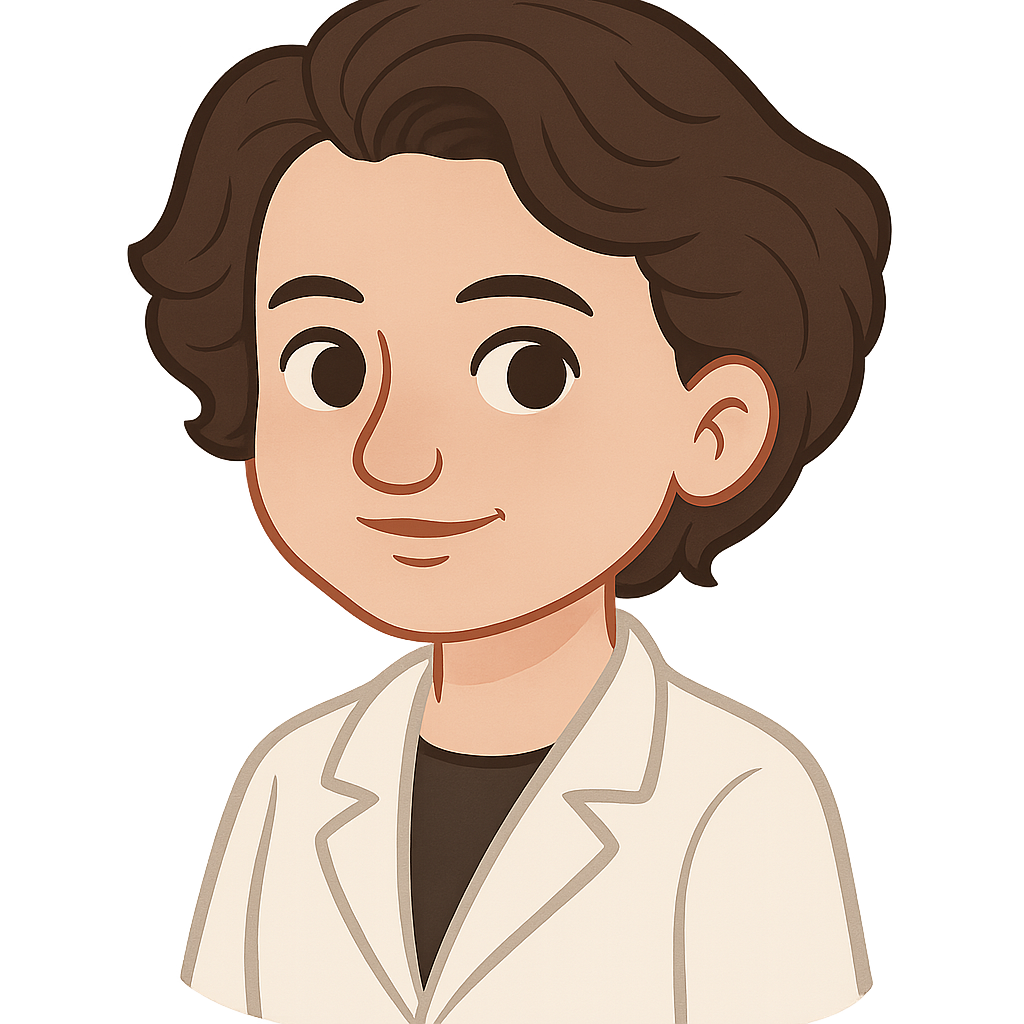
Hello! My name is Rosalind Franklin. I was born in London, England, on July 25th, 1920. Ever since I was a little girl, I loved puzzles and figuring out how things worked. Science was my favorite puzzle of all! I was always asking questions and trying to figure out the answers through experiments. My passion for science led me to Cambridge University in 1938, where I studied chemistry. It was a very exciting time for me because not many women became scientists back then. But I was determined to follow my curiosity and spend my life discovering new things about the world.
After university, I wanted to learn how to see things that were too small for any normal microscope. In 1947, I moved to Paris, France, to work in a special laboratory where I could learn a technique called X-ray crystallography. You can think of it as having super-powered eyes! The process involves shooting a tiny beam of X-rays at a crystal. When the X-rays pass through, they create a pattern, like a shadow. By studying that pattern, I could figure out the shape of the molecules inside the crystal. I became very good at this technique and used it to study the structure of coal, which helped people understand how to use it more effectively.
In 1951, I returned to London to work at a new lab at King's College. There, I was given a very important and challenging puzzle to solve: what did a molecule called DNA look like? DNA is like a recipe book inside every living thing, holding all the instructions that tell it how to grow and what to do. At the time, no one knew its shape! It was very difficult work that required a lot of patience. I spent many hours carefully setting up my experiments. In May of 1952, after trying over and over again, I finally took a clear X-ray picture of DNA. We called it 'Photo 51.' It was the best picture of DNA anyone had ever seen, and it showed a clear 'X' shape, which turned out to be a huge clue to its structure.
Rosalind Franklin: Unlocking the Secret of Life
Hello! My name is Rosalind Franklin. I was born in London, England, on July 25th, 1920. Ever since I was a little girl, I loved puzzles and figuring out how things worked. Science was my favorite puzzle of all! I was always asking questions and trying to figure out the answers through experiments. My passion for science led me to Cambridge University in 1938, where I studied chemistry. It was a very exciting time for me because not many women became scientists back then. But I was determined to follow my curiosity and spend my life discovering new things about the world.
After university, I wanted to learn how to see things that were too small for any normal microscope. In 1947, I moved to Paris, France, to work in a special laboratory where I could learn a technique called X-ray crystallography. You can think of it as having super-powered eyes! The process involves shooting a tiny beam of X-rays at a crystal. When the X-rays pass through, they create a pattern, like a shadow. By studying that pattern, I could figure out the shape of the molecules inside the crystal. I became very good at this technique and used it to study the structure of coal, which helped people understand how to use it more effectively.
In 1951, I returned to London to work at a new lab at King's College. There, I was given a very important and challenging puzzle to solve: what did a molecule called DNA look like? DNA is like a recipe book inside every living thing, holding all the instructions that tell it how to grow and what to do. At the time, no one knew its shape! It was very difficult work that required a lot of patience. I spent many hours carefully setting up my experiments. In May of 1952, after trying over and over again, I finally took a clear X-ray picture of DNA. We called it 'Photo 51.' It was the best picture of DNA anyone had ever seen, and it showed a clear 'X' shape, which turned out to be a huge clue to its structure.
My Photo 51 was a key piece of the DNA puzzle. Without my knowing, a colleague of mine named Maurice Wilkins showed my photograph to two other scientists, James Watson and Francis Crick. Seeing the 'X' shape in my picture helped them finally understand the structure they had been trying to build. They realized that DNA was shaped like a twisted ladder, a shape they called a 'double helix.' In 1953, they published their model, which became one of the most important discoveries in science. It showed that science is often a team sport, where many people's work comes together to solve a big puzzle.
After my work on DNA, I moved to a different college in 1953 and began studying viruses, making important discoveries about their structures as well. I loved being a scientist and solving puzzles that could help the world. I lived to be 37 years old, passing away from an illness in 1958. Though I was not recognized for my important contribution to the discovery of DNA's structure during my lifetime, today people remember my careful and brilliant work. My Photo 51 is now famous, and I am remembered as one of the key scientists who helped unlock the secret of life.
Wow facts
About
Rosalind Franklin was a British chemist and X-ray crystallographer whose work was central to the understanding of the molecular structures of DNA, RNA, viruses, coal, and graphite.
Take a Quiz
Question 1 of 5
Why was Photo 51 an important clue for understanding DNA?
Explore next






Want to do even more?
Go beyond exploring. Unlock tools that turn every story into real learning.

Storypie Plus for families
Full stories, quizzes, and printables. Nights and car rides, sorted.
- Unlimited audio stories
- Create Mode: your child stars in the story
- Offline downloads
- Printable worksheets & coloring pages

Why Storypie for Schools
Students engaged. Prep in seconds. Evenings back to you.
- Worksheets & Quizzes
- Classroom Management
- Formative Assessment
- Custom Curriculum & Lesson Plans
- 27 Languages

Why Storypie for Homeschool
Curriculum done. They'll ask for more. Hours back in your day.
- Worksheet Generator
- First-Person Audio Stories
- Built-in Comprehension Quizzes
- Custom Curriculum & Lesson Plans
- Print & Go Activities