English


Sandro Botticelli
An influential Italian painter of the Early Renaissance…
Reads at Grades 3–5 Listens at Grades 1–5
Print & create
Answer keys·No prep·Free with an account
28 worksheets · answer keys · full story · quiz · Ages 8-10 · CEFR B1
Plus adds 280,000+ more stories in 27 languages, audio for every one, and printables for all of them.
Just want Sandro Botticelli?
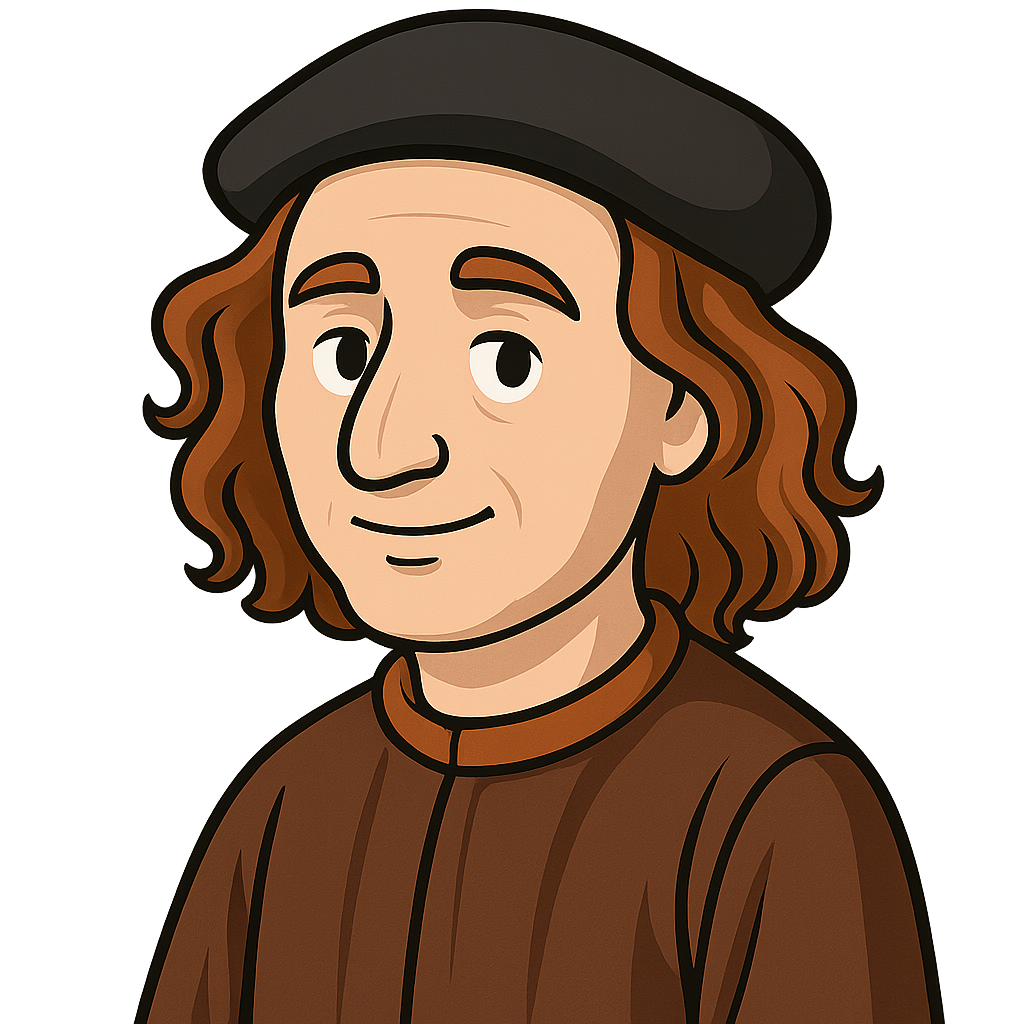
Hello, my name is Alessandro Filipepi, but everyone knows me by my nickname, Sandro Botticelli. It means ‘little barrel,’ a funny name I was given as a boy. I was born in the beautiful city of Florence, Italy, around the year 1445. Growing up in Florence was amazing. The city was buzzing with artists creating wonderful things and thinkers sharing new ideas. It was a very exciting place to be. At first, I was sent to be a goldsmith's apprentice, where I learned to work with shiny metals. But I soon realized that my true passion was painting. I loved mixing colors and creating pictures more than anything else. So, around the year 1460, I left the goldsmith's shop to study with a famous painter named Fra Filippo Lippi. He taught me so much about how to bring stories to life on a canvas.
After learning from my teacher, I was ready to start on my own. By 1470, I opened my very own art workshop right in the heart of Florence. It wasn't long before my work caught the eye of the most powerful family in the city, the Medici family. They were great lovers of art, especially their leader, Lorenzo de' Medici. People called him 'the Magnificent' because he supported so many artists and writers. The Medici family asked me to paint many important pictures for them, and this was a wonderful opportunity. Working for them allowed me to let my imagination run wild. I loved painting stories from old myths and legends. I would fill my paintings with graceful figures that seemed to dance across the canvas. I paid close attention to every detail, from the soft folds of flowing fabrics to the leaves on the trees. My goal was to create a world that was both beautiful and full of meaning, a place where stories could unfold in front of your eyes.
Sandro Botticelli: Painting a Dream
Hello, my name is Alessandro Filipepi, but everyone knows me by my nickname, Sandro Botticelli. It means ‘little barrel,’ a funny name I was given as a boy. I was born in the beautiful city of Florence, Italy, around the year 1445. Growing up in Florence was amazing. The city was buzzing with artists creating wonderful things and thinkers sharing new ideas. It was a very exciting place to be. At first, I was sent to be a goldsmith's apprentice, where I learned to work with shiny metals. But I soon realized that my true passion was painting. I loved mixing colors and creating pictures more than anything else. So, around the year 1460, I left the goldsmith's shop to study with a famous painter named Fra Filippo Lippi. He taught me so much about how to bring stories to life on a canvas.
After learning from my teacher, I was ready to start on my own. By 1470, I opened my very own art workshop right in the heart of Florence. It wasn't long before my work caught the eye of the most powerful family in the city, the Medici family. They were great lovers of art, especially their leader, Lorenzo de' Medici. People called him 'the Magnificent' because he supported so many artists and writers. The Medici family asked me to paint many important pictures for them, and this was a wonderful opportunity. Working for them allowed me to let my imagination run wild. I loved painting stories from old myths and legends. I would fill my paintings with graceful figures that seemed to dance across the canvas. I paid close attention to every detail, from the soft folds of flowing fabrics to the leaves on the trees. My goal was to create a world that was both beautiful and full of meaning, a place where stories could unfold in front of your eyes.
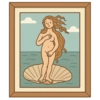
Two of my most famous paintings were inspired by those old stories. In the late 1470s, I created a painting called 'Primavera.' 'Primavera' means 'Spring' in Italian, and the painting is like a magical garden scene celebrating the season's arrival. It is filled with beautiful flowers and figures from mythology, all gathered together under the orange trees. A few years later, around 1486, I painted another famous work, 'The Birth of Venus.' In this painting, I painted the goddess of love, Venus, floating to shore on a giant seashell, with winds blowing roses all around her. She looks gentle and calm as she arrives on the land. In both of these paintings, I used soft colors and delicate lines to create a feeling of gentleness and beauty. I wanted people to feel like they were stepping into a dream.
One of the most exciting moments of my career happened in 1481. I received a message from Pope Sixtus IV, asking me to come to Rome. This was a very important invitation. He asked me and some of the other most famous artists of the time to decorate the walls of his brand-new chapel. Today, you know this famous building as the Sistine Chapel. My job was to paint large frescoes on the walls. A fresco is a special kind of painting that is done right onto wet plaster, so the color becomes part of the wall itself. I painted scenes telling stories from the life of Moses and Jesus. It was a great honor to work on such an important building and to have my art be part of a place that so many people would see.
As I grew older, the world of art in Florence began to change. My graceful, dreamy style of painting became less fashionable for a time. I was also deeply influenced by a preacher named Girolamo Savonarola, which made my later artwork more focused on religious subjects. I lived to be 65 years old and was laid to rest in my home city of Florence in 1510. For a long, long time after that, my paintings were mostly forgotten. But hundreds of years later, people rediscovered my work. They fell in love with the beauty and grace I had tried to capture. Today, my paintings like 'The Birth of Venus' are some of the most famous in the world, and people travel from everywhere to see the stories I brought to life with my brushes.
Wow facts
About
An influential Italian painter of the Early Renaissance, known for masterpieces like 'The Birth of Venus' and 'Primavera'.
Take a Quiz
Question 1 of 5
What does the name of Sandro Botticelli's painting, 'Primavera,' mean in English?
Explore next




Want to do even more?
Go beyond exploring. Unlock tools that turn every story into real learning.

Storypie Plus for families
Full stories, quizzes, and printables. Nights and car rides, sorted.
- Unlimited audio stories
- Create Mode: your child stars in the story
- Offline downloads
- Printable worksheets & coloring pages

Why Storypie for Schools
Students engaged. Prep in seconds. Evenings back to you.
- Worksheets & Quizzes
- Classroom Management
- Formative Assessment
- Custom Curriculum & Lesson Plans
- 27 Languages

Why Storypie for Homeschool
Curriculum done. They'll ask for more. Hours back in your day.
- Worksheet Generator
- First-Person Audio Stories
- Built-in Comprehension Quizzes
- Custom Curriculum & Lesson Plans
- Print & Go Activities