English

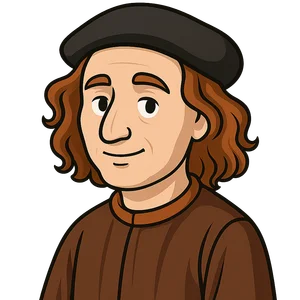
Sandro Botticelli
An influential Italian painter of the Early Renaissance…
Reads at Grades 6–8 Listens at Grades 4–8
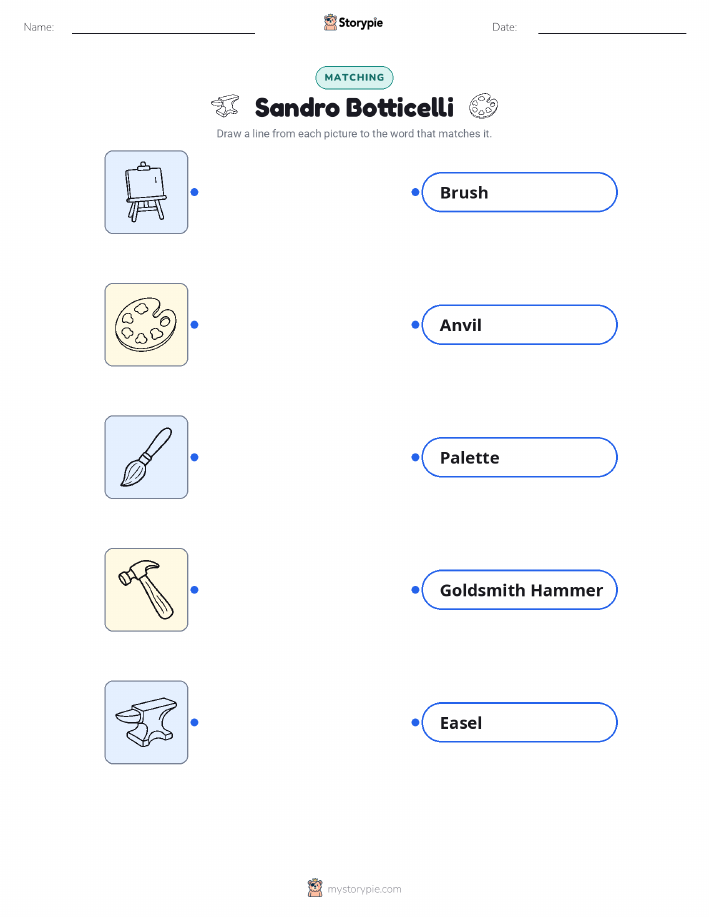
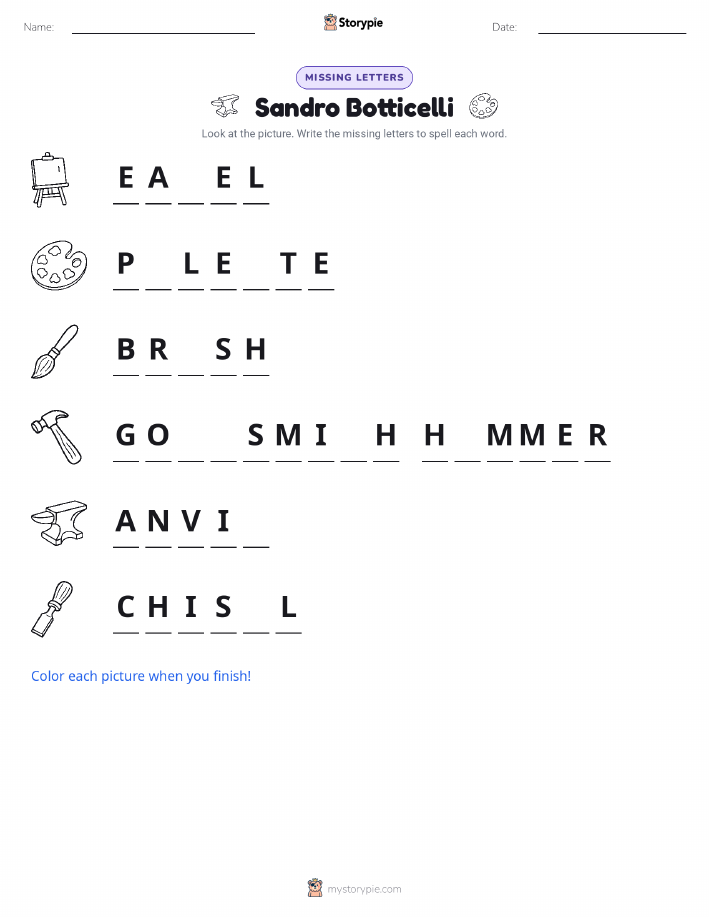
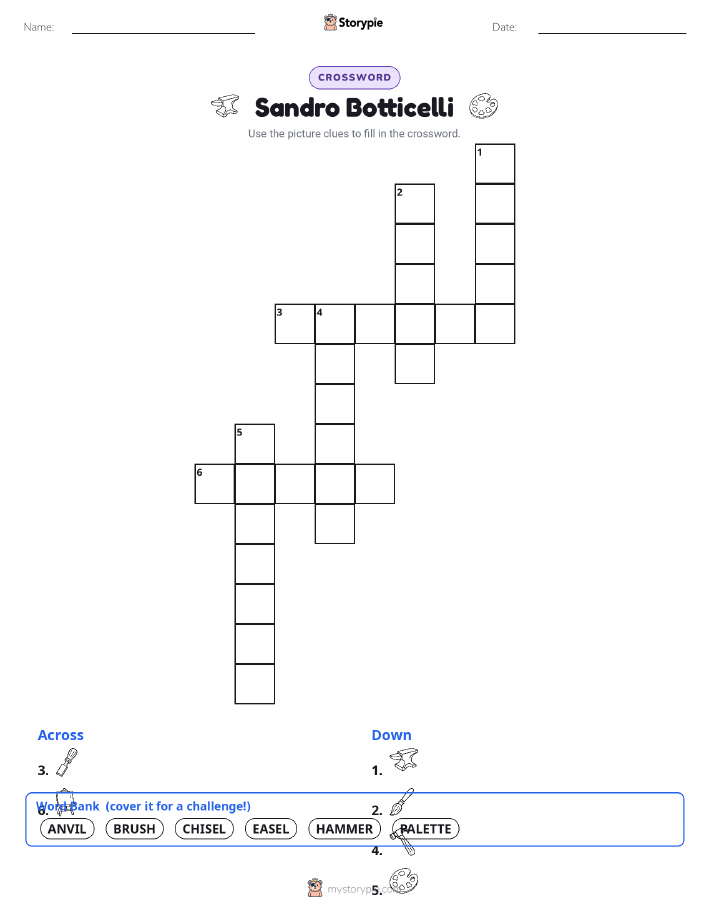
Print & create
Answer keys·No prep·Free with an account
28 worksheets · answer keys · full story · quiz · Ages 10-12 · CEFR B2
Plus adds 280,000+ more stories in 27 languages, audio for every one, and printables for all of them.
Just want Sandro Botticelli?
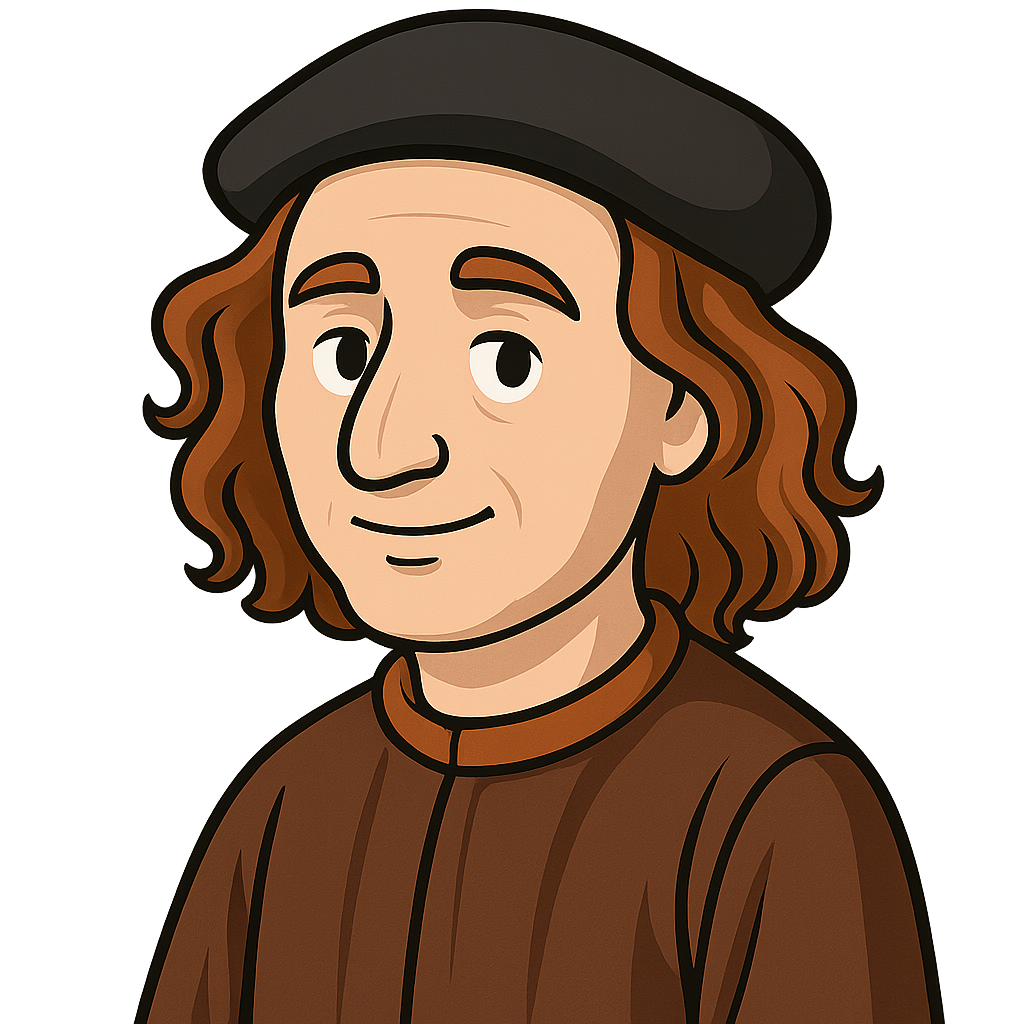
Hello! My name is Alessandro di Mariano di Vanni Filipepi, but that’s quite a mouthful, isn’t it? You can call me by my nickname, Sandro Botticelli. I was born around March 1st, 1445, in Florence, a city in what is now Italy. In my time, Florence was the heart of an amazing period of creativity and discovery called the Renaissance. Art, science, and new ideas were blossoming everywhere! My nickname, Botticelli, means 'little barrel,' a funny name that stuck with me my whole life. Growing up surrounded by magnificent sculptures, buildings, and paintings made me dream of creating beautiful things myself.
At first, I didn't train to be a painter. My first apprenticeship was with a goldsmith. Working with gold taught me how to be very precise and to pay close attention to tiny, delicate details. But my heart was truly set on painting. So, around the year 1462, I was lucky enough to become an apprentice in the workshop of a famous painter named Fra Filippo Lippi. He was a master, and from him, I learned how to paint graceful, flowing lines and create figures that seemed both elegant and full of life. By 1470, I had learned so much that I was ready to open my very own workshop in Florence.
My work soon caught the eye of the most powerful family in Florence, the Medici. They loved art and supported many artists, including me. Their patronage allowed me to create some of my most famous paintings, which told stories not just from the Bible, but also from ancient myths. Around 1482, I painted 'Primavera,' a magical scene in a garden filled with gods and goddesses celebrating spring. A few years later, around 1486, I created what might be my most recognized work, 'The Birth of Venus.' It shows the goddess of love, Venus, arriving on a giant seashell. It was unusual at the time to paint such large pictures about myths, but I loved bringing these ancient tales to life with my brushes.
Sandro Botticelli: A Renaissance Painter
Hello! My name is Alessandro di Mariano di Vanni Filipepi, but that’s quite a mouthful, isn’t it? You can call me by my nickname, Sandro Botticelli. I was born around March 1st, 1445, in Florence, a city in what is now Italy. In my time, Florence was the heart of an amazing period of creativity and discovery called the Renaissance. Art, science, and new ideas were blossoming everywhere! My nickname, Botticelli, means 'little barrel,' a funny name that stuck with me my whole life. Growing up surrounded by magnificent sculptures, buildings, and paintings made me dream of creating beautiful things myself.
At first, I didn't train to be a painter. My first apprenticeship was with a goldsmith. Working with gold taught me how to be very precise and to pay close attention to tiny, delicate details. But my heart was truly set on painting. So, around the year 1462, I was lucky enough to become an apprentice in the workshop of a famous painter named Fra Filippo Lippi. He was a master, and from him, I learned how to paint graceful, flowing lines and create figures that seemed both elegant and full of life. By 1470, I had learned so much that I was ready to open my very own workshop in Florence.
My work soon caught the eye of the most powerful family in Florence, the Medici. They loved art and supported many artists, including me. Their patronage allowed me to create some of my most famous paintings, which told stories not just from the Bible, but also from ancient myths. Around 1482, I painted 'Primavera,' a magical scene in a garden filled with gods and goddesses celebrating spring. A few years later, around 1486, I created what might be my most recognized work, 'The Birth of Venus.' It shows the goddess of love, Venus, arriving on a giant seashell. It was unusual at the time to paint such large pictures about myths, but I loved bringing these ancient tales to life with my brushes.
My reputation grew, and in 1481, I received a very important invitation. Pope Sixtus IV called me to Rome to work on a special project: decorating the walls of his new chapel, the Sistine Chapel. It was a great honor! I worked alongside other leading artists of my day to paint large frescoes—paintings made on wet plaster. I painted scenes from the life of Moses and the life of Jesus. It was challenging work, but it was incredible to be part of creating a place that would be so important for centuries to come.
Later in my life, things in Florence began to change. A fiery preacher named Girolamo Savonarola became very influential, and he preached that the city's love for art and luxury was wrong. His ideas affected many people, including me. My style of painting shifted. I moved away from mythological subjects and focused almost entirely on religious art that was more serious and emotional. My flowing, graceful style became a bit harder and more intense as I grew older and my beliefs changed.
I lived until May 17th, 1510, to be about 65 years old. For a long time after I was gone, my paintings were largely forgotten. But hundreds of years later, in the 19th century, art lovers rediscovered my work. They fell in love with the elegance and beauty I had tried to capture. Today, my paintings, especially 'The Birth of Venus' and 'Primavera,' are some of the most famous and beloved treasures of the Renaissance. I am so happy that my art continues to bring a sense of wonder and beauty to people all over the world.
Wow facts
About
An influential Italian painter of the Early Renaissance, known for masterpieces like 'The Birth of Venus' and 'Primavera'.
Take a Quiz
Question 1 of 5
What does the story suggest is the main lesson about Botticelli's legacy?
Explore next




Want to do even more?
Go beyond exploring. Unlock tools that turn every story into real learning.

Storypie Plus for families
Full stories, quizzes, and printables. Nights and car rides, sorted.
- Unlimited audio stories
- Create Mode: your child stars in the story
- Offline downloads
- Printable worksheets & coloring pages

Why Storypie for Schools
Students engaged. Prep in seconds. Evenings back to you.
- Worksheets & Quizzes
- Classroom Management
- Formative Assessment
- Custom Curriculum & Lesson Plans
- 27 Languages

Why Storypie for Homeschool
Curriculum done. They'll ask for more. Hours back in your day.
- Worksheet Generator
- First-Person Audio Stories
- Built-in Comprehension Quizzes
- Custom Curriculum & Lesson Plans
- Print & Go Activities