English

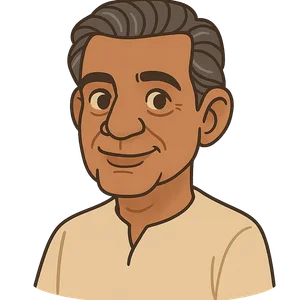
Satyajit Ray
Satyajit Ray was an Indian filmmaker, writer, and artist…
Reads at Grades 3–5 Listens at Grades 1–5
Print & create
Answer keys·No prep·Free with an account
28 worksheets · answer keys · full story · quiz · Ages 8-10 · CEFR B1
Plus adds 280,000+ more stories in 27 languages, audio for every one, and printables for all of them.
Just want Satyajit Ray?
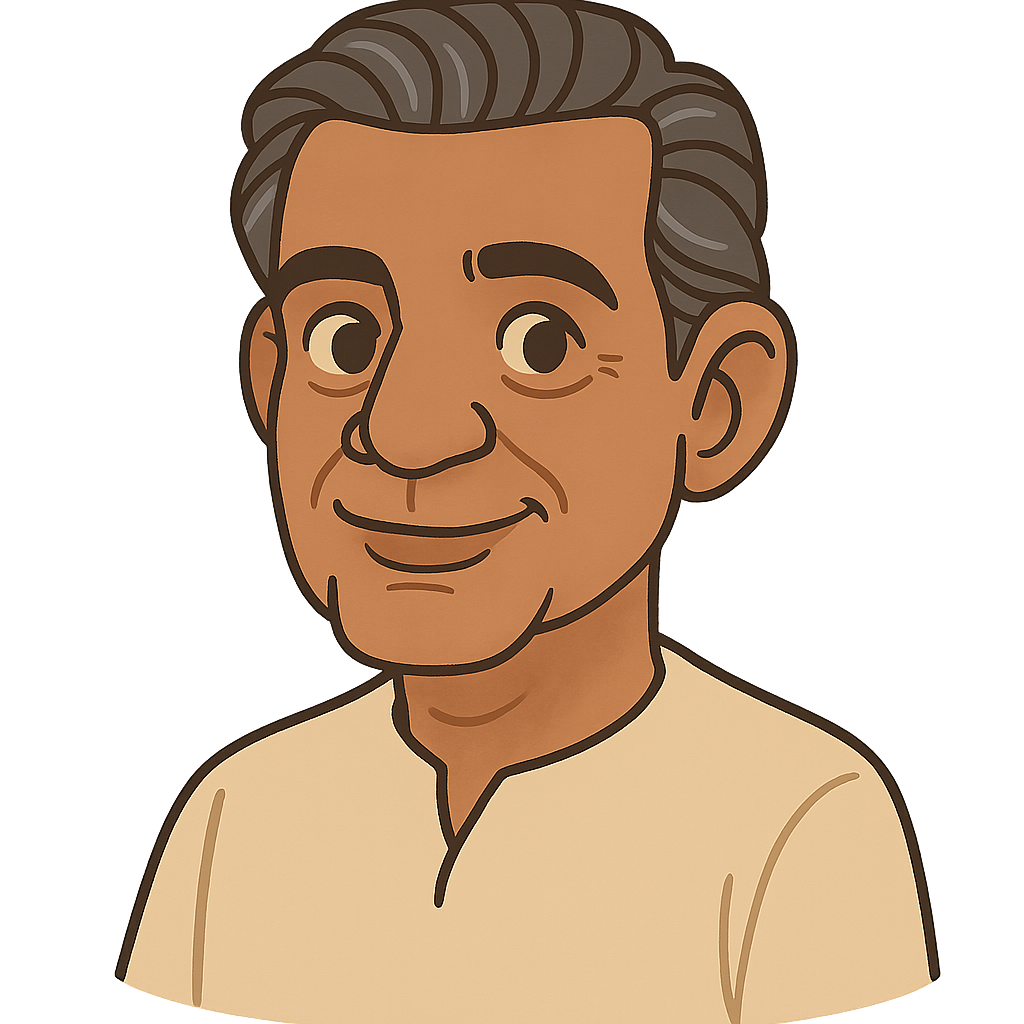
Hello, my name is Satyajit Ray, but my family and friends always called me Manik. I was born on May 2nd, 1921, in Calcutta, India, into a home that was bursting with creativity. My grandfather, Upendrakishore Ray Chowdhury, was a famous writer and painter, and my father, Sukumar Ray, was known for his wonderful and funny poems. Art and stories were all around me from the very beginning. Sadly, my father passed away around 1923, when I was only a young boy. After that, my mother and I went to live with my uncle. Even though it was a difficult time, I was still surrounded by books, music, and a love for learning, which shaped the person I would become.
During my school days, I fell in love with two things: art and movies. I would spend hours looking at paintings and watching films from all over the world. In 1940, I went to study at Visva-Bharati University, a special school in a peaceful town called Santiniketan. It was started by the famous poet Rabindranath Tagore, and it taught me to see the beauty in nature and Indian art. After my studies, I began my first job in 1943 at an advertising company. My work was to create pictures for advertisements and design the covers for books. This job was very important because it taught me a special skill: how to tell a complete story using just a single image. This would become very useful for my future as a filmmaker.
My interest in making movies grew stronger every year. In 1947, I started the Calcutta Film Society with some of my friends. It was a club where we could watch and study amazing films that we couldn't see in regular movie theaters. We learned so much by watching the work of great directors. A very important moment for me came in 1949 when I met Jean Renoir, a famous film director from France. He was in India to make a movie, and he encouraged me to follow my dream of becoming a filmmaker. But the biggest inspiration came in 1950, when I was on a trip to London. I saw a movie from Italy called 'Bicycle Thieves.' It wasn't about famous actors or exciting adventures; it was about real people and their everyday problems. It made me realize I wanted to make films just like that, telling honest stories about life in India.
Satyajit Ray: The Storyteller of India
Hello, my name is Satyajit Ray, but my family and friends always called me Manik. I was born on May 2nd, 1921, in Calcutta, India, into a home that was bursting with creativity. My grandfather, Upendrakishore Ray Chowdhury, was a famous writer and painter, and my father, Sukumar Ray, was known for his wonderful and funny poems. Art and stories were all around me from the very beginning. Sadly, my father passed away around 1923, when I was only a young boy. After that, my mother and I went to live with my uncle. Even though it was a difficult time, I was still surrounded by books, music, and a love for learning, which shaped the person I would become.
During my school days, I fell in love with two things: art and movies. I would spend hours looking at paintings and watching films from all over the world. In 1940, I went to study at Visva-Bharati University, a special school in a peaceful town called Santiniketan. It was started by the famous poet Rabindranath Tagore, and it taught me to see the beauty in nature and Indian art. After my studies, I began my first job in 1943 at an advertising company. My work was to create pictures for advertisements and design the covers for books. This job was very important because it taught me a special skill: how to tell a complete story using just a single image. This would become very useful for my future as a filmmaker.
My interest in making movies grew stronger every year. In 1947, I started the Calcutta Film Society with some of my friends. It was a club where we could watch and study amazing films that we couldn't see in regular movie theaters. We learned so much by watching the work of great directors. A very important moment for me came in 1949 when I met Jean Renoir, a famous film director from France. He was in India to make a movie, and he encouraged me to follow my dream of becoming a filmmaker. But the biggest inspiration came in 1950, when I was on a trip to London. I saw a movie from Italy called 'Bicycle Thieves.' It wasn't about famous actors or exciting adventures; it was about real people and their everyday problems. It made me realize I wanted to make films just like that, telling honest stories about life in India.
When I returned to India, I knew I had to make my first film. I chose a story about a young boy named Apu who lives in a small village in Bengal. The film was called 'Pather Panchali,' which means 'Song of the Little Road.' Making it was not easy. We began filming in 1952 with very little money, and most of our actors had never been in a movie before. We often had to stop filming for weeks or months because we couldn't afford to continue. It was a huge challenge, but I believed in the story of Apu and his family so much that I refused to give up. I was determined to finish it. Finally, the government of West Bengal offered to help us, and we were able to complete the film. 'Pather Panchali' was released in 1955, and people all over the world loved it. It won many awards and showed audiences a real and beautiful picture of life in an Indian village.
Even though I became known as a filmmaker, that wasn't my only passion. I loved telling stories in many different ways. I began writing books for children and created some very famous characters. One was a brilliant detective named Feluda, and another was a quirky scientist called Professor Shonku. I also took over as the editor of a children's magazine named 'Sandesh,' which my own grandfather had started many years before. Starting in 1961, I even began composing the music for my own films because I wanted every part of the movie to have the exact feeling I imagined. From designing the movie posters to writing the stories, I loved being involved in every step of the creative process.
Looking back on my life, I feel grateful that I was able to share so many stories with the world. In 1992, I received two of the greatest honors an artist can be given. I was awarded a special Academy Award for my lifetime of work in movies, and I also received the Bharat Ratna, which is the highest award a citizen can receive in India. I lived to be 70 years old. People remember me for making films that showed the joys and struggles of everyday life in India. I hope my movies and books continue to inspire young people everywhere to look closely at the world around them and to find the courage to tell their own unique stories.
Wow facts
About
Satyajit Ray was an Indian filmmaker, writer, and artist, widely regarded as one of the greatest directors in the history of cinema. He is celebrated for his humanistic films, such as the Apu Trilogy, which brought international recognition to Indian cinema.
Take a Quiz
Question 1 of 5
When was Satyajit Ray's first movie, 'Pather Panchali,' released?
Explore next





Want to do even more?
Go beyond exploring. Unlock tools that turn every story into real learning.

Storypie Plus for families
Full stories, quizzes, and printables. Nights and car rides, sorted.
- Unlimited audio stories
- Create Mode: your child stars in the story
- Offline downloads
- Printable worksheets & coloring pages

Why Storypie for Schools
Students engaged. Prep in seconds. Evenings back to you.
- Worksheets & Quizzes
- Classroom Management
- Formative Assessment
- Custom Curriculum & Lesson Plans
- 27 Languages

Why Storypie for Homeschool
Curriculum done. They'll ask for more. Hours back in your day.
- Worksheet Generator
- First-Person Audio Stories
- Built-in Comprehension Quizzes
- Custom Curriculum & Lesson Plans
- Print & Go Activities