English

Savitribai Phule
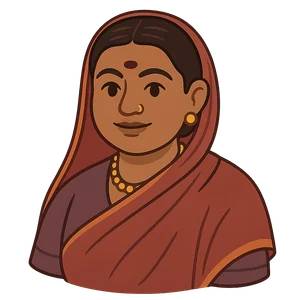
Savitribai Phule was a pioneering Indian social reformer, educator…
Reads at Grades 6–8 Listens at Grades 4–8
Print & create
Answer keys·No prep·Free with an account
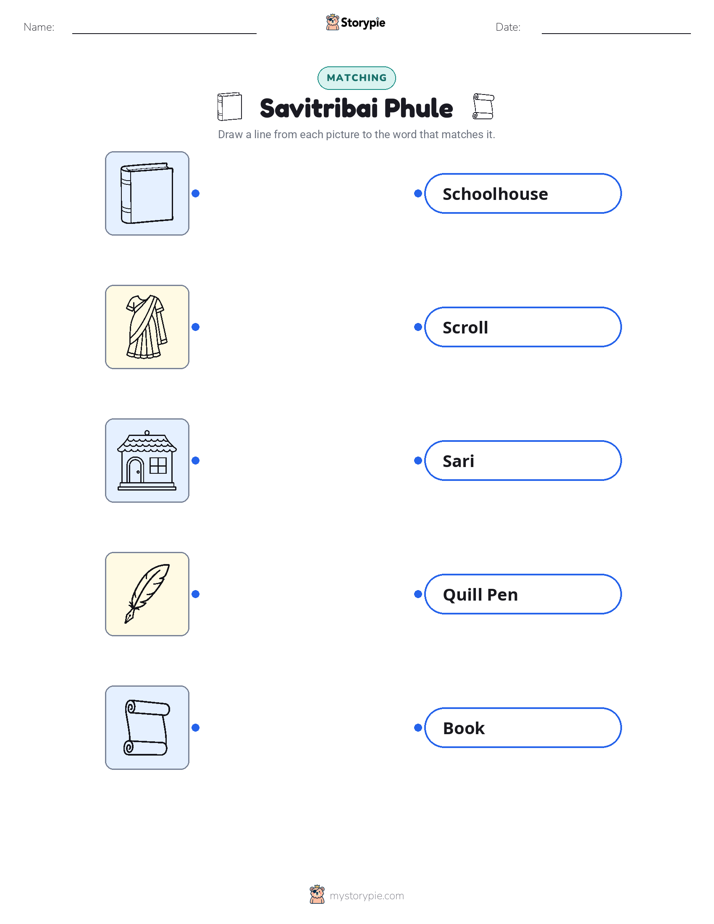
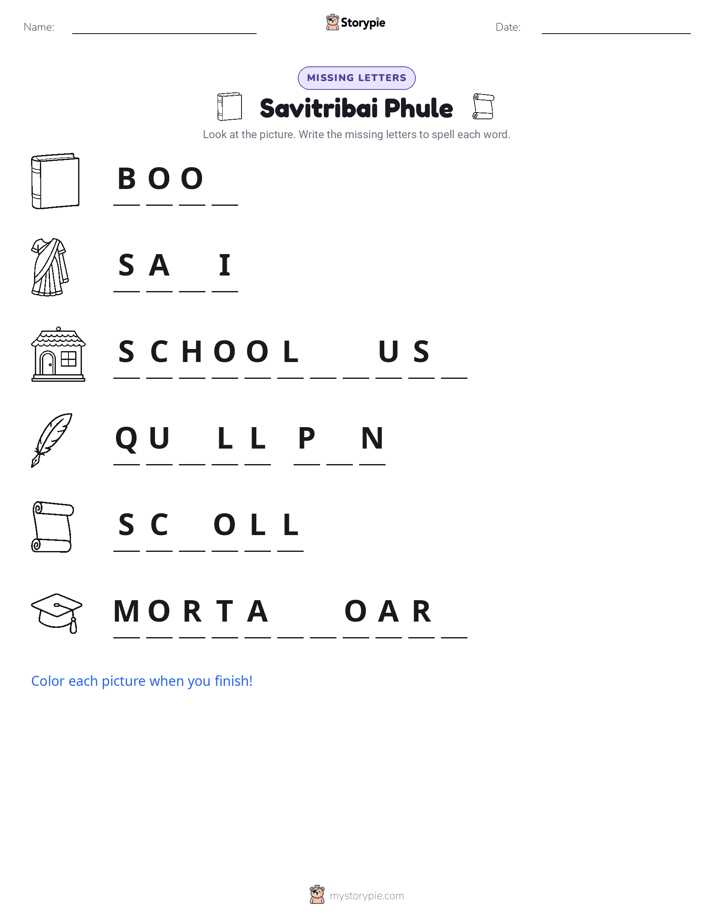
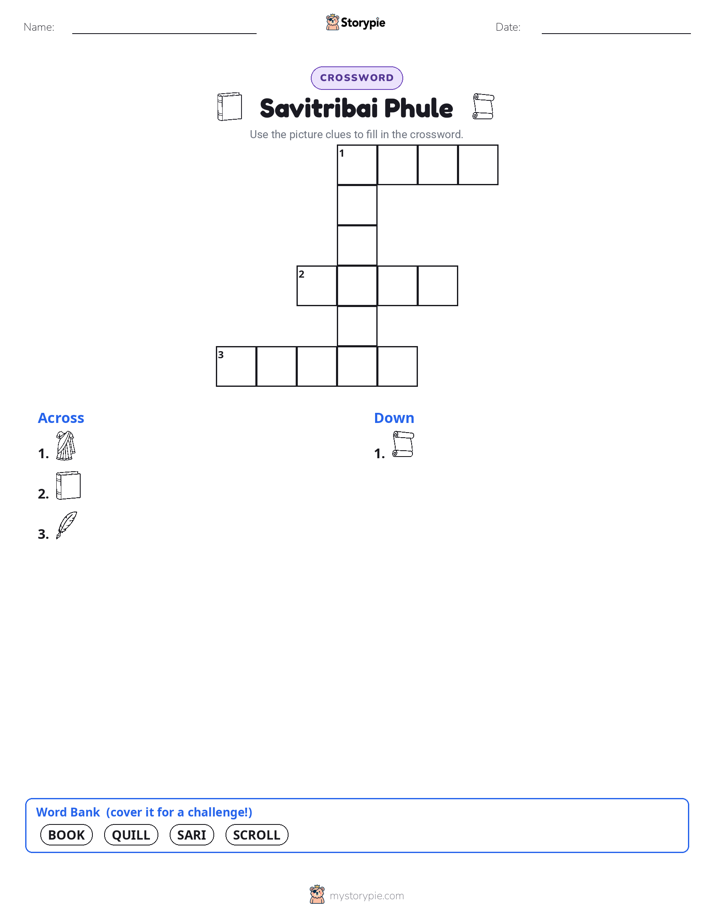
28 worksheets · answer keys · full story · quiz · Ages 10-12 · CEFR B2
Plus adds 164,000+ more stories in 27 languages, audio for every one, and printables for all of them.
Just want Savitribai Phule?
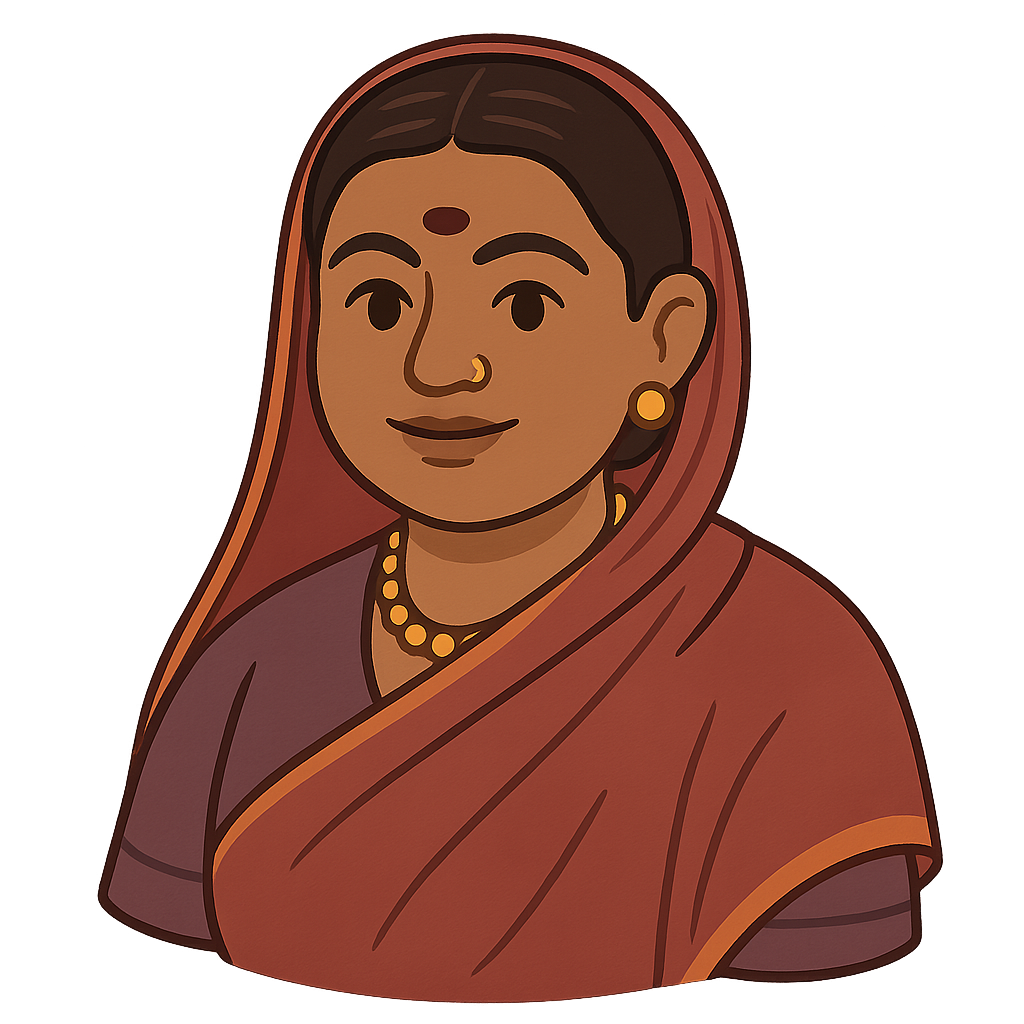
Hello, my name is Savitribai Phule, and I want to share my story with you. I was born on January 3rd, 1831, in a small village called Naigaon, in Maharashtra, India. The world I grew up in was very different from the one you know. In my time, it was believed that girls did not need to learn how to read or write. Our lives were meant to be spent at home, and the doors to schools were closed to us. But from a very young age, I was filled with a deep curiosity about the world. I would look at books and wonder about the stories and knowledge hidden inside their pages. I dreamed of the day I could read them for myself. In 1840, when I was only nine years old, I was married to a kind young man named Jyotirao Phule. This was a common practice back then, but this marriage would become the turning point not just for my life, but for the lives of millions of girls who came after me. It was the beginning of a journey I could never have imagined.
After our marriage, I moved with my husband, Jyotirao, to the city of Pune. He was a thoughtful and progressive man who saw the fire in my eyes and my intense desire to learn. He firmly believed that education was a right for everyone, regardless of their gender or social standing. He saw that keeping girls and women uneducated held our whole society back. So, he decided to do something that was considered very radical and brave at the time: he became my first teacher. Every day at home, he would patiently teach me how to read and write in our language, Marathi. It was a joyful experience, and with every letter I learned, a new world opened up to me. Jyotirao knew that for our dream to grow, I needed more than just basic literacy. Between 1846 and 1847, he arranged for me to receive formal teacher training. This was an incredible opportunity, and I studied hard, preparing myself for the great mission we were about to begin together.
Savitribai Phule: The Mother of Indian Feminism
Hello, my name is Savitribai Phule, and I want to share my story with you. I was born on January 3rd, 1831, in a small village called Naigaon, in Maharashtra, India. The world I grew up in was very different from the one you know. In my time, it was believed that girls did not need to learn how to read or write. Our lives were meant to be spent at home, and the doors to schools were closed to us. But from a very young age, I was filled with a deep curiosity about the world. I would look at books and wonder about the stories and knowledge hidden inside their pages. I dreamed of the day I could read them for myself. In 1840, when I was only nine years old, I was married to a kind young man named Jyotirao Phule. This was a common practice back then, but this marriage would become the turning point not just for my life, but for the lives of millions of girls who came after me. It was the beginning of a journey I could never have imagined.
After our marriage, I moved with my husband, Jyotirao, to the city of Pune. He was a thoughtful and progressive man who saw the fire in my eyes and my intense desire to learn. He firmly believed that education was a right for everyone, regardless of their gender or social standing. He saw that keeping girls and women uneducated held our whole society back. So, he decided to do something that was considered very radical and brave at the time: he became my first teacher. Every day at home, he would patiently teach me how to read and write in our language, Marathi. It was a joyful experience, and with every letter I learned, a new world opened up to me. Jyotirao knew that for our dream to grow, I needed more than just basic literacy. Between 1846 and 1847, he arranged for me to receive formal teacher training. This was an incredible opportunity, and I studied hard, preparing myself for the great mission we were about to begin together.
Our shared dream became a reality on January 1st, 1848. I was only seventeen years old when my husband, our dear friend Fatima Sheikh, and I opened the very first school for girls in India. We started it at a place called Bhide Wada in Pune. It was an exciting and hopeful moment, but it was also incredibly difficult. Many people in our community were angry and strongly opposed to what we were doing. They believed that educating girls was wrong and went against tradition. As I walked to school each day, people would shout insults at me. Some would even throw stones and mud. It was hurtful, but I refused to let their anger stop me. I came up with a simple solution: I would carry a second sari with me to school every day. When I arrived, I would change into the clean one, ready to greet my students with a smile. My determination, and that of Jyotirao and Fatima, never wavered. Our hard work paid off, and by 1851, we were successfully running three schools for over 150 girls, proving that change was possible.
Our work, however, was about more than just opening schools. We understood that true change required fighting against many injustices in our society. We challenged the unfair caste system, which divided people into rigid social groups and treated many with great cruelty. We fought for the rights of all women, especially those who were treated the most poorly. In 1852, we opened a home for widows, who were often cast out and left with no support after their husbands died. We wanted to give them a safe place to live and the chance to build new lives. To organize our efforts for social equality, Jyotirao and I founded a group called the Satyashodhak Samaj, which means 'Truth-Seekers' Society,' on September 24th, 1873. Its goal was to fight for the rights of all people to live with dignity. I also found a voice through writing. In 1854, I published my first book of poems, 'Kavya Phule,' using my words to spread our message of hope, equality, and the importance of education.
My life was dedicated to serving others, and that dedication guided my final chapter. In 1897, a terrible disease called the bubonic plague spread through our region. Seeing the suffering around me, I opened a clinic to care for the sick, especially the poor who had nowhere else to go. I worked tirelessly to help them. One day, while carrying a sick young boy to the clinic, I contracted the illness myself. My journey on this earth came to an end on March 10th, 1897. I lived to be 66 years old. Today, I am remembered as India's first female teacher and a mother of Indian feminism. I hope my story shows you that education is a powerful light that can change the world, and that one person's courage can open doors for millions.
Wow facts
About
Savitribai Phule was a pioneering Indian social reformer, educator, and poet who is regarded as the first female teacher of India. Alongside her husband, Jyotirao Phule, she opened one of the first modern Indian girls' schools in 1848.
Take a Quiz
Question 1 of 5
Which sentence best summarizes the main idea of my story?
Explore next





Want to do even more?
Go beyond exploring. Unlock tools that turn every story into real learning.

Storypie Plus for families
Full stories, quizzes, and printables. Nights and car rides, sorted.
- Unlimited audio stories
- Create Mode: your child stars in the story
- Offline downloads
- Printable worksheets & coloring pages

Why Storypie for Schools
Students engaged. Prep in seconds. Evenings back to you.
- Worksheets & Quizzes
- Classroom Management
- Formative Assessment
- Custom Curriculum & Lesson Plans
- 27 Languages

Why Storypie for Homeschool
Curriculum done. They'll ask for more. Hours back in your day.
- Worksheet Generator
- First-Person Audio Stories
- Built-in Comprehension Quizzes
- Custom Curriculum & Lesson Plans
- Print & Go Activities