English

Shah Jahan
Shah Jahan was the fifth Mughal emperor of India, reigning from 1628 to 1658.
Reads at Grades 6–8 Listens at Grades 4–8
Shah Jahan: The King Who Built a Dream
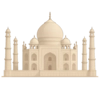
Hello. Many know me as Shah Jahan, the emperor who built the Taj Mahal, but my story begins with a different name. I was born Prince Khurram on January 5th, 1592, in the city of Lahore. As the son of the great Mughal Emperor, Jahangir, my childhood was filled with lessons that would prepare me to one day rule an empire. I wasn't just taught how to read and write; I spent my days studying the delicate beauty of art and the powerful words of poetry. At the same time, I was trained in the arts of war and military strategy, learning how to lead armies and defend our lands. My education was designed to create a balanced ruler, one who appreciated beauty but also understood strength. I proved myself to be a capable military commander from a young age, leading successful campaigns that expanded my father’s empire. My victories in battle were so impressive that my father, Emperor Jahangir, bestowed upon me a special title to honor my achievements. Long before I sat on the throne, he began calling me Shah Jahan, which in the Persian language means 'King of the World.' It was a name I hoped to one day earn for myself.
While my public life was focused on matters of the state and the military, my personal life was defined by a love that would shape my entire destiny. In 1612, I married a woman named Arjumand Banu Begum. She was more than just my wife; she was my closest companion and most trusted advisor. I was so captivated by her grace and wisdom that I gave her a new name: Mumtaz Mahal, which means 'the Chosen One of the Palace.' She truly was the light of my world. We were inseparable, and she accompanied me on my travels and even on military campaigns, offering her counsel on important matters. In 1628, my father's reign came to an end, and I ascended to the throne as the fifth emperor of the mighty Mughal Empire. Ruling a vast and powerful empire was a great responsibility, but the joy of it was doubled because I had Mumtaz Mahal by my side. Her presence gave me strength, and her intelligence helped me govern with fairness and vision. Together, we dreamed of a golden age for our empire, filled with peace, prosperity, and magnificent beauty.
My reign was prosperous, but it was also marked by a profound and deep sorrow. In 1631, my world was shattered when my beloved Mumtaz Mahal passed away. Her death left me heartbroken, and the empire mourned with me. In my grief, I made a promise to her, and to myself, that I would build a monument so beautiful and perfect that the world would never forget her name or our love. This promise became the driving force of my life. The very next year, in 1632, construction began on her final resting place, a grand mausoleum that would be known as the Taj Mahal. I spared no expense and sought out the finest materials. We brought in gleaming white marble that seemed to change color with the light of the day. We imported precious and semi-precious gems from all over Asia—jade from China, turquoise from Tibet, and sapphires from Sri Lanka—to be inlaid into the marble walls in intricate patterns. It was a massive undertaking that required the skill of more than twenty thousand artisans, including stonecutters, calligraphers, and dome builders. For over twenty years, they labored to bring my vision to life, creating a building that was not just a tomb, but a tribute to eternal love.
My passion for building and creating beauty extended far beyond the Taj Mahal. I believed that the architecture of an empire should reflect its grandeur and sophistication. During my reign, I dedicated enormous resources to constructing magnificent buildings that would stand as symbols of Mughal power and artistry. In 1648, I made the monumental decision to move the capital of the empire from Agra to a new city I had built from the ground up. I named it Shahjahanabad, and today you know it as Old Delhi. This city was planned with wide streets, beautiful gardens, and impressive fortifications. At its heart, I commissioned the construction of a massive fortress made of red sandstone, which became known as the Red Fort, or Lal Qila. It was more than just a military structure; it was a city within a city, containing palaces, audience halls, and private apartments. Not far from the fort, I also ordered the construction of the Jama Masjid, one of the largest and most elegant mosques in all of India. These projects, along with countless others, marked my reign as a golden age for art and architecture in the Mughal Empire.
Despite the glory and achievements of my rule, the final chapter of my life was filled with sadness and loss. In 1657, I fell seriously ill, and this created uncertainty across the empire. Believing I was near death, my sons began a bitter and destructive war against one another to determine who would inherit the throne. It was a time of great turmoil that tore my family apart. In the end, my son Aurangzeb emerged victorious in 1658. Instead of honoring me, he seized the throne for himself and declared me unfit to rule. He had me imprisoned within the walls of the Agra Fort, the very same fortress from which I had once ruled the empire. Though I was an emperor, I was now a prisoner. For the last years of my life, I was confined to my chambers. My only comfort during that lonely time was a small window that offered a view across the Yamuna River. From that window, I could gaze upon the Taj Mahal, the beautiful tomb I had built for my dearest wife. It was a constant reminder of our love and the life we once shared.
I lived to be 74 years old and passed away in 1666. My final wish was granted, and I was laid to rest in the Taj Mahal, right beside my dearest Mumtaz Mahal, so that we could be together for eternity. Though my empire and my time as a ruler are long gone, the legacy I left behind is built in stone and marble. The Red Fort, the city of Shahjahanabad, and the great mosques I commissioned still stand as monuments to a great era. Millions of people from all over the world still visit the Taj Mahal every year. I hope that when they look at its gleaming dome and intricate details, they see more than just a beautiful building. I hope they see a timeless story of love, a monument to a promise kept, and a symbol of the incredible artistry and vision of my time.
Wow facts
About
Shah Jahan was the fifth Mughal emperor of India, reigning from 1628 to 1658. He is renowned for his patronage of architecture, most famously commissioning the Taj Mahal as a mausoleum for his beloved wife, Mumtaz Mahal.
Take a Quiz
Question 1 of 5
What was the main reason Shah Jahan built the Taj Mahal?
Explore next



Want to do even more?
Go beyond exploring. Unlock tools that turn every story into real learning.

Storypie Plus for families
Full stories, quizzes, and printables. Nights and car rides, sorted.
- Unlimited audio stories
- Create Mode: your child stars in the story
- Offline downloads
- Printable worksheets & coloring pages

Why Storypie for Schools
Students engaged. Prep in seconds. Evenings back to you.
- Worksheets & Quizzes
- Classroom Management
- Formative Assessment
- Custom Curriculum & Lesson Plans
- 27 Languages

Why Storypie for Homeschool
Curriculum done. They'll ask for more. Hours back in your day.
- Worksheet Generator
- First-Person Audio Stories
- Built-in Comprehension Quizzes
- Custom Curriculum & Lesson Plans
- Print & Go Activities