English

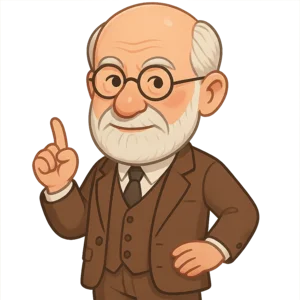
Sigmund Freud
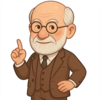
Sigmund Freud was an Austrian neurologist and the founder of psychoanalysis…
Reads at Grades 6–8 Listens at Grades 4–8
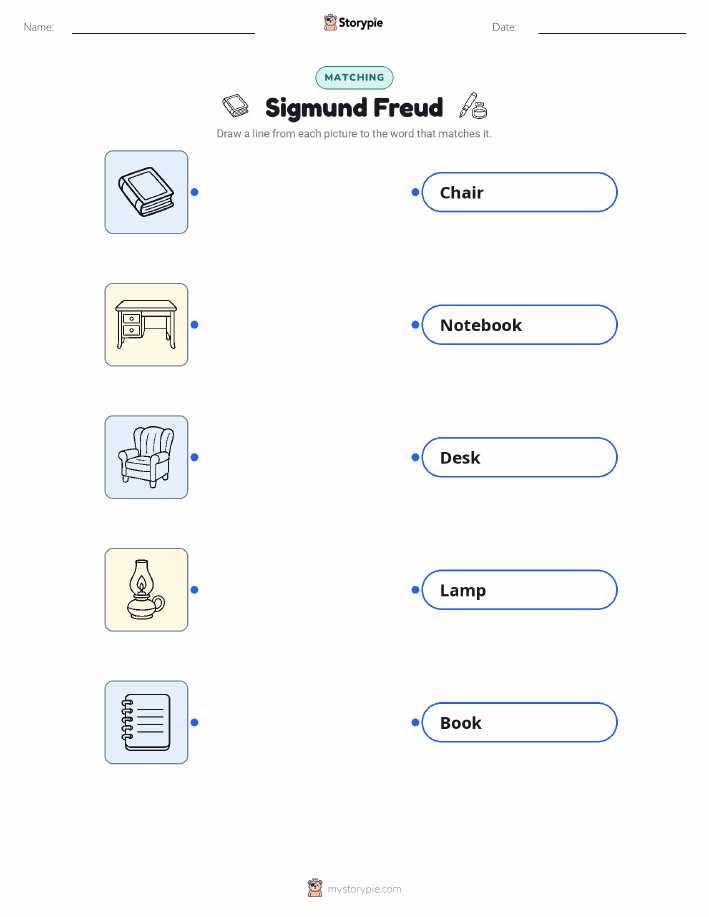
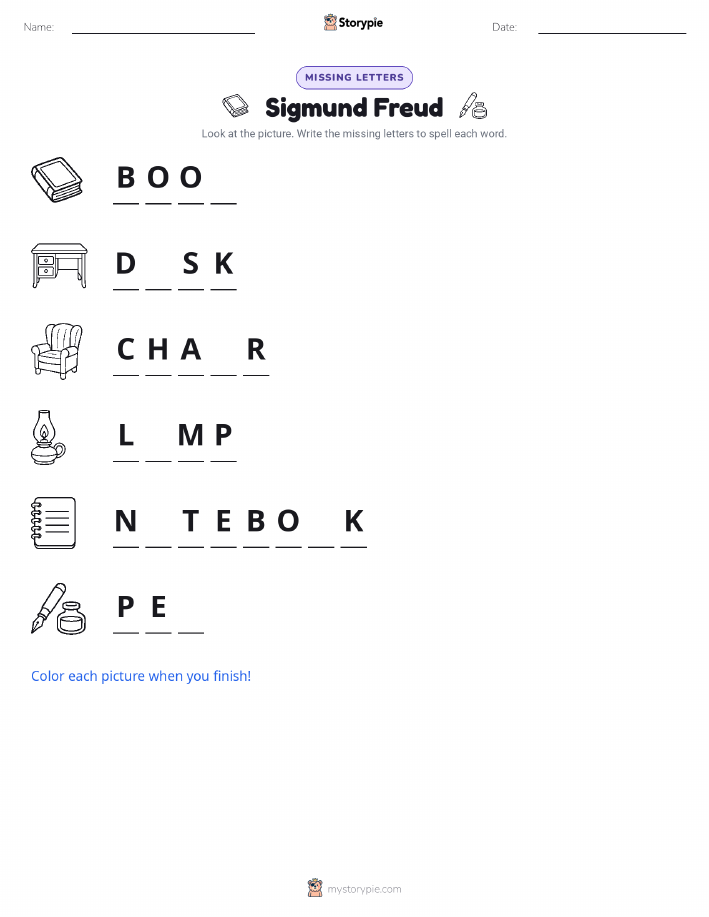
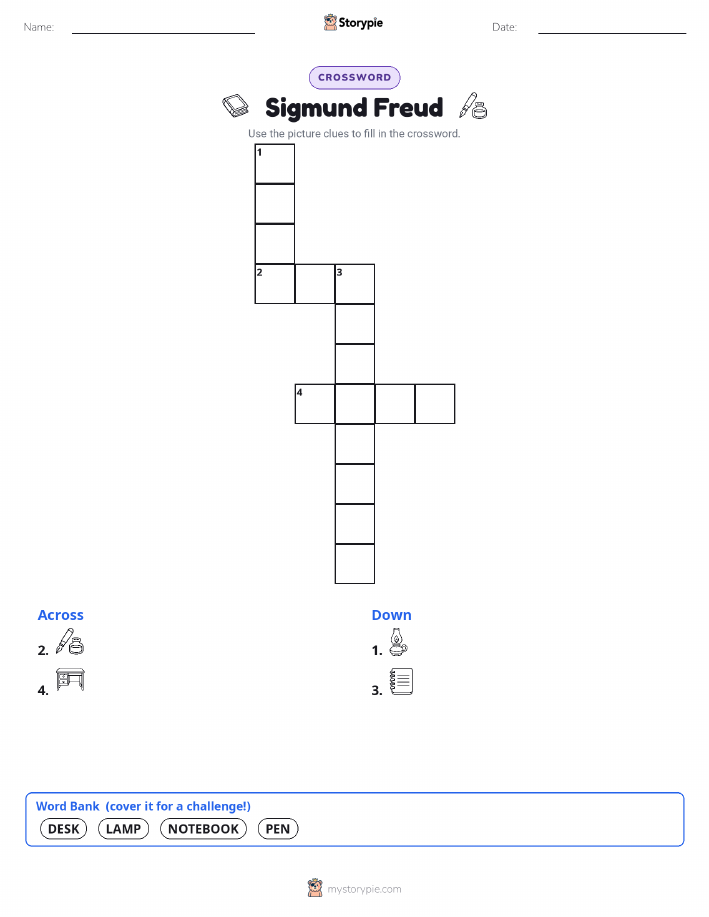
Print & create
Answer keys·No prep·Free with an account
28 worksheets · answer keys · full story · quiz · Ages 10-12 · CEFR B2
Plus adds 279,000+ more stories in 27 languages, audio for every one, and printables for all of them.
Just want Sigmund Freud?
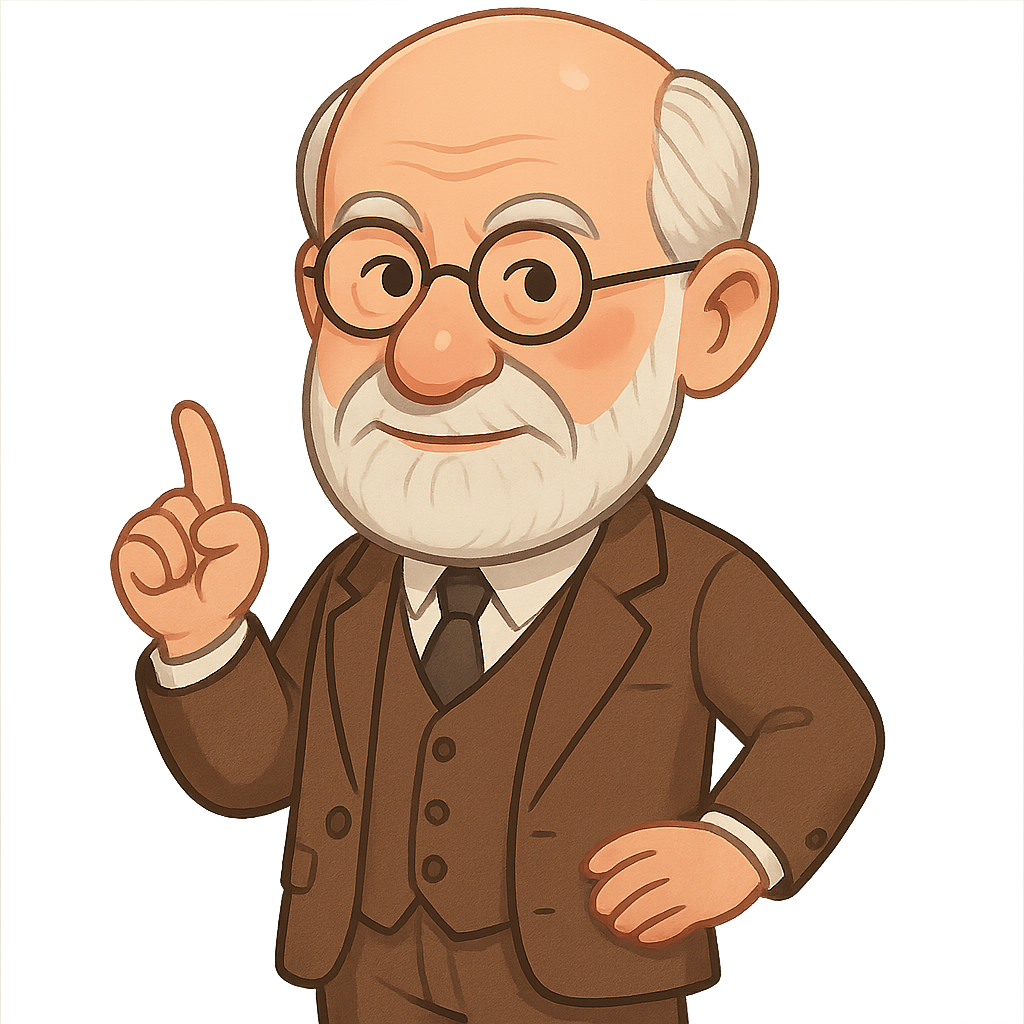
Hello there. My name is Sigmund Freud, and I spent my life exploring the most fascinating and mysterious place in the universe: the human mind. My journey began on May 6, 1856, in a small town called Freiberg, which was then part of the Austrian Empire. When I was just a little boy, my family moved to the grand, bustling city of Vienna. As the oldest of eight children, our home was always full of life, but my favorite place was in the quiet company of books. I read everything I could get my hands on, from plays to history to science. More than anything, I was fascinated by people. I would watch them and wonder, 'Why did they do that? What were they thinking?'. This endless curiosity, this constant questioning of 'why', was the seed that would grow into my life's work.
My path to exploring the mind wasn't a straight one. In 1873, I enrolled at the University of Vienna to study medicine. My dream was to be a research scientist, spending my days in a laboratory uncovering the secrets of the human body. However, life had other plans. To support my family and the woman I loved, Martha Bernays, I knew I needed a more practical profession, so I became a doctor specializing in the nervous system, a neurologist. My work was interesting, but I felt something was missing. I saw patients with physical problems that had no clear physical cause. In 1885, a trip to Paris changed everything. I went to study with a famous doctor named Jean-Martin Charcot, who was using hypnosis to treat patients. It was there I began to believe that some illnesses were rooted not in the body, but deep within the mind. Back in Vienna, my friend and colleague Josef Breuer told me about a patient we called 'Anna O.'. She found that simply talking about her painful memories helped her symptoms disappear. We called it the 'talking cure', and it was the very beginning of a new field I would later name psychoanalysis.
Sigmund Freud
Hello there. My name is Sigmund Freud, and I spent my life exploring the most fascinating and mysterious place in the universe: the human mind. My journey began on May 6, 1856, in a small town called Freiberg, which was then part of the Austrian Empire. When I was just a little boy, my family moved to the grand, bustling city of Vienna. As the oldest of eight children, our home was always full of life, but my favorite place was in the quiet company of books. I read everything I could get my hands on, from plays to history to science. More than anything, I was fascinated by people. I would watch them and wonder, 'Why did they do that? What were they thinking?'. This endless curiosity, this constant questioning of 'why', was the seed that would grow into my life's work.
My path to exploring the mind wasn't a straight one. In 1873, I enrolled at the University of Vienna to study medicine. My dream was to be a research scientist, spending my days in a laboratory uncovering the secrets of the human body. However, life had other plans. To support my family and the woman I loved, Martha Bernays, I knew I needed a more practical profession, so I became a doctor specializing in the nervous system, a neurologist. My work was interesting, but I felt something was missing. I saw patients with physical problems that had no clear physical cause. In 1885, a trip to Paris changed everything. I went to study with a famous doctor named Jean-Martin Charcot, who was using hypnosis to treat patients. It was there I began to believe that some illnesses were rooted not in the body, but deep within the mind. Back in Vienna, my friend and colleague Josef Breuer told me about a patient we called 'Anna O.'. She found that simply talking about her painful memories helped her symptoms disappear. We called it the 'talking cure', and it was the very beginning of a new field I would later name psychoanalysis.
This led me to the biggest question of all: if our minds could hold secrets that made us sick, what did the mind actually look like? Since I couldn't see it, I decided to draw a map. I imagined the mind was like a giant iceberg. The small part you can see above the water is your conscious mind—the thoughts you know you're having. But beneath the surface lies the vast, hidden part: the unconscious mind. This is where your deepest feelings, fears, and memories are stored, often without you even realizing it. I believed that dreams were a secret window into this unconscious world. In 1899, I published my most famous book, 'The Interpretation of Dreams', where I explained that our dreams are like secret messages from our hidden selves. I also developed a theory that our personality has three parts constantly talking to each other: the 'id', which is the wild, impulsive part that wants everything now; the 'superego', which is like a strict parent, full of rules about right and wrong; and the 'ego', which is the referee that tries to balance the other two in the real world.
My ideas were revolutionary, and not everyone was ready for them. As my theories about the unconscious mind, dreams, and personality spread, I gained many followers who were excited by this new way of thinking. But I also faced a lot of criticism from people who thought my ideas were shocking or unscientific. Still, I continued my work, writing books and teaching others. Life in Vienna was my home, the center of my world for nearly 80 years. But in the 1930s, a dark shadow fell over Europe. The Nazi party came to power, and because my family was Jewish, we were in grave danger. My books were burned and our safety was threatened. In 1938, with the help of friends, my family and I made the heartbreaking decision to flee. We escaped to London, leaving behind our home, our friends, and the city that had shaped my entire life. I was grateful to be safe, but I was old and sick. My life's journey came to an end in my new home in London on September 23, 1939.
Even though my life ended far from where it began, the questions I asked have continued to echo around the world. My goal was never to have all the answers, but to help people understand themselves a little better. I wanted to show that it's okay to talk about our feelings, our fears, and our dreams. While many of my specific theories are still debated today, I am proud that I encouraged the world to think more deeply about the incredible, complicated, and wonderful mystery of what it means to be human. My greatest hope is that you, too, will always stay curious and never be afraid to ask 'why?'.
Wow facts
About
Sigmund Freud was an Austrian neurologist and the founder of psychoanalysis, a clinical method for evaluating and treating pathologies in the psyche through dialogue between a patient and a psychoanalyst.
Take a Quiz
Question 1 of 5
In your own words, describe the key events that led me to create the 'talking cure'.
Explore next





Want to do even more?
Go beyond exploring. Unlock tools that turn every story into real learning.

Storypie Plus for families
Full stories, quizzes, and printables. Nights and car rides, sorted.
- Unlimited audio stories
- Create Mode: your child stars in the story
- Offline downloads
- Printable worksheets & coloring pages

Why Storypie for Schools
Students engaged. Prep in seconds. Evenings back to you.
- Worksheets & Quizzes
- Classroom Management
- Formative Assessment
- Custom Curriculum & Lesson Plans
- 27 Languages

Why Storypie for Homeschool
Curriculum done. They'll ask for more. Hours back in your day.
- Worksheet Generator
- First-Person Audio Stories
- Built-in Comprehension Quizzes
- Custom Curriculum & Lesson Plans
- Print & Go Activities