English


Sir Christopher Wren
Sir Christopher Wren was a renowned 17th-century English architect, astronomer…
Reads at Grades 6–8 Listens at Grades 4–8
Print & create
Answer keys·No prep·Free with an account
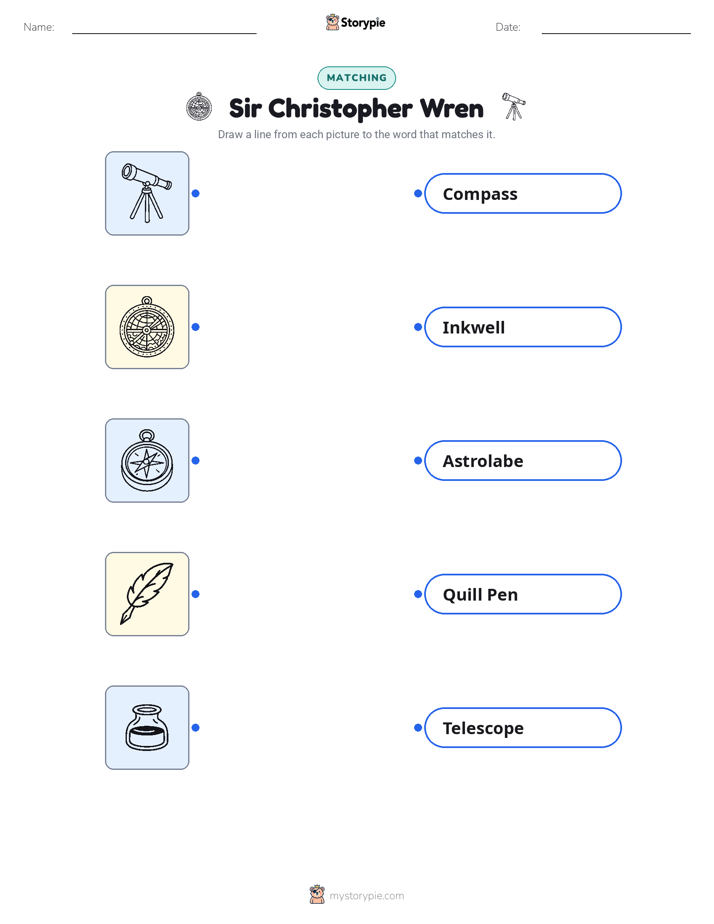
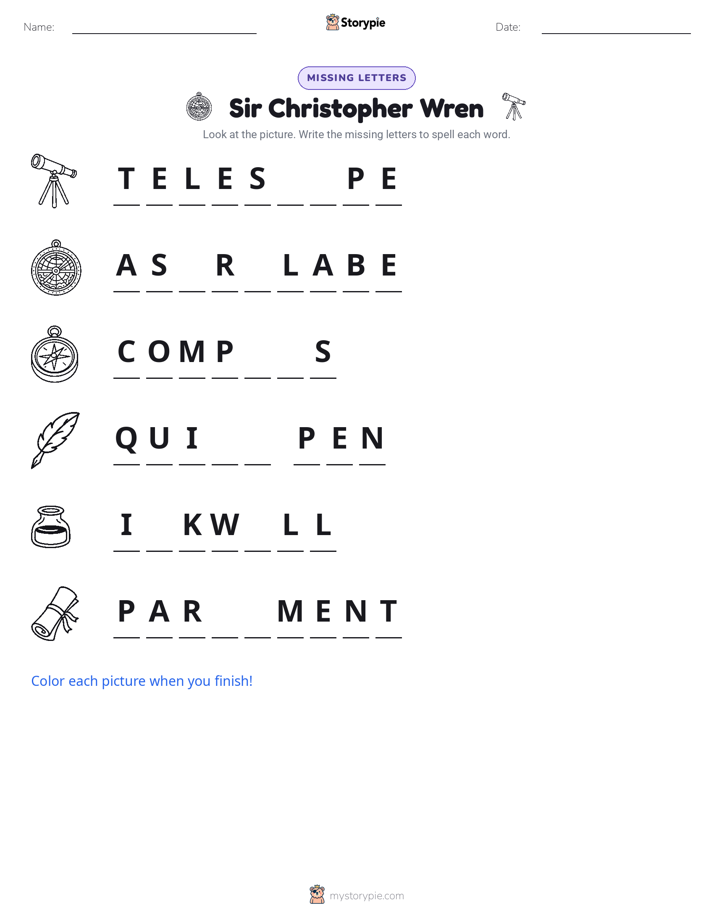
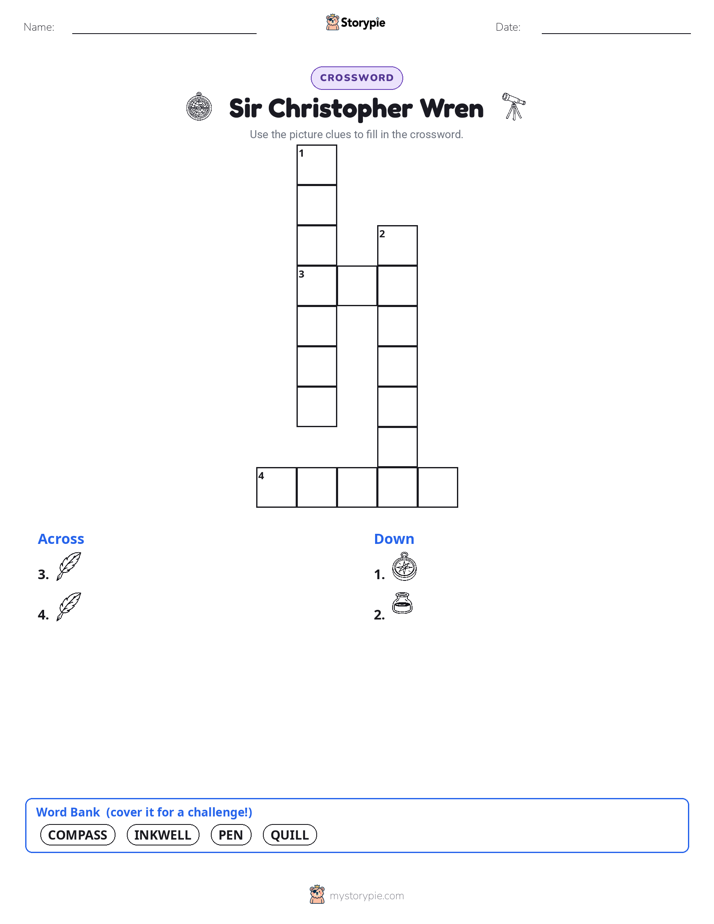
28 worksheets · answer keys · full story · quiz · Ages 10-12 · CEFR B2
Plus adds 244,000+ more stories in 27 languages, audio for every one, and printables for all of them.
Just want Sir Christopher Wren?
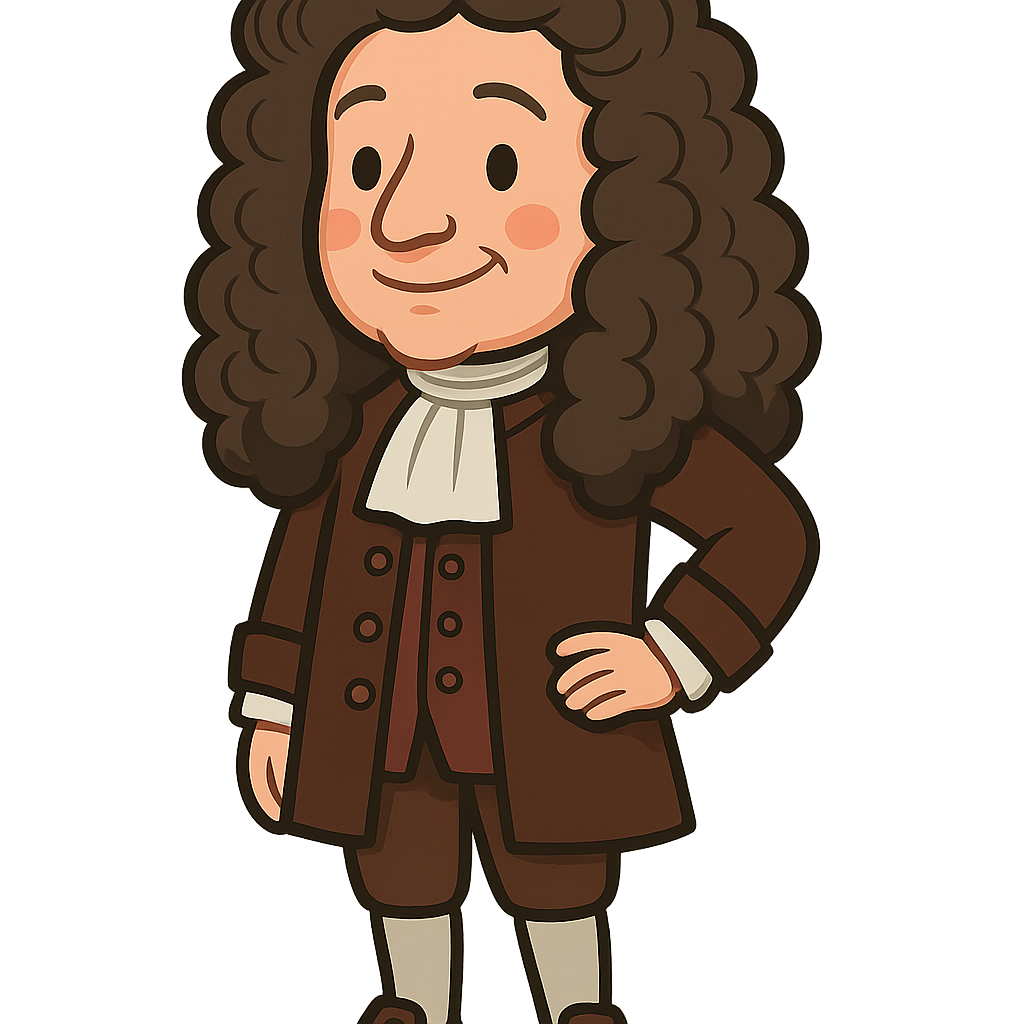
Hello, I am Sir Christopher Wren. You may know me as an architect, but my story begins with a love for science and the stars. I was born on October 20th, 1632, in a small village in Wiltshire, England. From a young age, I was not interested in building blocks, but in understanding how the world worked. I was fascinated by science, mathematics, and especially astronomy. My mind was always busy with questions and ideas for new inventions. I didn't set out to build great cathedrals; I set out to understand the universe. My passion for learning led me to Oxford University in 1649, a place buzzing with new ideas. There, my studies flourished, and I even created models of the moon and other inventions that impressed my professors. My knowledge grew, and I eventually became a professor of astronomy, spending my nights gazing at the heavens. In 1660, I was incredibly proud to help start a special club for brilliant thinkers like myself. We called it the Royal Society, and it became one of the most important scientific groups in the world, a place where we could share our discoveries and push the boundaries of knowledge.
While my heart was in science, my mind was also drawn to the beauty and precision of architecture. It was like a puzzle, blending art with the laws of physics and mathematics that I knew so well. My first major project began in 1664, when I was asked to design the Sheldonian Theatre at Oxford. It was a challenge I embraced, using my understanding of geometry to create a large, open space without any visible support columns. Just two years later, in September of 1666, a disaster struck that would change my life and the city of London forever. A small fire that started in a bakery quickly spread, consuming the city’s tightly packed wooden buildings. This event became known as the Great Fire of London. For days, the city burned. The devastation was immense. When the smoke cleared, most of medieval London was gone, including the magnificent old St. Paul's Cathedral. It was a terrible tragedy, but out of the ashes came an unexpected opportunity. King Charles II saw a chance to build a new, modern city. In 1669, he appointed me as the Surveyor of the King's Works, entrusting me with the monumental task of helping to rebuild London from its ruins.
Sir Christopher Wren: Rebuilding a City
Hello, I am Sir Christopher Wren. You may know me as an architect, but my story begins with a love for science and the stars. I was born on October 20th, 1632, in a small village in Wiltshire, England. From a young age, I was not interested in building blocks, but in understanding how the world worked. I was fascinated by science, mathematics, and especially astronomy. My mind was always busy with questions and ideas for new inventions. I didn't set out to build great cathedrals; I set out to understand the universe. My passion for learning led me to Oxford University in 1649, a place buzzing with new ideas. There, my studies flourished, and I even created models of the moon and other inventions that impressed my professors. My knowledge grew, and I eventually became a professor of astronomy, spending my nights gazing at the heavens. In 1660, I was incredibly proud to help start a special club for brilliant thinkers like myself. We called it the Royal Society, and it became one of the most important scientific groups in the world, a place where we could share our discoveries and push the boundaries of knowledge.
While my heart was in science, my mind was also drawn to the beauty and precision of architecture. It was like a puzzle, blending art with the laws of physics and mathematics that I knew so well. My first major project began in 1664, when I was asked to design the Sheldonian Theatre at Oxford. It was a challenge I embraced, using my understanding of geometry to create a large, open space without any visible support columns. Just two years later, in September of 1666, a disaster struck that would change my life and the city of London forever. A small fire that started in a bakery quickly spread, consuming the city’s tightly packed wooden buildings. This event became known as the Great Fire of London. For days, the city burned. The devastation was immense. When the smoke cleared, most of medieval London was gone, including the magnificent old St. Paul's Cathedral. It was a terrible tragedy, but out of the ashes came an unexpected opportunity. King Charles II saw a chance to build a new, modern city. In 1669, he appointed me as the Surveyor of the King's Works, entrusting me with the monumental task of helping to rebuild London from its ruins.
Rebuilding an entire city was an overwhelming prospect. I immediately drew up a grand plan for London with wide, straight streets and grand public squares, inspired by the beautiful cities I had seen in Europe. Unfortunately, my plan was too ambitious and could not be used because property owners wanted to rebuild on their old plots of land. However, I was given an equally incredible responsibility: to design 51 new parish churches to replace those lost in the fire. This was my chance to use all my skills. I poured my knowledge of geometry, light, and engineering into each design, making every church unique and beautiful. Of all my projects, one stood above the rest: the new St. Paul's Cathedral. We began the enormous undertaking in 1675. My greatest challenge was its famous dome. Many thought it would be impossible to build something so large and elegant, but I used my scientific principles to create an innovative three-part structure that was both strong and breathtakingly beautiful. During this busy period, my work was recognized by the king, and I was knighted in 1673, becoming Sir Christopher Wren. In 1675, I also designed another important building, the Royal Observatory in Greenwich, a place for astronomers to continue the work I so deeply loved.
I dedicated nearly four decades of my life to building the new St. Paul's Cathedral. Seeing it finally completed around 1710, when I was in my late seventies, was one of the proudest moments of my life. It stood as a testament to hard work, innovation, and the spirit of a city that refused to be defeated. I lived a long and full life, dedicated to science and creation. I lived to be 90 years old and passed away in 1723. It was decided that I should be laid to rest inside my greatest creation, and so I was buried within St. Paul's Cathedral. My work can still be seen all over London today, in the many churches and buildings that rose from the ashes of the Great Fire. The great dome of St. Paul's has become a symbol of the city's strength and resilience. My son wrote a simple Latin inscription for my tomb, which reads: 'Lector, si monumentum requiris, circumspice.' This translates to, 'Reader, if you seek his monument, look around you.' I hope my story shows you that even after a great disaster, creativity, knowledge, and perseverance can build something beautiful and lasting for generations to come.
Wow facts
About
Sir Christopher Wren was a renowned 17th-century English architect, astronomer, and mathematician who is most famous for designing St. Paul's Cathedral and designing 51 churches in London after the Great Fire of 1666; not all were completed during his lifetime.
Take a Quiz
Question 1 of 5
What was the unexpected opportunity that arose from the tragedy of the Great Fire of London in 1666?
Explore next






Want to do even more?
Go beyond exploring. Unlock tools that turn every story into real learning.

Storypie Plus for families
Full stories, quizzes, and printables. Nights and car rides, sorted.
- Unlimited audio stories
- Create Mode: your child stars in the story
- Offline downloads
- Printable worksheets & coloring pages

Why Storypie for Schools
Students engaged. Prep in seconds. Evenings back to you.
- Worksheets & Quizzes
- Classroom Management
- Formative Assessment
- Custom Curriculum & Lesson Plans
- 27 Languages

Why Storypie for Homeschool
Curriculum done. They'll ask for more. Hours back in your day.
- Worksheet Generator
- First-Person Audio Stories
- Built-in Comprehension Quizzes
- Custom Curriculum & Lesson Plans
- Print & Go Activities