English

Sojourner Truth
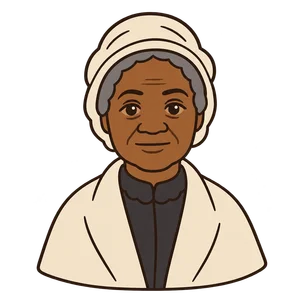
Sojourner Truth was an American abolitionist and women's rights activist who was born into slavery but…
Reads at Grades 6–8 Listens at Grades 4–8
Print & create
Answer keys·No prep·Free with an account
28 worksheets · answer keys · full story · quiz · Ages 10-12 · CEFR B2
Plus adds 290,000+ more stories in 27 languages, audio for every one, and printables for all of them.
Just want Sojourner Truth?
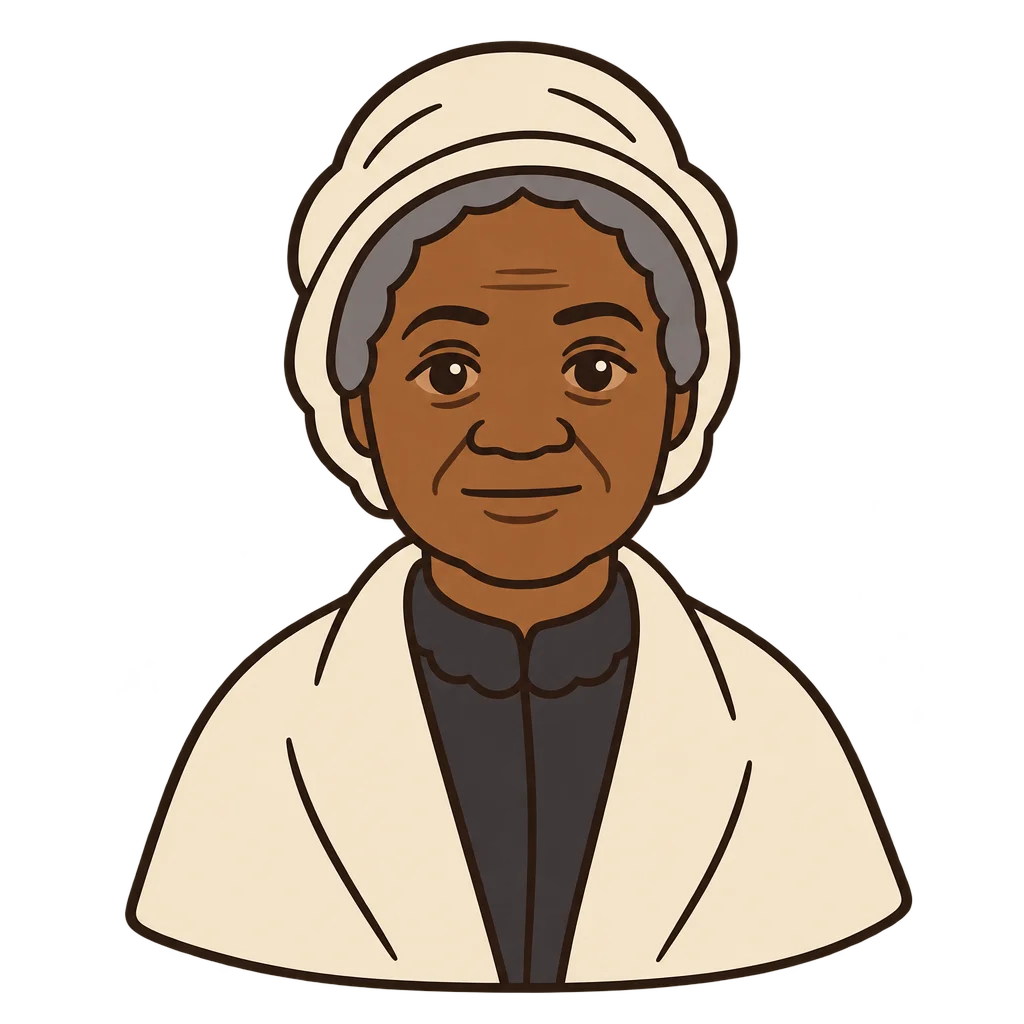
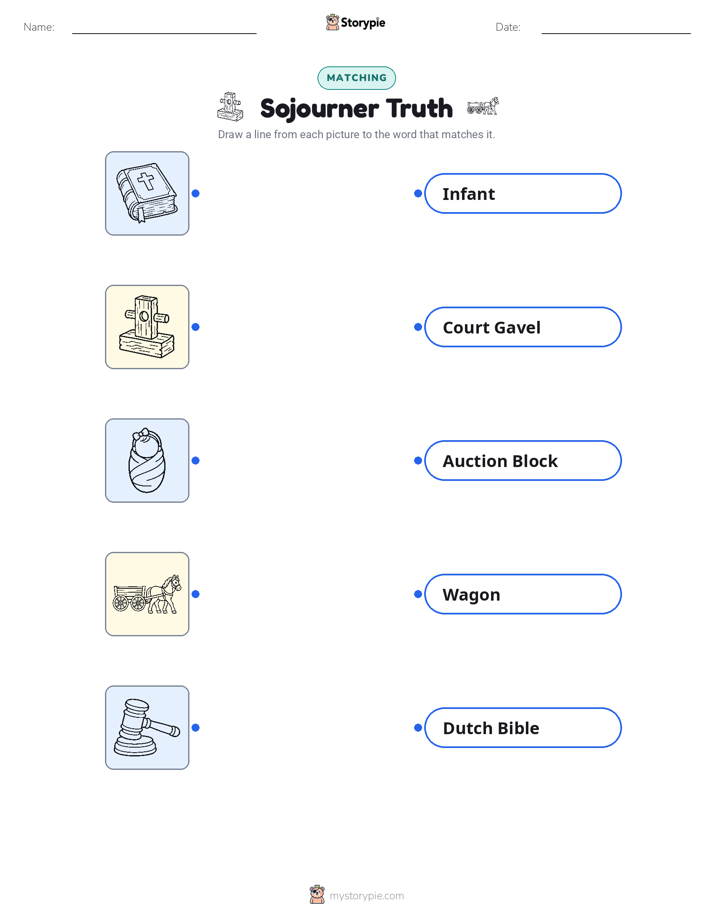
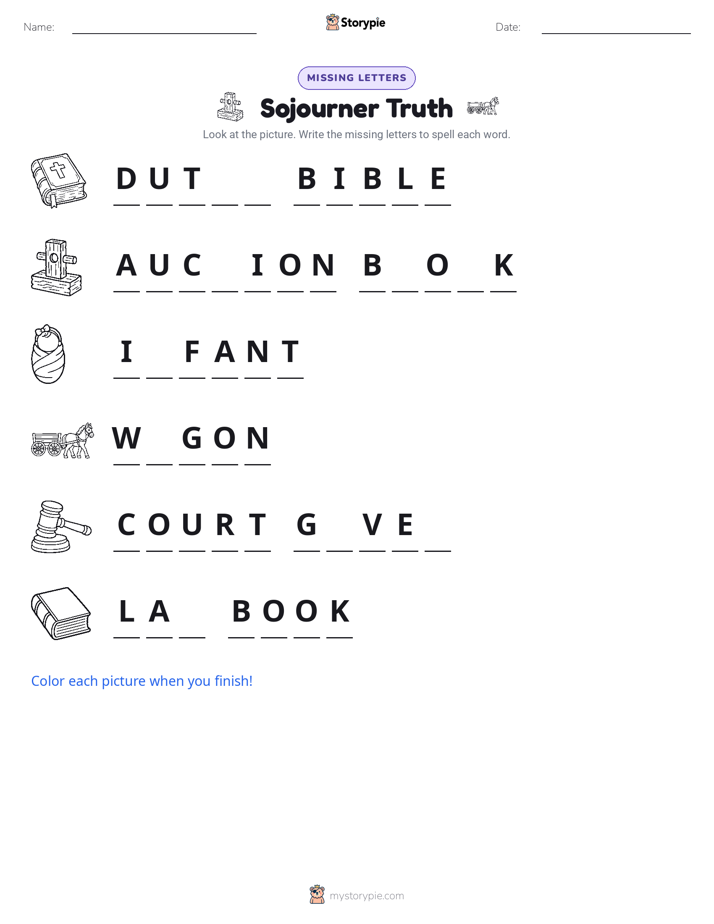
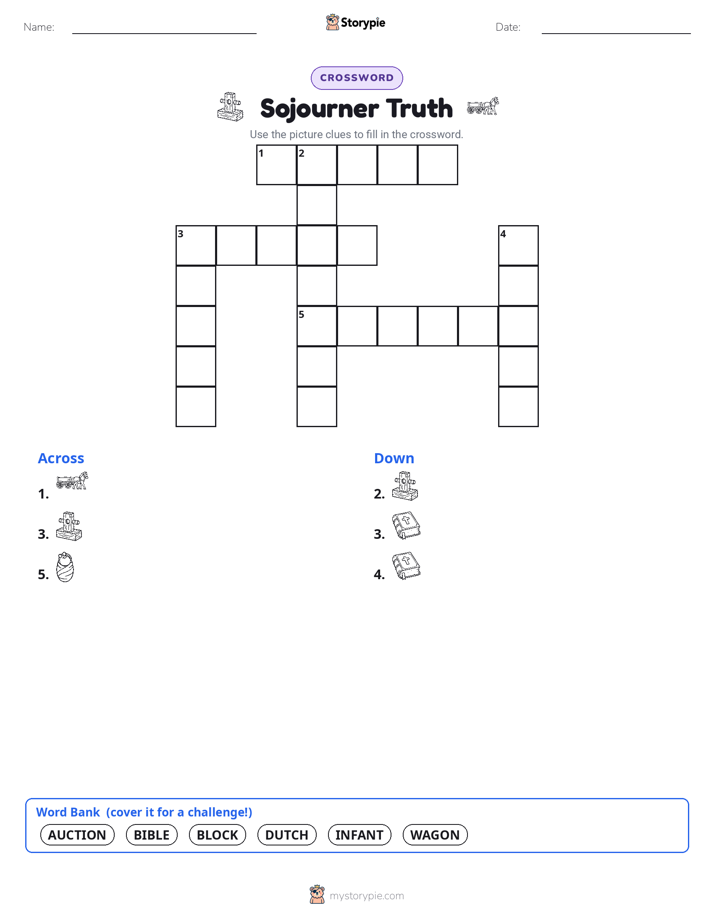
You may know me as Sojourner Truth, but that was not the name I was given at birth. I was born Isabella Baumfree around the year 1797 in the state of New York. My life began in a world very different from the one you know. I was born into slavery, which meant my family and I were considered the property of others. My first language wasn't even English; it was Dutch, which was spoken by the family that enslaved us. One of my earliest and most painful memories was from when I was just a young girl. I was sold at an auction, torn away from my mother and father. Over the next several years, I was sold to different enslavers, and life was filled with hardship and cruel treatment. These early experiences planted a seed in my heart—a deep understanding of injustice and a powerful desire for freedom. I learned to be resilient and to hold onto hope, even when the world around me was dark and unfair. My childhood was not one of play and learning, but of hard labor and sorrow, which shaped the person I would become and the fight I would one day lead.
My path to freedom was not an easy one. I was enslaved by a man named John Dumont, and in 1826, he promised he would grant me my freedom, one year before New York State law would emancipate all enslaved people. I worked hard, holding onto his promise, but when the time came, he broke his word. He said I still owed him work because my hand had been injured, and he refused to let me go. I knew this was wrong. I had fulfilled my side of the agreement, and I believed that freedom was a right that God had given me, not something a man could grant or deny. So, one morning, I made a decision. I did not run away in the dark of night. Instead, I walked away in broad daylight, carrying my infant daughter, Sophia, with me. I felt that I wasn't stealing myself; I was simply taking what was rightfully mine. I walked until I found a home with a kind family, Isaac and Maria Van Wagenen. They were against slavery and gave me shelter. When John Dumont came to reclaim me, the Van Wagenens paid him for my last year of service and helped me secure my legal freedom in late 1826, just before the state law set all remaining enslaved people free on July 4th, 1827.
Sojourner Truth
You may know me as Sojourner Truth, but that was not the name I was given at birth. I was born Isabella Baumfree around the year 1797 in the state of New York. My life began in a world very different from the one you know. I was born into slavery, which meant my family and I were considered the property of others. My first language wasn't even English; it was Dutch, which was spoken by the family that enslaved us. One of my earliest and most painful memories was from when I was just a young girl. I was sold at an auction, torn away from my mother and father. Over the next several years, I was sold to different enslavers, and life was filled with hardship and cruel treatment. These early experiences planted a seed in my heart—a deep understanding of injustice and a powerful desire for freedom. I learned to be resilient and to hold onto hope, even when the world around me was dark and unfair. My childhood was not one of play and learning, but of hard labor and sorrow, which shaped the person I would become and the fight I would one day lead.
My path to freedom was not an easy one. I was enslaved by a man named John Dumont, and in 1826, he promised he would grant me my freedom, one year before New York State law would emancipate all enslaved people. I worked hard, holding onto his promise, but when the time came, he broke his word. He said I still owed him work because my hand had been injured, and he refused to let me go. I knew this was wrong. I had fulfilled my side of the agreement, and I believed that freedom was a right that God had given me, not something a man could grant or deny. So, one morning, I made a decision. I did not run away in the dark of night. Instead, I walked away in broad daylight, carrying my infant daughter, Sophia, with me. I felt that I wasn't stealing myself; I was simply taking what was rightfully mine. I walked until I found a home with a kind family, Isaac and Maria Van Wagenen. They were against slavery and gave me shelter. When John Dumont came to reclaim me, the Van Wagenens paid him for my last year of service and helped me secure my legal freedom in late 1826, just before the state law set all remaining enslaved people free on July 4th, 1827.
Even though I was free, my heart was still broken because my children were not all with me. A terrible moment came when I learned that my five-year-old son, Peter, had been illegally sold by the Dumont family to an enslaver in Alabama. At that time, New York law forbade selling enslaved people out of the state. I was filled with a righteous anger and a mother's determination. I knew I had to get him back. In 1828, I did something that was almost unheard of: I decided to take the matter to court. It was an incredibly bold and courageous act for a Black woman, who had only recently been freed from slavery, to sue a powerful white man. Many people would have thought it was impossible, but I believed in justice and the power of the truth. I found help from lawyers who believed in my cause, and I stood before the court to tell my story. After months of legal battles, the court ruled in my favor. It was a monumental victory. They ordered that Peter be returned to me, and holding him in my arms again was a triumph that proved to me that even the most powerless voice could be heard when it speaks the truth.
My personal fights for freedom and for my son ignited a fire within me to fight for others. I felt a deep spiritual calling, and on June 1st, 1843, I decided to leave my old life and name behind. I renamed myself Sojourner Truth. 'Sojourner' because I would travel, and 'Truth' because that is what I would speak. My mission was to journey across the country and testify to the injustices of slavery and the need for equality for all people, including women. I became a traveling preacher and speaker, sharing my story and advocating for the abolition of slavery and for women's rights. One of my most famous moments came in 1851 at a Women's Rights Convention in Akron, Ohio. In a powerful speech, I challenged the ideas about women being weak and inferior. It is there that I am remembered for asking the question, 'Ain't I a Woman?'. My work continued through the years, and during the Civil War, I recruited Black soldiers for the Union Army. On October 29th, 1864, I even had the honor of meeting with President Abraham Lincoln at the White House to discuss my experiences and my ideas for the future.
After the Civil War ended and slavery was abolished, my work was far from over. I continued to travel and speak, fighting for the rights of formerly enslaved people. I advocated for the government to provide them with land so they could build their own independent lives. I lived a long and full life to be about 86 years old, and I never stopped using my voice to speak out against injustice wherever I saw it. My story is a testament to the power of a single individual's courage and conviction. I hope my journey shows that speaking the truth, even when it is difficult, can challenge the world's greatest wrongs and inspire others to continue the long walk toward freedom and equality for all.
Wow facts
About
Sojourner Truth was an American abolitionist and women's rights activist who was born into slavery but escaped to freedom and became a powerful orator for justice and equality.
Take a Quiz
Question 1 of 5
In your own words, describe the main events that led Sojourner Truth to gain her freedom.
Explore next






Want to do even more?
Go beyond exploring. Unlock tools that turn every story into real learning.

Storypie Plus for families
Full stories, quizzes, and printables. Nights and car rides, sorted.
- Unlimited audio stories
- Create Mode: your child stars in the story
- Offline downloads
- Printable worksheets & coloring pages

Why Storypie for Schools
Students engaged. Prep in seconds. Evenings back to you.
- Worksheets & Quizzes
- Classroom Management
- Formative Assessment
- Custom Curriculum & Lesson Plans
- 27 Languages

Why Storypie for Homeschool
Curriculum done. They'll ask for more. Hours back in your day.
- Worksheet Generator
- First-Person Audio Stories
- Built-in Comprehension Quizzes
- Custom Curriculum & Lesson Plans
- Print & Go Activities